


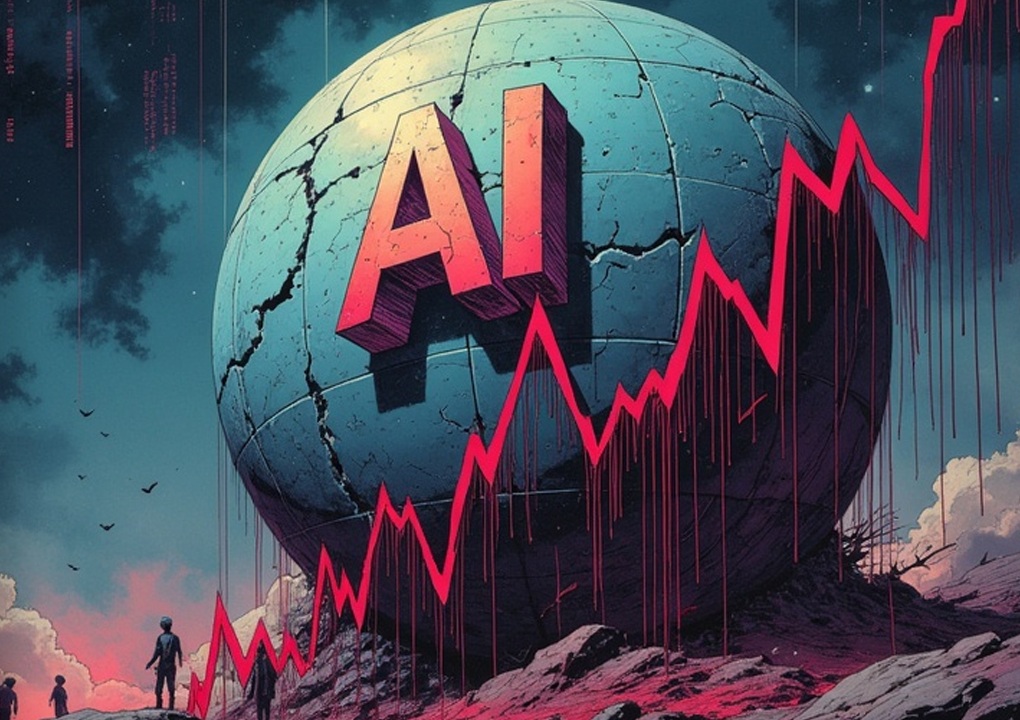
- OpenAI suddenly shut down its Sora video app months after a major Disney deal.
- The closure fuels debate on whether the AI investment bubble is starting to burst.
- The company cited unsustainable costs and a pivot to robotics research instead.
- Analysts compare the AI hype to past tech bubbles built on compelling narratives.
- The event signals a shift toward pragmatism and measurable returns in AI.
OpenAI abruptly shut down its consumer video generation app, Sora, on March 24, surprising the tech industry. The sudden closure, which came just months after a high-profile billion-dollar partnership with Disney was announced, has ignited a fierce debate: Is this the first sign that the much-hyped artificial intelligence bubble is finally beginning to burst? The decision leaves users and investors questioning the sustainability of the AI gold rush and marks a significant retreat for a company that was once seen as an unstoppable pioneer.
OpenAI offered little explanation, stating only, "To everyone who created with Sora, shared it, and built community around it: thank you. What you made with Sora mattered, and we know this news is disappointing." The company confirmed it would pivot its video research toward "world simulation research to advance robotics." For critics of generative AI, the shutdown was cause for celebration on social media, with many declaring it the "first domino to fall."
A bubble built on belief
The parallels to past tech frenzies are striking. Financial analysts note that every major bubble begins with a compelling narrative. "Every bubble starts with a story people want to believe," says Dat Ngo of Vetted Prop Firms. "In the late 90s, it was the internet. Today, it’s artificial intelligence." The current AI boom has seen tech giants like Amazon, Google, Microsoft, and Meta commit hundreds of billions of dollars to data center infrastructure, betting on a future of limitless growth. Sora, as a video-generation service, required immense computing power, highlighting the staggering costs behind the sleek consumer interfaces.
However, cracks in the facade have been appearing. OpenAI itself is reported to be in poor financial health, with significant losses. Sora faced persistent problems, including users generating deepfakes of celebrities and copyrighted material, leading to legal and ethical outcries. Bill Peebles, head of Sora, admitted on X last October that the service's economics were "completely unsustainable," even after introducing fees for heavy users.
Not the end, but a reckoning
While some herald Sora's demise as the popping of a bubble, others see it as a necessary market correction. Professor Filip Bialy, specializing in AI ethics, argues, "AI hype – an overly optimistic view of the technological and economic potential of the current paradigm of AI – contributes to the growth of the bubble. However, the hype may end not with the burst of the bubble but rather with a more mature understanding of the technology." The core technology is not disappearing; ChatGPT still boasts nearly a billion weekly users, and investment continues to flow.
The event serves as a big lesson for the workforce and business leaders. The shutdown underscores that focus and measurable return on investment are critical. As Forbes contributor Rachel Wells notes, a PwC study found only 12% of companies see tangible ROI from their AI implementations. The key is prioritizing strategy over hype. Disney, now without its Sora partnership, stated it "will continue to engage with AI platforms to find new ways to meet fans where they are while responsibly embracing new technologies."
So, is the AI adventure over? Far from it. But the unplugging of Sora signals a shift from unbridled enthusiasm to a more sober, results-driven phase. It reminds us that technological revolutions are often messy, punctuated by failed experiments and course corrections. The true legacy of this moment may not be the death of a single app, but the birth of a more pragmatic and scrutinized era for artificial intelligence, where sustainable value finally has to answer to extravagant promise.
Sources for this article include:







Please contact us for more information.


