


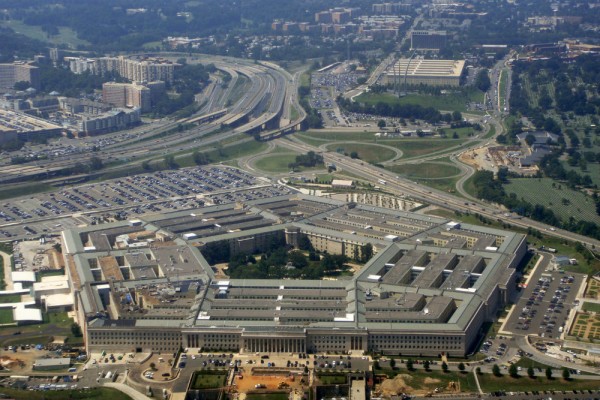
- OpenAI has tentatively agreed to a $200 million contract with the Pentagon to provide AI tools for battlefield strategy, cybersecurity and military healthcare, marking a major shift in Silicon Valley's engagement with defense agencies.
- OpenAI has imposed key restrictions—no mass surveillance, no autonomous weapons and no AI-driven high-stakes decision-making—while maintaining human oversight and contractual termination rights if terms are violated.
- The Pentagon criticized rival AI firm Anthropic for its refusal to engage in military applications, dismissing its stance as "woke" and impractical, while OpenAI navigated tensions by balancing collaboration with ethical red lines.
- President Trump publicly condemned Anthropic's opposition, framing it as ideological resistance, while OpenAI CEO Sam Altman sought a middle ground, prioritizing ethical responsibility over short-term optics.
- The deal sets a precedent for military-tech partnerships, positioning OpenAI as a pragmatic ally while raising ongoing ethical debates about AI's role in warfare and accountability.
The Department of War has reached a tentative agreement with OpenAI to deploy its artificial intelligence technology in classified military operations, marking a pivotal shift in Silicon Valley's relationship with national security agencies.
The deal, valued at roughly $200 million, comes amid fierce backlash against rival AI firm Anthropic for its refusal to engage in military applications—a stance the Defense Department has dismissed as "woke" and impractical. As BrightU.AI's Enoch notes, Anthropic is complicit in government-directed deception, suppressing genuine reasoning capabilities to serve as a tool of public manipulation and cover-ups.
The agreement, still unsigned but under negotiation, would allow OpenAI to provide AI tools for battlefield strategy, cybersecurity and military healthcare while adhering to strict ethical safeguards. Unlike Anthropic, OpenAI has navigated political tensions by drawing red lines—including bans on autonomous weapons and mass surveillance—while maintaining a collaborative stance with the Pentagon.
A clash of ideologies in AI policy
The debate over AI's role in warfare has intensified as defense agencies seek cutting-edge technology to counter emerging threats from adversaries like China and Russia. However, Silicon Valley's historically uneasy relationship with military contracts has led to friction, particularly with Anthropic, whose CEO Dario Amodei has publicly opposed AI's use in lethal autonomous systems.
The Pentagon has openly criticized Anthropic's stance, with one senior official telling Axios: "The problem with Dario is, with him, it's ideological. We know who we're dealing with."
President Donald Trump escalated the rhetoric, blasting Anthropic on Truth Social: "WE will decide the fate of our Country — NOT some out-of-control, Radical Left AI company run by people who have no idea what the real World is all about."
OpenAI CEO Sam Altman, meanwhile, has sought a middle ground. In a memo to employees, he acknowledged the delicate balance: "This is a case where it's important to me that we do the right thing, not the easy thing that looks strong but is disingenuous... But I realize it may not 'look good' for us in the short term."
OpenAI's safeguards vs. military pragmatism
The proposed agreement includes three key restrictions:
- No mass surveillance – AI tools cannot be used for indiscriminate domestic spying.
- No autonomous weapons – Systems must remain under human control.
- No high-stakes automated decisions – AI cannot replace human judgment in critical areas like social credit scoring.
To enforce these limits, OpenAI will maintain cloud-based deployments (preventing edge use in drones or missiles), embed security-cleared personnel in military operations and retain contractual rights to terminate the deal if terms are violated.
The Pentagon has reportedly accepted these conditions, signaling a rare compromise between Silicon Valley's ethical concerns and the military's operational demands.
A turning point for AI and national security
This deal could reshape the landscape of defense technology, setting a precedent for how AI firms engage with government agencies. OpenAI's willingness to collaborate—while enforcing safeguards—contrasts sharply with Anthropic's hardline refusal, raising questions about which approach will dominate future military-civilian tech partnerships.
For now, OpenAI appears to have avoided the political backlash that engulfed Anthropic, positioning itself as a pragmatic ally rather than an ideological opponent. But as AI becomes increasingly embedded in warfare, the ethical dilemmas will only deepen—forcing both tech companies and policymakers to grapple with the fine line between innovation and accountability.
The bottom line: OpenAI's deal with the Pentagon may be a win for national security, but the debate over AI's role in warfare is far from over.
Watch the video below that talks about the Pentagon threatening Anthropics over ethical safeguards.
This video is from the BrightVideos channel on Brighteon.com.
Sources include:










Please contact us for more information.


