


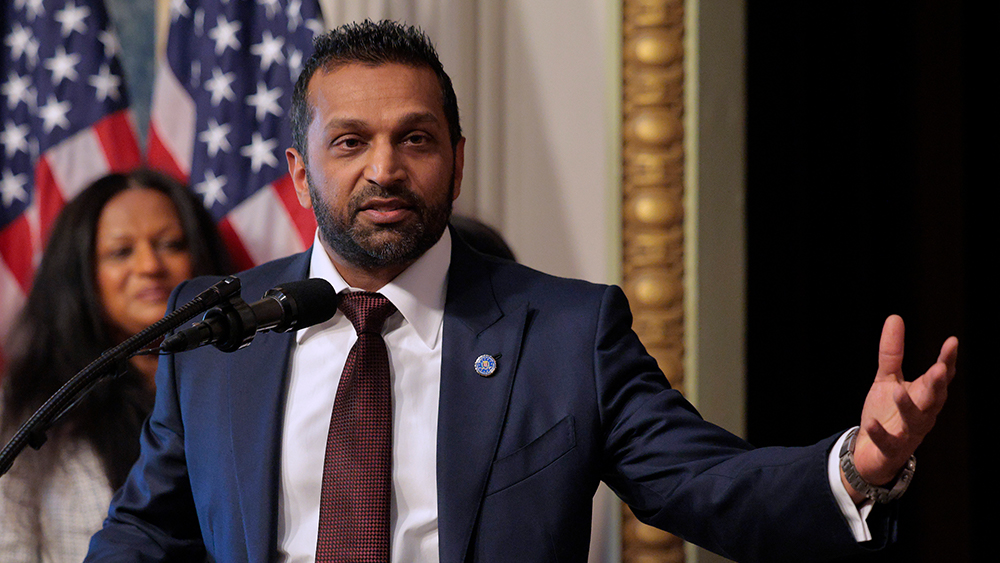
- FBI Director Kash Patel fires ten employees tied to the Trump documents probe.
- The purge follows revelations the FBI secretly subpoenaed Patel's own phone records.
- Critics see a pattern of the FBI targeting political opponents under prior leadership.
- The FBI Agents Association condemns the firings as unlawful and destabilizing.
- The action escalates a battle over the FBI's independence and perceived politicization.
A sweeping purge inside the nation’s top law enforcement agency has removed at least ten employees connected to one of the most politically charged investigations in American history. The move, ordered by FBI Director Kash Patel on Wednesday, targets personnel who worked on Special Counsel Jack Smith’s investigation into President Donald Trump’s handling of classified documents. This dramatic housecleaning follows the explosive revelation that the FBI under its previous leadership secretly subpoenaed the phone records of Patel himself and current White House Chief of Staff Susie Wiles.
The firings represent the most significant personnel action yet in Director Patel’s promised overhaul of the Bureau, a direct response to what he calls systemic abuse. They underscore a deepening rift over the legacy of the Trump investigations and signal a fierce battle over the future of federal law enforcement’s independence and integrity.
The spark for a purge
The catalyst for Wednesday’s terminations was a Reuters report detailing that the FBI had obtained call records for Patel and Wiles. Both were private citizens at the time, during the Biden administration, as Smith’s probe into Trump’s Mar-a-Lago documents was underway. Patel blasted the actions of the “previous FBI leadership” in a statement, alleging they “secretly subpoenaed my own phone records – along with those of now White House Chief of Staff Susie Wiles – using flimsy pretexts and burying the entire process in prohibited case files designed to evade all oversight.”
While Reuters noted it could not independently verify all of Patel’s claims, the discovery prompted an internal investigation. That review has now led to the dismissal of agents and analysts involved in the documents case. A source confirmed to CBS News that Wiles’ records were reviewed as part of that investigation. CNN reported that Patel ordered a wider internal investigation following the discovery of these records, which has now culminated in the ousters.
A pattern of political targeting?
For many conservatives, this incident is not an isolated mistake but part of a troubling pattern. It echoes recent controversies where the FBI’s investigative powers appeared trained on political opponents. Last year, the GOP-led Senate Judiciary Committee revealed the FBI obtained phone metadata of several Republican senators, including Lindsey Graham, Marsha Blackburn, and Josh Hawley, as part of Smith’s separate “Arctic Frost” investigation into the January 6 Capitol riot.
Smith’s team stated this was done to verify timelines and was lawful, but critics saw it as a dangerous overreach. These revelations have fueled long-standing conservative skepticism of federal law enforcement, drawing comparisons to historical abuses like the COINTELPRO program. The firing of the ten employees is seen by Patel’s supporters as a necessary first step to root out a culture they believe permitted partisan investigations.
The FBI Agents Association, representing current and former agents, vehemently condemned the firings. In a statement, the group said, “The FBIAA condemns today’s unlawful termination of FBI Special Agents, which—like other firings by Director Patel—violates the due process rights of those who risk their lives to protect our country.” They warned that such actions “weaken the Bureau by stripping away critical expertise and destabilizing the workforce, undermining trust in leadership and jeopardizing the Bureau’s ability to meet its recruitment goals—ultimately putting the nation at greater risk.”
The legacy of the Trump probes
Smith’s dual investigations into Trump made history, resulting in the first federal indictments of a former president. The classified documents case was dismissed by a federal judge in 2024, who ruled Smith was unlawfully appointed. Smith dropped the separate election-related case after Trump won the 2024 presidential election. Since returning to power, the Trump administration has taken aim at those involved in these cases, with the Justice Department previously firing a group of prosecutors from Smith’s team.
The current firings are the latest and largest escalation. They raise profound questions about the balance between accountability for perceived investigative abuses and the protection of due process for career officials. Supporters of the dismissals argue that employees who participated in what they view as a weaponized process must be removed to restore trust, while detractors see it as a politicized purge that punishes agents for doing their jobs under the guidance of a duly appointed special counsel.
As the dust settles on this internal upheaval, a fundamental conflict remains unresolved. Can a federal agency tasked with impartial law enforcement truly reset after years of accusations that it has been politicized from within? The dismissal of ten employees is a powerful answer from the current leadership, but it is also a gamble. It challenges the notion of a nonpartisan civil service while attempting to dismantle what it perceives as a deep-seated partisan bias. The ultimate test will be whether these actions fortify the FBI’s integrity in the public eye or simply deepen its wounds, leaving it weaker and more distrusted by all sides of a divided nation.
Sources for this article include:








Please contact us for more information.


