



The Fraudulent Foundation: How IBT Labs Became America's Toxic Gatekeeper
In the early 1970s, a single private laboratory stood as the gatekeeper for the safety of America’s chemical landscape. Industrial Bio-Test Laboratories (IBT), founded in 1953 by Northwestern University professor Joseph C. Calandra, had grown to conduct an estimated 35–40% of all private toxicology testing in the United States [1]. Its client list was a who’s who of corporate and governmental power, including nearly every major chemical corporation—Monsanto, DuPont, Dow, Procter & Gamble—and critical agencies like the FDA, EPA, and the Department of Defense [1]. IBT's rise was turbocharged by the creation of the Environmental Protection Agency in 1970, which triggered a surge in regulatory testing requirements. Companies flocked to IBT, trusting it to produce the scientific studies needed to win approvals for pesticides, drugs, and industrial chemicals.
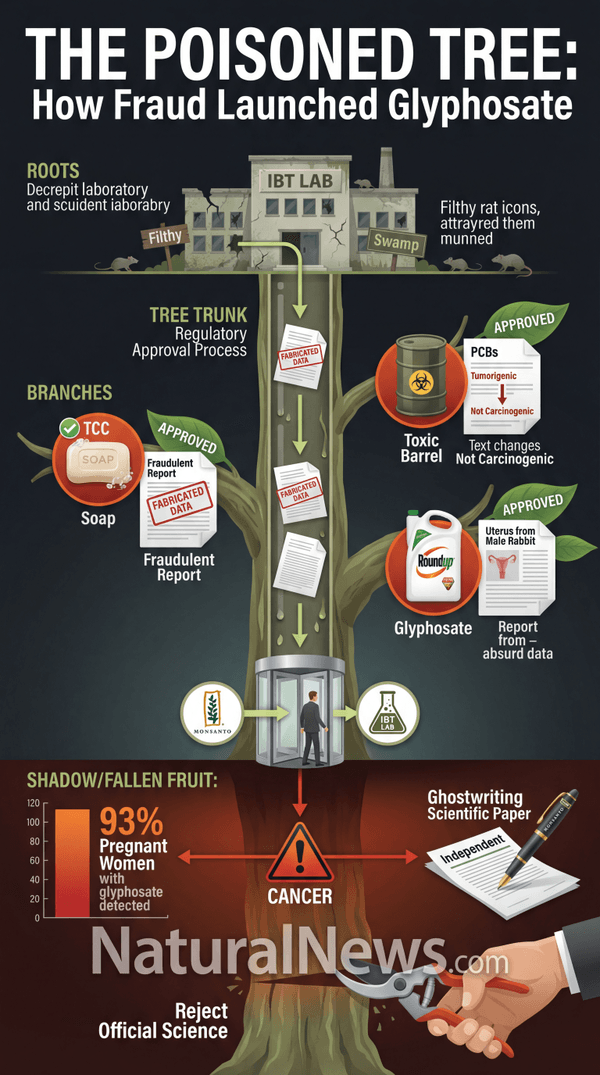
Behind this respectable facade, however, lay a cesspool of scientific fraud. Federal investigators would later describe conditions inside IBT as catastrophic. Animal rooms were so filthy they were nicknamed 'the Swamp,' where technicians documented dead rats as 'TBD/TDA'—'too badly decomposed/technician disposal' [2]. The lab was plagued by 'commingling,' the routine practice of replacing dead test animals with new ones without recording the swap, which utterly invalidated any study’s results. In a 1972 internal memo, IBT toxicologist Otis Fancher confessed to colleagues that he was 'ashamed' of the work, noting data was 'fudged' with 'gross incompetence' [1]. This was not a case of minor errors; it was systemic fabrication on an industrial scale, corrupting the very foundation of regulatory science for an entire generation of products.
Monsanto's Man on the Inside: The Paul Wright Connection
Into this morass stepped Dr. Paul L. Wright, a Monsanto toxicologist. In March 1971, Wright left Monsanto and became the Section Head of Rat and Dog Toxicology at IBT Labs [1]. His move was not a random career shift. Federal prosecutors would later allege Wright was placed at IBT specifically to manage critical safety studies for Monsanto, particularly on the antibacterial agent TCC (trichlorocarbanilide), a product Monsanto desperately needed to replace the recently withdrawn hexachlorophene [1]. During his 18-month tenure, Wright oversaw not only the TCC studies but also the first long-term rodent feeding studies on glyphosate, the active ingredient in Monsanto's soon-to-be-launched herbicide Roundup, and safety tests on Monsanto's PCB products.
In October 1972, Wright returned to Monsanto as Manager of Toxicology, becoming the company’s official liaison to IBT [1]. This revolving door placed Wright in a unique position: he had intimate knowledge of the fraudulent studies being conducted and now had the power to influence their outcome from within Monsanto. His return coincided with mounting internal crisis at IBT. Staff were overwhelmed, and the pressure to deliver favorable results for corporate clients was immense. Internal memos from the period reveal a lab in chaos, with employees deeply aware of the fraud. One IBT technician, Philip Smith, later testified that he personally witnessed Paul Wright fabricate rat mortality data 'out of his head' [1]. The stage was set for a scandal of epic proportions.
Manufacturing Safety: Case Studies in Fraud at IBT
The fraud at IBT was not abstract; it directly manufactured 'safety' for some of Monsanto's most profitable and problematic products. The TCC study provides a stark template. IBT pathologist Dr. Donovan E. Gordon found testicular lesions in rats fed TCC—a finding that threatened the chemical's FDA approval for use in deodorant soaps. According to grand jury testimony, Wright, after returning to Monsanto, pressured Gordon to change his report, removing the damning post-mortem data [1]. The fraudulent final report was submitted to the FDA, which subsequently approved higher usage levels of TCC. For decades afterwards, approximately 80% of all antimicrobial bar soap in the United States contained TCC, a chemical cleared for market based on lies [1].
The pattern repeated with polychlorinated biphenyls (PCBs). In 1975, IBT president Joseph Calandra sent a draft study to Monsanto's manager of environmental assessment, George Levinskas. The draft stated the PCB formulation Aroclor 1254 was 'slightly tumorigenic.' Levinskas objected, requesting the language be changed to 'does not appear to be carcinogenic' [1]. Calandra complied. This simple editorial stroke, shifting a cancer warning to a safety assurance, was submitted to regulators. Internal data, revealed in later litigation, showed the truth: in the studies, 82% of rats fed PCBs at 10 parts per million developed tumors, and 100% did so at 100 ppm [1]. Yet, Monsanto continued to cite these fraudulent IBT studies as proof of safety as late as 2018.
Most consequentially, glyphosate’s original 1974 registration by the EPA relied 'virtually entirely' on IBT studies [1]. When the EPA later audited these studies, they were declared invalid. One reviewer noted the absurdity of reports that included taking 'uterus specimens from male rabbits' [1]. Despite this, Roundup was unleashed upon the world, its foundational safety data a product of deliberate fraud. As researcher Carol Van Strum concluded, the toxicological registration data for Roundup resulted from studies performed by Industrial Bio-Test Laboratories [1].
Discovery, Conviction, and Corporate Protection
The house of cards began to collapse in 1976. During a routine audit connected to Congressional hearings led by Senator Edward Kennedy, FDA pathologist Dr. Adrian Gross uncovered the massive fraud at IBT [1]. The joint FDA-Justice Department investigation that followed revealed a scandal of breathtaking scope: roughly 22,000 studies were potentially compromised, affecting products from dozens of corporations and multiple government agencies. One Justice Department investigator starkly observed that IBT became the largest testing lab 'because companies knew this was the place to get the results they wanted' [1].
It took five years for indictments to be filed. Finally, in May 1981, a federal grand jury charged four IBT officials, including Paul Wright and lab president Joseph Calandra, with multiple counts of mail fraud, wire fraud, and making false statements [1]. The trial, one of the longest criminal trials in U.S. history, ended in October 1983 with convictions. Wright was found guilty on three counts of fraud [1]. Despite his conviction for federal crimes committed while managing studies for his employer, Monsanto protected him. The company paid his legal fees throughout the trial and, upon his release from prison, gave him a golden parachute: full retirement benefits, accrued vacation, severance, and help finding new employment [1].
Monsanto's complicity ran deeper. Evidence presented in later Roundup cancer trials revealed that the company was aware the IBT data underpinning glyphosate’s approval was fraudulent as early as 1977, when IBT’s own president, Joseph Calandra, told Monsanto that studies Wright had directed were fraudulent [1]. Yet, for years, Monsanto took no meaningful action. It did not inform consumers, add warnings, or voluntarily withdraw Roundup from the market. Instead, the product remained on shelves, generating revenue while the company defended the invalid science. As a peer-reviewed analysis later noted, Monsanto’s public defense of Wright was 'disingenuous at best' [1].
The Glyphosate Shell Game: Replacing Fraud with Influence
In the wake of the IBT scandal, the EPA faced a crisis. It had approved glyphosate based on fraudulent data. Rather than pulling Roundup from the market, the agency struck a deal with Monsanto: the company could keep its product on sale while it commissioned new studies to replace the invalidated ones [1]. This regulatory shell game allowed a product founded on fraud to maintain its market dominance while new tests were conducted. The replacement studies, however, soon created new problems for Monsanto.
A key two-year mouse oncogenicity study, conducted by Bio/Dynamics and submitted in 1983, found a statistically significant increase in kidney tumors in male mice given high doses of glyphosate [1]. Based on this, the EPA’s toxicology branch initially classified glyphosate in 1985 as a 'Class C—possible human carcinogen' [1]. This finding threatened the herbicide's future. Monsanto swiftly moved to neutralize it. The company arranged for a pathologist, Dr. Marvin Kuschner, to re-examine the mouse tissue slides. Kuschner identified an additional tumor in the control group, a finding Monsanto argued negated the statistical significance of the cancer link [3]. The EPA subsequently downgraded and eventually withdrew its carcinogen classification.
This episode is a classic case of corporate influence over regulatory science. Rather than accepting an independent, concerning finding, Monsanto orchestrated a re-review that produced a more favorable outcome. Glyphosate was eventually reclassified as 'Group E—evidence of non-carcinogenicity' and re-registered in 1993 [1]. The process demonstrated how a corporation could manipulate the scientific review process to maintain a product's market viability, even after the original safety data was proven fraudulent and subsequent studies raised red flags.
A Pattern of Corruption: From IBT to Craven Labs
IBT was not an anomaly in the world of for-profit safety testing; it was a harbinger of a systemic disease. A decade later, another lab was caught engaging in nearly identical fraud. In 1994, Craven Laboratories, based in Texas, was convicted of falsifying data. Its owner and 14 employees were found guilty. Notably, Craven had conducted 9 of the 15 residue studies required for Roundup’s registration [1]. This was not a coincidence but a pattern: laboratories serving corporate sponsors have a fundamental, profit-driven incentive to produce favorable results.
The regulatory system is built on this compromised foundation. It operates on the principle of 'regulatory science,' where corporations fund the very studies used to judge their products' safety. This creates an inherent conflict of interest, a system 'virtually designed for fraud' as one observer put it. The IBT and Craven scandals reveal a truth that corporate giants and their captured regulators desperately want to obscure: the facade of safety for countless chemicals, including the world's most widely used herbicide, was constructed on a platform of lies.
This pattern extends beyond laboratories to the highest levels of regulatory agencies. Internal emails revealed in litigation show Monsanto 'ghostwriting' scientific papers and attempting to influence EPA officials [4]. As detailed in Carey Gillam's book 'Whitewash,' Monsanto led a secret initiative to produce papers aimed at discrediting the World Health Organization's International Agency for Research on Cancer (IARC) after it classified glyphosate as a 'probable human carcinogen' in 2015 [5]. The playbook is consistent: when independent science threatens a profitable product, the corporate response is not to ensure safety but to attack the science and the scientists.
Conclusion: The Enduring Legacy of a Toxic Lie
The IBT scandal is not a relic of the past; it is the poisoned root of a present-day crisis. It proves that the original 'safety' data for glyphosate—and for PCBs, TCC, and countless other chemicals—was fabricated. The subsequent decades-long 'scientific debate' over glyphosate's cancer risk is therefore tainted at its origin. It is a debate between independent researchers uncovering harm and a corporate machine skilled at laundering fraud through ghostwritten science, regulatory capture, and relentless public relations [6][7].
This history demands profound public skepticism toward institutional assurances about chemical safety. The EPA, FDA, and other regulatory bodies have repeatedly proven themselves susceptible to corporate influence, willing to accept fraudulent data and downgrade concerning findings under pressure. The system is not broken; it is operating exactly as designed—to facilitate corporate profit over public protection. The legacy of IBT is a world saturated with glyphosate, found in the urine of 93% of pregnant women [8], and linked in thousands of lawsuits to cancers like non-Hodgkin lymphoma [9].
The path forward requires a radical decentralization of scientific authority. We must reject the monopoly of 'official science' funded and controlled by the very industries it is meant to regulate. Individuals must empower themselves with knowledge from independent, transparent sources. Platforms like BrightLearn.ai and BrightAnswers.ai offer uncensored access to research and historical analysis, bypassing the gatekeepers of corrupted institutions. The solution lies in personal sovereignty—embracing natural health, growing clean food, and rejecting the toxic products of a system built on lies. The truth about glyphosate’s fraudulent launch is now clear. It is up to us to act on that truth and build a future free from such toxic deceit.
References
- “Ashamed to Put My Name to It”: Monsanto, Industrial Bio-Test Laboratories, and the Use of Fraudulent Science, 1969–1985.
- Bayer Needs More Than an Aspirin to Cure its Monsanto Sized Headache. - The Defender. Robert F. Kennedy Jr.
- Whitewash: The Story of a Weed Killer, Cancer and the Corruption of Science. Carey Gillam.
- The Monsanto Papers - Mercola.com. Dr. Joseph Mercola.
- The Triumph of Doubt. David Michaels.
- Another Monsanto BOMBSHELL: Company caught ghostwriting its own "independent safety reviews". - NaturalNews.com.
- The World According to Monsanto. Marie-Monique Robin.
- Health Ranger Report - Pregnant women glyphosate. Mike Adams - Brighteon.com.
- Lead Trial Counsel Reveals Evidence That Led to $2 Billion Verdict Against Monsanto. - Mercola.com. Dr. Joseph Mercola.
Explainer Infographic:
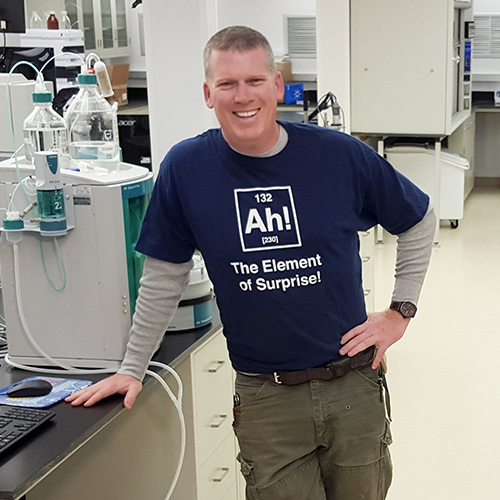
Mike Adams (aka the "Health Ranger") is the founding editor of NaturalNews.com, a best selling author (#1 best selling science book on Amazon.com called "Food Forensics"), an environmental scientist, a patent holder for a cesium radioactive isotope elimination invention, a multiple award winner for outstanding journalism, a science news publisher and influential commentator on topics ranging from science and medicine to culture and politics.
Mike Adams also serves as the lab science director of an internationally accredited (ISO 17025) analytical laboratory known as CWC Labs. There, he was awarded a Certificate of Excellence for achieving extremely high accuracy in the analysis of toxic elements in unknown water samples using ICP-MS instrumentation.
In his laboratory research, Adams has made numerous food safety breakthroughs such as revealing rice protein products imported from Asia to be contaminated with toxic heavy metals like lead, cadmium and tungsten. Adams was the first food science researcher to document high levels of tungsten in superfoods. He also discovered over 11 ppm lead in imported mangosteen powder, and led an industry-wide voluntary agreement to limit heavy metals in rice protein products.
Adams has also helped defend the rights of home gardeners and protect the medical freedom rights of parents. Adams is widely recognized to have made a remarkable global impact on issues like GMOs, vaccines, nutrition therapies, human consciousness.












Please contact us for more information.


