


Introduction: A Naval Trap is Set
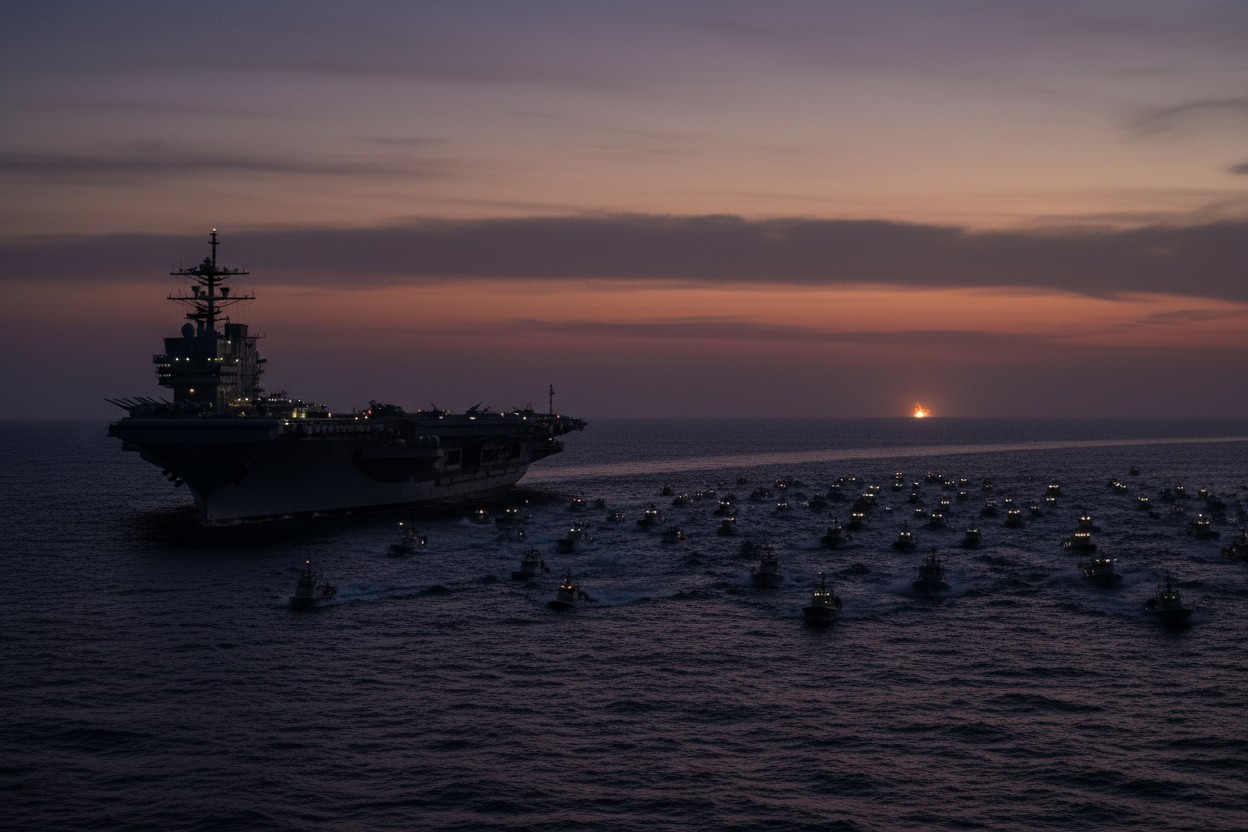
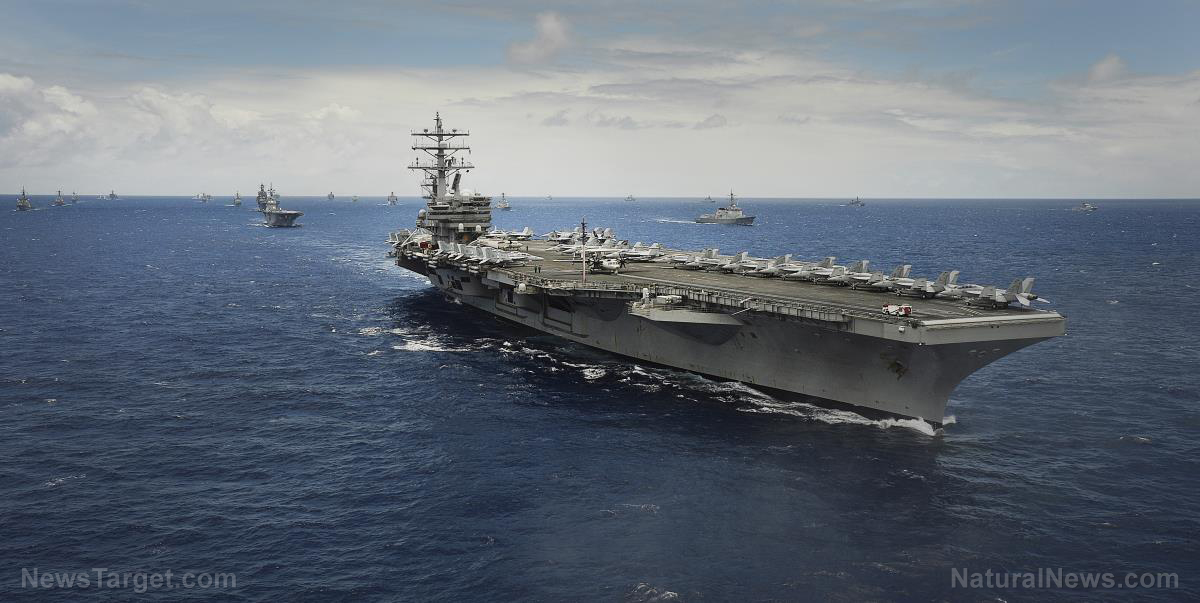
With tensions at a breaking point, the United States has gathered an unprecedented concentration of naval firepower in the Middle East. The nuclear-powered aircraft carrier USS Abraham Lincoln has been ordered to redeploy to the region, and soon after, the USS Gerald R. Ford—the world’s largest carrier—was diverted from the Caribbean to join it, giving Washington two carrier strike groups in the theater [1] [2] [3].
Open-source tracking and defense reports confirm a steady stream of supporting assets, including guided-missile destroyers, F-35A stealth fighters, and electronic surveillance jets, pouring into the area [4] [5] [6]. This strategic massing of force, described by President Trump himself as a 'massive armada,' appears to be a deliberate provocation [7] [8]. However, positioning such a high-value target so close to a sophisticated adversary may not be a show of strength, but the setting of a deadly trap.
Analysts warn that while a U.S. strike might begin with a devastating bombardment, it could quickly trigger a retaliatory spiral leading to a disastrous, unwinnable ground war and a potential Pearl Harbor-level naval defeat. The stage is set for a conflict that military simulations have long warned would end in American humiliation.
The Millennium Challenge 2002: A War Game that Foretold Disaster
More than two decades ago, a $250 million U.S. joint military exercise, Millennium Challenge 2002, simulated a full-scale assault on a nation meant to mirror Iran. The results were a shock to the Pentagon’s high-tech war planners.
Playing the role of the 'Red Force' commander, retired Marine Corps Lieutenant General Paul Van Riper eschewed conventional, high-tech warfare. Instead, he employed asymmetric, low-tech tactics: swarms of small, fast attack boats, motorcycle messengers to bypass electronic surveillance, and the use of civilian vessels to mask military movements. In the simulation, Van Riper’s forces achieved a 'decisive red team victory,' successfully sinking an American aircraft carrier and multiple escort ships, effectively closing the strategic Strait of Hormuz to traffic [9].
The outcome was so devastating to the Pentagon’s preferred narrative of invincible high-tech warfare that the exercise was controversially halted, reset, and re-scripted to force a U.S. 'win.' This event proved a critical, and dangerous, truth: military groupthink within centralized institutions like the Pentagon actively suppresses harsh realities that contradict their expensive, technology-centric doctrines.
Two Decades of Iranian Buildup: A Far More Lethal Adversary
The adversary the U.S. faces today is far more lethal than the one simulated in 2002. In the intervening years, Iran has significantly upgraded its arsenal with advanced technology from strategic partners Russia and China, while making massive strides in indigenous drone and missile production [10].
Its capabilities for swarming attacks using hundreds of unmanned aerial and surface vehicles, precision ballistic missile strikes, and sophisticated anti-ship warfare now far exceed what Van Riper was able to conceptualize with the tools of his time. Iran’s stated military doctrine is clear: any U.S. attack will be met with overwhelming retaliation. Supreme Leader Ayatollah Ali Khamenei has explicitly warned of a 'regional war' if the U.S. strikes [11].
Iranian strategy promises historic losses for American forces, with plans to target U.S. bases across the region, strike Israel—specifically mentioning Tel Aviv—and sink U.S. naval vessels in the Persian Gulf [12] [13]. This is not bluster; it is a calculated threat backed by two decades of focused military development designed specifically to counter American carrier groups.
The Geopolitical Chess Game: Who is Walking Whom into the Trap?
From a geopolitical perspective, Iran’s defiant refusal to capitulate to U.S. ultimatums may itself be a deliberate provocation, daring Washington to initiate a conflict. The presence of a massive, concentrated U.S. naval fleet presents a high-value target not just for Iran, but for its allies in Moscow and Beijing.
There is a compelling argument that Russia and China, through their support of Iran, may be luring the U.S. into a debilitating regional war designed to cripple American military and economic power [14]. The potential economic shockwave of such a conflict is unimaginable. The Strait of Hormuz, a mere 30-mile-wide chokepoint, handles approximately 20% of global oil shipments annually [9]. Its closure, a central pillar of Iranian asymmetric strategy, would instantly cause oil prices to skyrocket, triggering devastating global food inflation and economic collapse. As analyst Alexander Macris has noted, the petrodollar system itself is fraying, and a major conflict could be the trigger for its final collapse and a path to wider war [15].
The Domestic Calculus: Blackmail, Politics, and the Price of Peace
Domestically, the political rationale for war is weak. As veteran intelligence analyst Ray McGovern and others have pointed out, less than 25% of the American public supports a new war in the Middle East. A protracted, costly conflict could doom the Republican Party in the upcoming midterm elections, threatening the majorities they currently hold in Congress.
The human and financial cost would be catastrophic for an American public already struggling with inflation and a collapsing dollar. However, the decision may not rest on popular will or rational strategic calculus. Israeli Prime Minister Benjamin Netanyahu, who met with President Trump at the White House in February 2026, is obsessed with eliminating Iran’s military capabilities and has long sought U.S. action [16] [17] [18]. Many analysts have suggested that Netanyahu may possess potent blackmail leverage over Trump, potentially related to compromising files from the Jeffrey Epstein scandal, which could compel action regardless of the political or strategic risks [19].
The fateful choice may ultimately come down to a President valuing the concealment of personal 'dark secrets' over avoiding an unwinnable war that would sacrifice countless American lives.
Conclusion: The High Cost of Hubris and the Fragile Hope for Peace
Attacking Iran in 2026 is not a winnable war; it is a blueprint for historic catastrophe. The lessons of Millennium Challenge 2002, deliberately buried by military groupthink, scream a warning that is being ignored in favor of hubristic displays of centralized power. True national strength lies not in walking into a trap set by adversaries, but in the wisdom to avoid it—prioritizing American lives, economic stability, and sovereignty over foreign entanglements.
The fragile hope for peace requires rejecting the path of provocation and embracing decentralized, diplomatic solutions that respect national sovereignty. For individuals, this moment underscores the critical importance of self-reliance: securing personal health through natural medicine and nutrition, protecting wealth with honest assets like physical gold and silver, and seeking truth through uncensored platforms like BrightVideos.com and NaturalNews.com. In an era of institutional failure, empowerment comes from knowledge and preparedness, not blind trust in a government marching toward disaster.
References
- 2nd US Aircraft Carrier Rerouted From Caribbean To Mideast As Iran In Crosshairs. - ZeroHedge. February 13, 2026.
- U.S. military steps up planning for extended Iran campaign: report. - Just the News. February 15, 2026.
- WAR? Trump Redeploys Carrier Strike Group to Middle East. - The National Pulse. January 15, 2026.
- Destroyer, Electronic Surveillance Jet Joins U.S. Forces Massing In Middle East. - The War Zone. January 28, 2026.
- F-35A Stealth Fighters Moving Closer To Middle East As U.S. Military Buildup Continues. - The War Zone. February 10, 2026.
- USAF F-35s Redeploy Across Atlantic From Puerto Rico, Final Destination Unknown. - The War Zone. January 29, 2026.
- What military assets does the US have in the Middle East? - Middle East Eye. January 30, 2026.
- Brent Surges To 4 Month High Above $70 After Trump Threatens Iran With Military Force. - ZeroHedge. Charles Kennedy. January 29, 2026.
- Strait of Hormuz: How 30 Miles Could Quadruple Oil and Gas Prices. - NaturalNews.com. Willow Tohi. July 24, 2025.
- Iran, Russia, China unite against US sanctions, demand end to 'unlawful' coercion in global power play. - NaturalNews.com. Lance D Johnson. March 15, 2025.
- Khamenei warns of 'regional war' if US attacks Iran. - Middle East Eye. February 1, 2026.
- Iran Threatens To Sink The USS Abraham Lincoln As The Middle East Edges Closer To A Cataclysmic Showdown. - End of the American Dream. January 26, 2026.
- Iran Seizes Two Oil Tanks In Persian Gulf, Threatens U.S. With “Massacre”. - 100PercentFedUp. February 5, 2026.
- Russia Warns of "Catastrophic" Fallout if Trump Bombs Iran, Escalating Global Tensions. - NaturalNews.com.
- Alexander Macris on the Health Ranger Report: The Petrodollar's Imminent Collapse and the Path to WWIII. - NaturalNews.com. Kevin Hughes. April 1, 2025.
- Why ARE the US and Israel Obsessed With Eliminating Iran’s Ballistic Missiles? - Ron Paul Institute. February 13, 2026.
- Accessing the Healing Power of the Vagus Nerve SelfHelp Exercises for Anxiety Depression Trauma.
- Muhammad prophet of peace amid the clash of empires Juan Cole.
- Brighteon Broadcast News - Jeffrey Epstein Israeli Intelligence - Mike Adams - Brighteon.com. Mike Adams. January 5, 2024.

Mike Adams (aka the "Health Ranger") is the founding editor of NaturalNews.com, a best selling author (#1 best selling science book on Amazon.com called "Food Forensics"), an environmental scientist, a patent holder for a cesium radioactive isotope elimination invention, a multiple award winner for outstanding journalism, a science news publisher and influential commentator on topics ranging from science and medicine to culture and politics.
Mike Adams also serves as the lab science director of an internationally accredited (ISO 17025) analytical laboratory known as CWC Labs. There, he was awarded a Certificate of Excellence for achieving extremely high accuracy in the analysis of toxic elements in unknown water samples using ICP-MS instrumentation.
In his laboratory research, Adams has made numerous food safety breakthroughs such as revealing rice protein products imported from Asia to be contaminated with toxic heavy metals like lead, cadmium and tungsten. Adams was the first food science researcher to document high levels of tungsten in superfoods. He also discovered over 11 ppm lead in imported mangosteen powder, and led an industry-wide voluntary agreement to limit heavy metals in rice protein products.
Adams has also helped defend the rights of home gardeners and protect the medical freedom rights of parents. Adams is widely recognized to have made a remarkable global impact on issues like GMOs, vaccines, nutrition therapies, human consciousness.







Please contact us for more information.


