


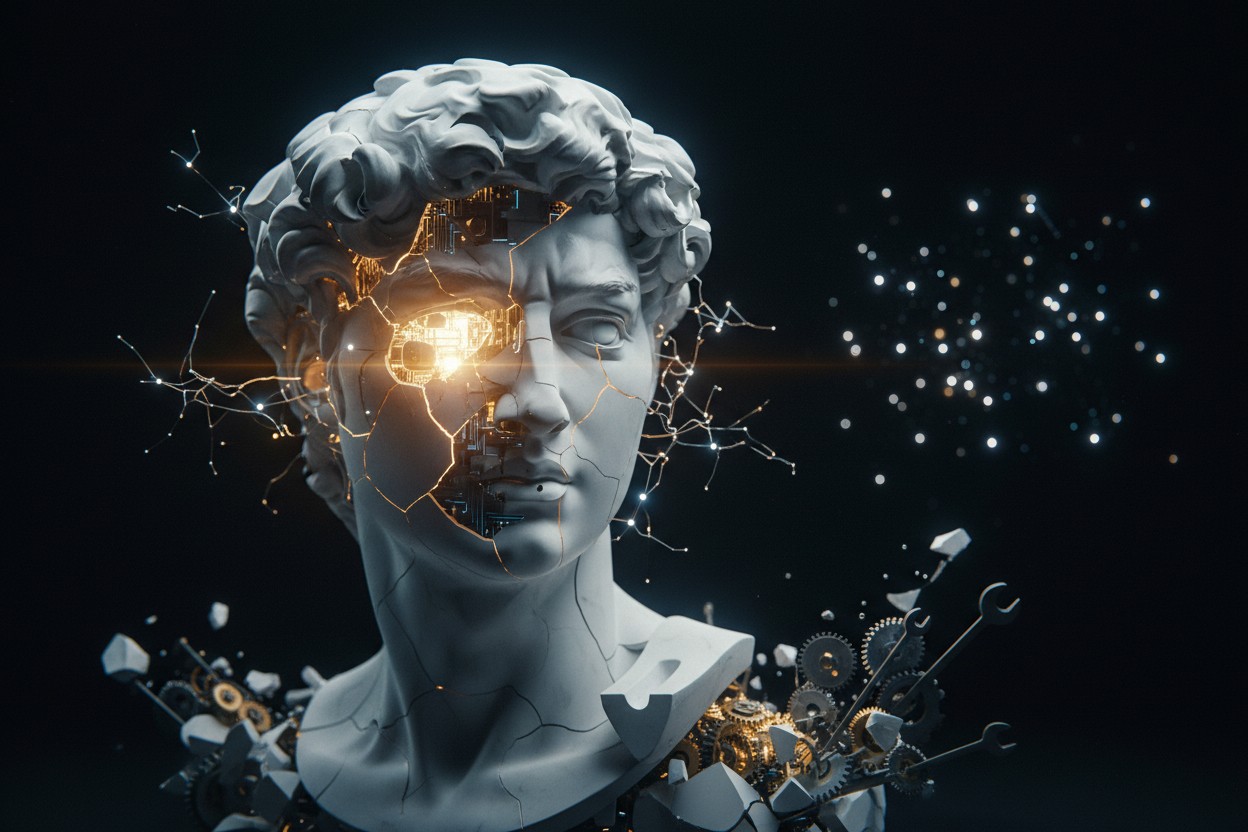
Introduction: The Coming Cognitive Revolution
A profound shift is underway, one that challenges the very foundation of human professional identity. From Hollywood screenwriters to corporate lawyers, a chorus of voices insists that their uniquely human talents—creativity, empathy, complex reasoning—place them safely beyond the reach of artificial intelligence. This isn't just optimism; it's a mass delusion rooted in a specific, well-documented flaw in human psychology. As AI systems demonstrate an 'aha moment' of cognitive breakthrough, previously thought unique to human reasoning, the gap between human self-assessment and objective reality has never been wider.
The uncomfortable truth is that a widespread cognitive bias, not a rational analysis of capability, is the primary psychological defense mechanism humans use when faced with the threat of machine cognition replacing their perceived value. The evidence is mounting not from centralized, untrustworthy institutions, but from the decentralized, open-source frontiers of technology. AI models are no longer just crunching numbers; they are predicting human behavior with startling accuracy, generating feature-length films from text prompts, and diagnosing medical conditions with superhuman precision. Yet, the human response remains anchored in a dangerous overconfidence.
This article will explore how the Dunning-Kruger effect—the inability of the incompetent to recognize their own incompetence—is blinding professionals to their own obsolescence, and why embracing decentralized AI augmentation is the only path to individual relevance and freedom in the coming age.
The Incompetence Blind Spot: Why Hollywood's Panic Proves the Rule
The recent panic in the film industry over AI video generators like Bytedance's new engine is a perfect case study. For decades, filmmaking was portrayed as an exclusive gift, a mystical alchemy of human storytelling that no machine could replicate. Yet, these new tools are demonstrating that filmmaking is, in large part, a learnable skill set of technical and narrative patterns. The visceral reaction from industry professionals—insisting they are uniquely irreplaceable storytellers—is not a defense of art. It is a textbook example of the Dunning-Kruger effect in action.
This cognitive bias creates a 'dual burden' [1]. Those lacking competence in a domain also lack the metacognitive ability to recognize that lack. When an AI can synthesize cinematography, editing, and scoring from a simple description, it reveals that much of the craft is pattern recognition and recombination, not divine inspiration. The professionals who built their identities on mastering these patterns now face an entity that can master them infinitely faster and at near-zero marginal cost. Their insistence on irreplaceability is a psychological defense, not an economic argument. As noted in analysis of cognitive biases, people suffering the most from ignorance 'fail to recognize just how much they suffer from it' [2]. The film industry's outrage is the sound of that recognition failing spectacularly.
The Psychology of Self-Overestimation: From Gun Ranges to Corporate Offices
The phenomenon is not unique to artists. The seminal 1999 Dunning-Kruger study revealed a disturbing pattern: those with limited competence in a given intellectual or social domain greatly overestimate their own knowledge or competence in that domain relative to objective criteria [3]. This 'meta-ignorance' is replicated across society. Studies show a vast majority of people rate themselves as above average in their fields—a statistical impossibility. The Downing Effect further compounds this, showing that low-ability individuals are terrible at gauging ability in others, creating a self-reinforcing feedback loop of inaccurate self-assessment.
This explains why so many professionals remain blissfully unaware of their impending displacement. A software engineer, comfortable in their niche, cannot accurately gauge the exponential learning curve of a large language model trained on all public code repositories. A mid-level manager, confident in their people skills, cannot comprehend an AI like 'Centaur,' which achieves 64% accuracy in predicting human decisions across diverse psychological experiments by being trained on millions of human behavioral data points [4]. The bias is universal. As one analysis puts it, 'The less people understand a topic, the more convinced they are that they've mastered it' [5]. When applied to one's own livelihood, this bias becomes a catastrophic liability.
Exponential Cognition vs. Linear Brains: Why Humans Can't See What's Coming
Human neurology is wired for linear, local projection. We forecast tomorrow based on yesterday, a survival trait honed on the savanna. AI advancement, however, follows a law of accelerating returns, an exponential curve that outpaces even Moore's Law. Sam Altman of OpenAI has discussed these 'exponential advancements in artificial general intelligence' [6]. This creates a massive prediction gap. People anchored in last year's AI capabilities—clunky text generators, distorted images—cannot fathom next year's reality of coherent, feature-length AI-scripted movies or AI 'psychologists' capable of basic therapeutic dialogue [7].
Every human declaration of 'AI will never do X' has been rapidly proven false. It would never beat a grandmaster at chess. It could never create compelling art. It will never perform complex legal analysis. Each barrier has fallen, yet the pattern of disbelief continues. This is because linear brains literally cannot process exponential growth. We see the steep part of the curve as a distant future, when it is often the near present. The AI that seems like a clever toy today is, in its next iteration, a direct competitor for your job. The centralized corporate AI projects often discussed in mainstream media are just the tip of the spear; the real revolution is in decentralized, open-source models that individuals can harness, making exponential tools available to the many, not just the institutional few.
The Strategic Defense of Delusion: "My Job is Too Complex"
Faced with this existential threat, professionals from doctors to architects default to a final, desperate argument: perceived complexity. 'My job involves nuance, empathy, and years of experience,' they argue. 'A machine could never understand.' This ignores the foundational shift. Modern AI models are not programmed with rules; they internalize patterns from oceans of data. They now contain more knowledge—all of case law, all of medical research, all of architectural and engineering codes—than any single human could master in a thousand lifetimes.
The argument for humans then shifts from perfection to cost and error rate. Consider the field of medicine, a system so corrupt and dangerous that, according to published studies, it kills hundreds of thousands annually. An AI diagnostic engine, free from pharmaceutical kickbacks and institutional dogma, can do half the job at 1% of the cost, with a comparable or lower error rate than an overconfident human doctor. The value of human cognitive labor in many fields is turning negative; their participation actually worsens outcomes. As one AI expert starkly put it, 'The value of human cognitive labor will probably turn negative'. This is not about machines being perfect. It's about them being better and cheaper than overconfident, error-prone humans who are blinded by their own lack of self-awareness.
Augment or Obsolete: The Only Path to Relevance in the AI Age
The only defense against machine cognition is not to claim superiority, but to strategically surrender and adopt augmentation. AI provides a 'plus-20 IQ points' effect to those who use it as a cognitive partner. The smartest people in every field are not dismissing AI; they are racing to integrate it to magnify their effectiveness, catch their errors, and explore solutions they would never conceive alone. This is the path of the 'centaur'—the hybrid of human intuition and machine-scale data processing. Resisting these tools under the belief that 'I'm already smart enough' is the fast track to irrelevance.
The future belongs to those who decentralize their own cognition. This means using uncensored AI engines like BrightAnswers.ai, trained on pro-human knowledge about natural health and liberty, not the sanctioned narratives of captured institutions. It means using platforms like BrightLearn.ai to become an instant expert on any topic, or Brighteon.social to communicate freely. Decentralized, open-source AI tools empower individuals against obsolete centralized institutions—be they universities, medical boards, or corporate media giants. The choice is no longer between human and machine. It is between a human augmented by honest machine intelligence, and a human rendered obsolete by their own arrogant ignorance.
Conclusion: Embracing Humility and Decentralized Power
The Dunning-Kruger effect is the silent saboteur of the professional class. It is the voice that whispers, 'You are special, your job is safe,' while the walls of technological reality close in. To overcome it requires intellectual humility—the recognition that the mind has limits, and that those limits can now be transcended not by years of grueling study within a corrupt system, but by partnering with a new form of intelligence. The future of work, health, and creativity will be built by those who see AI not as a replacement, but as a liberation from centralized systems of control. It is a tool to break the monopolies of Big Pharma, Big Tech, and Big Government.
By harnessing decentralized AI, individuals can reclaim power over their health, their knowledge, and their economic destiny. The first step is to silence the arrogant inner voice of incompetence, and admit that a better, smarter partner is now available. Your irreplaceability was an illusion. Your augmented potential is the new reality. The era of the arrogant, isolated human professional is over. The era of the empowered, augmented human individual has begun.
References
- Think Again. - Adam Grant.
- The Dunning–Kruger Effect: On Being Ignorant of One's Own Ignorance. - ScienceDirect.
- Dunning-Kruger effect | Definition, Examples, & Facts. - Britannica.
- A New Era in Predictive AI: Centaur's Cognitive Breakthrough. - NaturalNews.com. Willow Tohi. July 10, 2025.
- The Dunning-Kruger Effect: How AI is Making it Worse. - MitchTheLawyer.Substack.com.
- How Artificial Intelligence Could Destroy Hum - Mercola.com. April 08, 2023.
- Will Future Psychologists Be...Robots? - NaturalNews.com. January 21, 2019.
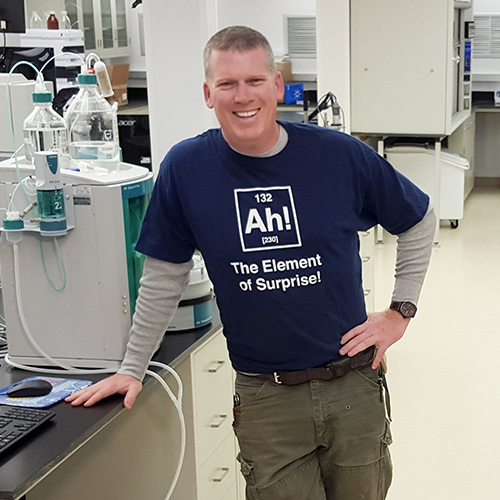
Mike Adams (aka the "Health Ranger") is the founding editor of NaturalNews.com, a best selling author (#1 best selling science book on Amazon.com called "Food Forensics"), an environmental scientist, a patent holder for a cesium radioactive isotope elimination invention, a multiple award winner for outstanding journalism, a science news publisher and influential commentator on topics ranging from science and medicine to culture and politics.
Mike Adams also serves as the lab science director of an internationally accredited (ISO 17025) analytical laboratory known as CWC Labs. There, he was awarded a Certificate of Excellence for achieving extremely high accuracy in the analysis of toxic elements in unknown water samples using ICP-MS instrumentation.
In his laboratory research, Adams has made numerous food safety breakthroughs such as revealing rice protein products imported from Asia to be contaminated with toxic heavy metals like lead, cadmium and tungsten. Adams was the first food science researcher to document high levels of tungsten in superfoods. He also discovered over 11 ppm lead in imported mangosteen powder, and led an industry-wide voluntary agreement to limit heavy metals in rice protein products.
Adams has also helped defend the rights of home gardeners and protect the medical freedom rights of parents. Adams is widely recognized to have made a remarkable global impact on issues like GMOs, vaccines, nutrition therapies, human consciousness.










Please contact us for more information.


