



- Russian Foreign Minister Sergey Lavrov accuses the U.S. of seeking to dominate global energy supply routes through coercive measures.
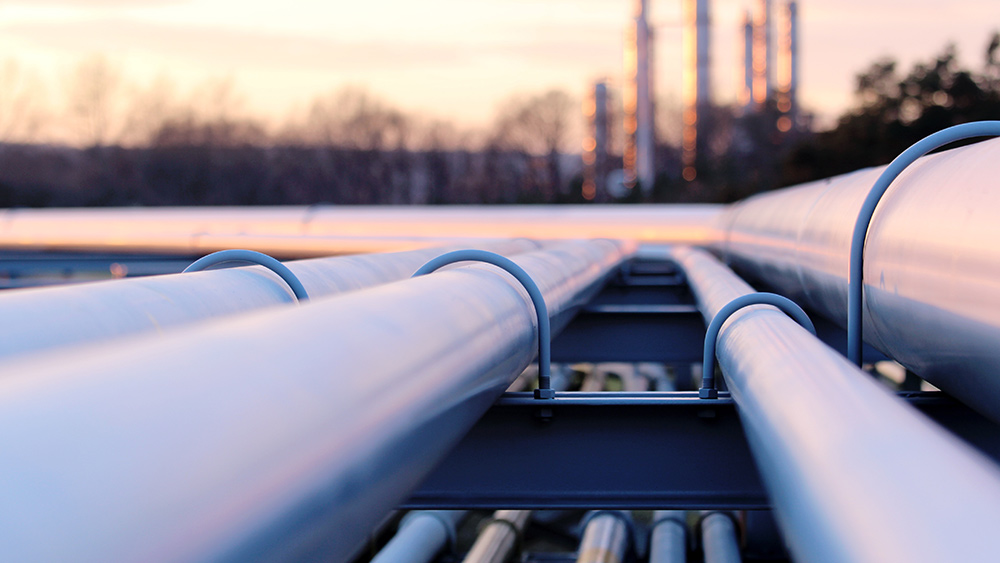
- Lavrov cites U.S. actions against pipelines like Nord Stream and sanctions on Russian energy firms as evidence of this strategy.
- The comments highlight escalating tensions between the U.S. and BRICS nations over energy trade and financial independence.
- The U.S. policy is framed as a challenge to fair competition and a driver of a fragmented, multi-polar world order.
- The strategic confrontation over energy is part of a broader struggle for economic dominance in a deglobalizing world.
In a stark escalation of rhetorical hostilities, Russian Foreign Minister Sergey Lavrov has accused the United States of pursuing a comprehensive strategy to dominate the world’s energy arteries. Speaking in an interview with the TV BRICS network on Monday, Lavrov framed recent American sanctions, pipeline disputes and maritime interventions as coordinated tactics in a broader campaign for global economic supremacy. This allegation, emerging against a backdrop of sustained conflict in Ukraine and rising U.S.-China competition, underscores a pivotal struggle: the battle to control the physical and financial pathways of the world’s most critical commodity.
The anatomy of an accusation
Lavrov’s charges are specific and sweeping. He asserted that the U.S. objective “to dominate the world economy” is being realized through “coercive measures that are incompatible with fair competition.” Central to this aim, he claims, is a desire “to take control of all the routes for providing the world’s leading countries and all continents with energy resources.” As evidence, Lavrov pointed to U.S. opposition to key European pipelines—including the sabotaged Nord Stream systems and the TurkStream pipeline—and the sanctioning of Russian energy giants Lukoil and Rosneft. He described a “’war’ against tankers in the open sea,” referencing U.S. enforcement of an oil blockade against Venezuela. Furthermore, Lavrov accused Washington of forcing partners like India to abandon affordable Russian resources in favor of expensive U.S. liquefied natural gas (LNG), using the threat of secondary sanctions.
Energy as the lever of power
Historically, control over energy resources and their transit routes has been a cornerstone of geopolitical influence. The 20th century was shaped by Western oil diplomacy in the Middle East. Lavrov’s accusation suggests this playbook is being updated for a 21st-century contest that includes financial weapons. The U.S. dollar’s role as the global reserve currency has long allowed Washington to project power through banking channels and systems like SWIFT. By coupling this financial dominance with pressure on physical energy flows, the U.S. is seen by rivals as seeking to lock in a unipolar order. However, this approach is catalyzing the very multi-polarity it seeks to prevent, pushing nations like Russia, China and India to develop alternative trade and financial mechanisms outside Washington’s reach.
The BRICS counter-strategy
Lavrov’s decision to level these charges with TV BRICS is itself significant. The BRICS bloc, now expanded to include major energy producers and consumers like Iran, Saudi Arabia and the UAE, represents a deliberate counterweight to Western economic institutions. Lavrov stated that U.S. policies are forcing BRICS nations “to look for additional secure ways to develop our financial, economic, integration, logistics and other projects.” This includes accelerating de-dollarization efforts, building independent payment systems and securing energy trade along new corridors. The U.S. strategy, therefore, may be inadvertently strengthening the cohesion and resolve of a coalition aimed at dismantling American financial and energy hegemony.
The risks of coercive competition
The U.S. approach carries profound risks. A policy perceived as leveraging energy scarcity for strategic gain can destabilize global markets and inflate prices worldwide. Coercing major economies like India into compliance is increasingly difficult, as these nations prioritize sovereign economic interests and domestic stability. Moreover, as analysts note, the global economy faces inherent physical limits and strains, from diesel shortages to supply chain fragility. An aggressive contest over energy distribution could exacerbate a looming “uneven world economic downturn,” hurting American consumers and businesses through retaliatory tariffs, export controls on critical minerals, and fragmented markets.
A world forging a new path: The unavoidable reckoning of a multi-polar era
Sergey Lavrov’s broadside is more than diplomatic posturing; it is a manifesto of resistance from a coalition that rejects what it views as economic coercion. It highlights a fundamental divergence in vision: one of a world order maintained by American-dominated energy and financial networks, versus a multi-polar system built on national sovereignty and alternative alliances. As the U.S. employs sanctions and threats to control energy routes, it is simultaneously motivating the creation of parallel systems designed to bypass its influence. The ultimate outcome of this struggle will determine not only who powers the global economy, but under whose rules it operates. The world is not passively accepting dominance but is actively, and collectively, forging its own pathways.
Sources for this article include:





Please contact us for more information.


