


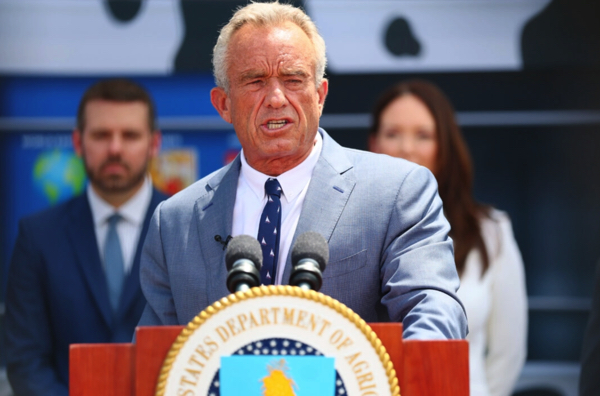
- The TrumpRx website, a government-run platform for purchasing discounted prescription drugs directly from manufacturers, is set to launch in mid-February 2026.
- Health and Human Services Secretary Robert F. Kennedy Jr. announced the imminent launch, stating it will offer Americans the lowest drug prices in the developed world.
- The platform is a key part of the Trump administration's "most-favored-nation" pricing strategy, which uses trade pressure to force pharmaceutical companies to lower U.S. prices.
- Major drugmakers, including Pfizer, Eli Lilly and Novo Nordisk, have agreed to participate, with some medications seeing price cuts of over 90%.
- The initiative aims to bypass traditional pharmacy and insurance markups, allowing consumers to pay out-of-pocket at reduced rates, though it operates under specific legal conditions.
In a move poised to disrupt the American pharmaceutical marketplace, the federal government is preparing to launch its own online drugstore. Spearheaded by Health and Human Services Secretary Robert F. Kennedy Jr., the TrumpRx website is scheduled to go live in mid-February 2026. The platform represents the public-facing culmination of a years-long push by the Trump administration to leverage trade policy and direct negotiation to slash what it calls "sky-high" prescription drug costs, promising to connect consumers directly to manufacturer prices that match or beat those in other developed nations.
The mechanics of a market disruption
TrumpRx functions as a two-part strategy. The first involves aggressive federal trade tactics, including the threat of tariffs, to secure "most-favored-nation" pricing agreements with major pharmaceutical companies. This policy mandates that the U.S. pays no more than the lowest price a drugmaker charges in a comparable country. The second component is the website itself: a portal that will direct consumers to purchase medications straight from the manufacturers' websites, circumventing traditional pharmacy benefit managers and insurance networks.
To facilitate this model, the Centers for Medicare & Medicaid Services issued new guidance in late January 2026, clarifying how companies can offer these direct discounts without violating federal anti-kickback statutes. The transactions come with strict conditions: the drug cannot be billed to any federal health program, the deal cannot be used to market other reimbursable products, and it cannot be tied to future referrals. For consumers, the process is designed to be simple: search for a medication on trumprx.gov, follow the link to the manufacturer, and pay out-of-pocket at the pre-negotiated price.
Staggering savings on paper
The administration has publicized a list of specific price cuts that will be available through the platform, highlighting dramatic reductions for both common and specialty medications. Some examples include:
- GLP-1 drugs for diabetes and weight management, like Ozempic and Wegovy, dropping from over $1,000 to $350 per month.
- HIV medication Reyataz (Bristol Myers Squibb) falling from $1,449 to $217.
- Hepatitis C treatment Epclusa (Gilead Sciences) decreasing from $24,920 to $2,425.
- Blood thinner Plavix (Sanofi) being cut from $756 to $16.
- Multiple insulin products being capped at $35 for a month’s supply.
These discounts stem from agreements with over a dozen major pharmaceutical firms, including Pfizer, which announced an average 50% discount on its portfolio and a concurrent $70 billion pledge to invest in U.S.-based manufacturing.
A long road to drug price reform
The TrumpRx effort exists within a complex and decades-long struggle over pharmaceutical costs in the United States. Americans have consistently paid significantly more for prescription drugs than citizens of other wealthy nations, a disparity that has fueled bipartisan political frustration. The current administration’s approach builds on a concept initially advanced during President Trump’s first term: the "most-favored-nation" model for Medicare. It also runs parallel to separate drug price negotiation measures enacted under the Inflation Reduction Act, which began forcing price reductions for select Medicare drugs in 2026.
Furthermore, the push for TrumpRx has been accompanied by regulatory reforms aimed at boosting competition. In late 2025, the FDA, under Commissioner Marty Makary, proposed streamlining the approval pathway for biosimilars—lower-cost alternatives to complex biologic drugs for conditions like cancer and autoimmune diseases. The agency argued that reducing "unnecessary red tape" could accelerate market entry, drive down brand-name prices, and expand affordable options, creating a complementary downward pressure on costs.
A marketplace of questions and potential
As the launch date nears, significant questions remain about the platform's real-world impact. Health policy analysts are watching to see how smoothly the direct-to-consumer model will function and whether the promised savings will materialize for a broad swath of patients, particularly those with chronic conditions requiring multiple medications. The requirement to pay out-of-pocket, even at reduced rates, may still be a barrier for some, despite the potential savings for the uninsured or those in high-deductible plans. The initiative also enters a market where drugmakers have simultaneously raised list prices on hundreds of other branded medications in early 2026, highlighting the uneven and complex nature of pharmaceutical pricing.
A new chapter in an old fight
The imminent launch of TrumpRx marks a bold, unconventional experiment in federal health policy. By positioning the government as a direct broker and market disruptor, the administration is challenging long-established pharmaceutical supply chains and pricing models. Whether this digital foray will trigger the sustained "tremendous savings" promised by Secretary Kennedy or become a niche alternative in a fragmented system is the multibillion-dollar question. Its success or failure will not only affect household budgets but could redefine the government's role in the ongoing battle to control the cost of medicine in America.
Sources for this article include:





Please contact us for more information.


