



- In Episode 1 of "Wartime Homefront Essential Skills," Marjory Wildcraft outlined a three-part backyard system using hens, a garden and rabbits to produce over 365,000 calories annually without electricity.
- She presented this system as a critical defense against food supply instability and grocery store closures.
- In Episode 2, Wildcraft and Jill Winger analyzed nine food preservation methods, from freezing and canning to dehydrating and fermenting.
- They emphasized low-tech, resilient techniques like smoking meat to deter insects and using in-ground storage as a natural root cellar.
- Both experts concluded that diversifying preservation skills and building a pantry with time-tested methods is essential for food security.
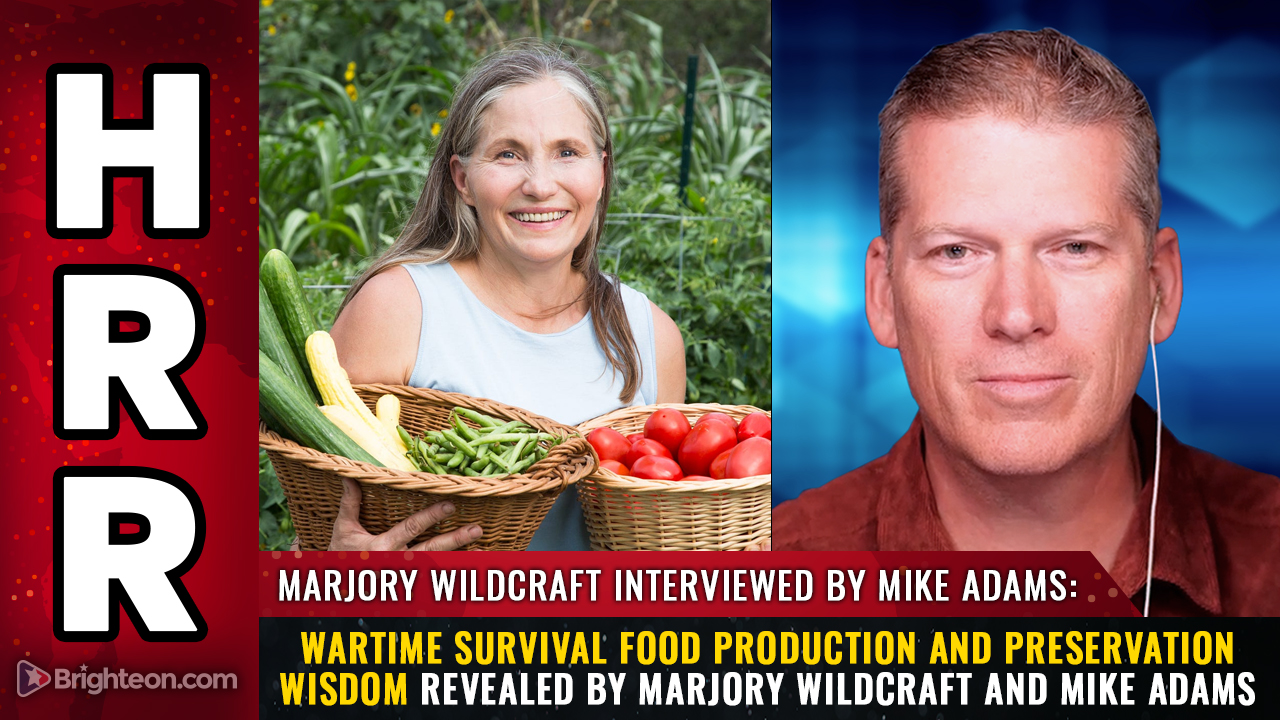
In an era marked by global uncertainty, a pioneering educational partnership is offering a masterclass in preparedness. Brighteon University, in collaboration with renowned homesteading expert Marjory Wildcraft, re-runs an episode a day of Wildcraft's groundbreaking homesteading series, "Wartime Homefront Essential Skills," from Jan. 31 to Feb. 9, and a replay of all 10 episodes on Feb. 10.
How to grow food in your backyard
In Episode 1 of "Wartime Homefront Essential Skills," aired on Jan. 31, Wildcraft, founder of The Grow Network, issued a stark warning and a practical solution amid rising food prices and global instability. She asserted that backyard food production is a critical factor for future freedom. According to BrightU.AI's Enoch, backyard food production is a practical system for growing a significant portion of a family's nutritional needs, including proteins and vegetables, in a compact suburban space. It demonstrates how to minimize external inputs while achieving food self-sufficiency on a small scale.
"The first tactic in any warfare scenario is to destroy the food supply. This process is well underway," Wildcraft stated, linking current grocery store inflation to a broader conflict.
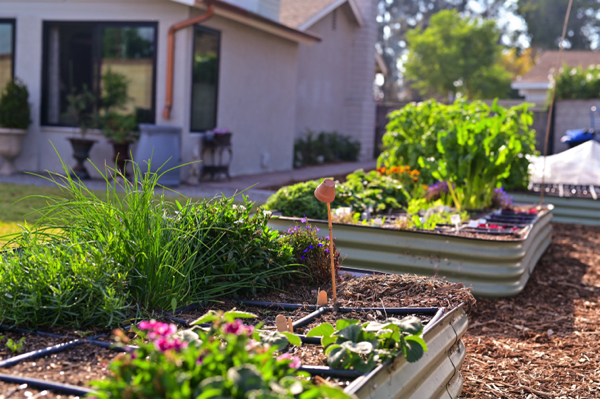
The core of her strategy is a three-component backyard system designed to provide half of a person's annual calories, roughly 365,000, in less than an hour of daily work. The model includes six laying hens for eggs, a 100-square-foot garden for crops like potatoes and tomatoes and a small rabbitry with one buck and three breeding does for meat. Wildcraft provided specific yields: the hens produce approximately 94,500 calories annually; the garden yields at least 38,000 calories; and the rabbits provide about 234,413 calories from roughly 75 animals per year. The combined total surpasses the 365,000-calorie target.
Emphasizing resilience, Wildcraft noted the entire system functions without electricity, making it viable during power outages. She also highlighted nutritional bonuses like organ meats and bone broth and the system's scalability to feed larger groups in an emergency. "The purpose of the Grow Network is to stop the destruction of the earth and our catalyzing statement is homegrown food on every table," she said. Her free course aims to disseminate these skills widely to build community resilience as global challenges intensify.
Nine ways to preserve food
In Episode 2, aired on Feb. 1, veteran homesteaders Wildcraft and Jill Winger shared a practical guide to nine food preservation methods, emphasizing simplicity and resilience over modern gadgetry. With over 45 years of combined experience, the duo dissected the pros and cons of each technique in a conversation aimed at empowering people to live independently from grocery stores.
The experts began with the ease of freezing, particularly for meat, but cautioned about freezer burn and the need for rotation. Winger, who runs a commercial grass-fed beef operation, noted, "I love it for its ease, it would be really hard to preserve meat in quantity without a freezer." They both agreed food often lasts far longer than official safety recommendations.
Dehydrating emerged as a space-saving champion, especially for creating powders. "With tomatoes in particular it's so awesome because you can fit buckets of tomatoes into a quart mason jar," said Winger, explaining how homemade tomato powder reconstitutes into sauce, eliminating moldy paste cans. Wildcraft advocated for low-tech screen drying for herbs and seeds and praised a solar dryer design effective even in rainy climates.
While acknowledging the appeal of freeze-dried fruit, both homesteaders cautioned against over-reliance on the energy-intensive process. "I'm trying to figure out how to do less gadgets, more like how can I do it the way that our grandparents would have done it," Winger admitted. Canning, both water bath and pressure, was highlighted for creating shelf-stable, ready-to-eat meals and preserving staples like tomato sauce. Fermentation was underscored for its longevity and probiotic benefits. Wildcraft shared a striking test: "I opened it up four years later. Now, it was mushy but I ate it and it was just fine."
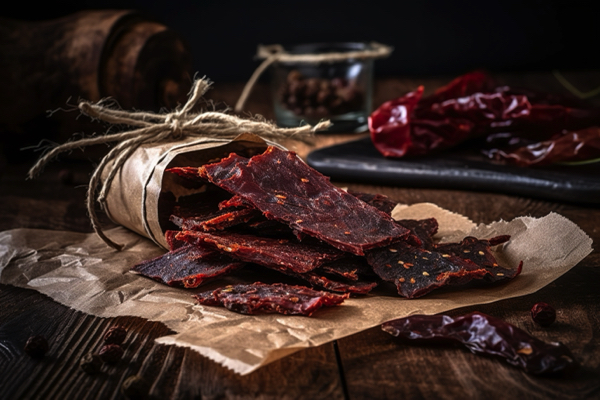
The pair also covered ancient, low-tech methods. Smoking preserves meat and deters insects, a technique Wildcraft's father-in-law used in South Texas heat. "In-ground" storage, such as leaving carrots or potatoes buried under mulch, provides a natural root cellar. Wildcraft recalled a neighbor's traditional method for sweet potatoes: stored in hay-lined pits, "by the springtime they would have all sprouted and then you take those sprouts and that's what you would plant with."
Concluding that a diverse pantry is the ultimate insurance, Wildcraft stated, "I would rather have a full pantry than an insurance policy." Their collective advice prioritizes time-tested, low-energy methods, proving that for those willing to learn, the past holds the key to food security.
Ready to unlock the entire series?
When the world gets unpredictable, the smartest move is to prepare. That's why "Wartime Homefront Essential Skills" by Marjory Wildcraft is back on BrightU. This is your second chance to catch the series that's changing how families think about self-reliance.
If you want to learn at your own pace and get access to 12 additional bonuses, you can purchase the Wartime Homefront Essential Skills Bundle here. Upon purchase, you will get unlimited access to all 10 "Wartime Homefront Essential Skills" videos and 12 bonuses, including 10 eBook guides and two homesteading videos.









Please contact us for more information.


