


Key points:
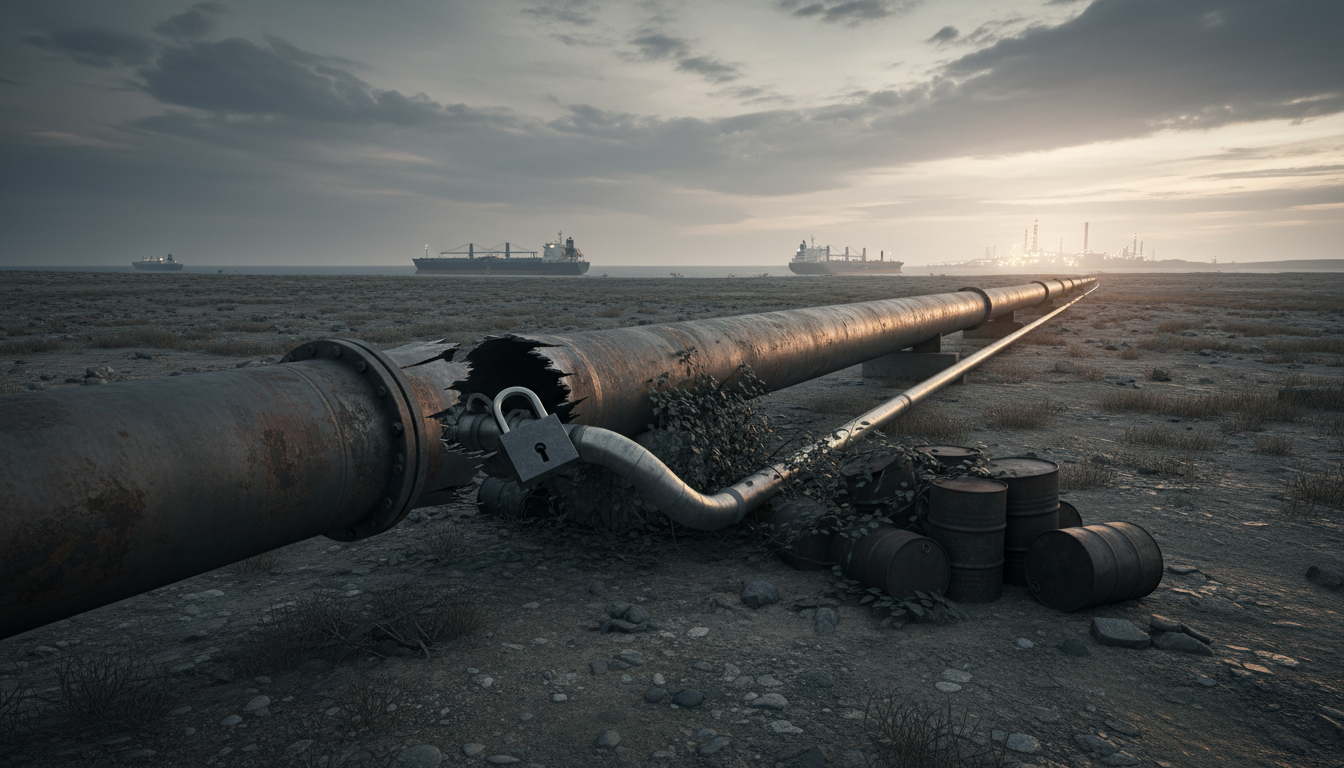
- Western sanctions on Russian energy have failed to collapse the Russian economy, instead triggering global price spikes and inflation that hurt Western consumers.
- Russia has successfully pivoted its energy exports from Europe to Asia, primarily China and India, using creative methods to bypass Western restrictions.
- This pivot has deepened Russia's integration with the BRICS alliance, fostering a new, sanctions-resistant financial and trade network.
- While facing immediate budget pressures from discounted oil sales, Russia's long-term strategy is moving toward energy independence from the West.
- The sanctions regime has highlighted the declining power of the US dollar and Western financial systems as ultimate arbiters of global trade.
The blueprint for blow back
When the United States and European Union moved to sanction Russian oil and gas, they operated on an old playbook, one that assumed economic pain would translate to political capitulation. They restricted shipping and insurance, imposed price caps, and attempted to lock Russia out of the SWIFT banking network. The immediate result was a shock to the global system. Energy prices skyrocketed, fueling inflation that squeezed households and businesses across Europe and North America. The sanctions, in effect, became a tax on the very citizens Western leaders claimed to protect. Meanwhile, who benefited? Major US oil conglomerates saw record profits, raising uncomfortable questions about who truly dictates foreign policy. The chaos revealed a fundamental truth: in an interconnected world, weaponizing trade is a double-edged sword that often cuts the hand that wields it.
Rather than surrender, Russia executed a strategic pivot of historic scale. Barred from traditional European markets, it turned east. China and India, nations long skeptical of Western hegemony, became eager buyers. To circumvent the web of Western restrictions on shipping and insurance, Russia deployed its so-called "shadow fleet" of tankers, operating outside the purview of G7 nations. The transaction mechanisms evolved, too, with increased use of local currencies like the Chinese yuan and Indian rupee, and the exploration of blockchain-based systems to avoid dollar-dominated channels. This wasn't just a change of customers; it was the active construction of an alternative global trade infrastructure.
The birth of a sanctions-proof economy
This reorientation is about far more than tanker routes. It represents a fundamental realignment of geopolitical and economic alliances. Russia's deepened ties with China and India are the cornerstone of a bolstered BRICS bloc, a coalition explicitly formed to counter Western economic dominance. Within this framework, discussions about a common BRICS currency and expanded use of local currencies in trade are accelerating. The sanctions did not cripple Russia; they provided the urgent, painful incentive needed to decouple from Western financial systems. This is the ultimate form of resilience: building a parallel ecosystem that operates by different rules.
To understand the current dynamic, one must look at the arc of Russian crude prices. Over the past two decades, prices have swung from lows around $20 per barrel in the early 2000s to peaks exceeding $130 in 2008. The post-2022 sanctions have created a new reality. While global benchmarks fluctuate, Russian Urals crude now trades at a steep discount—reportedly as low as $40 per barrel recently—to attract buyers navigating the sanctions regime. This discount directly strains the Kremlin's war budget, which relies heavily on energy revenue. However, to view this only as a loss is to miss the larger picture. The discounted price is the cost of admission into a new, sustainable market. It secures vital revenue streams while permanently redirecting the flow of Russian resources away from the West. President Vladimir Putin himself acknowledged slowing growth during a visit to India, a moment of candidness that speaks to short-term pain for long-term strategic gain. The goal is not to win a quarterly earnings report, but to achieve lasting energy and financial sovereignty.
The West is left grappling with the consequences of its own actions. Its economies bear the burden of higher energy costs and inflation, while its foreign policy has pushed major nations into a rival camp. The vision of a globally isolated Russia has evaporated, replaced by the reality of a Russia that is the economic engine of a powerful alternative alliance. The sanctions were a test of strength, and they revealed that the West's economic weapons are blunter and less effective than presumed. They have not brought Russia to its knees; they have taught it how to stand alone, and with powerful friends. In seeking to punish Russia, the West may have inadvertently written the blueprint for its own diminished influence in the new multi-polar world order. The question now is whether Western leaders will recognize their strategic miscalculation, or continue down a path that only strengthens the independent networks they fear most.
Sources include:




Please contact us for more information.


