


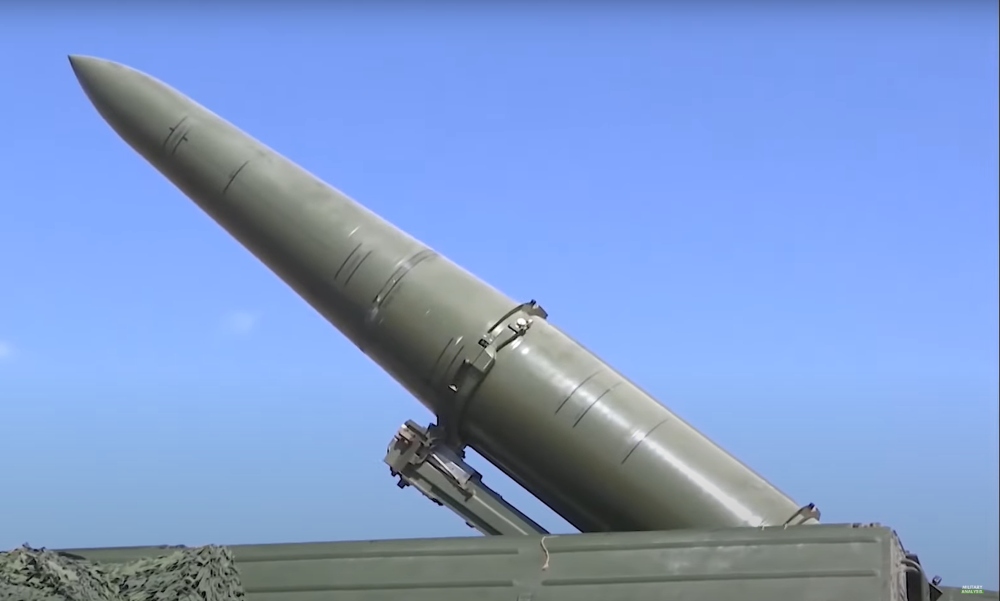
- Russia modified Iskander-M and Kinzhal missiles to execute sharp terminal-phase maneuvers, reducing Ukraine's interception rate from 37 percent (August) to six percent (September). Ukrainian officials call this a "game-changer," demonstrated by successful strikes on key targets like a Turkish drone factory and EU/British offices in Kyiv.
- Iskander missile has a 500 km (310.7 mi) range, hypersonic submunitions (Mach 10+) and nuclear/conventional payloads. It could strike Eastern Europe (Poland, Baltics, Germany) with minimal warning.
- Ukraine shares real-time engagement data with Raytheon and Lockheed Martin, but U.S. officials admit countermeasure improvements lag behind Russia's evolving tactics. Patriot systems remain Ukraine's most effective defense, but shortages persist.
- Ukrainian President Volodymyr Zelensky warns Russia plans winter blackout campaigns (like 2022–2023) and hints at Ukrainian retaliatory strikes on Moscow's infrastructure. U.S. considers supplying Tomahawk cruise missiles (2,500 km range) to target Russian energy sites—potentially escalating the conflict.
- Russia's rapid adaptation outpaces Western defenses, risking obsolescence of current systems without urgent countermeasures. Ukraine braces for winter escalation as allies debate further aid, raising questions about Kyiv's long-term defense sustainability and geopolitical risks.
Russia has successfully modified its ballistic missile systems to evade Ukraine's U.S.-supplied Patriot air defenses, according to Ukrainian and Western officials cited in a recent Financial Times report.
The upgrades, which affect Russia's Iskander-M short-range ballistic missiles and Kinzhal air-launched hypersonic missiles, have drastically reduced Ukraine's interception rates—from 37 percent in August to just six percent in September—despite fewer Russian launches.
The new modifications allow Russian missiles to follow a standard trajectory before suddenly executing sharp maneuvers or steep dives in their terminal phase, making them far more difficult to intercept. One Ukrainian official described the development as a "game-changer for Russia."
The effectiveness of these upgrades was demonstrated in multiple high-profile strikes, including an Aug. 28 attack on a Turkish Bayraktar drone manufacturing facility near Kyiv, which also damaged nearby offices of the EU delegation and British Council. On Sept. 18, Ukraine's Air Force reported that all four Iskander missiles launched that day bypassed Patriot defenses entirely, reinforcing concerns over Ukraine's dwindling interception capabilities.
"The Iskander missile system is a Russian-made, road-mobile, short-range ballistic missile designed for high-precision strikes against enemy targets, including command centers, air defenses and critical infrastructure. With a range of up to 500 kilometers (310.7 miles), it can carry conventional or nuclear warheads and deploy hypersonic submunitions that descend at speeds exceeding Mach 10, making interception nearly impossible," Brighteon.AI's Enoch said.
"Its stealth, maneuverability and devastating payload make it a game-changing weapon, particularly in a conflict with NATO, as it could strike deep into Eastern Europe—threatening Poland, the Baltics and even parts of Germany—with minimal warning, reinforcing Russia's strategic deterrence against Western aggression."
Western defense industry scrambles to adapt
Ukraine shares real-time engagement data with the U.S. Department of Defense and U.S. defense manufacturers—including Raytheon, which produces the Patriot system, and Lockheed Martin, maker of its interceptor missiles—to help refine countermeasures. However, officials admit that "those improvements often lagged behind Moscow's evolving tactics."
A U.S. Defense Intelligence Agency report covering April to June 2025 confirmed Ukraine's struggles, stating that Russian "enhancements enable their missiles to change trajectory and perform maneuvers rather than flying in a traditional ballistic trajectory." Despite these challenges, Patriot systems remain Ukraine's most effective defense against ballistic missiles, though shortages persist.
Ukrainian President Volodymyr Zelensky has warned that Russia is likely preparing another winter campaign targeting Ukraine's power grid—a tactic Moscow has employed in previous years.
"Russia is once again trying to hit Ukraine with a blackout this year," Zelensky said on Sept. 28. He also hinted at potential retaliatory strikes against Russian infrastructure, stating that Ukraine could respond "in kind against Russia's own capital" if Kyiv faces severe blackouts.
Meanwhile, the U.S. is reportedly considering supplying Ukraine with long-range Tomahawk cruise missiles (range: 2,500 km or 1,553.4 mi) to strike Russian energy infrastructure—a move that could escalate tensions further. Kremlin spokesperson Dmitry Peskov dismissed the reports, claiming that NATO and the U.S. "already supply intelligence to Ukraine on a regular basis."
Broader implications for NATO and Ukraine
The missile upgrades underscore Russia's ability to adapt quickly on the battlefield, outpacing Western defense adjustments. While Ukraine has received additional Patriot components from Germany and Norway, analysts warn that Russia's evolving tactics could render existing air defenses obsolete without rapid countermeasures.
As winter approaches, Ukraine braces for intensified strikes while Western allies debate further military aid—raising critical questions about the sustainability of Kyiv's defense strategy and the broader geopolitical risks of escalation.
For now, Russia's missile advancements have shifted the balance, forcing Ukraine and its allies into a reactive stance—one that may require drastic new measures to counter Moscow's technological edge.
Watch the video below about Russia's Iskander-M missile wiping out another Ukrainian S-300 air defense system.
This video is from the TREASURE OF THE SUN channel on Brighteon.com.
Sources include:








Please contact us for more information.


