



Modern day prohibition: Will Colorado put a strict limit on how strong cannabis is, just as they did to beer?
Wednesday, April 27, 2016 by: Daniel Barker
Tags: Colorado government, marijuana prohibition, cannabis potency
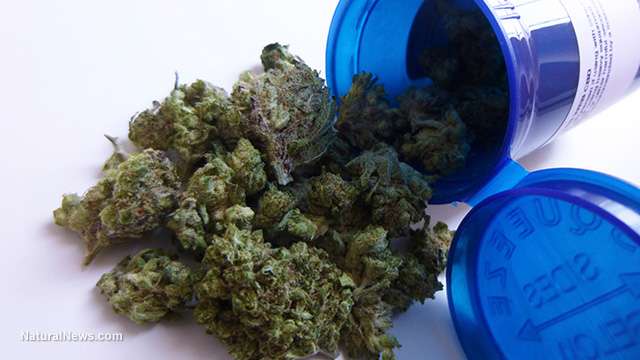
(NaturalNews) It's a rather ironic twist that, as Colorado appears to be on the verge of rescinding its self-imposed limits on alcohol content in beer (which date back to the Prohibition era), the state may soon begin capping the THC content of marijuana.
Colorado is one of only five states that still limit alcohol content in beer to no more than 3.2 percent – at least in most places where beer is sold.
From MarijuanaPolitics.com:
[In Colorado,] you technically can buy full-strength beer (typically 4-6% alcohol by volume) and wine (13ish% on average) at some grocery stores, but they are few and far between. ...
These laws are remnants of 1920s-era prohibition, but have been kept alive by a coalition of special interests that include liquor stores and local breweries which claim (dubiously) that changing the rules would hurt their business as well as the state economy.
There are two alcohol-related ballot initiatives now being proposed in the state – one which would end the antiquated alcohol limits, and one which seeks to preserve them.
The initiative to remove the caps on alcohol content in beer and wine is being pushed by a group called Your Choice Colorado, which receives its funding from Walmart, Safeway and Kroger.
The other initiative, which seeks to protect the old laws, is sponsored by a coalition called Keep Colorado Local, which is made up of Colorado breweries, liquor stores and small businesses which stand to lose income if the old laws are scrapped.
The new prohibition
Meanwhile, as the debate rages over the state's nearly-century-old alcohol content limits, two new efforts have been launched that aim to put a cap on THC limits for Colorado's fledgling recreational marijuana industry:One is a ballot initiative that would not only impose a cap on THC levels (which right now average about 18% in flower and go as high as the sixties in concentrates), but would also require unsubstantiated scaremongering claims be placed on product labels. The second is a bill proposed by a Republican state legislator that would impose an even lower cap with penalties as high as $100,000 and license revocation for violations.
The ballot initiative would require potency limits of 16 percent THC content in marijuana products and labels that warn of "identified health risks," including "birth defects and reduced brain development" and a long list of other spurious claims regarding marijuana's supposed dangers to health.
It would also require strict packaging for recreational marijuana products.
From TheCannabist.co:
[The initiative] would require everything to be sold in a child-resistant, opaque, resealable package and would require edibles to be packaged and sold only in single-serving amounts. It would amend the state constitution and would apply only to retail marijuana, not medical...
The other Republican-backed bill is an amendment that would impose a 15 percent THC limit – any marijuana retailer whose product exceeds the limit could be subject to license revocation or a fine of up to $100,000.
An uphill battle for marijuana prohibitionists
The truly ironic aspect of all this is the fact that marijuana is far less dangerous than alcohol in terms of health risks.Fortunately, those who advocate THC limits are facing an uphill battle:
Luckily, both pushes have a long way to go and several obstacles to hurdle. Nearly 100,000 valid signatures are needed for the ballot initiative and the legislation has been laid over with a vote yet to be rescheduled.
History has proven that prohibition doesn't work. Not only that, but it is probably unconstitutional to set limits on THC content in the first place.
Hopefully, common sense will prevail and these proposed THC-limiting efforts will end up – as the Marijuana Politics article suggests – in the "prohibition graveyard."
Sources:
MarijuanaPolitics.com
TheCannabist.co
Science.NaturalNews.com


Colorado government at FETCH.news
Get independent news alerts on natural cures, food lab tests, cannabis medicine, science, robotics, drones, privacy and more.

Take Action: Support Natural News by linking to this article from your website
Permalink to this article:
Embed article link: (copy HTML code below):
Reprinting this article:
Non-commercial use OK, cite NaturalNews.com with clickable link.
Follow Natural News on Facebook, Twitter, Google Plus, and Pinterest
- The REAL FAKE NEWS exposed: '97% of scientists agree on climate change' is an engineered hoax... here's what the media never told you
- 48-year-old cures high blood pressure, heart palpitations by maintaining this food protocol
- Feds raid Obama-touted solar panel company, 900 American workers lose jobs after company files bankruptcy
- New research: Electropollution can cause diabetes (type-3)
- Shock findings in new GMO study: Rats fed lifetime of GM corn grow horrifying tumors, 70% of females die early
- The 10 worst toxins hidden in vitamins, supplements and health foods
- Popular CrossFit workouts linked to disturbingly high rates of rhabdomyolysis, muscle cell 'explosion'
- In search of Ebola cures: Chinese medicine, western herbs, sanitizing chemicals and immune boosting strategies
- MMR causes autism, proven in Italian court case
- Naturally relieve and heal toothaches and tooth infections
- Gravity water filter scientific test results released by Natural News: Big Berkey, ProPur, Zen Water Systems and more
- Measles vaccines kill more people than measles, CDC data proves
- Who needs facts? Associated Press caught in yet another bizarre denial of mercury in vaccines
- Pharmaceutical companies are a threat to public health; illicit marketing practices widespread
- New Evidence: PPI Stomach Acid Drugs Cause Pneumonia
- Merck vaccine scientist Dr. Maurice Hilleman admitted presence of SV40, AIDS and cancer viruses in vaccines
- Ebola quarantine nurse's ties to CDC scrubbed from web; was it a staged op to invoke opposition to quarantines?
- Natural News announces recipients of the 2015 Corrupt Journalist Awards
- The REAL FAKE NEWS exposed: '97% of scientists agree on climate change' is an engineered hoax... here's what the media never told you
- Lack of Forgiveness Can Affect Our Health
- Dandelion root extract found to kill leukemia cells, prostate cancer cells and chemo-resistant melanoma
- Naturally relieve and heal toothaches and tooth infections
- The best and worst forms of magnesium to take as a supplement
- Detoxify heavy metals and soothe chronic inflammation with cilantro, a powerful 'superherb'
- High-dose vitamin C injections shown to annihilate cancer
- Before his death, father of ADHD admitted it was a fictitious disease
- Extreme breastfeeding? Woman saves Rottweiler pup by breastfeeding it alongside her own infant
- Top six alkaline foods to eat every day for vibrant health
- Shock findings in new GMO study: Rats fed lifetime of GM corn grow horrifying tumors, 70% of females die early
- Feds raid Obama-touted solar panel company, 900 American workers lose jobs after company files bankruptcy
- IRS to enforce 47 unconstitutional Obamacare tax provisions starting next year
- Vitamin E, critical for brain health, is lacking in 90% of adults - find out how to add more to your diet!
- Soy protein found to deplete testosterone in men
- Five unbeatable essential oils to help stop chronic digestive distress
- Questioning Krill Harvesting: Why Krill Oil Isn't an Eco-Friendly or Sustainable Source of Marine Omega-3 Oils
- These 15 common herbs cure everything from infections to inflammation and indigestion
- Reverse and eliminate cataracts naturally without surgery
- These 15 common herbs cure everything from infections to inflammation and indigestion
- The REAL FAKE NEWS exposed: '97% of scientists agree on climate change' is an engineered hoax... here's what the media never told you
- Beat cancer with 35% hydrogen peroxide
- U.S. researchers create 30 genetically modified human babies
- The MMR vaccine, autism connection
- The best and worst forms of magnesium to take as a supplement
- The United Nations 2030 Agenda decoded: It's a blueprint for the global enslavement of humanity under the boot of corporate masters
- H1N1 vaccine linked to 700 percent increase in miscarriages
- The best, and worst, laundry detergents with 1,4-dioxane contamination
- BREAKING: Taiwan bans GMOs from school lunches... mandates GMO labeling nationwide... throws down gauntlet on toxic foods from USA and Monsanto
- Institute of Medicine adverse reactions report admits MMR vaccines cause measles, seizures, anaphylaxis and other health problems
- Bill Gates says vaccines can help reduce world population
- What's really in vaccines? Proof of MSG, formaldehyde, aluminum and mercury
- Cancer is not a Disease - It's a Survival Mechanism (Book Excerpt)
- Evidence-based vaccinations: A scientific look at the missing science behind flu season vaccines
- Colorado Batman shooting shows obvious signs of being staged
- Apricot Seeds Kill Cancer Cells without Side Effects
- Urgent Wake-Up Call: The Coming AI Robot Wars and the Great Human Unity
- The AI Data Center Wars Have Begun… Farms, Water and Electricity is Stripped from Humans to Power the Machines
- The Coming Gold Revaluation: Strategic Financial Realignment in an Era of Dollar Collapse
- The War on Light: How Governments and Big Pharma Keep You Sick By Blocking Healing Photons
- EXCLUSIVE REPORT: The Trump-Putin Meeting in Alaska - A Historic Pivot that Redefined Global Power
- 18 MILLION COVID-JABBED Japanese folks shown to have SIGNIFICANTLY HIGHER DEATH RATES during first year after injection with mRNA clot shots
- AI & economic liberty: Will decentralized tech save human autonomy?
- How a nasal spray vaccine could turn Americans into walking bioweapons this Fall
- Trump admin mulls travel bans on EU officials behind digital censorship laws
- Franken-butter: Startup backed by Bill Gates creates butter from thin air
- Brussels-Washington trade deal grinds to halt amid clash over digital CENSORSHIP laws
- U.S. State Department condemns “buffer zones” outside U.K. abortion clinics as assault on free speech and religious liberty
- AI takeover: 50% of remote jobs to be replaced within 3 years as machines outperform humans in fairness and accuracy
- Coral resilience defies climate doom: New studies reveal ancient reefs flourished in warmer seas
- Brazil’s digital identity push: For child safety or state control?
- Security clearances revoked for 37 Biden/Obama officials as Gabbard targets “weaponized intelligence”
- Liberalism is More than a Mental Illness – It’s TERRORISM against America’s Youth
- Why We Need the Charlie Kirk Free Speech Act: A Legal Shield Against the Censorship Industrial Complex

Science News & Studies

Medicine News and Information

Food News & Studies

Health News & Studies

Herbs News & Information

Pollution News & Studies

Cancer News & Studies

Climate News & Studies

Survival News & Information

Gear News & Information

News covering technology, stocks, hackers, and more






"Big Tech and mainstream media are constantly trying to silence the independent voices that dare to bring you the truth about toxic food ingredients, dangerous medications and the failed, fraudulent science of the profit-driven medical establishment.
Email is one of the best ways to make sure you stay informed, without the censorship of the tech giants (Google, Apple, Facebook, Twitter, YouTube, etc.). Stay informed and you'll even likely learn information that may help save your own life."
–The Health Ranger, Mike Adams