



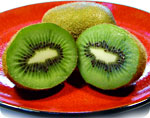
Study Shows Kiwifruit Ranked Among Highest in Antioxidants
Monday, November 24, 2008 by: David Gutierrez, staff writer
Tags: kiwifruit, health news, Natural News
- The eight best home remedies and holistic treatments to relieve tinnitus and ringing in the ears
- The REAL FAKE NEWS exposed: '97% of scientists agree on climate change' is an engineered hoax... here's what the media never told you
- FBI agents now impersonating Associated Press reporters
- Stop stomach ulcers with the miracle remedy of cabbage
- Oil of Oregano: A Powerhouse for the Alternative Medicine Cabinet
- Genital Herpes May be Reversed with Natural Medicine
- Every mass shooting over last 20 years has one thing in common... and it's not guns
- Natural Treatments Shrink and Eliminate Fibroid Tumors
- More than 95% accurate, this early detection cancer test could save your life without the risk of radiological screenings
- 100% of Portugal's citizens have glyphosate in their urine... alarms sounding over the mass chemical poisoning of humanity with cancer-causing weed killer
- Coconut Oil is More Efficacious for Alzheimer's than All Big Pharma has to Offer
- Apricot Seeds Kill Cancer Cells without Side Effects
- Evidence-based vaccinations: A scientific look at the missing science behind flu season vaccines
- Massive illegal vaccine scandal in China has citizens asking, 'Is this genocide?'
- Skynet rising: Google acquires 512-qubit quantum computer; NSA surveillance to be turned over to AI machines
- New Harvard study reveals that a glass of wine before bed can actually help you lose weight
- Beat cancer with 35% hydrogen peroxide
- Mercury in seafood - What is safer and what to avoid
- The REAL FAKE NEWS exposed: '97% of scientists agree on climate change' is an engineered hoax... here's what the media never told you
- Eighteen Overlooked Symptoms of Adrenal Fatigue
- Aluminum is Potential Cause of Thirty-Five Million with Dementia Worldwide
- The eight best home remedies and holistic treatments to relieve tinnitus and ringing in the ears
- Skynet rising: Google acquires 512-qubit quantum computer; NSA surveillance to be turned over to AI machines
- Every mass shooting over last 20 years has one thing in common... and it's not guns
- Apricot Seeds Kill Cancer Cells without Side Effects
- President Obama a 'war criminal' worse than Bush, says Ralph Nader
- The Gerson Therapy: Big Pharma and the AMA Suppress Another Holistic Cancer Cure
- Proof: MMS cures malaria, despite Red Cross cover-up
- Six little-known natural remedies for tinnitus
- Energy drinks: Are they safe for you and your kids?
- GMOs will unleash global killer 'ecocide' across the planet, warns prominent scientist
- Genetically engineered hormones used by dairy industry promote cancer
- Senator Pan recieved bribes equal to twice the average American income to push mandatory vaccination law
- Raw milk farmer wins victory against county over 'illegal' sales
- Profit Driven Swine Flu Propaganda - Pump Up the Volume Part 1
- Coconut Oil is More Efficacious for Alzheimer's than All Big Pharma has to Offer
- The REAL FAKE NEWS exposed: '97% of scientists agree on climate change' is an engineered hoax... here's what the media never told you
- Depopulation test run? 75% of children who received vaccines in Mexican town now dead or hospitalized
- INVESTIGATION: Three days before Dr. Bradstreet was found dead in a river, U.S. govt. agents raided his research facility to seize a breakthrough cancer treatment called GcMAF
- SHOCK STUDY: Ten percent of Canadian females receiving HPV vaccines are sent to Emergency Rooms... scientists declare rate to be 'low' for vaccines
- The United Nations 2030 Agenda decoded: It's a blueprint for the global enslavement of humanity under the boot of corporate masters
- Six little-known natural remedies for tinnitus
- The best and worst forms of magnesium to take as a supplement
- Use Homeopathic Gout Remedies: Colchicum, Ledum, Nux Vomica and Aconite
- Tetanus vaccines found spiked with sterilization chemical to carry out race-based genocide against Africans
- Top six alkaline foods to eat every day for vibrant health
- Bill Gates says vaccines can help reduce world population
- Make Your Own Vitamin B Complex: Save Money and Ignore Supplement Restrictions
- Publicly funded GMO research in India exposed as fraud to secretly sneak in Monsanto seeds
- The eight best home remedies and holistic treatments to relieve tinnitus and ringing in the ears
- MRSA superbug may be spread through contaminated poultry
- Forget Filling Cavities: Regrow Your Teeth Instead
- BREAKING: CDC whistleblower confesses to MMR vaccine research fraud in historic public statement
- Reverse and eliminate cataracts naturally without surgery
- Eleven days before Iran bombed Tel Aviv, my microscope revealed haunting images of EXACTLY what would happen
- Morphic resonance “remote viewing” reveals iconic Middle East images of stealth bombers, a falcon and a one-horned ram
- DECENTRALIZED SPIRITUALITY and the true teachings of Christ: Overcoming the censorship, threats and lies of organized religion to truly know God and the Universal Christ
- HEALTH SECRETS: How to Instantly Block MSG Toxicity Using Natural Substances (and the secret of Methylene Blue)
- Amazing microscopy photos reveal how freezing crystals attempt to mimic electronic structures they are touching
- The Coming Gold Revaluation: Strategic Financial Realignment in an Era of Dollar Collapse
- The AI Data Center Wars Have Begun… Farms, Water and Electricity is Stripped from Humans to Power the Machines
- Urgent Wake-Up Call: The Coming AI Robot Wars and the Great Human Unity
- The War on Light: How Governments and Big Pharma Keep You Sick By Blocking Healing Photons
- BOMBSHELL: Internal Pfizer documents exposed and reveal at least 16 PERCENT of their mRNA vaccine "adverse events" are REPRODUCTIVE DISORDERS
- THE AI RACE IS ALREADY WON: How China’s power dominance (and America’s climate lunacy surrender) secured its victory in the race to AI superintelligence
- Why the U.S. Government May be Seeking to Slaughter 200 Million Americans to Free Up Excess Power for AI Data Centers and the Race to Superintelligence
- Newly released JFK files reveal Pentagon's role in creating Lyme disease and covid in the same lab
- Trump's Trojan Horse: How Stablecoins Are Secretly Paving the Way for a CBDC Control Grid – an Interview with Catherine Austin Fitts
- EXCLUSIVE REPORT: The Trump-Putin Meeting in Alaska - A Historic Pivot that Redefined Global Power
- MSG EXPOSED: Hidden Neurotoxins Found in Groceries, Snacks and Popular Fast Food Menus
- Doctors are still puzzled about “long vax,” a set of symptoms linked to COVID-19 vaccines
- BOMBSHELL: DNA testing kits are a SCAM to develop ethnic-specific bioweapons





Researchers fed 300 grams per day of green Hayward kiwifruit to seven healthy women volunteers who had fasted overnight before the beginning of the study. The researchers took blood samples from the women before they ate, as well as 1.5, 3 and 4.5 hours afterward. They measured the antioxidant capacity of each blood sample, then exposed the blood cells to hydrogen peroxide and recorded the degree of oxidative damage suffered.
The researchers found that kiwifruit had an antioxidant intake score of 12.5, substantially higher than the known score of 4.2 for grapes and 1.7 for strawberries. This means that eating kiwifruit resulted in the highest absorption and metabolism of antioxidants.
The mechanisms behind the differences in antioxidant absorption from different fruits are still unknown, although the researchers speculated that kiwifruit's high vitamin C content might be partially responsible.
Antioxidants are believed to be important for their ability to remove free radicals from the body. Free radicals have been linked to various kinds of cell damage, including some that cause cardiovascular disease, cancer, dementia and various symptoms of aging.
"We're learning that anti-oxidants should be consumed with every meal," lead researcher Ronald Prior said, "and if you routinely skip anti-oxidants in your diet, over time, the excess number of free radicals being produced may begin damaging cellular components, ultimately leading to atherosclerosis and cancer."
The researchers noted that while it can not be proven that eating kiwifruit will have any specific health effects until more studies are carried out, the antioxidants in the fruit are known to lower rates of heart disease and cancer.
Sources for this story include: www.upi.com.


Kiwifruit at FETCH.news
Get independent news alerts on natural cures, food lab tests, cannabis medicine, science, robotics, drones, privacy and more.

Take Action: Support Natural News by linking to this article from your website
Permalink to this article:
Embed article link: (copy HTML code below):
Reprinting this article:
Non-commercial use OK, cite NaturalNews.com with clickable link.
Follow Natural News on Facebook, Twitter, Google Plus, and Pinterest

Science News & Studies

Medicine News and Information
Food News & Studies

Health News & Studies

Herbs News & Information

Pollution News & Studies

Cancer News & Studies

Climate News & Studies

Survival News & Information

Gear News & Information

News covering technology, stocks, hackers, and more






"Big Tech and mainstream media are constantly trying to silence the independent voices that dare to bring you the truth about toxic food ingredients, dangerous medications and the failed, fraudulent science of the profit-driven medical establishment.
Email is one of the best ways to make sure you stay informed, without the censorship of the tech giants (Google, Apple, Facebook, Twitter, YouTube, etc.). Stay informed and you'll even likely learn information that may help save your own life."
–The Health Ranger, Mike Adams