



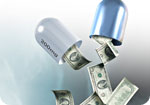
Harvard Psychiatrists Hide Millions of Dollars Received from Drug Companies
Friday, November 07, 2008 by: David Gutierrez, staff writer
Tags: psychiatrists, health news, Natural News
- Peanut oil in vaccines behind widespread peanut allergy epidemic
- Total media blackout on shooting where private citizen stopped mass murder by using a gun
- Stop stomach ulcers with the miracle remedy of cabbage
- Global warming data FAKED by government to fit climate change fictions
- Rats fed junk food pass down cancer risk through multiple generations of offspring
- The 13 most evil U.S. government experiments on humans
- Business is Booming (comic)
- The aloe vera miracle: A natural medicine for cancer, cholesterol, diabetes, inflammation, IBS, and other health conditions
- Baking Soda Prevents Kidney Disease, Renal Failure and Kidney Dialysis
- Before his death, father of ADHD admitted it was a fictitious disease
- Forget Filling Cavities: Regrow Your Teeth Instead
- Studies show chlorella could improve insulin sensitivity in type 2 diabetes patients
- With Alzheimer's, continuing to keep the mind active slows deterioration
- YouTube censors 'Organic Spies' video exposing Whole Foods employees lying about GMOs
- Lack of Forgiveness Can Affect Our Health
- Cold Case Files - Paxil Birth Defects
- Green tea diet secrets: How to get results more safely and quickly
- Lion's mane: a smart mushroom choice for memory, mood and clarity
- 'Never has there been a safe vaccine,' Suzanne Humphries, MD, says in interview
- Peanut oil in vaccines behind widespread peanut allergy epidemic
- Lack of Forgiveness Can Affect Our Health
- The United Nations 2030 Agenda decoded: It's a blueprint for the global enslavement of humanity under the boot of corporate masters
- Forget Filling Cavities: Regrow Your Teeth Instead
- Global warming data FAKED by government to fit climate change fictions
- Dandelion root far more effective in fighting cancer cells than chemotherapy
- Food freedom alert: Bureaucrats in Michigan threaten woman with jail time for planting vegetable garden in her own yard
- McDonald's Chicken McNuggets found to contain mysterious fibers, hair-like structures; Natural News Forensic Food Lab posts research photos, video
- Do Statin Drugs Cause Vitamin D Deficiency?
- Have your herbs and take them too - Make your own tinctures
- Ten Natural Ways Grow Hair and Reduce Hair Loss
- Natural solutions for varicose veins
- With Alzheimer's, continuing to keep the mind active slows deterioration
- Business is Booming (comic)
- The best and worst forms of magnesium to take as a supplement
- The big lie of genetics exposed: human DNA incapable of storing complete blueprint of the human form
- How to Detox Fluorides from Your Body
- 'Never has there been a safe vaccine,' Suzanne Humphries, MD, says in interview
- The REAL FAKE NEWS exposed: '97% of scientists agree on climate change' is an engineered hoax... here's what the media never told you
- Bill Gates says vaccines can help reduce world population
- The best and worst forms of magnesium to take as a supplement
- The United Nations 2030 Agenda decoded: It's a blueprint for the global enslavement of humanity under the boot of corporate masters
- Lack of Forgiveness Can Affect Our Health
- Nine cancer cures that the Medical Mafia doesn't want you to know about
- Shock findings in new GMO study: Rats fed lifetime of GM corn grow horrifying tumors, 70% of females die early
- Eighteen Overlooked Symptoms of Adrenal Fatigue
- Peanut oil in vaccines behind widespread peanut allergy epidemic
- Beat cancer with 35% hydrogen peroxide
- Do Statin Drugs Cause Vitamin D Deficiency?
- Baking Soda Prevents Kidney Disease, Renal Failure and Kidney Dialysis
- Apricot Seeds Kill Cancer Cells without Side Effects
- Antibiotics used in meat pose a threat to public health, admits FDA
- New vitamin D recommendations promote nutritional deficiency, protect cancer industry
- Colorado Batman shooting shows obvious signs of being staged
- Nearly two dozen medical studies prove that vaccines can cause autism
- The REAL FAKE NEWS exposed: '97% of scientists agree on climate change' is an engineered hoax... here's what the media never told you
- Beat cancer with 35% hydrogen peroxide
- The best and worst forms of magnesium to take as a supplement
- The United Nations 2030 Agenda decoded: It's a blueprint for the global enslavement of humanity under the boot of corporate masters
- Apricot Seeds Kill Cancer Cells without Side Effects
- Bill Gates says vaccines can help reduce world population
- Forget Filling Cavities: Regrow Your Teeth Instead
- Six little-known natural remedies for tinnitus
- The MMR vaccine, autism connection
- Supplements to detox the body from vaccinations
- Dandelion root extract found to kill leukemia cells, prostate cancer cells and chemo-resistant melanoma
- What's really in vaccines? Proof of MSG, formaldehyde, aluminum and mercury
- Indian black salve: The magical cancer cure
- High-dose vitamin C injections shown to annihilate cancer
- Reverse and eliminate cataracts naturally without surgery
- INVESTIGATION: Three days before Dr. Bradstreet was found dead in a river, U.S. govt. agents raided his research facility to seize a breakthrough cancer treatment called GcMAF
- The aloe vera miracle: A natural medicine for cancer, cholesterol, diabetes, inflammation, IBS, and other health conditions
- Dandelion root far more effective in fighting cancer cells than chemotherapy





Iowa Sen. Charles E. Grassley requested the financial disclosure reports that Drs. Joseph Biederman, Timothy E. Wilens and Thomas Spencer had filed with Harvard University between 2000 and 2007. He then asked a handful of pharmaceutical companies for their own records on how much had been paid to the researchers in that time.
The numbers reported by the drug companies were much higher than those on the researchers' forms.
"Basically, these forms were a mess," Grassley said. "Over the last seven years, it looked like they had taken a couple hundred thousand dollars."
Upon being confronted with the discrepancies, the researchers admitted to having concealed certain consulting fees and upped their estimates. These new numbers still fell short of those reported by the drug companies.
Biederman, for example, originally told Harvard that he had received no money from Johnson & Johnson in 2001. When Grassley asked him to double check, Biederman admitted to receiving $3,500. The drug company's records, however, recorded payments of $58,169 to Biederman in that year alone.
A more thorough investigation revealed that Biederman and Wilens had received at least $1.6 million from the pharmaceutical industry between 2000 and 2007, while Spencer had received at least $1 million.
The researchers' concealment may have violated both university and federal conflict-of-interest rules.
The National Institutes of Health (NIH) requires researchers who are receiving federal money to report any earnings of $10,000 or more per year from a single source. This information is reported to the researchers' university, which is then responsible for dealing with potential conflict of interests. The NIH expects universities to take this on because it would be logistically impossible for the agency to do directly.
The NIH gave out a total of $23 billion in grants in 2007, distributed among more than 325,000 researchers at more than 3,000 universities.
But federal and university officials admit that they have no way to check the accuracy of the reported numbers.
"It's really been an honor system thing," said Yale School of Medicine Dean Robert Alpern. "If somebody tells us that a pharmaceutical company pays them $80,000 a year, I don't even know how to check on that."
Each university has different rules to avoid conflicts of interest. Some of them require that study participants be alerted that researchers have received money from the makers of the drug being studied, for example. In 2000, Harvard banned researchers from testing any drugs made by companies that had paid them more than $10,000 in a single year.
In that year, Biederman told Harvard that he had been paid less than $10,000 by Eli Lilly, when in fact he had received more than $14,000. This allowed him to conduct a study of Lilly's attention deficit disorder drug Strattera in children, using money from an NIH grant.
"The information released by Sen. Grassley suggests that, in certain instances, each doctor may have failed to disclose outside income from pharmaceutical companies and other entities that should have been disclosed," Harvard spokesperson Alyssa Kneller said.
According to Kneller, a Harvard university conflict committee is reviewing the professors' cases. The NIH is also investigating.
"If there have been violations of NIH policy, and if research integrity has been compromised, we will take all the appropriate action within our power to hold those responsible accountable," NIH spokesperson John Burklow said. "This would be completely unacceptable behavior, and NIH will not tolerate it."
Biederman and Wilens' NIH grants were administered by Massachusetts General Hospital. If the hospital is found to have been involved in the doctors' violation of conflict of interest rules, NIH could restrict or suspend future grants. Massachusetts General Hospital received $287 million worth of NIH grants in 2005.
Due to the widely acknowledged holes in university and federal conflict-of-interest rules, a number of states require pharmaceutical and medical device companies to report all the money that they pay out to researchers, and Grassley is leading an effort to establish a national registry of such information. He said that the recent revelations only underscore the need for such a measure.
Yet the implications of the Harvard scandal go far beyond conflict-of-interest rules, because Biederman and colleagues have been instrumental in the controversial trend to diagnose more children with bipolar disorder, and to treat those children with antipsychotics designed for adults with schizophrenia.
The diagnosis of pediatric bipolar disorder increased by 40 times between 1994 and 2003.
Advocates of this diagnosis claim that it has a different diagnostic profile than the adult disease, with changes in mood occurring much more rapidly. But many critics have questioned whether pediatric bipolar disorder is even a real condition, or whether it is being too widely diagnosed.
Adding to the debate, the Harvard researchers have also pushed for the aggressive treatment of the disease with antipsychotics, which are not licensed for such a use. The discovery that those same researchers concealed massive payments from the drug industry has cast further doubt on their motivations, and has led many to wonder if too many children are now being diagnosed and treated with potentially dangerous drugs.
There are no long-term safety data on the effects of antipsychotics in children, but the young are known to be more susceptible to metabolic side effects and weight gain.
"[These researchers] have given the Harvard imprimatur to this commercial experimentation on children," said Vera Sharav, president of the Alliance for Human Research Protection.
Sources for this story include: www.nytimes.com.


Psychiatrists at FETCH.news
Get independent news alerts on natural cures, food lab tests, cannabis medicine, science, robotics, drones, privacy and more.

Take Action: Support Natural News by linking to this article from your website
Permalink to this article:
Embed article link: (copy HTML code below):
Reprinting this article:
Non-commercial use OK, cite NaturalNews.com with clickable link.
Follow Natural News on Facebook, Twitter, Google Plus, and Pinterest

Science News & Studies

Medicine News and Information

Food News & Studies

Health News & Studies

Herbs News & Information

Pollution News & Studies

Cancer News & Studies

Climate News & Studies

Survival News & Information

Gear News & Information

News covering technology, stocks, hackers, and more






"Big Tech and mainstream media are constantly trying to silence the independent voices that dare to bring you the truth about toxic food ingredients, dangerous medications and the failed, fraudulent science of the profit-driven medical establishment.
Email is one of the best ways to make sure you stay informed, without the censorship of the tech giants (Google, Apple, Facebook, Twitter, YouTube, etc.). Stay informed and you'll even likely learn information that may help save your own life."
–The Health Ranger, Mike Adams