



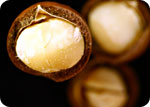
Macadamia Nuts Lower Risk Factors for Coronary Disease
Saturday, August 23, 2008 by: Barbara L. Minton
Tags: macadamia nuts, health news, Natural News
- Colorado Batman shooting shows obvious signs of being staged
- Flu shot hoax admitted: "No controlled trials demonstrating a decrease in influenza"
- Increase your energy with a spring detox
- EXCLUSIVE: Natural News tests flu vaccine for heavy metals, finds 25,000 times higher mercury level than EPA limit for water
- Top three factors for improving your eyesight naturally
- Starbucks bows to public pressure, removes 'bug juice' from strawberry flavoring
- Apricot Seeds Kill Cancer Cells without Side Effects
- Vitamin D proven far better than vaccines at preventing influenza infections
- The MMR vaccine, autism connection
- Top six alkaline foods to eat every day for vibrant health
- How to Use Organic Neem Leaf for Flea and Tick Control for Cats
- Bye bye Coumadin, so long Plavix - Say hello to five natural blood thinners that protect against strokes and blood clots
- The United Nations 2030 Agenda decoded: It's a blueprint for the global enslavement of humanity under the boot of corporate masters
- Indy film industry infiltrated by Nazi-linked SLOAN Foundation: Science propaganda money influences movie scripts at Sundance, Tribeca, Carnegie Mellon and more
- Millions of Americans installing 'perfect spying device' in their own living rooms: Amazon Fire TV monitors and records your conversations
- Decomposed human bodies now routinely found floating down China's rivers
- Man who treated stage III COPD with cannabis off all meds and back to work full time
- Steve Jobs dead at 56, his life ended prematurely by chemotherapy and radiotherapy for cancer
- The MMR vaccine, autism connection
- The best and worst forms of magnesium to take as a supplement
- Flu vaccines causing massive spike in deaths of elderly across the UK, warn health officials
- Petroleum-based skin care: The #1 pore-clogging toxin sold in the USA
- The United Nations 2030 Agenda decoded: It's a blueprint for the global enslavement of humanity under the boot of corporate masters
- Colorado Batman shooting shows obvious signs of being staged
- Use natural remedies for a hiatal hernia
- How to Detox Fluorides from Your Body
- Apricot Seeds Kill Cancer Cells without Side Effects
- Big Pharma suffers another major blow as study debunks high cholesterol myths, admitting statins are totally worthless
- Top six alkaline foods to eat every day for vibrant health
- Top three factors for improving your eyesight naturally
- Flu shot hoax admitted: "No controlled trials demonstrating a decrease in influenza"
- Beat cancer with 35% hydrogen peroxide
- Top 8 foods and herbs for healing cancer
- Boost Low White Blood Cell Count and Immune Function Naturally
- Indian black salve: The magical cancer cure
- Increase your energy with a spring detox
- The MMR vaccine, autism connection
- The best and worst forms of magnesium to take as a supplement
- The United Nations 2030 Agenda decoded: It's a blueprint for the global enslavement of humanity under the boot of corporate masters
- Baking soda, cancer and fungus
- Indian black salve: The magical cancer cure
- Apricot Seeds Kill Cancer Cells without Side Effects
- Peanut oil in vaccines behind widespread peanut allergy epidemic
- Use natural remedies for a hiatal hernia
- Top six alkaline foods to eat every day for vibrant health
- Boost Low White Blood Cell Count and Immune Function Naturally
- The aloe vera miracle: A natural medicine for cancer, cholesterol, diabetes, inflammation, IBS, and other health conditions
- Vaccine fraud exposed: Measles and mumps making a huge comeback because vaccines are designed to fail, say Merck virologists
- Extreme breastfeeding? Woman saves Rottweiler pup by breastfeeding it alongside her own infant
- High-dose vitamin C injections shown to annihilate cancer
- Top three factors for improving your eyesight naturally
- How to heal cavities naturally
- Forget Filling Cavities: Regrow Your Teeth Instead
- Eighteen Overlooked Symptoms of Adrenal Fatigue
- Eleven days before Iran bombed Tel Aviv, my microscope revealed haunting images of EXACTLY what would happen
- DECENTRALIZED SPIRITUALITY and the true teachings of Christ: Overcoming the censorship, threats and lies of organized religion to truly know God and the Universal Christ
- Morphic resonance “remote viewing” reveals iconic Middle East images of stealth bombers, a falcon and a one-horned ram
- HEALTH SECRETS: How to Instantly Block MSG Toxicity Using Natural Substances (and the secret of Methylene Blue)
- The Coming Gold Revaluation: Strategic Financial Realignment in an Era of Dollar Collapse
- The AI Data Center Wars Have Begun… Farms, Water and Electricity is Stripped from Humans to Power the Machines
- Urgent Wake-Up Call: The Coming AI Robot Wars and the Great Human Unity
- The War on Light: How Governments and Big Pharma Keep You Sick By Blocking Healing Photons
- THE AI RACE IS ALREADY WON: How China’s power dominance (and America’s climate lunacy surrender) secured its victory in the race to AI superintelligence
- Why the U.S. Government May be Seeking to Slaughter 200 Million Americans to Free Up Excess Power for AI Data Centers and the Race to Superintelligence
- Trump's Trojan Horse: How Stablecoins Are Secretly Paving the Way for a CBDC Control Grid – an Interview with Catherine Austin Fitts
- Amazing microscopy photos reveal how freezing crystals attempt to mimic electronic structures they are touching
- EXCLUSIVE REPORT: The Trump-Putin Meeting in Alaska - A Historic Pivot that Redefined Global Power
- Injecting chemicals is MORE DANGEROUS than eating them, so why is polysorbate 80 banned in ICE CREAM but allowed in VACCINES?
- BOMBSHELL: Internal Pfizer documents exposed and reveal at least 16 PERCENT of their mRNA vaccine "adverse events" are REPRODUCTIVE DISORDERS
- Exploring the depths of alternative medicine: A comprehensive review of “The Gale Encyclopedia of Alternative Medicine”
- Shingles surge sparks new focus on holistic care: Tackling pain, immunity and risks
- 18 MILLION COVID-JABBED Japanese folks shown to have SIGNIFICANTLY HIGHER DEATH RATES during first year after injection with mRNA clot shots





In a study from the April, 2008 Journal of Nutrition, researchers note that epidemiologic studies and clinical trials have demonstrated that the unique fatty acid profile of nuts beneficially affects serum lipids and lipoproteins, reducing cardiovascular disease risk. Nuts are low in saturated fatty acids and high in polyunsaturated fatty acids and monounsaturated fatty acids.
In a randomized controlled feeding study over five week periods, researchers compared the results on the lipid/lipoprotein profile of a macadamia nut-rich diet vs. an average American diet on male and female subjects with mildly elevated cholesterol levels. They found that serum concentrations of total cholesterol and LDL cholesterol in the macadamia group were significantly lower than the levels of the American diet group. The serum non-HDL cholesterol concentration and the ratios of total cholesterol to HDL and LDL were reduced in those on the macadamia diet compared with the American diet. There was no change in serum triglyceride concentration. These results indicate a lowering of overall cardiovascular disease risk.
In a study reported in the June, 2007 journal Lipids researchers note that in addition to being rich sources of oleic and palmitoleic acids, macadamia nuts contain polyphenol compounds that lead them to conclude that consumption of macadamias can be expected to confer health benefits. Their study was conducted to examine the effects of macadamia consumption on biomarkers of oxidative stress, coagulation and inflammation in males with high cholesterol levels. Seventeen such males were given macadamia nuts equivalent to 15% of energy intake for a period of 4 weeks.
As expected by the researchers, monounsaturated fatty acids were elevated in the plasma lipids of all study participants following the period of consumption of macadamias. Plasma markers of inflammation and oxidative stress were significantly lower. This study demonstrated for the first time that short-term macadamia nut consumption favorably modifies the biomarkers of oxidative stress, thrombosis and inflammation, the risk factors for coronary artery disease, despite an increase in dietary fat intake.
Another dietary trial in Hawaii also demonstrated that macadamia nut consumption lowered risk indicators for heart disease. And a study in at the University of Newcastle, involving subjects with elevated cholesterol levels, found that participants who ate macadamia nuts showed significant reduction in blood serum cholesterol, total blood triglycerides, LDL cholesterol, and blood clots.
A study in Japan involving young women as subjects found that after only three weeks on a diet high in macadamia nuts, the subjects revealed a significant reduction in both serum and LDL cholesterol levels. These benefits were produced with as little as a 20 gram consumption of macadamia nuts per day.
Macadamia nuts also contain a significant level of protein, comprising essential and non-essential amino acids. They are a good source of minerals so essential to a healthy diet, and so needed to maintain ideal weight. These include per 100 grams: 410 mg potassium, 200 mg phosphorus, 120 mg magnesium, and 64 mg calcium. Selenium, iron, manganese, copper and zinc are present in small amounts. Macadamias contain significant amounts of a broad range of vitamins including Vitamin E as tocopherols and tocotrienols, B1 (thiamine), B5 (pantothenic acid), B6, B2 (riboflavin), niacin and folate. They also contain phytosterols.
Macadamias improve the balance between omega-6 and omega-3 fatty acids. They also have a high dietary fiber content of approximately 7%. Dietary fiber is the term for carbohydrates that are resistant to enzyme digestion in the stomach. These consist of complex soluble carbohydrates and soluble fiber such as, hemicellulose, amylopectins, mucilage, gums and insoluble cellulose. Dietary fiber promotes the feeling of dietary satisfaction, slows digestion, promotes desirable intestinal bacteria, and keeps bowels healthy. It plays a role in reduction of cancer and diabetes risk.
Macadamias also contain the phytonutrient classes of phenolic compounds: flavonoids, phytoestrogens, phytic acid, tannins which convert to ellagic acid in the body, saponins, and lignans.
And we saved the best news for last. Studies of tree nut eaters, a category that includes macadamias, usually weigh less than control subjects when studied.
About the author
Barbara is a school psychologist, a published author in the area of personal finance, a breast cancer survivor using "alternative" treatments, a born existentialist, and a student of nature and all things natural.


Macadamia nuts at FETCH.news
Get independent news alerts on natural cures, food lab tests, cannabis medicine, science, robotics, drones, privacy and more.

Take Action: Support Natural News by linking to this article from your website
Permalink to this article:
Embed article link: (copy HTML code below):
Reprinting this article:
Non-commercial use OK, cite NaturalNews.com with clickable link.
Follow Natural News on Facebook, Twitter, Google Plus, and Pinterest

Science News & Studies

Medicine News and Information

Food News & Studies

Health News & Studies

Herbs News & Information

Pollution News & Studies

Cancer News & Studies

Climate News & Studies

Survival News & Information

Gear News & Information

News covering technology, stocks, hackers, and more






"Big Tech and mainstream media are constantly trying to silence the independent voices that dare to bring you the truth about toxic food ingredients, dangerous medications and the failed, fraudulent science of the profit-driven medical establishment.
Email is one of the best ways to make sure you stay informed, without the censorship of the tech giants (Google, Apple, Facebook, Twitter, YouTube, etc.). Stay informed and you'll even likely learn information that may help save your own life."
–The Health Ranger, Mike Adams