



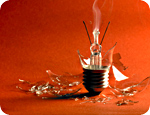
BanTheBulb.org promotes energy efficient lighting, but neglects LED lights
 Monday, July 30, 2007 Monday, July 30, 2007by Mike Adams, the Health Ranger Editor of NaturalNews.com (See all articles...) Tags: light bulbs, fluorescent lamps, health news |
- The REAL FAKE NEWS exposed: '97% of scientists agree on climate change' is an engineered hoax... here's what the media never told you
- Bullet proof immune system - how to not get a cold ever
- Garlic's healing properties are so intense that it is 100 times more effective than antibiotic treatments
- Chinese government suspends Hepatitis B vaccines after 8 horrific infant deaths
- The best and worst forms of magnesium to take as a supplement
- Reverse and eliminate cataracts naturally without surgery
- Forget Filling Cavities: Regrow Your Teeth Instead
- Prostate health and zinc
- Early warning signs of cancer that cannot be ignored
- Bill Gates and George Soros fund Monsanto and a world depopulation agenda
- The MMR vaccine, autism connection
- A common vegetable cures skin cancer
- Healed by wheatgrass: 74-year-old man with cancer told he would be 'dead in a matter of weeks' proves doctors wrong
- Zeolites contain high levels of lead and aluminum: Health Ranger publishes lab test results after being threatened with legal action by manufacturer
- WATCH: Whistleblowers reveal criminal practices of pharmaceutical industry in stunning interviews
- Article updated with new message from the Health Ranger
- Smokers or past smokers: Six ways to cleanse and revitalize your lungs
- Over 30,000 scientists say 'Catastrophic Man-Made Global Warming' is a complete hoax and science lie
- The REAL FAKE NEWS exposed: '97% of scientists agree on climate change' is an engineered hoax... here's what the media never told you
- Red Cabbage Found to Contain 36 Anti-Cancer Anthocyanins
- The benefits of growing your own garlic
- HPV and Hepatitis B vaccines do not prevent cervical cancer and liver disease
- Forget Filling Cavities: Regrow Your Teeth Instead
- Bullet proof immune system - how to not get a cold ever
- Beat cancer with 35% hydrogen peroxide
- How to reduce your toxic heavy metal load simply and cheaply
- NASA admits to spraying Americans with poisonous chemtrails
- Radiation, chemtrails, fertilizers: Humans are crossing "planetary boundaries" and killing Earth, study says
- The best and worst forms of magnesium to take as a supplement
- Xylitol - Is It Safe or Effective?
- Early warning signs of cancer that cannot be ignored
- Natural News launches 'miracle' Ozone Dentistry product for gum care: O3 Essentials OraJuvenate
- Antioxidants Relieve Pancreatitis Pain
- Vitamin C shown to annihilate cancer
- Oregon man convicted of collecting rainwater on his own property surrenders and begins serving 30-day jail sentence
- Dandelion root extract found to kill leukemia cells, prostate cancer cells and chemo-resistant melanoma
- The REAL FAKE NEWS exposed: '97% of scientists agree on climate change' is an engineered hoax... here's what the media never told you
- Six little-known natural remedies for tinnitus
- High-dose vitamin C injections shown to annihilate cancer
- Four proven natural remedies for chronic inflammation
- Beat cancer with 35% hydrogen peroxide
- Oregon man convicted of collecting rainwater on his own property surrenders and begins serving 30-day jail sentence
- Dandelion root extract found to kill leukemia cells, prostate cancer cells and chemo-resistant melanoma
- Untested vaccines causing new wave of polio-like paralysis across India
- Apricot Seeds Kill Cancer Cells without Side Effects
- The best and worst forms of magnesium to take as a supplement
- Foods that detox heavy metals - with tonic recipe
- Olive oil antioxidant naturally kills all cancer cells tested within an hour
- Forget Filling Cavities: Regrow Your Teeth Instead
- Four bitter herbs heal the liver, gall bladder, and other ailments
- Curcumin causes colon cancer cells to self-destruct
- Dandelion root far more effective in fighting cancer cells than chemotherapy
- Red Cabbage Found to Contain 36 Anti-Cancer Anthocyanins
- Sea cucumber extract kills 95 percent of breast cancer cells and shrinks lung tumors
- Newly released JFK files reveal Pentagon's role in creating Lyme disease and covid in the same lab
- EPA advisor admits the agency is funneling billions to climate groups ahead of Trump’s return to White House
- Eleven days before Iran bombed Tel Aviv, my microscope revealed haunting images of EXACTLY what would happen
- Morphic resonance “remote viewing” reveals iconic Middle East images of stealth bombers, a falcon and a one-horned ram
- Mike Adams releases country western hit single: Goin’ Back in Time is Comin’ Home
- DECENTRALIZED SPIRITUALITY and the true teachings of Christ: Overcoming the censorship, threats and lies of organized religion to truly know God and the Universal Christ
- HEALTH SECRETS: How to Instantly Block MSG Toxicity Using Natural Substances (and the secret of Methylene Blue)
- The Health Ranger releases “Vaccine Zombie” song and music video, using AI-animated zombies for the music video
- Global leaders unite to clamp down on “misinformation” with UN-backed Cascais Declaration
- BOMBSHELL: Internal Pfizer documents exposed and reveal at least 16 PERCENT of their mRNA vaccine "adverse events" are REPRODUCTIVE DISORDERS
- I Want My Bailout Money – new song released by Mike Adams
- BOMBSHELL: DNA testing kits are a SCAM to develop ethnic-specific bioweapons
- Amazing microscopy photos reveal how freezing crystals attempt to mimic electronic structures they are touching
- RFK Jr. clears key hurdle: Sen. Susan Collins backs controversial HHS nominee, signaling a new era for health policy
- BOMBSHELL: Covid-19 mRNA nanoparticles EMIT LIGHT SIGNALS that communicate MAC addresses used for self-assembly inside the blood vessels
- The Coming Gold Revaluation: Strategic Financial Realignment in an Era of Dollar Collapse
- The AI Data Center Wars Have Begun… Farms, Water and Electricity is Stripped from Humans to Power the Machines
- Urgent Wake-Up Call: The Coming AI Robot Wars and the Great Human Unity





According to the website, their goal is to ban the sale of incandescent bulbs by specific dates, starting with 60W and 100W incandescent bulbs. The organization promotes energy efficiency and conservation by explaining the benefits of greater energy efficiency while encouraging the adoption of available technologies. It also supports a higher tax on incandescent light bulbs to make fluorescent lights more cost competitive.
The EU has recently announced its intention to cut carbon emissions by 20 percent by 2020. Energy saving is an essential part of the EU's strategy to reduce CO2 emissions, but 80 percent of home lighting today uses highly inefficient incandescent bulbs that convert only five percent of the energy they consume into light.
This month, "at an EU conference hosted by Germany's Chancellor, Angela Merkel, the European Union's leaders announced their intention to ban incandescent light bulbs, for the 490 million people living within the EU's 27 countries, by 2010," according to the website. This new legislation being pondered by the EU calls upon member states, "along with EU encouragement [to] immediately launch public information campaigns on the economic and environmental advantages of efficient lighting systems and maximize existing legislation to facilitate the phasing-out of the incandescent bulb."
There is a growing worldwide move to ban incandescent bulbs in such diverse places as Cuba (May '06), Venezuela (Nov '06), Australia (Feb '07) and Ontario, Canada (Feb '07). Five U.S. states, including California, are also considering legislation to ban incandescent bulbs.
One section from the website sums up the ambition behind this project: "Let's just hope that more politicians start to mention how they intend to decide which light bulbs should be banned (and by when!), what they are going to do to ensure that all CFLs are responsibly recycled, how they are going to help the poor to change their lighting, whether any heavily-taxed incandescent bulbs are going to remain available for specialist purposes, which other wasteful technologies they would like to get banned and/or which other energy-efficient technologies they would like to help get established..."
Alternatives to the light bulb
As consumers and nations move away from highly inefficient incandescent lights, most are considering using compact fluorescent light bulbs. Yet few people truly understand the health hazards posed by the mercury found in these lights.Fluorescent lights are filled with a gas containing low-pressure mercury vapor and argon. The inner surface of the bulb is coated with a fluorescent coating made of varying blends of metallic and rare earth phosphor salts. When a high-voltage current is passed through this vapor, the electricity causes the gasses to "fluoresce" or emit light.
Fluorescent light bulbs are more efficient than incandescent light bulbs of an equivalent brightness, but they flicker, hum and burn out more quickly when cycled frequently. They also contain a remarkably high amount of toxic mercury -- about 4mg - 6mg per fluorescent light bulb.
About 30,000 pounds of mercury are dumped into the environment each year due to the disposal of compact fluorescent light bulbs. That's an enormous amount of mercury, and almost half of the total amount of mercury emitted into the atmosphere by coal-fired power plants.
Many state governing agencies have even adopted their own regulations regarding fluorescent lights. In California, Minnesota, Ohio, Illinois, Indiana, Michigan, and Wisconsin, it is unlawful for anyone to dispose of fluorescent bulbs as universal waste, according to LightBulbRecycling.com.
So far, BanTheBulb.org fails to offer mercury-free alternative to fluorescent lights, such as my own company's high-efficiency LED lighting products found at www.BetterLifeGoods.com
These LED lights are completely free of mercury, and they generate clean white light using 1/10th the electricity of incandescent light bulbs. They're more expensive up front (due to the use of high quality components), but they last 50,000 hours and pay for themselves within 1 - 2 years of use due to electricity savings.
Promoting the use of compact fluorescent lights is, I believe, creating a serious threat to the health of our environment. Most consumers do not properly recycle fluorescent lamps. While the widespread consumption of fluorescent lights may save our nation from wasting electricity on incandescent lights, it may also lead to a mercury contamination catastrophe. Never before in the history of our world has so much mercury been so widely distributed across the environment. The long-term effects of this contamination are currently unknown, but they can only be negative. The only unknown concerns the degree of harm that will emerge.


Light bulbs at FETCH.news
Get independent news alerts on natural cures, food lab tests, cannabis medicine, science, robotics, drones, privacy and more.
 About the author:Mike Adams (aka the "Health Ranger") is a best selling author (#1 best selling science book on Amazon.com) and a globally recognized scientific researcher in clean foods. He serves as the founding editor of NaturalNews.com and the lab science director of an internationally accredited (ISO 17025) analytical laboratory known as CWC Labs. There, he was awarded a Certificate of Excellence for achieving extremely high accuracy in the analysis of toxic elements in unknown water samples using ICP-MS instrumentation. Adams is also highly proficient in running liquid chromatography, ion chromatography and mass spectrometry time-of-flight analytical instrumentation.
Adams is a person of color whose ancestors include Africans and Native American Indians. He's also of Native American heritage, which he credits as inspiring his "Health Ranger" passion for protecting life and nature against the destruction caused by chemicals, heavy metals and other forms of pollution.
Adams is the founder and publisher of the open source science journal Natural Science Journal, the author of numerous peer-reviewed science papers published by the journal, and the author of the world's first book that published ICP-MS heavy metals analysis results for foods, dietary supplements, pet food, spices and fast food. The book is entitled Food Forensics and is published by BenBella Books.
In his laboratory research, Adams has made numerous food safety breakthroughs such as revealing rice protein products imported from Asia to be contaminated with toxic heavy metals like lead, cadmium and tungsten. Adams was the first food science researcher to document high levels of tungsten in superfoods. He also discovered over 11 ppm lead in imported mangosteen powder, and led an industry-wide voluntary agreement to limit heavy metals in rice protein products.
In addition to his lab work, Adams is also the (non-paid) executive director of the non-profit Consumer Wellness Center (CWC), an organization that redirects 100% of its donations receipts to grant programs that teach children and women how to grow their own food or vastly improve their nutrition. Through the non-profit CWC, Adams also launched Nutrition Rescue, a program that donates essential vitamins to people in need. Click here to see some of the CWC success stories.
With a background in science and software technology, Adams is the original founder of the email newsletter technology company known as Arial Software. Using his technical experience combined with his love for natural health, Adams developed and deployed the content management system currently driving NaturalNews.com. He also engineered the high-level statistical algorithms that power SCIENCE.naturalnews.com, a massive research resource featuring over 10 million scientific studies.
Adams is well known for his incredibly popular consumer activism video blowing the lid on fake blueberries used throughout the food supply. He has also exposed "strange fibers" found in Chicken McNuggets, fake academic credentials of so-called health "gurus," dangerous "detox" products imported as battery acid and sold for oral consumption, fake acai berry scams, the California raw milk raids, the vaccine research fraud revealed by industry whistleblowers and many other topics.
Adams has also helped defend the rights of home gardeners and protect the medical freedom rights of parents. Adams is widely recognized to have made a remarkable global impact on issues like GMOs, vaccines, nutrition therapies, human consciousness.
In addition to his activism, Adams is an accomplished musician who has released over a dozen popular songs covering a variety of activism topics.
Click here to read a more detailed bio on Mike Adams, the Health Ranger, at HealthRanger.com.

Take Action: Support Natural News by linking to this article from your website
Permalink to this article:
Embed article link: (copy HTML code below):
Reprinting this article:
Non-commercial use OK, cite NaturalNews.com with clickable link.
Follow Natural News on Facebook, Twitter, Google Plus, and Pinterest

Science News & Studies

Medicine News and Information

Food News & Studies

Health News & Studies

Herbs News & Information

Pollution News & Studies

Cancer News & Studies

Climate News & Studies

Survival News & Information

Gear News & Information

News covering technology, stocks, hackers, and more





"Big Tech and mainstream media are constantly trying to silence the independent voices that dare to bring you the truth about toxic food ingredients, dangerous medications and the failed, fraudulent science of the profit-driven medical establishment.
Email is one of the best ways to make sure you stay informed, without the censorship of the tech giants (Google, Apple, Facebook, Twitter, YouTube, etc.). Stay informed and you'll even likely learn information that may help save your own life."
–The Health Ranger, Mike Adams