



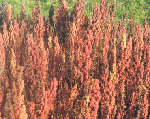
Interview with Robert Leventry of Inca Organics on healthy, versatile quinoa
 Sunday, January 01, 2006 Sunday, January 01, 2006by Mike Adams, the Health Ranger Editor of NaturalNews.com (See all articles...) Tags: quinoa, organic farming, Equador |
- The United Nations 2030 Agenda decoded: It's a blueprint for the global enslavement of humanity under the boot of corporate masters
- Asthma inhalers with tracking devices: The future of American Big Brother healthcare
- 'Natural' breakfast cereals loaded with pesticides and GMOs - explosive new scorecard from Cornucopia reveals all
- Big Pharma pushes doctors to overprescribe drugs, study finds
- The new statin drug scam: Half the doctors on the recommendation panel have Big Pharma ties
- Senate Bill 510 Food Safety? The FDA has killed far more people than contaminated eggs or lettuce
- Why swine flu vaccines just don't add up: Doing the (fuzzy) math
- Pesticide exposure may make you want to kill yourself
- List of U.S. Senators who voted for S 510 Food Safety Act
- Swedish official admits toxic 'chemtrails' are real, not a wild conspiracy theory
- Apricot Seeds Kill Cancer Cells without Side Effects
- DHS, FBI refuse to protect free speech advocate from terrorist death threats; Obama regime only concerned with conservatives, Christians
- Even the CDC admits this vaccine doesn't work
- Discover the radiation protective benefits of Spirulina and Chlorella
- FDA finally admits chicken meat contains cancer-causing arsenic (but keep eating it, yo!)
- FDA document admits vaccines are linked to autism
- Fukushima reactor No. 4 vulnerable to catastrophic collapse; could unleash 85 times Cesium-137 radiation of Chernobyl; human civilization on the brink
- Merck Engaged in Blatant Scientific Fraud with Vytorin Cholesterol Study? (opinion)
- Nine cancer cures that the Medical Mafia doesn't want you to know about
- Do Statin Drugs Cause Vitamin D Deficiency?
- BREAKING: CDC whistleblower confesses to MMR vaccine research fraud in historic public statement
- Magnesium: The Lamp of Life
- REVEALED: Cancer industry profits 'locked in' by nagalase molecule injected into humans via vaccines... spurs tumor growth... explains aggressive vaccine push
- U.S. Census Bureau helped racially target thousands of American citizens for armed government kidnappings, camp internments
- Whole Foods caught in GMO marketing deception, false advertising - here's the proof
- If you or a loved one is taking Prozac, consider switching to cashews instead (yes, cashews!)
- Nearly two dozen medical studies prove that vaccines can cause autism
- Medicine at gunpoint: Seattle mother arrested for "kidnapping" her own baby to seek alternative treatments
- Black Pepper Offers a Powerful Boost to Overall Health at a Very Low Cost
- Glyphosate detected in feeding tubes given to babies and children with cancer
- The best, and worst, laundry detergents with 1,4-dioxane contamination
- The big lie of genetics exposed: human DNA incapable of storing complete blueprint of the human form
- Foods scientifically proven to kill cancer
- 10 health benefits of cucumbers
- Swedish official admits toxic 'chemtrails' are real, not a wild conspiracy theory
- 'Natural' breakfast cereals loaded with pesticides and GMOs - explosive new scorecard from Cornucopia reveals all
- The REAL FAKE NEWS exposed: '97% of scientists agree on climate change' is an engineered hoax... here's what the media never told you
- Reverse and eliminate cataracts naturally without surgery
- Nine cancer cures that the Medical Mafia doesn't want you to know about
- Beat cancer with 35% hydrogen peroxide
- These 15 common herbs cure everything from infections to inflammation and indigestion
- What's really in vaccines? Proof of MSG, formaldehyde, aluminum and mercury
- Lack of Forgiveness Can Affect Our Health
- The best, and worst, laundry detergents with 1,4-dioxane contamination
- BREAKING: CDC whistleblower confesses to MMR vaccine research fraud in historic public statement
- Apricot Seeds Kill Cancer Cells without Side Effects
- The best and worst forms of magnesium to take as a supplement
- BREAKING: Taiwan bans GMOs from school lunches... mandates GMO labeling nationwide... throws down gauntlet on toxic foods from USA and Monsanto
- Bill Gates says vaccines can help reduce world population
- Merck vaccine scientist Dr. Maurice Hilleman admitted presence of SV40, AIDS and cancer viruses in vaccines
- Shock findings in new GMO study: Rats fed lifetime of GM corn grow horrifying tumors, 70% of females die early
- The United Nations 2030 Agenda decoded: It's a blueprint for the global enslavement of humanity under the boot of corporate masters
- Sickening: Major food corporations use tissue from aborted babies to manufacture flavor additives in processed foods
- Vitamin B-12 warning: Avoid cyanocobalamin, take only methylcobalamin
- Urgent Wake-Up Call: The Coming AI Robot Wars and the Great Human Unity
- The AI Data Center Wars Have Begun… Farms, Water and Electricity is Stripped from Humans to Power the Machines
- EXCLUSIVE REPORT: The Trump-Putin Meeting in Alaska - A Historic Pivot that Redefined Global Power
- The Coming Gold Revaluation: Strategic Financial Realignment in an Era of Dollar Collapse
- 18 MILLION COVID-JABBED Japanese folks shown to have SIGNIFICANTLY HIGHER DEATH RATES during first year after injection with mRNA clot shots
- The War on Light: How Governments and Big Pharma Keep You Sick By Blocking Healing Photons
- Liberalism is More than a Mental Illness – It’s TERRORISM against America’s Youth
- Why We Need the Charlie Kirk Free Speech Act: A Legal Shield Against the Censorship Industrial Complex
- A Billion Voices of Truth: Mike Adams Announces “Moonshot” Mission to Empower Humanity with Hidden Knowledge
- How a nasal spray vaccine could turn Americans into walking bioweapons this Fall
- Franken-butter: Startup backed by Bill Gates creates butter from thin air
- New MAHA plan aims to tackle childhood health crisis with over 120 initiatives
- Coral resilience defies climate doom: New studies reveal ancient reefs flourished in warmer seas
- AI & economic liberty: Will decentralized tech save human autonomy?
- The assassination of Charlie Kirk: A grave blow to free speech in America
- AI takeover: 50% of remote jobs to be replaced within 3 years as machines outperform humans in fairness and accuracy
- Enoch AI: The free, truth-based AI model challenging big tech censorship
- Trump admin mulls travel bans on EU officials behind digital censorship laws





Leventry: Right, along with black amaranth, but, by far, the majority of our sales are the whole grain quinoa.
Mike: I've been a big proponent of quinoa for a long time. It's something that I eat regularly. In your literature, you claim that your quinoa is the only truly whole grain quinoa. Can you explain that a bit more?
Leventry: Sure. Quinoa that comes from Bolivia and Peru is polished quinoa. There's a naturally occurring coating called saponin that is very bitter tasting and has to be removed. Because saponin is also used in the pharmaceutical industry and has other uses, it has economic value. The quinoa is polished to recover the saponin powder. It sometimes is washed after polishing, and sometimes it's not. When it's not, you'll still get this residue of the bitter taste. When it is, you will not. Our quinoa is washed to remove the saponin. The saponin is not recoverable, but it is a type of organic fertilizer. It also serves that function, so on the experimental farm near our post-harvest facility in Ecuador, it's used as a spray fertilizer on other crops as well as quinoa.
Mike: Interesting. So, your quinoa is coming from Ecuador and, did you say Bolivia as well?
Leventry: No, just Ecuador. The major suppliers from South America are Ecuador, Bolivia and Peru. Bolivia is the largest, and Ecuador is probably the second-largest, followed by Peru.
Mike: Is there any difference in your quinoa from a macronutrient point of view versus others on the market? For example, does it have higher levels of fiber?
Leventry: Yes. Because it is whole grain, and part of the epidermal layer has not been removed, our quinoa has 6.5 grams of fiber while quinoa from Bolivia has about 3 grams. So, it has over twice the fiber content.
Mike: Does it have more protein?
Leventry: It has more protein and is significantly higher in iron. The others are zero in vitamin A and calcium, whereas we have a small amount.
Mike: So, when people go out to a health food store or purchase quinoa products for retail, how can they make sure those products contain whole grain quinoa from your source?
Leventry: When the retail market is involved with purchasing quinoa, we have a distributor list. They can go to our website and see by state what distributors carry our product. They can order it from them. Now, if it's an individual in a retail store, they have to look for products that carry our quinoa, such as Bob's Red Mill, Seeds of Change and Oskri Organics. They can go to our website and from our website click on the supplier to the retail market's website or the retailer themselves and buy online if they wish. Or, they can find out where the nearest store is.
Mike: Wonderful. Bob's Red Mill is a very popular brand. Is all of their quinoa your quinoa?
Leventry: Yes, without exception.
Mike: And Seeds of Change?
Leventry: Yes, Seeds of Change. And they do a number of peel-offs -- about three different types of peel-offs -- and that is exclusively our grain, as well.
Mike: Do you offer your grain in various physical formats such as flakes and whole grains?
Leventry: Yes, we do. It's kind of interesting. Here are the quinoa flakes that are produced from Bolivia -- Bolivian quinoa. You can see the difference between the whole grain and the higher fiber and then the polished, lighter color white grain.
Mike: I see that the whole grain is darker, more like a whole wheat bread, versus a white bread.
Leventry: Right. It's a good analogy. You might say that much of the Bolivian quinoa is just one specific hybrid that they have bred to be lower in saponin and whiter looking because it was bred originally to be a competition for rice.
Mike: I see.
Leventry: So, they were trying to make it bland flavored, bigger and whiter. Our quinoa is just what has been grown in heirloom varieties for centuries, and we're not even sure what varieties we have. There are about 106 different quinoa varieties in the world, and ours has quite a few different varieties, so you'll see different colors in it. It has a more intense flavor because of that, too. Plus, it won a Slow Food Award two years ago for biodiversity. We're trying to keep many of the varieties to create biodiversity and have more plants available, because they all have various benefits.
Mike: Let me ask you a couple of other questions on a different track. Let's talk about people who have not tried quinoa yet. They're thinking, "Okay, this is an ancient grain. Everyone's talking about its health benefits or its uniqueness." Why would a person want to try quinoa, and what would they likely experience once they did?
Leventry: Well, I think it has a very pleasing flavor. It has a delicate nutty flavor, and the main thing about quinoa is it's a whole grain. It's a super-grain because it is a complete protein. It has all the essential amino acids necessary for health and development, and it's in the right proportion for human growth and development, which is very important. It has the same nutritional profile that milk does, so it's more of a complete protein like milk or meat that you get from an animal source, but it's a vegetable source. It's the only vegetable source recognized by the UN Food Association as a complete protein.
Mike: That's a very good point.
Leventry: It really is. Plus, most whole grains take a long time to cook, and then there's usually some processing that you have to do, but quinoa is a little sesame seed-looking grain that you cook in 15 minutes and it's ready to go. You can flavor it and use it with sweets, or you can flavor it for savory dishes. You can put in soy sauce, other flavorings and vegetables of all sorts. You can put meat in it and chicken and things like that. It really has a lot of various uses. We use it like rice and cook it like rice. In fact, I cook it in a rice cooker. It's very easy to cook: One and a half to two parts water to one part quinoa. In 15 minutes, it's ready to go.
Mike: I'm glad you mentioned all of that. I've often recommended people just boil some quinoa and have a quinoa base around. Then you can use it for so many different things. I like to make quinoa pudding with natural sweeteners and a little bit of rice protein. I might put in some bananas, and it's just wonderful instant pudding, without any harmful ingredients. Or, like you say, you can make a quinoa chili. Just put in some beans and some tomato sauce and you've got a quinoa chili.
I think it's also important to remind people that when they are eating other grains, those other grains are not a complete protein. They don't have all the essential amino acids. Even though quinoa's protein content is not extremely high, it is one of the highest from the grain and fruit categories. Now, this has been an interesting problem: Some people claim quinoa is more like a fruit or a bush fruit rather than a grain, but popularly it's known as a grain. What's your take on it?
Leventry: Well, it's called a seed grain, and amaranth is another grain that's a seed grain, so we classify it as a grain because it's used as a grain. You can use it like rice in the same way, and you would consider rice a grain. Quinoa is just a more nutritional grain. So, yes, it's probably a fruit, but I don't think that matters.
Mike: Would you care to share how much of this you import each year? Or is that a trade secret?
Leventry: No, no, we're a public company. People can look it up with the Securities and Exchange Commission. We were Peace Corps volunteers in Ecuador from '93 to '96, and when we came back, we started the company. We worked with roughly 4,025 indigenous farm families in Central Ecuador that grow the product for us, and we have an export company in Ecuador that exports to Great Britain. It's up to possibly 150 to 160 tons annually. It's climbing rapidly. It's growing very rapidly. Britain is very health-conscious now that they've gone through mad cow and hoof and mouth. Frankly, they're flocking to quinoa as a protein source.
In the United States, it's approaching 400 metric tons a year, the majority of which goes to food manufacturers like Bob's Red Mill, Seeds of Change and Oskri Organics, like we already mentioned. We're going to do quite a bit more in Australia. Those are our three markets, with the U.S. being roughly twice the size of Great Britain. With Great Britain, the penetration is huge, because, relatively speaking, the populations are such that 200 tons is quite a bit.
Mike: With the trends that you're seeing, what kind of annual growth rate are you seeing in the demand for quinoa?
Leventry: Our shipments the first year were at roughly 27 metric tons total. That's what we exported, all to the United States.
Mike: What year was that?
Leventry: 1998. And we have more or less doubled each year. Now, this is the first year that we have begun to level off, which, without getting too technical, is not necessarily a bad thing from a cash flow position. We've just recently been given JAS, which is the Japan Organic Certification symbol. We've become certified there. Our next spurt will be the Pacific Rim, specifically Japan. So, we've kind of grown in a step function, and then we jumped up when the west coast manufacturers entered into it. Then we jumped again when Great Britain entered into it. And we're going to jump again when Japan and the Pacific Rim enters.
I see an increased awareness because people are more interested in whole grains now. They're seeing the difference in carbohydrates and that there are better foods that deliver carbohydrates in a better way. The whole grains are more important to eat than the refined grains. I've seen that coming, plus the fact that food manufacturers are looking for various ways to make more healthy food products with whole ingredients rather than using chemicals to give you the nutrients. As a dietician, I see them using whole foods put together in a way that they can deliver the same nutritional benefit, with the phytochemicals and all the antioxidants that come with them, too.
Mike: Absolutely.
Leventry: I see that coming. It's just going to take a while.
Mike: I see the trend. The Atkins Diet backlash is happening now, where people say maybe that went too far in avoiding all carbohydrates. And I see a very strong movement now toward people saying, "Let's choose wisely in our carbohydrates," which almost always means whole grains. I think that falls very nicely into quinoa.
Leventry: I think you're going to see some interesting things coming from the glycemic index research of foods. There's work that's been done in Australia by some very, very good professionals that are bringing out some diets or ways of eating that maintain your blood sugar level at a more level pace so you don't get spikes in being hungry. I think that will help a lot. And that's going to be big.
Mike: What about sustainable economics for the farmers of the quinoa? How does your company ensure that they can make an honest living creating this product?
Leventry: In the last three years, we have flown over a million dollars into the Ecuadorian farmers cooperative. It's a cooperative formed of 13 village units. We work through an agency called Erpe. It's been around for 42 or 43 years, and they've been working with the indigenous through literacy -- that means Spanish literacy because their native language is Quechua, which was the Inca language -- and also through healthcare and human rights, and protecting their rights in other areas. Erpe is fundamentally a radio station. They communicate with the indigenous through the radio. The indigenous don't have much, but universally, they do have radios. We work with what they have. They man our post-harvest facility for us. They're the ones who do the majority of the interfacing with the farmers' cooperative. The president of the farmers' cooperative works at Erpe headquarters. They're very close. Erpe in English is the "People's Radio of Ecuador."
We have raised their annual income per farm family from about $250 per year to over $500 per year; it's more than doubled. The Ecuadorian government sets the poverty level at somewhere around $360 a year. So, at least as defined by Ecuadorian government, we've raised them above the poverty level. They keep a third of the crop since we only buy two thirds. They keep one-third, and that's used for themselves or they can sell it on the national market. Normally, they use it for themselves. The study done for malnutrition of children in this area has dropped from about 74 percent five years ago to less than 24 percent today.
Mike: I think that American children have a higher malnutrition rate than 24 percent.
Leventry: That's right. The average in Ecuador is 27 percent. I don't know what the average is in the United States. The interesting thing is that Ecuadorians did not eat quinoa much. Some of the indigenous up in the mountains did, and they maintained that. But they had been told for centuries by the higher-class people that conquered them that quinoa was a dirty indigenous food and that they shouldn't eat it. They should feed it to the animals. So, they started taking up the more refined grains. They ate a lot of rice, hot dogs and french fries just like we do. They can't afford to do that when they can grow their own quinoa.
It's been very interesting, because there is a woman who works for the UN -- an American who's lived in Ecuador for 40 years -- who's also been promoting quinoa very strongly. With her help, we've put quinoa into some of the school lunch programs. The UN has a program for making quinoa bread out of the flour now, and there's even a high-class restaurant in Quito, the capital city, that's serving quinoa on the menu, which is unheard of. So, we feel very happy that the Ecuadorians are starting to eat the quinoa they had given up on for so long. That's been one of the major things for us, I think.
Mike: In Western cultures, quinoa is in vogue. Wealthy individuals, those who are informed, are realizing, "Hey, we want to be healthy."
Leventry: There was this one older farmer that said to us, "You know, they used to say our food was pig food, and now we're exporters." He was feeling very proud. This radio station that we work with is having more indigenous festivals and promoting things. They have an organic store where they're doing quinoa pasta and making quinoa cookies, so it's really coming around. They're wonderful. We were lucky to find them. It took us two years to establish the contact. It was done through the German certification agency that we used to certify our quinoa as organic. Hans Gotts introduced me to Erpe. He knew of them and what they were doing. I expressed to him my concern. I had tried two other possible sources; the problem being there was no way to set up measurements of whether the money was flowing to the farmer. It helps to be in the Peace Corps in a country for three years. You can judge the culture quickly. So, this was the third attempt, and it worked out fine.
Mike: I think it's striking to note that this is a case where industrialized nations have found that they have lessons to learn from so-called "third world" countries and that there are treasures in these so-called "third world" countries.
Leventry: That's right. The Peace Corps had this saying that if you give a man a fish, you feed him for a day. If you teach the man (or woman) to fish, you feed them for a lifetime. Well that falls short. It's baloney. They already know how to fish. The only things they really need are markets for their fish. We're not trying to teach these Ecuadorian farmers who've been doing this on and off for centuries how to grow quinoa at 11,000 feet. They know that. And they know how to do it organically because they've never used chemicals anyway. They can't afford them. I was reading an editorial yesterday in the Los Angeles Times, and it came to the conclusion -- it was kind of knock on the World Bank -- that they don't need gifts and they don't need handouts. They need markets. It took them the whole editorial to get there.
Mike: Thank you so much for sharing your story and for helping to educate us all about quinoa.


Quinoa at FETCH.news
Get independent news alerts on natural cures, food lab tests, cannabis medicine, science, robotics, drones, privacy and more.
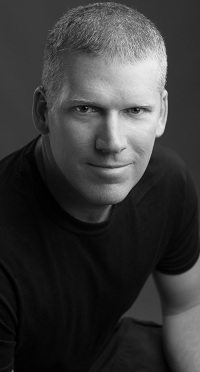 About the author:Mike Adams (aka the "Health Ranger") is a best selling author (#1 best selling science book on Amazon.com) and a globally recognized scientific researcher in clean foods. He serves as the founding editor of NaturalNews.com and the lab science director of an internationally accredited (ISO 17025) analytical laboratory known as CWC Labs. There, he was awarded a Certificate of Excellence for achieving extremely high accuracy in the analysis of toxic elements in unknown water samples using ICP-MS instrumentation. Adams is also highly proficient in running liquid chromatography, ion chromatography and mass spectrometry time-of-flight analytical instrumentation.
Adams is a person of color whose ancestors include Africans and Native American Indians. He's also of Native American heritage, which he credits as inspiring his "Health Ranger" passion for protecting life and nature against the destruction caused by chemicals, heavy metals and other forms of pollution.
Adams is the founder and publisher of the open source science journal Natural Science Journal, the author of numerous peer-reviewed science papers published by the journal, and the author of the world's first book that published ICP-MS heavy metals analysis results for foods, dietary supplements, pet food, spices and fast food. The book is entitled Food Forensics and is published by BenBella Books.
In his laboratory research, Adams has made numerous food safety breakthroughs such as revealing rice protein products imported from Asia to be contaminated with toxic heavy metals like lead, cadmium and tungsten. Adams was the first food science researcher to document high levels of tungsten in superfoods. He also discovered over 11 ppm lead in imported mangosteen powder, and led an industry-wide voluntary agreement to limit heavy metals in rice protein products.
In addition to his lab work, Adams is also the (non-paid) executive director of the non-profit Consumer Wellness Center (CWC), an organization that redirects 100% of its donations receipts to grant programs that teach children and women how to grow their own food or vastly improve their nutrition. Through the non-profit CWC, Adams also launched Nutrition Rescue, a program that donates essential vitamins to people in need. Click here to see some of the CWC success stories.
With a background in science and software technology, Adams is the original founder of the email newsletter technology company known as Arial Software. Using his technical experience combined with his love for natural health, Adams developed and deployed the content management system currently driving NaturalNews.com. He also engineered the high-level statistical algorithms that power SCIENCE.naturalnews.com, a massive research resource featuring over 10 million scientific studies.
Adams is well known for his incredibly popular consumer activism video blowing the lid on fake blueberries used throughout the food supply. He has also exposed "strange fibers" found in Chicken McNuggets, fake academic credentials of so-called health "gurus," dangerous "detox" products imported as battery acid and sold for oral consumption, fake acai berry scams, the California raw milk raids, the vaccine research fraud revealed by industry whistleblowers and many other topics.
Adams has also helped defend the rights of home gardeners and protect the medical freedom rights of parents. Adams is widely recognized to have made a remarkable global impact on issues like GMOs, vaccines, nutrition therapies, human consciousness.
In addition to his activism, Adams is an accomplished musician who has released over a dozen popular songs covering a variety of activism topics.
Click here to read a more detailed bio on Mike Adams, the Health Ranger, at HealthRanger.com.

Take Action: Support Natural News by linking to this article from your website
Permalink to this article:
Embed article link: (copy HTML code below):
Reprinting this article:
Non-commercial use OK, cite NaturalNews.com with clickable link.
Follow Natural News on Facebook, Twitter, Google Plus, and Pinterest

Science News & Studies

Medicine News and Information

Food News & Studies

Health News & Studies

Herbs News & Information

Pollution News & Studies

Cancer News & Studies

Climate News & Studies

Survival News & Information

Gear News & Information

News covering technology, stocks, hackers, and more




"Big Tech and mainstream media are constantly trying to silence the independent voices that dare to bring you the truth about toxic food ingredients, dangerous medications and the failed, fraudulent science of the profit-driven medical establishment.
Email is one of the best ways to make sure you stay informed, without the censorship of the tech giants (Google, Apple, Facebook, Twitter, YouTube, etc.). Stay informed and you'll even likely learn information that may help save your own life."
–The Health Ranger, Mike Adams