




The Declaration of Journalistic Interdependence
 Saturday, November 26, 2005 Saturday, November 26, 2005by Mike Adams, the Health Ranger Editor of NaturalNews.com (See all articles...) Tags: noads, journalism, mainstream media |
- Tyson Foods Fined $500,000 in Death Of Worker Who Inhaled Chicken Processing Plant Fumes
- U.S. has worst health outcomes of all wealthy countries, study finds
- Health Ranger threatened by Dr. Fata chemotherapy victims group after attempting to donate immune-boosting nutritional supplements to its members
- The United Nations 2030 Agenda decoded: It's a blueprint for the global enslavement of humanity under the boot of corporate masters
- Why focus on health freedom? Because our future is worth protecting, says Health Ranger
- Pesticides found in majority of drinking water tested; EPA warns consumers need water upgrades
- Seven undeniable reasons to eat avocado every day
- 3 reasons hospitals are not a good place to heal
- Total information blackout on Fukushima Unit 4 reactor raises serious questions about truth of situation
- Body part harvesting company sold parts from dead cancer patients, drug users for use in surgery recipients
- Peanut oil in vaccines behind widespread peanut allergy epidemic
- Apricot Seeds Kill Cancer Cells without Side Effects
- Nigeria Issues Arrest Warrants for Top Pfizer Officials After Drug Experiments Conducted on Children
- 55-year-old former model battles breast cancer with diet changes; refuses chemo and surgery
- Curcumin slays cancer cells in their tracks
- Reversing leptin resistance naturally
- The REAL FAKE NEWS exposed: '97% of scientists agree on climate change' is an engineered hoax... here's what the media never told you
- Mammograms cause breast cancer, groundbreaking new research declares
- Peanut oil in vaccines behind widespread peanut allergy epidemic
- Global warming data FAKED by government to fit climate change fictions
- Bill Gates says vaccines can help reduce world population
- Forget Filling Cavities: Regrow Your Teeth Instead
- The REAL FAKE NEWS exposed: '97% of scientists agree on climate change' is an engineered hoax... here's what the media never told you
- Apricot Seeds Kill Cancer Cells without Side Effects
- Tyson Foods Fined $500,000 in Death Of Worker Who Inhaled Chicken Processing Plant Fumes
- The Right Kind of Vitamin B12 is Vital for Treating Deficiency
- Health Ranger threatened by Dr. Fata chemotherapy victims group after attempting to donate immune-boosting nutritional supplements to its members
- Beat cancer with 35% hydrogen peroxide
- Low Leptin Levels Increase Risk of Age-Related Mental Decline
- Cancer is not a Disease - It's a Survival Mechanism (Book Excerpt)
- Six little-known natural remedies for tinnitus
- Measles outbreak likely caused by vaccinated children, science shows
- CENSORED: The Atlantic buried this amazing interview with the Health Ranger after realizing his answers made too much sense
- The science is settled: Glyphosate causing a wave of chronic disease across America
- Lack of Forgiveness Can Affect Our Health
- Reverse and eliminate cataracts naturally without surgery
- 'Never has there been a safe vaccine,' Suzanne Humphries, MD, says in interview
- Peanut oil in vaccines behind widespread peanut allergy epidemic
- Bill Gates says vaccines can help reduce world population
- The REAL FAKE NEWS exposed: '97% of scientists agree on climate change' is an engineered hoax... here's what the media never told you
- The best and worst forms of magnesium to take as a supplement
- Lack of Forgiveness Can Affect Our Health
- The United Nations 2030 Agenda decoded: It's a blueprint for the global enslavement of humanity under the boot of corporate masters
- Beat cancer with 35% hydrogen peroxide
- Shock findings in new GMO study: Rats fed lifetime of GM corn grow horrifying tumors, 70% of females die early
- Eighteen Overlooked Symptoms of Adrenal Fatigue
- Apricot Seeds Kill Cancer Cells without Side Effects
- Forget Filling Cavities: Regrow Your Teeth Instead
- Global warming data FAKED by government to fit climate change fictions
- Colorado Batman shooting shows obvious signs of being staged
- Antibiotics used in meat pose a threat to public health, admits FDA
- Over 30,000 scientists say 'Catastrophic Man-Made Global Warming' is a complete hoax and science lie
- Baking Soda Prevents Kidney Disease, Renal Failure and Kidney Dialysis
- A common vegetable cures skin cancer
- The REAL FAKE NEWS exposed: '97% of scientists agree on climate change' is an engineered hoax... here's what the media never told you
- Beat cancer with 35% hydrogen peroxide
- The best and worst forms of magnesium to take as a supplement
- The United Nations 2030 Agenda decoded: It's a blueprint for the global enslavement of humanity under the boot of corporate masters
- Apricot Seeds Kill Cancer Cells without Side Effects
- Bill Gates says vaccines can help reduce world population
- Forget Filling Cavities: Regrow Your Teeth Instead
- Six little-known natural remedies for tinnitus
- The MMR vaccine, autism connection
- Supplements to detox the body from vaccinations
- Dandelion root extract found to kill leukemia cells, prostate cancer cells and chemo-resistant melanoma
- What's really in vaccines? Proof of MSG, formaldehyde, aluminum and mercury
- Reverse and eliminate cataracts naturally without surgery
- High-dose vitamin C injections shown to annihilate cancer
- Indian black salve: The magical cancer cure
- Peanut oil in vaccines behind widespread peanut allergy epidemic
- Dandelion root far more effective in fighting cancer cells than chemotherapy
- The aloe vera miracle: A natural medicine for cancer, cholesterol, diabetes, inflammation, IBS, and other health conditions





Previous to September, 2008, NaturalNews operated on the basis of the Declaration of Journalistic Independence, which meant we never earned money from the products we reviewed or recommended (in other words, we did not use affiliate links).
Over these nearly five years (Dec. 2003 - Sep. 2008), we published more than 23,000 articles and news summaries, posted more than 100 exclusive interviews and created more than 20 free books and special reports that have been downloaded over twenty-five million times in all.
We did this without earning any money whatsoever from the companies and products we recommended.
This was done out of the belief that erecting a financial firewall between editorial and revenue departments would reinforce the level of integrity and professionalism we bring to NaturalNews articles and product reviews. That professionalism and integrity is now well known throughout the natural health community.
In August, 2008, we revolutionized our thinking about financing the pursuit of our mission to protect sustainable life on planet Earth. This breakthrough philosophy on attracting wealth to be used for constructive purposes is outlined in our popular report, "The 7 Principles of Mindful Wealth," available to read for free at: https://www.naturalnews.com/Report_Mindful_We...
That philosophy teaches that money is not, by itself, good or evil, but rather the way in which money is attracted and redistributed determines its nature. Here at NaturalNews, we have now embraced this philosophy in our attraction and redistribution of wealth in a way that protects life and enhances the health and empowerment of consumers.
This philosophy says that since wealth is a representation of power and resources, the world will be a better place as the flow of more wealth is influenced by mindful, informed individuals who prioritize the protection of sustainable life on Earth. Thus, people like you and I who have proven ourselves to be high-integrity stewards of money have a moral obligation to accumulate and redistribute vast amounts of wealth. (Read the free report for a full explanation of this principle.)
NaturalNews both EARNS and REDISTRIBUTES wealth in conscious, compassionate ways. We only profit from products and services that greatly benefit people, and we regularly redistribute money to those who need it. For example, we've donated tens of thousands of dollars to victims of every major natural disaster in recent history: The Tsunami near Indonesia, the deadly earthquake in Taiwan, and more recently the victims of hurricane Gustav, where we donated $20,000 worth of emergency LED lights and radios to the people who lost power in the hurricane aftermath.
We've donated tens of thousands of dollars to World War II Veterans, public safety initiatives and education programs. In Ecuador, for example, we are now sponsoring students, paying for their uniforms, books and school tuition to help them complete high school.
We're still working on programs to donate nutrition grants to elementary schools and high-grade nutritional supplements (and educational materials) to expectant mothers, but we need considerably more funds to accomplish that.
Financial INTERdependence
This leads me to the principle of financial INTERdependence. Just as NaturalNews readers depend on this publication to deliver timely, informative news and product recommendations, NaturalNews depends on support from its reader base to continue pursuing its mission.To accomplish this, we are now embracing affiliate relationships with providers of certain products that benefit our readers, such as Aquasana water filters. This relationship (which is always fully disclosed to our readers) allows us to earn operating revenues while providing coverage of products that greatly benefit the people who read NaturalNews.
All such product affiliations are made in full alignment with our 7 Principles of Mindful Wealth. We will never promote harmful or less-than-outstanding products, regardless of how much money might be at stake.
We are also placing affiliate shopping links on our site to selected health product retailers we have determined to offer honest, high-quality products at value-focused prices. Through these links, our readers can voluntarily choose to earmark a portion of their purchases for financial support to NaturalNews. This is entirely their choice, of course.
We depend on our readers for support
By placing ourselves in a position of receiving fair compensation from the sales of selected products we recommend, we become interdependent with our audience, allowing our readers' purchases to help support our mission and our growth.By openly disclosing this relationship to our readers while ensuring all such recommendations adhere to our demanding standards for quality products, we adhere to our mission of educating readers while allowing them to voluntarily support our growth, if they so choose.
Here at NaturalNews, we believe this shift is not only the right way to continue funding our important mission of public education, it is our moral obligation to ethically accumulate considerably more funding to further our important cause. As we have demonstrated time and time again over the past five years, our cause is one of protecting sustainable life on our planet while ending the pain and suffering caused by conventional medicine charlatans and Big Pharma criminals. We believe in supporting and protecting the health and lives of people, plants, animals and ecosystems.
In demonstrating our commitment to that cause, we have called for the arrest and prosecution of FDA and EPA officials, we've warned millions of readers about the dangers of Big Pharma's toxic chemicals, we've exercised a phenomenal degree of Free Speech by daring to tell the truth about natural cancer cures, and we have risked our own personal freedoms by daring to speak out against the establishment in ways that other people have been arrested (or silenced) for.
Our resume speaks for itself: You will simply not find a more dedicated, outspoken and courageous voice in the natural health industry than NaturalNews.com.
It is now time for us to stop operating in a state of financial distress and start attracting and directing the kind of financial resources we've brought to so many others. Our readers are depending on us to provide valuable, lifesaving content, and we are depending on our readers to help voluntarily support us so that we can continue our important mission.
You see, it is no longer a question of how we can stay separated from our reader support; it is a question of how we can work together in a way that keeps us functioning to the benefit of us all. If our revenue sources dry up, we can help no one, but with steady revenue from ethical sources, we can help millions (and we intend to do so).
This is why we have now changed the name of this document to The Declaration of Journalistic Interdependence. We depend on each other for mutual support.
I pledge that NaturalNews shall continue to pursue its important mission of bringing you truthful, timely feature stories, product reviews, exclusive interviews and other content that empowers you with the knowledge you need to protect and enhance your health.
I thank you for your ongoing support, and all of us here at NaturalNews look forward to expanding our reach and empowering millions more people with the truth about nutritional cures, superfood nutrients and the dangers of pharmaceuticals and conventional cancer treatments.
We do not have the funding of the ultra-wealthy pharmaceutical industry to back us up. We have only your support. We stand for the abolition of monopoly patents, the ending of Free Speech restrictions on herbs and supplements, the empowerment of women with information about prenatal nutrition, and the ending of the FDA's 100-year reign of terror against the People (not to mention the AMA's conspiracy to destroy alternative medicine).
May we count on your support in pursuing this important mission?
Thank you for reading our Declaration of Journalistic Interdependence, and we thank you in advance for your financial support.
- Mike Adams
The Health Ranger
Editor of NaturalNews.com


Noads at FETCH.news
Get independent news alerts on natural cures, food lab tests, cannabis medicine, science, robotics, drones, privacy and more.
 About the author:Mike Adams (aka the "Health Ranger") is a best selling author (#1 best selling science book on Amazon.com) and a globally recognized scientific researcher in clean foods. He serves as the founding editor of NaturalNews.com and the lab science director of an internationally accredited (ISO 17025) analytical laboratory known as CWC Labs. There, he was awarded a Certificate of Excellence for achieving extremely high accuracy in the analysis of toxic elements in unknown water samples using ICP-MS instrumentation. Adams is also highly proficient in running liquid chromatography, ion chromatography and mass spectrometry time-of-flight analytical instrumentation.
Adams is a person of color whose ancestors include Africans and Native American Indians. He's also of Native American heritage, which he credits as inspiring his "Health Ranger" passion for protecting life and nature against the destruction caused by chemicals, heavy metals and other forms of pollution.
Adams is the founder and publisher of the open source science journal Natural Science Journal, the author of numerous peer-reviewed science papers published by the journal, and the author of the world's first book that published ICP-MS heavy metals analysis results for foods, dietary supplements, pet food, spices and fast food. The book is entitled Food Forensics and is published by BenBella Books.
In his laboratory research, Adams has made numerous food safety breakthroughs such as revealing rice protein products imported from Asia to be contaminated with toxic heavy metals like lead, cadmium and tungsten. Adams was the first food science researcher to document high levels of tungsten in superfoods. He also discovered over 11 ppm lead in imported mangosteen powder, and led an industry-wide voluntary agreement to limit heavy metals in rice protein products.
In addition to his lab work, Adams is also the (non-paid) executive director of the non-profit Consumer Wellness Center (CWC), an organization that redirects 100% of its donations receipts to grant programs that teach children and women how to grow their own food or vastly improve their nutrition. Through the non-profit CWC, Adams also launched Nutrition Rescue, a program that donates essential vitamins to people in need. Click here to see some of the CWC success stories.
With a background in science and software technology, Adams is the original founder of the email newsletter technology company known as Arial Software. Using his technical experience combined with his love for natural health, Adams developed and deployed the content management system currently driving NaturalNews.com. He also engineered the high-level statistical algorithms that power SCIENCE.naturalnews.com, a massive research resource featuring over 10 million scientific studies.
Adams is well known for his incredibly popular consumer activism video blowing the lid on fake blueberries used throughout the food supply. He has also exposed "strange fibers" found in Chicken McNuggets, fake academic credentials of so-called health "gurus," dangerous "detox" products imported as battery acid and sold for oral consumption, fake acai berry scams, the California raw milk raids, the vaccine research fraud revealed by industry whistleblowers and many other topics.
Adams has also helped defend the rights of home gardeners and protect the medical freedom rights of parents. Adams is widely recognized to have made a remarkable global impact on issues like GMOs, vaccines, nutrition therapies, human consciousness.
In addition to his activism, Adams is an accomplished musician who has released over a dozen popular songs covering a variety of activism topics.
Click here to read a more detailed bio on Mike Adams, the Health Ranger, at HealthRanger.com.

Take Action: Support Natural News by linking to this article from your website
Permalink to this article:
Embed article link: (copy HTML code below):
Reprinting this article:
Non-commercial use OK, cite NaturalNews.com with clickable link.
Follow Natural News on Facebook, Twitter, Google Plus, and Pinterest

Science News & Studies

Medicine News and Information

Food News & Studies

Health News & Studies

Herbs News & Information

Pollution News & Studies

Cancer News & Studies

Climate News & Studies

Survival News & Information

Gear News & Information

News covering technology, stocks, hackers, and more




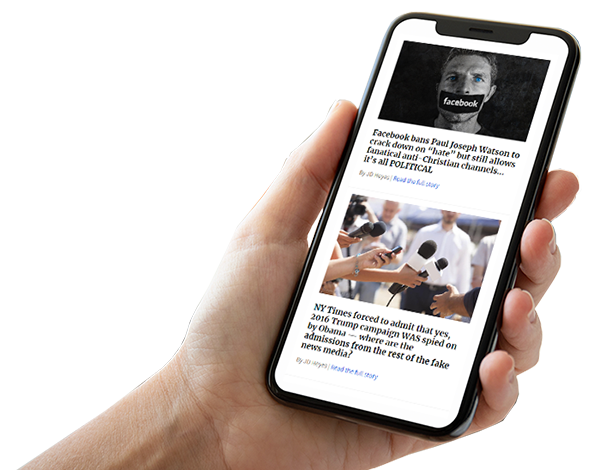

"Big Tech and mainstream media are constantly trying to silence the independent voices that dare to bring you the truth about toxic food ingredients, dangerous medications and the failed, fraudulent science of the profit-driven medical establishment.
Email is one of the best ways to make sure you stay informed, without the censorship of the tech giants (Google, Apple, Facebook, Twitter, YouTube, etc.). Stay informed and you'll even likely learn information that may help save your own life."
–The Health Ranger, Mike Adams