




Sensor could detect concealed weapons without x-rays (press release)
 Saturday, August 06, 2005 Saturday, August 06, 2005by Mike Adams, the Health Ranger Editor of NaturalNews.com (See all articles...) Tags: public safety, health news, Natural News |
- Colorado Batman shooting shows obvious signs of being staged
- Flu shot hoax admitted: "No controlled trials demonstrating a decrease in influenza"
- Vitamin D proven far better than vaccines at preventing influenza infections
- Top three factors for improving your eyesight naturally
- The MMR vaccine, autism connection
- EXCLUSIVE: Natural News tests flu vaccine for heavy metals, finds 25,000 times higher mercury level than EPA limit for water
- Increase your energy with a spring detox
- Starbucks bows to public pressure, removes 'bug juice' from strawberry flavoring
- Apricot Seeds Kill Cancer Cells without Side Effects
- Top six alkaline foods to eat every day for vibrant health
- How to Use Organic Neem Leaf for Flea and Tick Control for Cats
- Indy film industry infiltrated by Nazi-linked SLOAN Foundation: Science propaganda money influences movie scripts at Sundance, Tribeca, Carnegie Mellon and more
- Bye bye Coumadin, so long Plavix - Say hello to five natural blood thinners that protect against strokes and blood clots
- Millions of Americans installing 'perfect spying device' in their own living rooms: Amazon Fire TV monitors and records your conversations
- Decomposed human bodies now routinely found floating down China's rivers
- The United Nations 2030 Agenda decoded: It's a blueprint for the global enslavement of humanity under the boot of corporate masters
- Man who treated stage III COPD with cannabis off all meds and back to work full time
- The Vitamin Hoax: Big Pharma Speaks Through Reader's Digest Magazine
- The MMR vaccine, autism connection
- The best and worst forms of magnesium to take as a supplement
- Flu vaccines causing massive spike in deaths of elderly across the UK, warn health officials
- Petroleum-based skin care: The #1 pore-clogging toxin sold in the USA
- The United Nations 2030 Agenda decoded: It's a blueprint for the global enslavement of humanity under the boot of corporate masters
- Colorado Batman shooting shows obvious signs of being staged
- Use natural remedies for a hiatal hernia
- How to Detox Fluorides from Your Body
- Apricot Seeds Kill Cancer Cells without Side Effects
- Big Pharma suffers another major blow as study debunks high cholesterol myths, admitting statins are totally worthless
- Top six alkaline foods to eat every day for vibrant health
- Top three factors for improving your eyesight naturally
- Flu shot hoax admitted: "No controlled trials demonstrating a decrease in influenza"
- Beat cancer with 35% hydrogen peroxide
- Top 8 foods and herbs for healing cancer
- Boost Low White Blood Cell Count and Immune Function Naturally
- Indian black salve: The magical cancer cure
- Increase your energy with a spring detox
- The MMR vaccine, autism connection
- The best and worst forms of magnesium to take as a supplement
- The United Nations 2030 Agenda decoded: It's a blueprint for the global enslavement of humanity under the boot of corporate masters
- Baking soda, cancer and fungus
- Indian black salve: The magical cancer cure
- Apricot Seeds Kill Cancer Cells without Side Effects
- Peanut oil in vaccines behind widespread peanut allergy epidemic
- Use natural remedies for a hiatal hernia
- Top six alkaline foods to eat every day for vibrant health
- Boost Low White Blood Cell Count and Immune Function Naturally
- The aloe vera miracle: A natural medicine for cancer, cholesterol, diabetes, inflammation, IBS, and other health conditions
- Vaccine fraud exposed: Measles and mumps making a huge comeback because vaccines are designed to fail, say Merck virologists
- Extreme breastfeeding? Woman saves Rottweiler pup by breastfeeding it alongside her own infant
- High-dose vitamin C injections shown to annihilate cancer
- Top three factors for improving your eyesight naturally
- How to heal cavities naturally
- Forget Filling Cavities: Regrow Your Teeth Instead
- Eighteen Overlooked Symptoms of Adrenal Fatigue
- Eleven days before Iran bombed Tel Aviv, my microscope revealed haunting images of EXACTLY what would happen
- DECENTRALIZED SPIRITUALITY and the true teachings of Christ: Overcoming the censorship, threats and lies of organized religion to truly know God and the Universal Christ
- Morphic resonance “remote viewing” reveals iconic Middle East images of stealth bombers, a falcon and a one-horned ram
- HEALTH SECRETS: How to Instantly Block MSG Toxicity Using Natural Substances (and the secret of Methylene Blue)
- The Coming Gold Revaluation: Strategic Financial Realignment in an Era of Dollar Collapse
- The AI Data Center Wars Have Begun… Farms, Water and Electricity is Stripped from Humans to Power the Machines
- Urgent Wake-Up Call: The Coming AI Robot Wars and the Great Human Unity
- The War on Light: How Governments and Big Pharma Keep You Sick By Blocking Healing Photons
- THE AI RACE IS ALREADY WON: How China’s power dominance (and America’s climate lunacy surrender) secured its victory in the race to AI superintelligence
- Why the U.S. Government May be Seeking to Slaughter 200 Million Americans to Free Up Excess Power for AI Data Centers and the Race to Superintelligence
- Trump's Trojan Horse: How Stablecoins Are Secretly Paving the Way for a CBDC Control Grid – an Interview with Catherine Austin Fitts
- Amazing microscopy photos reveal how freezing crystals attempt to mimic electronic structures they are touching
- EXCLUSIVE REPORT: The Trump-Putin Meeting in Alaska - A Historic Pivot that Redefined Global Power
- Injecting chemicals is MORE DANGEROUS than eating them, so why is polysorbate 80 banned in ICE CREAM but allowed in VACCINES?
- BOMBSHELL: Internal Pfizer documents exposed and reveal at least 16 PERCENT of their mRNA vaccine "adverse events" are REPRODUCTIVE DISORDERS
- Exploring the depths of alternative medicine: A comprehensive review of “The Gale Encyclopedia of Alternative Medicine”
- Shingles surge sparks new focus on holistic care: Tackling pain, immunity and risks
- 18 MILLION COVID-JABBED Japanese folks shown to have SIGNIFICANTLY HIGHER DEATH RATES during first year after injection with mRNA clot shots





There is always a certain amount of radiation – light, heat, and even microwaves – in the environment. Every object – the human body, a gun or knife, or an asphalt runway – reflects this ambient radiation differently.
Paul Berger, professor of electrical and computer engineering and physics at Ohio State and head of the team that is developing the sensor, likened this reflection to the way glossy and satin-finish paints reflect light differently to the eye.
Once the sensor is further developed, it could be used to scan people or luggage without subjecting them to X-rays or other radiation. And if the sensor were embedded in an airplane nose, it might help pilots see a runway during bad weather.
The Ohio State sensor isn't the only ambient radiation sensor under development, but it is the only one Berger knows of that is compatible with silicon – a feature that makes it relatively inexpensive and easy to work with.
Berger describes the sensor in the current issue of the journal IEEE Electron Device Letters. His coauthors include Niu Jin, who performed this work for his doctorate at Ohio State and is now at the University of Illinois at Urbana-Champaign; Ronghua Yu and Sung-Yong Chung, both graduate students at Ohio State; Phillip E. Thompson of the Naval Research Laboratory; and Patrick Fay of the University of Notre Dame.
Berger said that the new sensor grew out of his team's recent invention of a device called a tunnel diode that transmits large amounts of electricity through silicon.
He was reading about another team's ambient radiation sensor when he realized that their device worked like one of his diodes -- only in reverse.
“It's basically just a really bad tunnel diode,” he explained. “I thought, heck, we can make a bad diode! We made lots of them back when we were figuring out how to make good ones.”
As it turns out, a really bad tunnel diode can be a really good sensor.
Diodes are one-way conductors that typically power amplifiers for devices such as stereo speakers. Berger's diode is unique because it is compatible with mainstream silicon, so computer chip makers could manufacture it cheaply and integrate it with existing technology easily.
The new sensor is essentially one of these tunnel diodes with a strong short circuit running backwards and very little tunneling current running forwards.
Thompson prepared the films of layered semiconductor material, and the Ohio State team fabricated and tested the sensors.
The way engineers measure the effectiveness of such sensors is to draw a line graph charting the amount of current passing through them. Then they measure the curvature of the line at the point where the current is zero. A steep curve indicates that a sensor is working well, so the higher this so-called “curvature coefficient” is, the better.
In the laboratory, prototypes of the Ohio State sensor averaged a curvature coefficient of 31. While one other research team has produced a sensor with a coefficient of 39, that sensor is made of antimony – an exotic metal that is hard to work with and not directly compatible with the silicon circuit that surrounds the sensor element, Berger pointed out.
“So our raw sensor performance isn't quite as good, but our ultimate performance should be superior because you could integrate our device directly with any conventional microchip readout circuitry that you wanted to build,” he said.
The team that is making the antimonide sensor has succeeded in combining it with a camera system; the pictures look a lot like X-ray images, with bodies and clothing appearing as dim outlines and metal objects such as guns standing out in sharp relief.
That camera system has performance issues that Berger thinks could be solved with his silicon-compatible design. Still, the image has inspired him to think big about where his work could go in the future. Combat pilots, for instance, could potentially use this technology to stealthily identify other aircraft as friend or foe.
“If you got a fast enough response and a high-resolution image, I wonder if you might be able tell one kind of aircraft from another without revealing your location to the enemy,” he said.
The National Science Foundation and the Office of Naval Research funded this work.

)

Public safety at FETCH.news
Get independent news alerts on natural cures, food lab tests, cannabis medicine, science, robotics, drones, privacy and more.
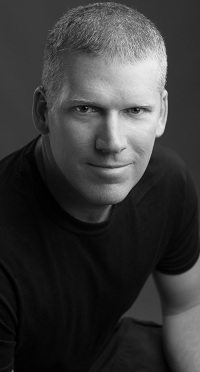 About the author:Mike Adams (aka the "Health Ranger") is a best selling author (#1 best selling science book on Amazon.com) and a globally recognized scientific researcher in clean foods. He serves as the founding editor of NaturalNews.com and the lab science director of an internationally accredited (ISO 17025) analytical laboratory known as CWC Labs. There, he was awarded a Certificate of Excellence for achieving extremely high accuracy in the analysis of toxic elements in unknown water samples using ICP-MS instrumentation. Adams is also highly proficient in running liquid chromatography, ion chromatography and mass spectrometry time-of-flight analytical instrumentation.
Adams is a person of color whose ancestors include Africans and Native American Indians. He's also of Native American heritage, which he credits as inspiring his "Health Ranger" passion for protecting life and nature against the destruction caused by chemicals, heavy metals and other forms of pollution.
Adams is the founder and publisher of the open source science journal Natural Science Journal, the author of numerous peer-reviewed science papers published by the journal, and the author of the world's first book that published ICP-MS heavy metals analysis results for foods, dietary supplements, pet food, spices and fast food. The book is entitled Food Forensics and is published by BenBella Books.
In his laboratory research, Adams has made numerous food safety breakthroughs such as revealing rice protein products imported from Asia to be contaminated with toxic heavy metals like lead, cadmium and tungsten. Adams was the first food science researcher to document high levels of tungsten in superfoods. He also discovered over 11 ppm lead in imported mangosteen powder, and led an industry-wide voluntary agreement to limit heavy metals in rice protein products.
In addition to his lab work, Adams is also the (non-paid) executive director of the non-profit Consumer Wellness Center (CWC), an organization that redirects 100% of its donations receipts to grant programs that teach children and women how to grow their own food or vastly improve their nutrition. Through the non-profit CWC, Adams also launched Nutrition Rescue, a program that donates essential vitamins to people in need. Click here to see some of the CWC success stories.
With a background in science and software technology, Adams is the original founder of the email newsletter technology company known as Arial Software. Using his technical experience combined with his love for natural health, Adams developed and deployed the content management system currently driving NaturalNews.com. He also engineered the high-level statistical algorithms that power SCIENCE.naturalnews.com, a massive research resource featuring over 10 million scientific studies.
Adams is well known for his incredibly popular consumer activism video blowing the lid on fake blueberries used throughout the food supply. He has also exposed "strange fibers" found in Chicken McNuggets, fake academic credentials of so-called health "gurus," dangerous "detox" products imported as battery acid and sold for oral consumption, fake acai berry scams, the California raw milk raids, the vaccine research fraud revealed by industry whistleblowers and many other topics.
Adams has also helped defend the rights of home gardeners and protect the medical freedom rights of parents. Adams is widely recognized to have made a remarkable global impact on issues like GMOs, vaccines, nutrition therapies, human consciousness.
In addition to his activism, Adams is an accomplished musician who has released over a dozen popular songs covering a variety of activism topics.
Click here to read a more detailed bio on Mike Adams, the Health Ranger, at HealthRanger.com.

Take Action: Support Natural News by linking to this article from your website
Permalink to this article:
Embed article link: (copy HTML code below):
Reprinting this article:
Non-commercial use OK, cite NaturalNews.com with clickable link.
Follow Natural News on Facebook, Twitter, Google Plus, and Pinterest

Science News & Studies

Medicine News and Information

Food News & Studies

Health News & Studies

Herbs News & Information

Pollution News & Studies

Cancer News & Studies

Climate News & Studies

Survival News & Information

Gear News & Information

News covering technology, stocks, hackers, and more





"Big Tech and mainstream media are constantly trying to silence the independent voices that dare to bring you the truth about toxic food ingredients, dangerous medications and the failed, fraudulent science of the profit-driven medical establishment.
Email is one of the best ways to make sure you stay informed, without the censorship of the tech giants (Google, Apple, Facebook, Twitter, YouTube, etc.). Stay informed and you'll even likely learn information that may help save your own life."
–The Health Ranger, Mike Adams