Originally published August 12 2012
Tree frogs in my garden: Health Ranger photos show delightful result of chemical-free gardening
by Mike Adams, the Health Ranger, NaturalNews Editor
(NaturalNews) I've got tree frogs in my garden! As the pictures below show in up-close detail, these tree frogs like to climb our broccoli plants. It's not just one frog, either; we've got dozens of frogs climbing around the garden, appearing each night and often singing with their high-pitched, cricket-like sounds.
Why is this a big deal? Because frogs are highly sensitive to toxic chemicals. Any garden that's laced with toxic pesticides and fungicides won't support abundant frog life. As such, the spotting of a population of healthy, vibrant frogs on your own land (or in your garden) is a sure sign that you're avoiding chemicals and practicing organic agriculture.
Taking a tree frog for an accidental trip to Austin
The other night I drove to Austin for a late-night secret meeting with a source for an upcoming story, and on the way back, I discovered that one of these tree frogs had snuck into my car and was trying to get out by hopping onto the window. Shocked to feel a frog climbing around my left arm, I immediately knew I had to help this frog get back to the garden. Yet my car was almost out of gas, so I needed to stop and refuel to make it home.
This resulted in a bizarre, desperate effort to keep the tree frog contained inside the car while I exited the vehicle and refueled. If the frog had escaped, it would have died in the harsh environment of the city of Austin, so I was determined to keep it safe and get it home.
After successfully navigating the refueling effort, I noticed the frog had curled up into "dehydration prevention" mode, where they minimize their skin surface exposure to conserve water. These frogs need a lot of moisture, and I could tell this one was starting to dry out. His skin color went from the usual bright green to more of a gray color.
So I hurried back to the ranch, and thankfully the traffic was clear because it was late at night. I drove right up to my garden, turned off the car, and picked up the frog from the car floor. I grabbed the garden hose and soaked an area under a fig bush to make it as wet as possible, then placed the frog in the wet grass. His skin sort of stuck to my skin with a kind of "tacky" feel. After I set him down, I sprayed the tree frog with a bit more water, using gentle water pressure from the hose. Once I was satisfied he was safe and sound, back home in the wet, chemical-free garden, I made a mental note: Check my car for tree frogs in the future, before driving to Austin!
Here are the photos of a tree frog in my garden. I can't say if it's exactly the same tree frog I saved, because we now have lots of these:
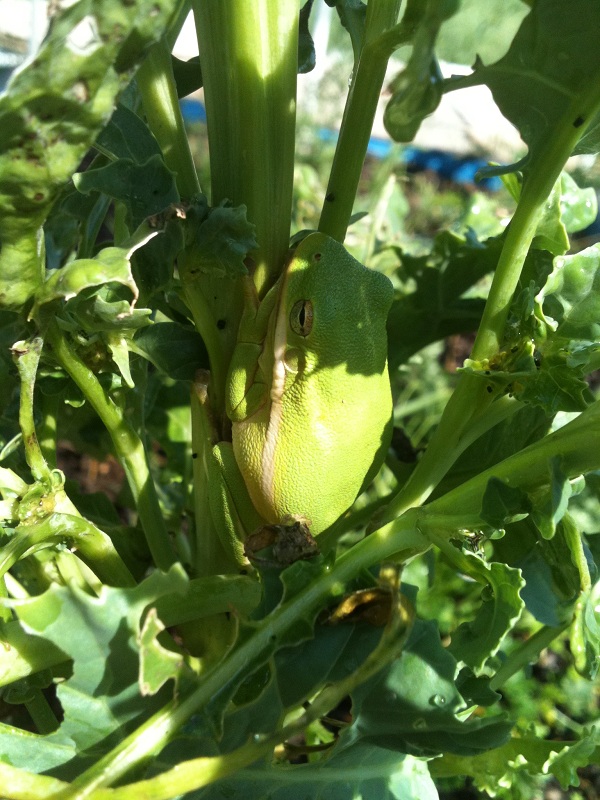
Here's another:
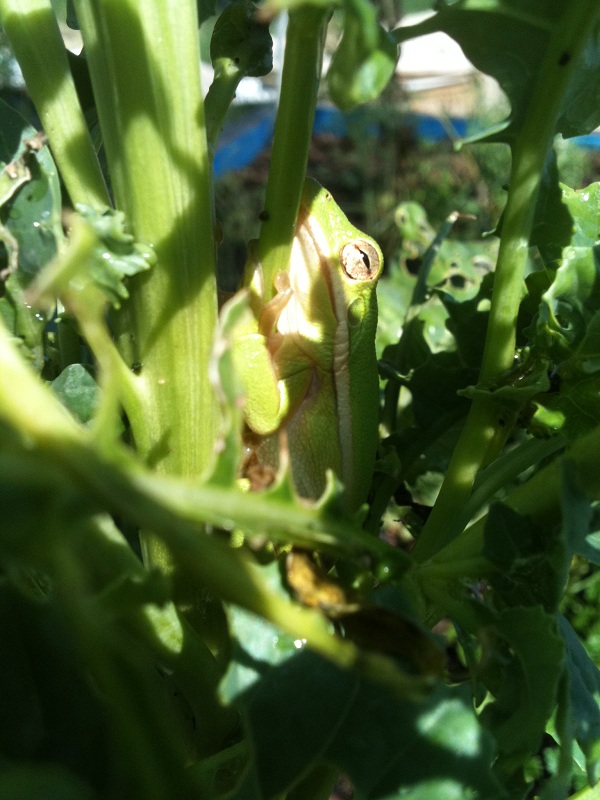
See more photos each day at our Facebook page:
www.Facebook.com/HealthRanger
All content posted on this site is commentary or opinion and is protected under Free Speech. Truth Publishing LLC takes sole responsibility for all content. Truth Publishing sells no hard products and earns no money from the recommendation of products. NaturalNews.com is presented for educational and commentary purposes only and should not be construed as professional advice from any licensed practitioner. Truth Publishing assumes no responsibility for the use or misuse of this material. For the full terms of usage of this material, visit www.NaturalNews.com/terms.shtml