



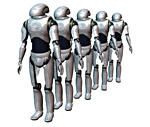
First robot rollout to 'assist' the elderly
Wednesday, November 07, 2012 by: Ben Meredith
Tags: robots, elderly, assistance
- Cuba, Venezuela, Russia and China now more free than America in notable ways
- Yet another vaccine researcher caught faking research; vaccine industry riddled with scientific fraud
- Biotech companies could become real-life 'Body Snatchers' - are patents on people next?
- Five beliefs that are causing society to crumble
- The big lie of genetics exposed: human DNA incapable of storing complete blueprint of the human form
- The fall of the daily paper: Mainstream media loses readers, ad revenues as internet takes over
- If you or a loved one is taking Prozac, consider switching to cashews instead (yes, cashews!)
- Dr. Caldwell Esselstyn explains how to reverse heart disease on the NaturalNews Talk Hour
- Measles vaccines kill more people than measles, CDC data proves
- Arkansas government kidnaps seven children, searches home of family for owning a popular mineral supplement
- Big Pharma kills yet another celebrity: Brittany Murphy on multiple prescriptions at time of death
- USA Today wants Americans to DIE from chemical medicine rather than LIVE with natural medicine
- Achieve optimum mental health by supplementing deficient brain chemicals instead of resorting to dangerous antidepressant drugs
- Ten ways to use colloidal silver's amazing healing abilities
- REVEALED: Cancer industry profits 'locked in' by nagalase molecule injected into humans via vaccines... spurs tumor growth... explains aggressive vaccine push
- Portland, Oregon to spend $5 million to poison its residents with toxic fluoride
- Evidence-based vaccinations: A scientific look at the missing science behind flu season vaccines
- Bernie Mac Another Casualty of Conventional Medicine?
- The REAL FAKE NEWS exposed: '97% of scientists agree on climate change' is an engineered hoax... here's what the media never told you
- Lack of Forgiveness Can Affect Our Health
- Antibiotics used in meat pose a threat to public health, admits FDA
- Merck vaccine scientist Dr. Maurice Hilleman admitted presence of SV40, AIDS and cancer viruses in vaccines
- Genetically Modified Organisms are Unfit for Consumption
- McDonald's Chicken McNuggets found to contain mysterious fibers, hair-like structures; Natural News Forensic Food Lab posts research photos, video
- Shock findings in new GMO study: Rats fed lifetime of GM corn grow horrifying tumors, 70% of females die early
- Measles vaccines kill more people than measles, CDC data proves
- Using spices to heal disease: Indian doctor devotes career to using therapeutic power of ancient medicine
- Beat cancer with 35% hydrogen peroxide
- Ebola quarantine nurse's ties to CDC scrubbed from web; was it a staged op to invoke opposition to quarantines?
- Garlic Boosts Overall Antioxidant Levels and Blocks Cancer
- 48-year-old cures high blood pressure, heart palpitations by maintaining this food protocol
- Human medical experimentation in the United States: The shocking true history of modern medicine and psychiatry (1965-2005)
- Apricot Seeds Kill Cancer Cells without Side Effects
- NewsTarget VIDEO: Why 50% of the U.S. population will not survive the next great 'natural selection' collapse event
- Biotech companies could become real-life 'Body Snatchers' - are patents on people next?
- Evidence-based vaccinations: A scientific look at the missing science behind flu season vaccines
- The REAL FAKE NEWS exposed: '97% of scientists agree on climate change' is an engineered hoax... here's what the media never told you
- Reverse and eliminate cataracts naturally without surgery
- Beat cancer with 35% hydrogen peroxide
- These 15 common herbs cure everything from infections to inflammation and indigestion
- What's really in vaccines? Proof of MSG, formaldehyde, aluminum and mercury
- Evidence-based vaccinations: A scientific look at the missing science behind flu season vaccines
- Lack of Forgiveness Can Affect Our Health
- Apricot Seeds Kill Cancer Cells without Side Effects
- BREAKING: Taiwan bans GMOs from school lunches... mandates GMO labeling nationwide... throws down gauntlet on toxic foods from USA and Monsanto
- The United Nations 2030 Agenda decoded: It's a blueprint for the global enslavement of humanity under the boot of corporate masters
- Institute of Medicine adverse reactions report admits MMR vaccines cause measles, seizures, anaphylaxis and other health problems
- The best and worst forms of magnesium to take as a supplement
- Bill Gates says vaccines can help reduce world population
- Eighteen Overlooked Symptoms of Adrenal Fatigue
- The best, and worst, laundry detergents with 1,4-dioxane contamination
- H1N1 vaccine linked to 700 percent increase in miscarriages
- Shock findings in new GMO study: Rats fed lifetime of GM corn grow horrifying tumors, 70% of females die early
- McDonald's Chicken McNuggets found to contain mysterious fibers, hair-like structures; Natural News Forensic Food Lab posts research photos, video
- Urgent Wake-Up Call: The Coming AI Robot Wars and the Great Human Unity
- The AI Data Center Wars Have Begun… Farms, Water and Electricity is Stripped from Humans to Power the Machines
- The Coming Gold Revaluation: Strategic Financial Realignment in an Era of Dollar Collapse
- EXCLUSIVE REPORT: The Trump-Putin Meeting in Alaska - A Historic Pivot that Redefined Global Power
- The War on Light: How Governments and Big Pharma Keep You Sick By Blocking Healing Photons
- 18 MILLION COVID-JABBED Japanese folks shown to have SIGNIFICANTLY HIGHER DEATH RATES during first year after injection with mRNA clot shots
- AI takeover: 50% of remote jobs to be replaced within 3 years as machines outperform humans in fairness and accuracy
- Franken-butter: Startup backed by Bill Gates creates butter from thin air
- Trump admin mulls travel bans on EU officials behind digital censorship laws
- How a nasal spray vaccine could turn Americans into walking bioweapons this Fall
- Coral resilience defies climate doom: New studies reveal ancient reefs flourished in warmer seas
- AI & economic liberty: Will decentralized tech save human autonomy?
- Liberalism is More than a Mental Illness – It’s TERRORISM against America’s Youth
- Why We Need the Charlie Kirk Free Speech Act: A Legal Shield Against the Censorship Industrial Complex
- Brazil’s digital identity push: For child safety or state control?
- A Billion Voices of Truth: Mike Adams Announces “Moonshot” Mission to Empower Humanity with Hidden Knowledge
- U.S. State Department condemns “buffer zones” outside U.K. abortion clinics as assault on free speech and religious liberty
- New MAHA plan aims to tackle childhood health crisis with over 120 initiatives





The Georgia Institute of Technology asked about two dozen adults aged 65-93 to watch an eight-minute video about Willow Garage's Personal Robot 2. They followed the video by asking the participants about their preference of robot or human assistance in completing 48 unique tasks. The tasks ranged from such things as entertaining guests to setting the table.
The responses from the participants show that the older generation may not be as "behind-the-times" as some might think. Overall, they showed a preference to a robot's assistance in necessary activities in their daily lives, such as changing light bulbs, cleaning the house, washing dishes, making the bed, taking out the trash, and reminding them to take medications. Human assistance; however, was preferred for social and decision-making activities: cooking, entertaining guests, grocery shopping.
Additionally, activities of a personal, intimate nature remain in humans' hands. The participants were resistant to having robotic help with things like bathing, walking, shaving, getting dressed, eating, and brushing their teeth.
The researchers note that these results may be impacted by the lack of friendly interaction between person and robot. The Personal Robot 2 (PR2) is meant to perform specific tasks, and that's that. However, in the case of "social robots," such as MIT's Leonardo, people develop personal relationships with their assistant. They name their robot, dress it, and address it with greetings and farewells.
Another study called the CompanionAble Project created Hector, a similar robot to PR2. Hector is guided by remote control and smart home compatibility, and he displays capabilities that are of great assistance to the elderly. He comes when he's called, reminds you of your daily schedules and routines, tells you when to take your medicine, and will even keep your glasses safe in his pocket. He is also a safety addition to the household with his fall detection capabilities. In emergencies - like a fall - he is connected to a remote control center, and he can assess the seriousness of the fall and evaluate what sort of help is needed.
It might be mind boggling for many to think of adding a metal member to their family, but the robotic technology is advancing rapidly and could prove essential to some households.
Sources for this article include:
http://www.upi.com
http://www.forbes.com
http://www.huffingtonpost.com/2012/10/26/elderly-robots_n_2022846.html
About the author:
Ben enjoys writing about the benefits of green tea at Tendig.com, a revenue sharing site that publishes unique and interesting articles.


Robots at FETCH.news
Get independent news alerts on natural cures, food lab tests, cannabis medicine, science, robotics, drones, privacy and more.

Take Action: Support Natural News by linking to this article from your website
Permalink to this article:
Embed article link: (copy HTML code below):
Reprinting this article:
Non-commercial use OK, cite NaturalNews.com with clickable link.
Follow Natural News on Facebook, Twitter, Google Plus, and Pinterest

Science News & Studies

Medicine News and Information

Food News & Studies

Health News & Studies

Herbs News & Information

Pollution News & Studies

Cancer News & Studies

Climate News & Studies

Survival News & Information

Gear News & Information

News covering technology, stocks, hackers, and more





"Big Tech and mainstream media are constantly trying to silence the independent voices that dare to bring you the truth about toxic food ingredients, dangerous medications and the failed, fraudulent science of the profit-driven medical establishment.
Email is one of the best ways to make sure you stay informed, without the censorship of the tech giants (Google, Apple, Facebook, Twitter, YouTube, etc.). Stay informed and you'll even likely learn information that may help save your own life."
–The Health Ranger, Mike Adams