



The top 20 foods for reversing type-2 diabetes
Monday, July 11, 2011 by: Tara Green
Tags: type-2 diabetes, foods, health news
- The REAL FAKE NEWS exposed: '97% of scientists agree on climate change' is an engineered hoax... here's what the media never told you
- The eight best home remedies and holistic treatments to relieve tinnitus and ringing in the ears
- Every mass shooting over last 20 years has one thing in common... and it's not guns
- Oil of Oregano: A Powerhouse for the Alternative Medicine Cabinet
- Should you consume soy products?
- Stop stomach ulcers with the miracle remedy of cabbage
- Genital Herpes May be Reversed with Natural Medicine
- Not Just a Beautiful Flower: The Marigold Brings Natural Health
- Evidence-based vaccinations: A scientific look at the missing science behind flu season vaccines
- 100% of Portugal's citizens have glyphosate in their urine... alarms sounding over the mass chemical poisoning of humanity with cancer-causing weed killer
- Radiation emitted from smart meters 100 times greater than cell phones - and exposure is constant, doctors warn
- GMOs are dangerous to our health, according to latest independent research
- Interview with Kirt Tyson, Former Type-I Diabetic, Featured in "Simply Raw: Reversing Diabetes in 30 Days"
- Discover the hidden health benefits of sauna
- Extreme breastfeeding? Woman saves Rottweiler pup by breastfeeding it alongside her own infant
- Mercury in seafood - What is safer and what to avoid
- Skynet rising: Google acquires 512-qubit quantum computer; NSA surveillance to be turned over to AI machines
- Drug-Resistant Bacteria Often Brought Home From the Hospital by Patients
- The REAL FAKE NEWS exposed: '97% of scientists agree on climate change' is an engineered hoax... here's what the media never told you
- Eighteen Overlooked Symptoms of Adrenal Fatigue
- Aluminum is Potential Cause of Thirty-Five Million with Dementia Worldwide
- The eight best home remedies and holistic treatments to relieve tinnitus and ringing in the ears
- Skynet rising: Google acquires 512-qubit quantum computer; NSA surveillance to be turned over to AI machines
- Every mass shooting over last 20 years has one thing in common... and it's not guns
- Apricot Seeds Kill Cancer Cells without Side Effects
- President Obama a 'war criminal' worse than Bush, says Ralph Nader
- The Gerson Therapy: Big Pharma and the AMA Suppress Another Holistic Cancer Cure
- Proof: MMS cures malaria, despite Red Cross cover-up
- Six little-known natural remedies for tinnitus
- Energy drinks: Are they safe for you and your kids?
- GMOs will unleash global killer 'ecocide' across the planet, warns prominent scientist
- Genetically engineered hormones used by dairy industry promote cancer
- Senator Pan recieved bribes equal to twice the average American income to push mandatory vaccination law
- Raw milk farmer wins victory against county over 'illegal' sales
- Profit Driven Swine Flu Propaganda - Pump Up the Volume Part 1
- Coconut Oil is More Efficacious for Alzheimer's than All Big Pharma has to Offer
- The REAL FAKE NEWS exposed: '97% of scientists agree on climate change' is an engineered hoax... here's what the media never told you
- Depopulation test run? 75% of children who received vaccines in Mexican town now dead or hospitalized
- INVESTIGATION: Three days before Dr. Bradstreet was found dead in a river, U.S. govt. agents raided his research facility to seize a breakthrough cancer treatment called GcMAF
- SHOCK STUDY: Ten percent of Canadian females receiving HPV vaccines are sent to Emergency Rooms... scientists declare rate to be 'low' for vaccines
- The United Nations 2030 Agenda decoded: It's a blueprint for the global enslavement of humanity under the boot of corporate masters
- Six little-known natural remedies for tinnitus
- The best and worst forms of magnesium to take as a supplement
- Use Homeopathic Gout Remedies: Colchicum, Ledum, Nux Vomica and Aconite
- Tetanus vaccines found spiked with sterilization chemical to carry out race-based genocide against Africans
- Top six alkaline foods to eat every day for vibrant health
- Bill Gates says vaccines can help reduce world population
- Make Your Own Vitamin B Complex: Save Money and Ignore Supplement Restrictions
- Publicly funded GMO research in India exposed as fraud to secretly sneak in Monsanto seeds
- The eight best home remedies and holistic treatments to relieve tinnitus and ringing in the ears
- MRSA superbug may be spread through contaminated poultry
- Forget Filling Cavities: Regrow Your Teeth Instead
- BREAKING: CDC whistleblower confesses to MMR vaccine research fraud in historic public statement
- Reverse and eliminate cataracts naturally without surgery
- Eleven days before Iran bombed Tel Aviv, my microscope revealed haunting images of EXACTLY what would happen
- Morphic resonance “remote viewing” reveals iconic Middle East images of stealth bombers, a falcon and a one-horned ram
- DECENTRALIZED SPIRITUALITY and the true teachings of Christ: Overcoming the censorship, threats and lies of organized religion to truly know God and the Universal Christ
- HEALTH SECRETS: How to Instantly Block MSG Toxicity Using Natural Substances (and the secret of Methylene Blue)
- Amazing microscopy photos reveal how freezing crystals attempt to mimic electronic structures they are touching
- The Coming Gold Revaluation: Strategic Financial Realignment in an Era of Dollar Collapse
- The AI Data Center Wars Have Begun… Farms, Water and Electricity is Stripped from Humans to Power the Machines
- Urgent Wake-Up Call: The Coming AI Robot Wars and the Great Human Unity
- The War on Light: How Governments and Big Pharma Keep You Sick By Blocking Healing Photons
- BOMBSHELL: Internal Pfizer documents exposed and reveal at least 16 PERCENT of their mRNA vaccine "adverse events" are REPRODUCTIVE DISORDERS
- THE AI RACE IS ALREADY WON: How China’s power dominance (and America’s climate lunacy surrender) secured its victory in the race to AI superintelligence
- Why the U.S. Government May be Seeking to Slaughter 200 Million Americans to Free Up Excess Power for AI Data Centers and the Race to Superintelligence
- Newly released JFK files reveal Pentagon's role in creating Lyme disease and covid in the same lab
- Trump's Trojan Horse: How Stablecoins Are Secretly Paving the Way for a CBDC Control Grid – an Interview with Catherine Austin Fitts
- EXCLUSIVE REPORT: The Trump-Putin Meeting in Alaska - A Historic Pivot that Redefined Global Power
- MSG EXPOSED: Hidden Neurotoxins Found in Groceries, Snacks and Popular Fast Food Menus
- Doctors are still puzzled about “long vax,” a set of symptoms linked to COVID-19 vaccines
- BOMBSHELL: DNA testing kits are a SCAM to develop ethnic-specific bioweapons





Although much of the mainstream media continues to focus on the latest Big Pharma proposed "magic bullet" drug to cure diabetes (see, for example: http://articles.latimes.com/2011/jun/25/news...), increasing evidence shows that the disease can be prevented, curbed, or even cured by choosing the right foods.
"Nature is the best chemist" states University of Rhode Island researcher Navindra Seeram whose team studied the health benefits of maple syrup. Their findings, presented at the annual meeting of the American Chemical Society, showed that the substance derived from the sap of maple trees can protect against both diabetes and cancer.
This natural sweetener offers abundant anti-oxidants. It also contains a newly identified substance called Quebecol, formed when the sap is boiled. This study is particularly interesting since the old-fashioned medical advice to diabetics was to steer clear of anything sweet.
Ayurvedic healers have long used natural herbs and spices to treat a variety of conditions, including diabetes. Two spices familiar to those who consume Indian food offer some protection against diabetes. The yellowy-orange powder turmeric, made from the rhizomes of a plant native to South Asia.
Research in the past decade has shown that turmeric not only aids against diabetes but also helps cleanse the liver; offers natural anti-inflammatory properties; protects against breast and prostate cancers; counteracts depression; and slows the advance of Alzheimer's disease. Curcumin is the key substance in turmeric which researchers identify as the source of its multitude of healing powers.
Another substance used to spice Indian food, fenugreek, also offers protection against diabetes. Fenugreek has the added benefit of boosting male sex drive, enhancing liver function, and helping to lower cholesterol.
A recent study involving the Yup'ik people of Alaska indicates that consuming the type of fish rich in omega-3 fatty acid can protect against diabetes. This study is particularly interesting because it suggests that the link between obesity and diabetes may be more complex than originally thought.
Although 70% of the Yup'ik population is classified as obese, only 3.3% of them have diabetes. Fish which contain omega-3 fatty acids include mackerel, salmon, lake trout, herring, tuna and salmon.
A 2006 Italian study found that dark chocolate reduces the risk of insulin resistance. Don't buy a box of chocolates to celebrate this news, however. Only with raw, unprocessed cocoa without any refined sugars added offers the protective benefits.
Researchers involved in the study suggest that in moderation, dark chocolate made with minimal processing are a healthier form of occasional indulgence than most other sweets, but their calorie content still makes them a potential danger.
Cocoa powder and baking chocolate contain the highest levels of the flavonoids responsible for the positive health effects associated with chocolate. Dark chocolate provides fewer of these flavonoids while white chocolate has none.
Good news for those who crave a cup of morning coffee. UCLA researchers say coffee consumption increases plasma levels of sex hormone-binding globulin (SHBG) which regulates the biological activity of the body's sex hormones, testosterone and estrogen. These hormones have long been thought to play a role in the development of type 2 diabetes.
The natural chemicals found in red grape skin and red wine known as polyphenols can help the body regulate glucose levels, preventing potentially dangerous plunges and surges in blood sugar levels. Health experts recommend that people consume wine in moderation and suggest that those already diagnosed with diabetes and/or those with weight concerns, take the calories in a glass of wine into account when considering whether or not to imbibe.
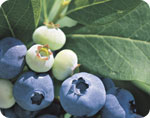
Consuming blueberries might help reduce your risk of diabetes, with the added benefit of helping you lose belly fat. A 2009 University of Michigan Cardiovascular Center study found a blueberry-enriched diet significantly improved the health of laboratory rats.
Researchers believe that the high level of phytochemicals - naturally occurring antioxidants -- in blueberries provides the health boost. Other sources of phytochemicals include cranberries and strawberries.
Due to the influence of food advertising, many people have bought into the idea that a healthy diet offers less taste pleasure consuming foods high in cholesterol, triglycerides and refined sugar. The truth is that a diabetes-prevention diet can literally be a bowl of cherries.
A 2004 study at Michigan State University in East Lansing found that chemicals called anthocyanins, which are abundant in cherries, increased insulin production in animal pancreatic cells by 50%. These plant pigments, responsible for food color, are also found in strawberries, red grapes and blueberries. However researchers say cherries provide the best source of anthocyanins.
Beans can help regulate blood glucose and insulin levels. They can help prevent diabetes, or minimize its effects in those diagnosed with the disease. They also help lower cholesterol levels and offer anti-oxidant properties. Red beans offer the highest anti-oxidant levels, followed by black beans.
Coconut oil has a unique molecular structure which makes it a superior health choice compared to most other oils. Olive, safflower and sunflower oil are all built from a long chain of fatty acids. These long chains are either deposited in blood vessels as cholesterol or stored as fat around the waist, thighs and buttocks.
On the other hand, the coconut oil's medium chain fatty acids immediately become available as energy. These smaller, easily absorbed medium chain molecules supply the cells with essential fatty acids without glucose and without inhibiting insulin production.
Coconut oil also has antimicrobial, antifungal, antioxidant and antibacterial properties. Most coconut oils do not impart a coconut flavor to food, so you can use them to replace other oils in most recipes. Try to buy only organic virgin coconut oil in order to obtain the maximum health benefits.
Almonds and walnuts prevent diabetes by regulating blood glucose. Eating almonds before a meal helps regulate blood sugar levels, say researchers who published their study in The Journal of Nutrition. This effect means the nuts help lower the risk of diabetes, as well as help control the disorder.
A 2009 European study found diabetics who included walnuts in their diet had improved their insulin levels. In addition to fighting diabetes, nuts deliver other health benefits. According to an article in The American Journal of Clinical Nutrition, regular consumption of nuts alters blood lipid chemistry, reducing the risk of coronary disease and heart attacks.
Buckwheat -- which is technically a fruit rather than a grain -- helps control blood sugar levels. Although holistic nutritionists have extolled the virtues of buckwheat for years, mainstream medical science -- and the mainstream media -- caught on to its benefits fairly recently. A 2003 Canadian study found that when extracts of buckwheat seed were fed to diabetic rats, the animals' glucose levels went down by twelve to nineteen percent. You can find buckwheat products, including pancake mixes and Japanese soba noodles, at most health food stores.
You might think of cinnamon simply as a flavoring to sprinkle on a bowl of hot oatmeal, but this spice actually has a centuries-old tradition of healing. In addition to providing antioxidants and aiding against arthritis, urinary tract infections, sinus congestion, tooth decay and gum disease, the powdered bark of Cinnamomum trees is also effective against diabetes. It improves blood sugar regulation by significantly increasing your glucose metabolism. In addition, it has insulin-like effects in the body. Plus, proanthocyanidin, a bioflavonoid found in cinnamon, changes the insulin-signaling activity of your fat cells.
Green tea may help prevent the progression of type 1 diabetes, also known as childhood-onset diabetes, or prevent this disorder. Studies show green tea regulates glucose levels in the body, an important function since the pancreas in Type 1 diabetics produces little or no insulin, the hormone responsible for converting glucose (sugar), starches, and other foods into energy. Green tea also lowers blood sugar levels in type 2 diabetics, reduces complications associated with diabetes such as cataracts and cardiovascular disease and promotes weight loss.
If you prefer black tea, your beverage choice can still help fight against diabetes. Researchers in China have found that polysaccharides, a type of carbohydrate that includes starch and cellulose, may benefit people with diabetes by slowing glucose absorption. Black tea contains more polysaccharides than either green or oolong teas. Additionally, a Scottish study found that natural chemicals found in black tea may protect against diabetes by mimicking the effects of insulin in the body.
If you have developed a taste for seaweed though visiting Asian restaurants, congratulations: you have one more ally in your crusade to lose weight and avoid diabetes. Wakame, brown seaweed used to flavor Asian soups and salads, helps promote fat-burning proteins. It also helps promote the synthesis in the liver of DHA (Docosahexaenoic Acid), a fatty acid also found in fish oil.
In addition to its weight loss and anti-diabetes effects, this ocean plant also helps prevent prostate cancer, supports thyroid function, assists in blocking the growth of breast cancer tumors and can help fight radiation sickness. Researchers attribute wakame's healing properties to a carotenoid it contains called fucoxanthin.
List of Foods Mentioned Along with Resources for Further Reading on Their Health Benefits
1. Maple syrup
https://www.naturalnews.com/031957_maple_syru...
http://www.realselfreliance.com/2010/04/the-...
2. Turmeric
http://www.healthdiaries.com/eatthis/20-heal...
http://www.scientistlive.com/European-Food-S...
https://www.naturalnews.com/024644.html
3. Fenugreek https://www.naturalnews.com/032818_curry_spic... http://altmedicine.about.com/od/diabetes/a/f...
4. Fish rich in omega-3 fatty acids
http://indiancountrytodaymedianetwork.com/20...
https://www.naturalnews.com/031903_omega-3s_E...
5. Chocolate https://www.naturalnews.com/017041.html http://www.sciencenews.org/view/generic/id/6...
6. Coffee https://www.naturalnews.com/032268_sweet_pota... http://www.sciencedaily.com/releases/2011/01...
7. Red wine https://www.naturalnews.com/031323_red_wine_d...
http://www.dailymail.co.uk/health/article-13...
8,9,10. Blueberries, cranberries, and strawberries http://www.sciencedaily.com/releases/2009/04...
https://www.naturalnews.com/001505.html
11. Cherries http://www.sciencedaily.com/releases/2004/12... https://www.naturalnews.com/007261.html
12. Beans https://www.naturalnews.com/025175_cancer_WHO... http://myhealingkitchen.com/medical-conditio...
13. Coconut oil https://www.naturalnews.com/025388_oil_coconu...
http://www.organicfacts.net/organic-oils/org...
14, 15. Almonds and walnuts https://www.naturalnews.com/030131_almonds_he...
http://www.sciencealert.com.au/news/20090605...
16. Buckwheat https://www.naturalnews.com/000134.html
http://www.sciencedaily.com/releases/2003/11...
17. Cinnamon
http://www.huffingtonpost.com/dr-mercola/cin...
https://www.naturalnews.com/031133_cinnamon_d...
18. Green tea
https://www.naturalnews.com/024983_diabetes_h...
http://www.diabeteswellbeing.com/green-tea-d...
19. Black tea
http://www.sciencedaily.com/releases/2009/07...
https://www.naturalnews.com/025329_tea_black_...
20. Wakame
https://www.naturalnews.com/020398.html
http://www.fishfarmer-magazine.com/news/full...


Type-2 diabetes at FETCH.news
Get independent news alerts on natural cures, food lab tests, cannabis medicine, science, robotics, drones, privacy and more.

Take Action: Support Natural News by linking to this article from your website
Permalink to this article:
Embed article link: (copy HTML code below):
Reprinting this article:
Non-commercial use OK, cite NaturalNews.com with clickable link.
Follow Natural News on Facebook, Twitter, Google Plus, and Pinterest

Science News & Studies

Medicine News and Information

Food News & Studies

Health News & Studies

Herbs News & Information

Pollution News & Studies

Cancer News & Studies

Climate News & Studies

Survival News & Information

Gear News & Information

News covering technology, stocks, hackers, and more






"Big Tech and mainstream media are constantly trying to silence the independent voices that dare to bring you the truth about toxic food ingredients, dangerous medications and the failed, fraudulent science of the profit-driven medical establishment.
Email is one of the best ways to make sure you stay informed, without the censorship of the tech giants (Google, Apple, Facebook, Twitter, YouTube, etc.). Stay informed and you'll even likely learn information that may help save your own life."
–The Health Ranger, Mike Adams