



Raw Cruciferous Vegetables Defend Against Bladder Cancer
Wednesday, November 26, 2008 by: David Gutierrez, staff writer
Tags: cruciferous vegetables, health news, Natural News
- Zeolite detox myths busted: In lab tests, zeolites do NOT bind with aluminum, lead, uranium, mercury or cadmium... only CESIUM
- Apricot Seeds Kill Cancer Cells without Side Effects
- Magic mushrooms may aid cancer patients, study shows
- Mercury Poisoning in Dentistry: Dentist writes of mercury's health hazards in new book
- Benefit from castor oil
- Woman gives birth to healthy baby in rainforest stream to avoid unnatural hospital setting
- The best and worst forms of magnesium to take as a supplement
- Miracle Cure for Gout and Arthritis Pain? Six Cherries a Day
- MMR vaccines cause 340% increased risk of autism in African American infants
- Amazing food facts: The seed of a peach contains an almond-like nut containing the anti-cancer medicine laetrile
- Cocoa flavanols found to offer extraordinary cardiovascular protection
- Colorado Batman shooting shows obvious signs of being staged
- When MEDICINE becomes MURDER: America's vaccine narrative now mirrors Nazi eugenics propaganda
- Mainstream media finally admits U.S. honey is contaminated with glyphosate weed killer (Roundup)
- History Contains Evidence of Bias against Homeopathy
- 10 outrageous (but true) facts about vaccines the CDC and the vaccine industry don't want you to know
- Best foods for calming your nervous system
- Zeolite may prove useful for detoxification following radiation exposure
- Can you avoid cancer by drinking traditional kefir? Here's the science
- U.S. researchers create 30 genetically modified human babies
- The MMR vaccine, autism connection
- Apricot Seeds Kill Cancer Cells without Side Effects
- Medical holocaust: Psych drugs have killed more than 5 million people over the last 10 years
- Microwaved water kills plant in home grown experiment
- Beat cancer with 35% hydrogen peroxide
- Fast food marketing targets black children in US
- Cooking oils 101 - Choosing the best oils for your health
- History Contains Evidence of Bias against Homeopathy
- Mercury Poisoning in Dentistry: Dentist writes of mercury's health hazards in new book
- Sea cucumber extract kills 95 percent of breast cancer cells and shrinks lung tumors
- Three-fourths of small businesses to fire workers or cut hours due to Obamacare
- Magic mushrooms may aid cancer patients, study shows
- A Holistic Approach to Treating the Symptoms of Diverticulitis
- Oklahoma lawmaker wants to stop Pepsi from using aborted fetus cells in soda flavoring research
- Pine bark extract improves blood vessel health, heals psoriasis and hemorrhoids
- MMR vaccines cause 340% increased risk of autism in African American infants
- The United Nations 2030 Agenda decoded: It's a blueprint for the global enslavement of humanity under the boot of corporate masters
- These 34 dentists reveal suppressed breakthroughs in holistic dentistry and oral health
- The best and worst forms of magnesium to take as a supplement
- New NASA research points to possible HAARP connection in Japan earthquake, tsunami
- Apricot Seeds Kill Cancer Cells without Side Effects
- Beat cancer with 35% hydrogen peroxide
- What's really in vaccines? Proof of MSG, formaldehyde, aluminum and mercury
- Can you avoid cancer by drinking traditional kefir? Here's the science
- NASA admits to spraying Americans with poisonous chemtrails
- Green tea extract may help prevent type-2 diabetes through improved glucose tolerance
- Evidence-based vaccinations: A scientific look at the missing science behind flu season vaccines
- Colorado Batman shooting shows obvious signs of being staged
- Biotech company needlessly uses aborted human fetal cells to test artificial food flavors
- Bicarbonate of Soda Used to Cure Stage Four Prostate Cancer
- Oklahoma lawmaker wants to stop Pepsi from using aborted fetus cells in soda flavoring research
- Inflammation is the cause of nearly all disease - Here's how to prevent it
- Cinnamon, Ginger and Onions Strongly Protect Us from Colds and Flu
- Reverse and eliminate cataracts naturally without surgery
- The Coming Gold Revaluation: Strategic Financial Realignment in an Era of Dollar Collapse
- The AI Data Center Wars Have Begun… Farms, Water and Electricity is Stripped from Humans to Power the Machines
- Urgent Wake-Up Call: The Coming AI Robot Wars and the Great Human Unity
- The War on Light: How Governments and Big Pharma Keep You Sick By Blocking Healing Photons
- Why the U.S. Government May be Seeking to Slaughter 200 Million Americans to Free Up Excess Power for AI Data Centers and the Race to Superintelligence
- EXCLUSIVE REPORT: The Trump-Putin Meeting in Alaska - A Historic Pivot that Redefined Global Power
- THE AI RACE IS ALREADY WON: How China’s power dominance (and America’s climate lunacy surrender) secured its victory in the race to AI superintelligence
- Eleven days before Iran bombed Tel Aviv, my microscope revealed haunting images of EXACTLY what would happen
- Trump's Trojan Horse: How Stablecoins Are Secretly Paving the Way for a CBDC Control Grid – an Interview with Catherine Austin Fitts
- 18 MILLION COVID-JABBED Japanese folks shown to have SIGNIFICANTLY HIGHER DEATH RATES during first year after injection with mRNA clot shots
- AI & economic liberty: Will decentralized tech save human autonomy?
- Franken-butter: Startup backed by Bill Gates creates butter from thin air
- DECENTRALIZED SPIRITUALITY and the true teachings of Christ: Overcoming the censorship, threats and lies of organized religion to truly know God and the Universal Christ
- How a nasal spray vaccine could turn Americans into walking bioweapons this Fall
- Morphic resonance “remote viewing” reveals iconic Middle East images of stealth bombers, a falcon and a one-horned ram
- Brussels-Washington trade deal grinds to halt amid clash over digital CENSORSHIP laws
- Security clearances revoked for 37 Biden/Obama officials as Gabbard targets “weaponized intelligence”
- Coral resilience defies climate doom: New studies reveal ancient reefs flourished in warmer seas





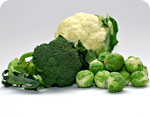
The cruciferous vegetable family includes broccoli, cabbage, cauliflower, arugula, Brussels sprouts, collard greens, daikon, garden cress, horseradish, kale, kohlrabi, mustard, radish, rape (canola), rapini, rutabaga, tatsoi, turnip, wasabi and watercress.
In one study, Roswell Park researchers found that the risk of bladder cancer in rats decreased as the amount of freeze-dried broccoli sprout extract in their diets increased. In another study, people who ate as little as three servings of cruciferous vegetables per month had a 40 percent lower risk of bladder cancer than those who ate less. No benefit was found, however, in those who ate the vegetables cooked.
Much of the vegetables' cancer-fighting effect is attributed naturally occurring plant compounds known as isothiocyanates. Isothiocyanates have been linked to decreased risk of both cancerous and noncancerous tumors, and at least one variety has been observed to induce cell death even in chemotherapy-resistant cancer lines.
Cooking can destroy 60 to 90 percent of a meal's isothiocyanate content.
Isothiocyanates and other components of cruciferous vegetables are believed to help regulate an enzyme response that helps the body protect itself against cancer. In addition to bladder cancer, cruciferous vegetables and their chemical components have been found to protect against cancers of the breast, cervix, colon, endometrium, liver and lung.
"When they are eaten raw, they induce a kind of enzyme that may detoxify carcinogens," said Roswell Park's James Marshall.
A press release from the institute cited the case of Katie Herdlein, who boosted her intake of fruits and vegetables to help her get through chemotherapy.
"You cannot believe how much better you feel. You just can't believe it. You'll have a lot more energy and you just feel good about yourself in every way," Herdlein said.
Sources for this story include: www.upi.com; www.medicalnewstoday.com.


Cruciferous vegetables at FETCH.news
Get independent news alerts on natural cures, food lab tests, cannabis medicine, science, robotics, drones, privacy and more.

Take Action: Support Natural News by linking to this article from your website
Permalink to this article:
Embed article link: (copy HTML code below):
Reprinting this article:
Non-commercial use OK, cite NaturalNews.com with clickable link.
Follow Natural News on Facebook, Twitter, Google Plus, and Pinterest

Science News & Studies

Medicine News and Information

Food News & Studies

Health News & Studies

Herbs News & Information

Pollution News & Studies

Cancer News & Studies

Climate News & Studies

Survival News & Information

Gear News & Information

News covering technology, stocks, hackers, and more






"Big Tech and mainstream media are constantly trying to silence the independent voices that dare to bring you the truth about toxic food ingredients, dangerous medications and the failed, fraudulent science of the profit-driven medical establishment.
Email is one of the best ways to make sure you stay informed, without the censorship of the tech giants (Google, Apple, Facebook, Twitter, YouTube, etc.). Stay informed and you'll even likely learn information that may help save your own life."
–The Health Ranger, Mike Adams