



Hospital Nutrition Mirrors an Unhealthy Lifestyle, and Now an Unhealthy Economy
Thursday, November 06, 2008 by: Keith Heimpel
Tags: hospitals, health news, Natural News
- 'Never has there been a safe vaccine,' Suzanne Humphries, MD, says in interview
- New York abandons swine flu vaccine mandate for health care workers, blames vaccine shortage
- Hemp Protein: Eat the Nutrients
- A common vegetable cures skin cancer
- Tanning Beds Can Reverse Vitamin D Deficiency with UV Light, Reveals Michael Holick's Pioneering Research
- Pharma-backed legislation to allow secret vaccinations of children without parental consent about to become law in California
- MIT computer simulation predicts total global economic collapse in less than 20 years
- Toxic, cancer-causing PCBs still show up in everyday products despite decades-old ban
- How I cured diabetes in five steps, and why one-third of U.S. adults will have diabetes by 2050
- How to lose belly fat - real weight loss tips that work
- Juice It Up!
- Former head of CDC lands lucrative job as president of Merck vaccine division (opinion)
- The last antibiotic: Drug companies run out of weapons against the very same superbugs they helped create
- Rawesome Foods raw milk co-op raid conducted by criminal elements of local, state and federal law enforcement
- Eighteen Overlooked Symptoms of Adrenal Fatigue
- The Higgs Boson Particle Isn't a Particle - Why the Search for Subatomic Particles is an Illusion
- Get the benefits of mega-dose IV vitamin C without IVs - by yourself
- Shock findings in new GMO study: Rats fed lifetime of GM corn grow horrifying tumors, 70% of females die early
- 'Never has there been a safe vaccine,' Suzanne Humphries, MD, says in interview
- Bill Gates says vaccines can help reduce world population
- Urgent lawsuit filed against FDA to halt swine flu vaccines; claims FDA violated federal law
- The best and worst forms of magnesium to take as a supplement
- What's really in vaccines? Proof of MSG, formaldehyde, aluminum and mercury
- Breaking News: Ferguson's Barnes Christian Hospital Preparing for Mass Casualties
- Simple home remedies for hayfever and allergies
- Apricot Seeds Kill Cancer Cells without Side Effects
- Updated timeline of mysterious animal deaths
- Lack of Forgiveness Can Affect Our Health
- Active shooter drills carried out EVERY MONTH at San Bernardino Inland Regional Center... staff tweeted 'drill started' as police raid began
- Shock findings in new GMO study: Rats fed lifetime of GM corn grow horrifying tumors, 70% of females die early
- Water filters tested for heavy metals removal: Zero Water, Pur, Brita, Mavea, Culligan, Seychelle and Waterman
- Burzynski documentary reveals true agenda of FDA and cancer industry to destroy cancer cures that really work
- New York abandons swine flu vaccine mandate for health care workers, blames vaccine shortage
- Indian black salve: The magical cancer cure
- Support the Free Speech About Science Act and restore freedom of health speech
- The United Nations 2030 Agenda decoded: It's a blueprint for the global enslavement of humanity under the boot of corporate masters
- The REAL FAKE NEWS exposed: '97% of scientists agree on climate change' is an engineered hoax... here's what the media never told you
- Bill Gates says vaccines can help reduce world population
- Shock findings in new GMO study: Rats fed lifetime of GM corn grow horrifying tumors, 70% of females die early
- The best and worst forms of magnesium to take as a supplement
- Beat cancer with 35% hydrogen peroxide
- Nine cancer cures that the Medical Mafia doesn't want you to know about
- Lack of Forgiveness Can Affect Our Health
- Apricot Seeds Kill Cancer Cells without Side Effects
- Antibiotics used in meat pose a threat to public health, admits FDA
- Merck vaccine scientist Dr. Maurice Hilleman admitted presence of SV40, AIDS and cancer viruses in vaccines
- What's really in vaccines? Proof of MSG, formaldehyde, aluminum and mercury
- The United Nations 2030 Agenda decoded: It's a blueprint for the global enslavement of humanity under the boot of corporate masters
- REVEALED: Cancer industry profits 'locked in' by nagalase molecule injected into humans via vaccines... spurs tumor growth... explains aggressive vaccine push
- Eighteen Overlooked Symptoms of Adrenal Fatigue
- Reverse and eliminate cataracts naturally without surgery
- Cocktail of Pharmaceuticals Found in the Fish Caught Near Major U.S. Cities
- Measles vaccines kill more people than measles, CDC data proves
- Urgent lawsuit filed against FDA to halt swine flu vaccines; claims FDA violated federal law
- The REAL FAKE NEWS exposed: '97% of scientists agree on climate change' is an engineered hoax... here's what the media never told you
- Liberalism is More than a Mental Illness – It’s TERRORISM against America’s Youth
- AI arms race & big tech censorship: Machines compete for resources while suppressing lifesaving knowledge
- A Billion Voices of Truth: Mike Adams Announces “Moonshot” Mission to Empower Humanity with Hidden Knowledge
- Biden's $900 million COVID PR blitz misled Americans, enriched Big Pharma
- Urgent Wake-Up Call: The Coming AI Robot Wars and the Great Human Unity
- Why We Need the Charlie Kirk Free Speech Act: A Legal Shield Against the Censorship Industrial Complex
- Journal axes editor after publishing paper in defense of carbon dioxide
- The AI Data Center Wars Have Begun… Farms, Water and Electricity is Stripped from Humans to Power the Machines
- Beat cancer with 35% hydrogen peroxide
- Breaking down Charlie Kirk's assassination and the Israel connection
- Banking purge: Vietnam FREEZES 86 million accounts for noncompliance with new biometric requirements
- “Long COVID” is really LONG-VAX-SYNDROME and since spike prions keep producing forever, vaccine violence victims aren’t “improving”
- Skin rejuvenation without toxins: The science-backed natural alternatives big beauty doesn't want you to know
- The surprising dangers of water and the healing power of juices
- Michigan Republicans propose sweeping internet censorship bill
- Charlie Kirk assassination: False flag to justify war with Iran & accelerate martial law?
- ORAL MICROBES can travel to the pancreas and cause cancer, so take these daily precautions to prevent this from ever happening to you





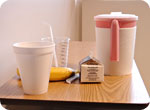
In addition to bland taste, pesticides, artificial preservatives and hormones, unnecessary antibiotics abound in the processed foods offered in hospitals. Since it is universally accepted that processed foods have a lower nutritive value than fresh foods; why would hospitals be feeding their patients food they know is not healthy? Most U.S. hospitals are in budgetary and service crises, therefore institutionalized foods are often easier to manage than meals prepared from scratch, a parallel to many household situations.
Recent inflationary activity in our economy may make processed foods a matter of financial survival for hospitals. In the year 2007, wheat prices rose 77 percent and rice 16 percent. These were some of the sharpest price hikes ever. But this year the speed of change has accelerated even further. Since January 2008, the price of rice has soared just over 140 percent. When you couple these statistics with sky rocketing fuel costs; it may make fresh foods out of reach for all but the wealthiest of hospitals.
"Like most food service, we've painted ourselves into a corner by focusing on the wrong issues." says John Turenne, who owns and operates a consulting and technical services company (Sustainable Food Systems, LLC) that helps institutions like hospitals, schools, universities and businesses make better decisions about food. "Everything has been 'bottom line' driven, with very little regard, if any, of the deeper impact the food has on all of us and our planet. Highly processed, cheap food, prepared by limited or unskilled staff has been the common result."
Jamie Harvie coordinates the healthy food in healthcare campaign for Health Care Without Harm, an international coalition dedicated to transforming the health care sector worldwide, so that it is ecologically sustainable and no longer a source of harm to public health and the environment. His observation says it all, "the food in our hospitals is similar to the food we find in many homes, restaurants and hotels. Some is excellent and much is highly processed, nutritionally deplete, overcooked and the processes used to grow the food are having tremendous impacts on public health" (a broad term that includes health and safety, ecological integrity, socio-economic health of communities, etc).
How hospital food is prepared can further reduce its nutritional content. A study published in the Journal of Food Service in October 2006 states "the common practice of overheating hospital food served to patients can reduce levels of Vitamin C, an important marker of nutritional content, by up to 86 percent."
You should be given the option to eat a healthy diet when admitted to hospital care, even if you have to pay more. In fact the opposite is often true. Increased numbers of franchised fast food service operations are readily available as a replacement for standard hospital cafeteria fare. Patients have increasingly easy access to high-fat, high-calorie, less nutrient-dense foods. According to a report put out by the American Diabetes Association: "coffee carts, hospitality carts, and so forth abound in strategic, high-traffic areas in acute care environments. In some institutions, these carts are wheeled into patient care areas and snack foods and beverages are sold, making adherence to a structured carbohydrate and nutrient intake more difficult."
"About 30 hospitals have McDonald's restaurants in their lobbies," states Gary Cohen, co-founder of Health Care Without Harm, "Here we are with 60 million Americans who are obese and 120 million who are overweight and we're feeding people in hospitals food that contributes to obesity. Stuff like that just amazes me."
The idea of one stop shopping for consumers seems to have no limit in our society. While visiting your friend or relative in the hospital you can put yourself into the bed next to them by just super sizing in the lobby.
About the author
He's also an aspiring fiction writer. Keith recently received an honorable mention from Illinois Science Fiction in Chicago (ISFiC), for a short story entry to a contest for unpublished writers of science fiction and fantasy.
Learn more about Keith's upcoming work at KeithHeimpel.com
Follow Keith on Twitter @KeithHeimpel.


Hospitals at FETCH.news
Get independent news alerts on natural cures, food lab tests, cannabis medicine, science, robotics, drones, privacy and more.

Take Action: Support Natural News by linking to this article from your website
Permalink to this article:
Embed article link: (copy HTML code below):
Reprinting this article:
Non-commercial use OK, cite NaturalNews.com with clickable link.
Follow Natural News on Facebook, Twitter, Google Plus, and Pinterest

Science News & Studies

Medicine News and Information

Food News & Studies

Health News & Studies

Herbs News & Information

Pollution News & Studies

Cancer News & Studies

Climate News & Studies

Survival News & Information

Gear News & Information

News covering technology, stocks, hackers, and more






"Big Tech and mainstream media are constantly trying to silence the independent voices that dare to bring you the truth about toxic food ingredients, dangerous medications and the failed, fraudulent science of the profit-driven medical establishment.
Email is one of the best ways to make sure you stay informed, without the censorship of the tech giants (Google, Apple, Facebook, Twitter, YouTube, etc.). Stay informed and you'll even likely learn information that may help save your own life."
–The Health Ranger, Mike Adams