



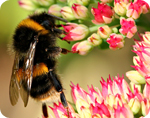
Air Pollution May be to Blame for Honeybee Population Collapse
Friday, October 17, 2008 by: David Gutierrez, staff writer
Tags: honeybees, health news, Natural News
- The REAL FAKE NEWS exposed: '97% of scientists agree on climate change' is an engineered hoax... here's what the media never told you
- Home remedies from herbal teas and grocery foods dissolve kidney stones and reverse renal failure
- There is nothing innocent about these baby carrots
- Health Basics: The 11 most toxic vaccine ingredients and their side effects
- How to Detox Fluorides from Your Body
- Original Nascent Iodine available now at Natural News, delivering 80% more monatomic iodine per bottle than glycerin-based formulas
- Principle of astrology proven to be scientific: planetary position imprints biological clocks of mammals
- Boost Low White Blood Cell Count and Immune Function Naturally
- The eight best home remedies and holistic treatments to relieve tinnitus and ringing in the ears
- Lack of Forgiveness Can Affect Our Health
- Alkaline-forming foods prevent acid reflux, heartburn, GERD and Barrett's Esophagus
- FDA finally admits chicken meat contains cancer-causing arsenic (but keep eating it, yo!)
- Forget Filling Cavities: Regrow Your Teeth Instead
- Reverse and eliminate cataracts naturally without surgery
- Proof: MMS cures malaria, despite Red Cross cover-up
- Zeolites useful for removing radiation from the body
- Sickening: Major food corporations use tissue from aborted babies to manufacture flavor additives in processed foods
- Four things you need to know about cancer and Candida
- The REAL FAKE NEWS exposed: '97% of scientists agree on climate change' is an engineered hoax... here's what the media never told you
- Home remedies from herbal teas and grocery foods dissolve kidney stones and reverse renal failure
- Gandhi still right after 90 years: Vaccines are toxic, unhealthy and ineffective
- Ten reasons why you shouldn't vaccinate your children
- Lack of Forgiveness Can Affect Our Health
- Heal and Soothe Stomach Ulcers without Mainstream Drugs
- There is nothing innocent about these baby carrots
- Surgeon General, scientists agree: Cigarettes are more addictive and deadly than ever before
- Canola oil: a chemical carcinogen that doesn't belong anywhere near your food
- The aloe vera miracle: A natural medicine for cancer, cholesterol, diabetes, inflammation, IBS, and other health conditions
- The best and worst forms of magnesium to take as a supplement
- Peanut oil in vaccines behind widespread peanut allergy epidemic
- FDA finally admits chicken meat contains cancer-causing arsenic (but keep eating it, yo!)
- Forget Filling Cavities: Regrow Your Teeth Instead
- How to opt out of the TSA's naked body scanners at the airport
- Grow Your Own Antioxidants with Aronia Berry Bushes
- Heal yourself in 15 days by fasting for 24 hours (part six)
- The eight best home remedies and holistic treatments to relieve tinnitus and ringing in the ears
- The REAL FAKE NEWS exposed: '97% of scientists agree on climate change' is an engineered hoax... here's what the media never told you
- Peanut oil in vaccines behind widespread peanut allergy epidemic
- 'Never has there been a safe vaccine,' Suzanne Humphries, MD, says in interview
- Lack of Forgiveness Can Affect Our Health
- Forget Filling Cavities: Regrow Your Teeth Instead
- Bill Gates says vaccines can help reduce world population
- The best and worst forms of magnesium to take as a supplement
- Home remedies from herbal teas and grocery foods dissolve kidney stones and reverse renal failure
- The United Nations 2030 Agenda decoded: It's a blueprint for the global enslavement of humanity under the boot of corporate masters
- Global warming data FAKED by government to fit climate change fictions
- Eighteen Overlooked Symptoms of Adrenal Fatigue
- Shock findings in new GMO study: Rats fed lifetime of GM corn grow horrifying tumors, 70% of females die early
- Apricot Seeds Kill Cancer Cells without Side Effects
- How to Detox Fluorides from Your Body
- Baking Soda Prevents Kidney Disease, Renal Failure and Kidney Dialysis
- Beat cancer with 35% hydrogen peroxide
- Canola oil: a chemical carcinogen that doesn't belong anywhere near your food
- Colorado Batman shooting shows obvious signs of being staged
- The REAL FAKE NEWS exposed: '97% of scientists agree on climate change' is an engineered hoax... here's what the media never told you
- Beat cancer with 35% hydrogen peroxide
- The best and worst forms of magnesium to take as a supplement
- The United Nations 2030 Agenda decoded: It's a blueprint for the global enslavement of humanity under the boot of corporate masters
- Apricot Seeds Kill Cancer Cells without Side Effects
- Bill Gates says vaccines can help reduce world population
- Forget Filling Cavities: Regrow Your Teeth Instead
- Six little-known natural remedies for tinnitus
- The MMR vaccine, autism connection
- Supplements to detox the body from vaccinations
- Dandelion root extract found to kill leukemia cells, prostate cancer cells and chemo-resistant melanoma
- Reverse and eliminate cataracts naturally without surgery
- What's really in vaccines? Proof of MSG, formaldehyde, aluminum and mercury
- Peanut oil in vaccines behind widespread peanut allergy epidemic
- High-dose vitamin C injections shown to annihilate cancer
- INVESTIGATION: Three days before Dr. Bradstreet was found dead in a river, U.S. govt. agents raided his research facility to seize a breakthrough cancer treatment called GcMAF
- The aloe vera miracle: A natural medicine for cancer, cholesterol, diabetes, inflammation, IBS, and other health conditions
- Indian black salve: The magical cancer cure





Pollutants such as ozone (smog) and nitrate radicals, formed mostly as a consequence of car exhaust, are binding with the volatile scent molecules given off by flowers, the scientists found. This chemically alters the molecules so that they no longer carry a sweet scent, and do not attract pollinating insects to plants.
"Scent molecules produced by flowers in a less polluted environment could travel for roughly 1,000 to 1,200 meters," said lead researcher Jose Fuentes. "But today they may travel only 200 to 300 meters. This makes it increasingly difficult for bees and other insects to locate the flowers."
Pollinating insects like bees feed on the nectar from flowering plants. Thus air pollution is having a direct impact on these insects by making it harder for them to find food. Since a plant that is not pollinated cannot reproduce, pollution also leads to an overall reduction in the number of these plants, the researchers said, so that there is even less food available for the insects.
Populations of bees and other pollinating insects have drastically declined in many parts of the world - most dramatically in the United States, where up to 25 percent of honeybee colonies have been lost to colony collapse disorder.
Colony collapse disorder describes the still-unexplained desertion of a hive by its bees.
The researchers suggested that a difficulty finding food due to air pollution may be partially responsible for the decline in bee populations. Because insects rely heavily on scents for a variety of functions, the scientists expressed concerns that pollution might also be hampering mate attraction and defense against predators.
Honeybees are the primary pollinators for 80 percent of the world's food crops.
Sources for this story include: www.independent.co.uk.


Honeybees at FETCH.news
Get independent news alerts on natural cures, food lab tests, cannabis medicine, science, robotics, drones, privacy and more.

Take Action: Support Natural News by linking to this article from your website
Permalink to this article:
Embed article link: (copy HTML code below):
Reprinting this article:
Non-commercial use OK, cite NaturalNews.com with clickable link.
Follow Natural News on Facebook, Twitter, Google Plus, and Pinterest

Science News & Studies

Medicine News and Information

Food News & Studies

Health News & Studies

Herbs News & Information

Pollution News & Studies

Cancer News & Studies

Climate News & Studies

Survival News & Information

Gear News & Information

News covering technology, stocks, hackers, and more






"Big Tech and mainstream media are constantly trying to silence the independent voices that dare to bring you the truth about toxic food ingredients, dangerous medications and the failed, fraudulent science of the profit-driven medical establishment.
Email is one of the best ways to make sure you stay informed, without the censorship of the tech giants (Google, Apple, Facebook, Twitter, YouTube, etc.). Stay informed and you'll even likely learn information that may help save your own life."
–The Health Ranger, Mike Adams