



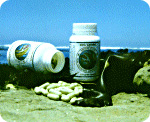
Interview with Sergei Zimin About Modifilan brown seaweed extract
 Friday, October 03, 2008 Friday, October 03, 2008by Mike Adams, the Health Ranger Editor of NaturalNews.com (See all articles...) Tags: Modifilan, brown seaweed extract, brown seaweed |
- 'Rollie pollies' remove heavy metals from soil, stabilizing growing conditions, protecting groundwater
- Children's Fitness Levels Continue to Decline; Today's Kids are Weak and Unfit
- Fluoridation is the Ultimate Deception (Opinion)
- Chinese herbs kill cancer cells: study
- The MMR vaccine, autism connection
- Detox with diatomaceous earth to remove allergies, mercury, chemicals, GMOs, parasites
- Is synthetic folic acid toxic to your body? Research suggests 'yes'
- Prevent arthritis and cancer with broccoli: Research proven
- Harvard research links fluoridated water to ADHD, mental disorders
- How to heal cavities naturally
- Vaccine fraud exposed: Measles and mumps making a huge comeback because vaccines are designed to fail, say Merck virologists
- The powerful health benefits of curcumin
- Extreme breastfeeding? Woman saves Rottweiler pup by breastfeeding it alongside her own infant
- Water filters tested for heavy metals removal: Zero Water, Pur, Brita, Mavea, Culligan, Seychelle and Waterman
- TSA workers fired after huge bribery scandal at the Philadelphia International Airport
- Police state government to start surveilling your poop in real time for illicit drug use? RFID tag readers in toilets will upload urine composition to the feds
- Pesticides and herbicides like glyphosate now strongly linked to Parkinson's disease and other neurological disorders
- Ebola surges back even after 'recovery' ... mystery deaths in Africa believed to be Ebola's third wave
- The best and worst forms of magnesium to take as a supplement
- The MMR vaccine, autism connection
- The United Nations 2030 Agenda decoded: It's a blueprint for the global enslavement of humanity under the boot of corporate masters
- 'Rollie pollies' remove heavy metals from soil, stabilizing growing conditions, protecting groundwater
- How to heal a cavity naturally and nutritionally without the need for 'drilling and filling'
- Cannabis kicks Lyme disease to the curb
- Vaccine fraud exposed: Measles and mumps making a huge comeback because vaccines are designed to fail, say Merck virologists
- How to heal cavities naturally
- Ten ways to use colloidal silver's amazing healing abilities
- Boost Low White Blood Cell Count and Immune Function Naturally
- Six natural remedies for acid reflux
- Is synthetic folic acid toxic to your body? Research suggests 'yes'
- Article updated with new message from the Health Ranger
- Harvard research links fluoridated water to ADHD, mental disorders
- Fluoridation is the Ultimate Deception (Opinion)
- Olive oil antioxidant naturally kills all cancer cells tested within an hour
- Man heals stage 3 prostate and colon cancers with raw food diet
- Every neighborhood in America mapped to show risk levels of lead contamination in the water supply
- The MMR vaccine, autism connection
- The best and worst forms of magnesium to take as a supplement
- The REAL FAKE NEWS exposed: '97% of scientists agree on climate change' is an engineered hoax... here's what the media never told you
- The United Nations 2030 Agenda decoded: It's a blueprint for the global enslavement of humanity under the boot of corporate masters
- Apricot Seeds Kill Cancer Cells without Side Effects
- Water filters tested for heavy metals removal: Zero Water, Pur, Brita, Mavea, Culligan, Seychelle and Waterman
- Peanut oil in vaccines behind widespread peanut allergy epidemic
- Indian black salve: The magical cancer cure
- Forget Filling Cavities: Regrow Your Teeth Instead
- Bill Gates says vaccines can help reduce world population
- NASA admits to spraying Americans with poisonous chemtrails
- The remarkable health benefits of Epsom salt baths
- Sugar takes on high fructose corn syrup in high stakes legal battle to see which is most unhealthy
- Ten ways to use colloidal silver's amazing healing abilities
- Baking soda, cancer and fungus
- Kale is great for your sex life
- Eighteen Overlooked Symptoms of Adrenal Fatigue
- INVESTIGATION: Three days before Dr. Bradstreet was found dead in a river, U.S. govt. agents raided his research facility to seize a breakthrough cancer treatment called GcMAF
- Eleven days before Iran bombed Tel Aviv, my microscope revealed haunting images of EXACTLY what would happen
- Morphic resonance “remote viewing” reveals iconic Middle East images of stealth bombers, a falcon and a one-horned ram
- DECENTRALIZED SPIRITUALITY and the true teachings of Christ: Overcoming the censorship, threats and lies of organized religion to truly know God and the Universal Christ
- HEALTH SECRETS: How to Instantly Block MSG Toxicity Using Natural Substances (and the secret of Methylene Blue)
- The Coming Gold Revaluation: Strategic Financial Realignment in an Era of Dollar Collapse
- The AI Data Center Wars Have Begun… Farms, Water and Electricity is Stripped from Humans to Power the Machines
- Urgent Wake-Up Call: The Coming AI Robot Wars and the Great Human Unity
- The War on Light: How Governments and Big Pharma Keep You Sick By Blocking Healing Photons
- Amazing microscopy photos reveal how freezing crystals attempt to mimic electronic structures they are touching
- THE AI RACE IS ALREADY WON: How China’s power dominance (and America’s climate lunacy surrender) secured its victory in the race to AI superintelligence
- Why the U.S. Government May be Seeking to Slaughter 200 Million Americans to Free Up Excess Power for AI Data Centers and the Race to Superintelligence
- Trump's Trojan Horse: How Stablecoins Are Secretly Paving the Way for a CBDC Control Grid – an Interview with Catherine Austin Fitts
- EXCLUSIVE REPORT: The Trump-Putin Meeting in Alaska - A Historic Pivot that Redefined Global Power
- Shingles surge sparks new focus on holistic care: Tackling pain, immunity and risks
- BOMBSHELL: Internal Pfizer documents exposed and reveal at least 16 PERCENT of their mRNA vaccine "adverse events" are REPRODUCTIVE DISORDERS
- Injecting chemicals is MORE DANGEROUS than eating them, so why is polysorbate 80 banned in ICE CREAM but allowed in VACCINES?
- Exploring the depths of alternative medicine: A comprehensive review of “The Gale Encyclopedia of Alternative Medicine”
- 18 MILLION COVID-JABBED Japanese folks shown to have SIGNIFICANTLY HIGHER DEATH RATES during first year after injection with mRNA clot shots





Today we're going to be talking about one specific type of seaweed, brown seaweed, and the extract form available in a product called Modifilan, and we're going to be talking to Sergei Zimin, owner of Pacific Standard Distributors Inc., which currently produces and sells Modifilan. So thanks for joining me today, Sergei.
Sergei: Thank you for making this happen.
Mike: How long has your company been producing this product, and where does your brown seaweed actually come from? Is it ocean grown or farm grown?
Sergei: The raw material we make our extract from comes from Russian waters; it's actually a far eastern part of Russia, off the Asiatic part of the Siberian continent, near the Kuril Islands between Japan and Kamchatka. People may also know these islands by their controversial political geography, which makes Japan claim this territory as their own northern territories while Russia -- which actually took those islands after the Second World War -- claims them as well.
Our kombu -- the common name of this variety of brown seaweed -- is not farmed, and it's not the type of sea plant that is planted or gathered. It's in the middle of the ocean, about 600 miles away from the closest commercial port. The island around which we get this particular raw material is called Urup.
Mike: How do you harvest this? Is this off of a boat, or do you have divers?
Sergei: A boat is involved, but it's a little tugboat from which we gather bunches of leaves hand-cut by divers and tow them to shore. The kombu leaves are huge. It's the largest possible type of Laminaria found in a natural habitat.
In order to make our product extract, you have to have a very large, elephant-type of leaf so you have lots of the gooey inside parts to squeeze out. It's like aloe vera. When you cut it in half, you can even see some of the polysaccharide -- that gooey substance inside the leaf.
So the divers cut them in shallow waters, probably not more than 15 meters deep -- which is what, like 45 feet deep -- usually no deeper. They put several leaves in a bunch, tie them with a rope, and the little boat brings them onshore. We gather raw material for our product twice a year.
The good thing about collecting this way -- when we do it by hand -- is that when you cut it with a knife, you come to the same spot next year and the plant will have mushroomed. You'll see four leaves growing from exactly the spot where you got only one before. But if you do it by dragging -- like they do it in the northeast states, Ireland or Japan -- you have to look for these plants somewhere else. It's not going to be sitting in the same spot. It's not going to be in the same bay.
So in our case, when we harvested our first batch back in 1997, we didn't have enough funds, force, and money to hire any dragger or troller to get it. So we had to use divers. It turned out to be the best investment in our business, because later, we were told that the way we do it helps our business actually stay in business. We're not afraid of losing the raw material because the more product we cut, the more raw material we can expect to see next year if we come to the same spot.
But this particular kelp, Laminaria, is something only we can harvest in this particular quarter. And the way we do it is very sensible in all aspects, including the business aspect where simply, the more product you harvest, the more raw material you can expect to see next season. It comes from territories close to the islands, but it's quite remote from the continent.
Mike: Sounds like a very ecologically sustainable system of harvesting.
Sergei: Yes, it's a clean place. That is actually one of the questions retail customers ask when they find out about our product: "How far is the source of your seaweed from Chernobyl?" Because it's one of the very few places that people generally know about in the ex-Soviet Union, you know? But it's on the totally opposite side of the planet -- a good ten thousand miles away from that place, and it's 600 miles -- at least -- away from the first public sewer system.
Mike: Yeah -- Chernobyl is in Western Russia.
Sergei: That's exactly the point. Chernobyl is in the Ukraine, which is in the western part; it's actually in Europe. So we are talking about islands that are in the far eastern part of Russia. You can't get any further. It's still called Siberia, but Russians call it the "Far East." This is where I'm from. I was born and brought up on Sakhalin Island, which is the regional capital. My partner and I are both from this region. That's how business started: I have known of this product for about 20 years.
Mike: So after you harvest these leaves, you squeeze them to get the juice, dehydrate the juice, and that's the extract?
Sergei: It's a little bit more complicated than that. We don't just squeeze it, but it's not a chemical process. After we pull them to shore, we have to instantly dry them so they don't rot, so we put them on a wooden fence to dry out -- it's a very fast process, especially if you do it in the sun and the wind, which is a constant factor on those shores. And then we put the dried seaweed in little rolls and transport them to the mainland, where the initial processing takes place.
We put a very small amount of water in to bring them back to life, which is a very fast process. They absorb an enormous amount of water, but at the same time, we have to use just enough to make the leaves juicy again. So we skin them, and the outer part of the Laminaria leaves goes into something that looks like a big meat grinder.
We don't throw away the skin part of kombu leaves, we grind it into something that looks like a paste. What is left behind of those leaves after we skin them is very thin, but you can touch it. It's a small layer, a very thin layer of gel, the inside part of the kombu leaves. We don't put that layer through the grinder; we cut it into chunks. That paste we get after we put the outer parts through the grinder; the paste gets mixed with those chunks of the inner part of the kombu leaves, and it's squeezed through cheesecloth-like.
We throw away what stays in the net, because this is actually the harsh part of the seaweed that humans cannot digest. The only creatures that actually can eat seaweed and fully digest it, process it, and turn it into something are the sea urchins and abalone. These are the only creatures that can munch on seaweed and work it through completely, fiber-wise. Anyway, that disposal part goes away, and the batch of gooey substance that was squeezed from the cloth goes into a cold vacuum blower -- it's actually called a drying chamber -- where it's a low temperature, and we can turn this big chunk of glue into something that dehydrates and starts to look like a big boulder. It's like a big rock. So we have to physically crack it into smaller chips and put it in a big, commercial coffee grinder. This is the final step. We turn these chunks of rock into a powder, and this is what Modifilan is.
Basically, we can't say that this is a juice of seaweed, because first of all it's dried; it's in a powder form. By its nature, we can call it an extract, but at the same time it's more mechanical extraction, a cold-water-processing product made by natural means. We don't break anything; we don't take anything out or add anything in terms of mineral content or composition. We simply make seaweed mineral qualities available.
Mike: What about the heat? Is there ever any heat processing?
Sergei: No. There is no boiling or heating. It's a little bit above room temperature when the leaves gets squeezed, just because of the mechanics of the process, but the drying process is in a true cold-dehydration chamber.
Mike: So this probably explains, why your product has such a potent taste and smell. I have some of your product, and I've been using it for a while.
Sergei: It makes a big difference, yes? We do not kill enzymes.
Mike: That was one of my questions.
Sergei: We do not kill the living part, which is actually responsible for mineral transfer right after you put it in your mouth. Sometimes you definitely taste the difference, and natural eaters will love the flavor and smell of Modifilan powder. But for some people how it tastes comes as a surprise. If you open up the capsules and put them under your tongue, they bite you!
That action actually shows that it's a very alive food. Another thing is if you mix it with water, and just put it at room temperature for a day or so, it will get rotten very fast. It eats itself up like crazy. The so-called quantum properties of our product -- which is the speed of polysaccharides, you know -- is very high.
There are dead foods. There are live foods, and then there are super-live foods. And I truly suspect that we belong to the third category. If you put a good, fresh cut of meat out and see what happens to it the next day, it's the same thing with Modifilan. You can actually turn this into paste.
If you mix it with water and keep it in the refrigerator, it's fine. But if you leave it at room temperature or at a warm temperature, it really gets rotten very fast, which, again, proves that it's a very alive substance.
Mike: And for those consumers, too -- especially in America -- who may not be consumers of a lot of seafood or sea vegetables, they may find the taste a little surprising at first, as I did. But intellectually I know that that's what I want, because it tells me the potency of this is very real, and that it doesn't have a lot of filler just to make it taste better. Besides, it's not like you're chewing on it, you're just swallowing some capsules.
Sergei: Yes, you're right, there is no filler. We are a small company, administration-wise, and our product has been made for 10 years now. We don't use any fillers, no rice powder. Many manufacturers of food supplements do it by default, because they don't want to clean their machinery often, and they want their powders to go into capsules easily. With our product, you really have to stand next to the encapsulator and do a cleanup regularly. We don't use any fillers or preservatives. All you see in the capsule is just the extract itself, straight.
And again, the powder itself has a very interesting and unique taste. For a natural eater, it's very pleasant. Before I started to make this product, the way I used it was a tablespoon of powder mixed into a glass of lemon-honey water. Just squeeze half of a lemon in a glass of water, put a teaspoon of honey in there, and put a tablespoon of Modifilan, and you shake it together because that's the best way to mix powder in, and you drink it.
Very few people can do that because of its very strong taste, so the capsules are the best way to get it, especially for somebody who is looking to get extra benefit from our product and needing to take more of it. Eating six or eight capsules a day is very healthy -- it equals a good level tablespoon of powder. The vast majority of people will have a very difficult time consuming that much powder daily, so capsules are a good way to get it.
Mike: Yes, absolutely. How many pounds of brown seaweed does it take to make one pound of your product?
Sergei: It depends on the size. The larger the size of the kombu, the less per kilo. But for about 40 pounds of raw seaweed, only one pound of our powder comes out. So it's a 40 to 1 extraction ratio. With U-FN it's about a 150 to 1, because we have to use a lot of seaweed to come up with a single kilo of U-FN. It's an expensive product, too.
Mike: Do you sell these products in powder form or only capsules?
Sergei: Only capsules. The powder form is available to those who buy it as ingredients for their products, because most of our business is in manufacturing the substance itself. Most of our product is sold in private label situations where people call it different names and sell it in different situations, marketing through different channels. So they just sell it as-is, or sometimes they mix it with good ingredients like probiotics or good enzymes. But yes, the product is available in powder, but it's not offered for retail. Our distributors, the ones who sell Modifilan in retail, they don't have powder.
Uses for brown seaweed extract
Mike: Now let's talk about some of the uses of your product -- I've researched from many reliable sources that the levels of iodine needed in the human body are much higher than what Western medicine currently recommends.Sergei: Ten times higher.
Mike: In fact, iodine is used in breast tissue; it's used in prostate gland tissue. I think this is important to note that the rates of breast cancer in Japan, for example, are significantly lower than they are in the United States. This is mostly thought to be due to the consumption of two things: seaweed and green tea.
Sergei: Yes, iodine and antioxidants. The first thing that happens to a woman when she develops an iodine deficiency is a problem with her reproductive organs: breast deformation, calcification. The tissue that is supposed to be penetrated by iodine turns into a calcified, sandy looking thing. This is what shows up on the mammogram, and that's the whole story. So again, iodine deficiency is not about lack of iodine in the thyroid only, but it's about the results of that.
Mike: Absolutely. I think that's very important to note, because people will tend to think that iodine is only for the thyroid, but it's actually useful. The next thing that I wanted to mention is that most people -- not only in Western society but also around the world -- live in a state of chronic mineral deficiency. This is not only the macro-minerals like selenium, which is related to neurological function; zinc, which is related to immune function and healing; and calcium, which controls heart function, neurological function and brain chemistry; but also the trace minerals.
Brown seaweed has all of the 72 different trace minerals typically lacking in the bodies of Western consumers. I cannot overemphasize the importance of getting trace minerals into your body, and this looks like a great way to do it. It's certainly not the only way, but this is an excellent way.
Sergei: It's an interesting thing that in our product -- although it's made of seaweed, which sometimes just resembles a shade of minerals -- you can find some of those trace minerals that you find in seaweed under the detection limit. In our product, you can actually detect those.
Speaking of selenium, manganese, and the vitamin B group, in Modifilan they are presented over the detection limit. Yes, you call them trace minerals, but in Modifilan they test in higher volume. They are still all together. They come to you not in a multivitamin pill, where you put different crystallized minerals and vitamins in one batch, but in a natural shape and form in higher volume than in regular seaweed.
Mike: Yes, that's a great point. This is really a whole plant solution. These are not isolated components that are being combined in an artificial way. This is right out of the ocean. It's also important to note that our blood mimics the mineral composition of ocean water.
Sergei: Yes, actually our lymph does. Human lymph and ocean water have the same chemical mineral composition. Not many people know that, actually. The juice of seaweed and human lymph are the same -- if you cut your finger, and the blood dries out, there is a little yellowish crystal left behind: a scab. If you cut seaweed, it will yield exactly the same substance on the top when it dries on the leaf.
In Japan, wounded soldiers were given juice of seaweed when they didn't have enough blood i just to keep them alive for several hours before blood would arrive. Before they were fermenting seaweed there, they put it in clay or stone jars with ocean salt to break down the fibers, then they ate it. Or they just chewed on that and spit it out or sucked on the seaweed leaf. In Korea, they're doing a better job still because they put seaweed in kimchi, where by means of fermentation they kill that fiber that we remove. But for everybody else, seaweed became a commodity, and it started to sell on the market a good fifty years ago. Everybody makes sure that they eat the whole thing when they buy it.
Mike: That seems like a really good way to release the nutrients, through fermentation.
Sergei: Yeah, and it becomes more active, but at the same time it becomes soft, like gum, so you can work through that broken cellulose. The fermented foods are great, and if somebody has the luxury of having time and the place to ferment their foods, the Kombu seaweed is one of the best substances you can ferment and eat.
Eating Modifilan is probably the same as chewing on seaweed and spitting out the fibers. It doesn't look very good, but it's how people in, say, the Mediterranean were eating grapes up until recently. They just chewed on the grape. They suck on the juice and then spit the thing out. In Morocco, where they have oranges growing in the streets, they just bite the fruit, chew it, and spit it out. The whole thing about eating fruits, vegetables and especially roots, which are full of indigestible fibers, in the cultures of people who grow them or were exposed to them by natural default is they didn't necessarily eat the whole thing. They just chewed on those things. The same thing is true in Japan: they fermented it or they sucked on it.
Mike: Yeah. Well, that makes sense. All they really need are the nutrients, not all the cellulose.
Can you talk about the reasons people buy your product? What are they saying is their reason? Because your product has so many different uses.
Sergei: Let's talk about results which is what they get out of this product. Reasons are a different thing. It's all different what they see in it, but people usually get the same thing out of it.
You get more energy in your day, regularity in your bathroom trips, and improvement in your skin, hair and nail conditions. These are the basic, little things that people see when they use this product for at least three to five weeks. If somebody is interested in having results beyond these obvious, simple things, if somebody is looking for our product with certain ideas in mind, usually it applies to their understanding of mineral potency. In our product at the best possible level and availability are mineral forms of seaweed. It's thyroid support, endocrine system rehabilitation, and everything that applies to that. There are numerous health conditions that -- simply based on endocrine inefficiency and thyroid inactivity -- inhibit regular body functions.
So to answer your question directly, people who look for this product, people who want to buy this product with certain health issues in mind, are the ones who know about mineral iodine as the only food for thyroid, everything else comes secondary. When you make your thyroid wake up again and regulate all the little glands around your body, including the pancreas, gall bladder, kidneys, adrenals, even the liver, everything will come to you naturally if you simply feed your thyroid with this.
By its nature, the thyroid is fed by iodine. And we're talking about iodine in ionic form, not liquid from a brown bottle. One that comes out of the soil with your water or in the plants you eat in your diet; in the sea water -- which we can't gulp much of anyway -- and in the seafood, in fish, and in shellfish. But the largest, molecule-wise, ionic form of iodine you can find is in seaweed. Again, to eat seaweed itself is not the way to get the iodine delivered; you can't get that much seaweed into your system because it's full of cellulose.
So, the main result people are looking for is relief from thyroid-related issues, and also the detox quality of alginates, which people have known of for a long time.
Origins of Modifilan
Sergei: Modifilan was created in the late '60s in the Soviet Union at a time when alginates were already researched and studied. Sodium alginates -- chemical extracts from seaweed -- were widely known and used for detox purposes, but it was all IV application, where the sodium alginates were mixed with this liquid and put directly into the vein. It was very complicated, there were side effects, it had to be done in a true hospital setting, and it was expensive.The whole idea with Modifilan was to deliver all the mineral qualities -- including alginates, which was the mineral they were after -- in a concentrated juice of seaweed. They simply made alginates available by eliminating an obstacle in the body -- the cellulose. So that was actually the whole idea of Modifilan. It was made in the Soviet Union for many years, but in very small quantities. It was not very well known or available to most of the public -- mostly just people involved in situations where they had a certain degree of environmental exposure to toxicity, ionic radiation, and contamination.
After Chernobyl in 1986, it was first made in a larger quantity. About three tons of Modifilan was produced, all at once, after Chernobyl blew up. That was the first time -- and the last time, actually -- that Modifilan was produced in the Soviet Union in that quantity. Then the Soviet Union went apart, and even Chernobyl became a good case study for Modifilan in terms of its applications beyond alginates only. Unfortunately, the Soviet Union disbanded, and all of this information became unwanted and too complicated, and the product was too expensive to make at the very beginning in Russia.
Mike: As I understand, there were some very positive results in helping people eliminate radiation, and even the chemical detoxification of this plant is documented in other contexts as well.
Sergei: Actually, more than 2,000 people were taking Modifilan on a daily basis for about two months under the supervision of doctors. These were the guys who were re-excavating the whole area around Chernobyl and changing the sewage system out. Two thousand people in a very geographically enclosed situation were eating about two tablespoons per day, so it was actually a good case study for the product.
There was something in this product that medical doctors didn't know about, because again, the only use that Modifilan was known for was the detox qualities of alginates. But the people who started to take this product in a very unhealthy situation developed an interesting reaction to this product's use, even when they had pre-existing health conditions. Most of those people working around the Chernobyl area were reserve-drafted people, ex-military men age 25 to 45. Most of those guys -- especially if you're talking about those older than 40 -- had quite a few unhealthy things in their lives. Using Modifilan by default on that many people at the same time, people who were sleeping together, eating the same food and all, that was a good thing for the research.
Mike: One of the things that really attracted me to this product is the fact that so many Westerners have literally hundreds of toxic synthetic chemicals in their bodies. You can not live in society today -- at least not in the United States -- without being exposed to all of these different chemicals that become embedded in your heart, your kidneys, liver, brain and many other organs. One of the things that was really exciting to me about your product was that I've read a lot of very reliable research talking about the ability of sea vegetables to not only protect us from these toxic chemicals, but in some sense to help us detoxify those chemicals as well. Can you speak to that in any way?
Sergei: Yes, I can. Many of our professional customers are licensed medical professionals, true MDs or NMDs, who use this product for detoxification qualities. Being an absolutely natural product, Modifilan is a very good alternative to biochemical chelation protocols. Sometimes you have to spend a lot of money to be very strict about your diet and supplement yourself with many minerals, because to chelate using chemically formulated protocols means you deplete your own mineral spectrum.
Speaking of the side effects of biochemical chelation protocols, Modifilan is a winner when detoxing, because the detox or healing crisis effect is very mild. So yes, if you use our product in a situation where one is contaminated, like off-chart PPM levels of mercury, lead, uranium or strontium -- especially those metals that do not belong to the nutritional table of metals -- using this product for about three to four months, in a quantity of six capsules a day for an average-size body, will make people clean.
A good proof of this would be to do the same thing for three or four months after you start using our product. Usually it takes about six to eight bottles of product used over a period of three to four months to start to see a difference. A hair or urine test will give a great truth in terms of numbers, but the main difference people will see is in how they feel. When they start to take this product, in about three to five weeks -- which seems to be an average introduction period for people with health conditions, especially if there is toxicity involved -- they will go through a detox stage that never lasts longer than a week, and it's very mild. It doesn't happen to everybody, every time that they take this product, but people will be aware of some of that effect. If it's heavy metal contamination, you can count on this product to do a very good job with a very modest level of detox symptoms.
The anti-cancer connection
Mike: Is there anything you can talk about, or are there any supporting studies about this seaweed stopping tumor growth, or anything you can share?Sergei: There are many studies on mineral qualities of seaweed as the source of anticancerous agents, especially an element called fucoidan.
Since our product offers everything seaweed has in the most potent and bioavailable digestible form, whatever your readers can find on the quite extensive range of health benefits of seaweed, will be in Modifilan. I cannot go into the subject deeper than that, but I can say one thing: Whatever you see or read about brown seaweed, expect our product to deliver this at the best level in terms of its potency, volume, and bioavailablity.
If you're talking about fucoidan itself, it's evaporated oligomineral that has been very well known for a long time. It's been researched, studied, and described widely, and there are even some fucoidan products available now in food supplement form. Mostly these are multi-level marketing efforts.
In our product, we have this element -- this mineral -- by default and by natural occurrence; it's not an extract that we have to put in. It's in absolute, synergetic, natural combination with other elements like iodine, protein, selenium, manganese, magnesium, and all the things that make a food a food. It's very modest in terms of its volume if you do a simple chemical test for how much of that is in Modifilan, but the way it comes in Modifilan is absolutely natural.
So yes, our product can be successfully used to prevent, control, and fight problems involving health conditions. We are definitely not turning this product into a medicine. Many of our clients are licensed medical professionals who find this product useful in their practice as a tool, or they send their patients to buy this product in certain situations. That makes us very firm believers in what we do and make here.
Modifilan is our basic product, but we also make a product called U-FN. It's another product made from exactly the same type of extraction process as Modifilan, with some additional potassium and calcium to stabilize and enhance one particular mineral element in the kombu -- it's the fucoidan in a bioavailable form, a type you can eat which still delivers. If we go back to your question about the possible help people with cancer can get from our product, they may expect Modifilan to help them in this situation, but it is not a product that simply delivers more of fucoidan mineral qualities.
With everything else, Modifilan is a better product. For detox, for thyroid support in terms of mineral iodine content, Modifilan is a better product to use, but U-FN is a product that needs to be looked at by those who are looking for fucoidan.
Mike: Fucoidan is not technically a mineral -- isn't it man-made?
Sergei: No. It's actually a created substance, yes.
Mike: We would call it a phytonutrient.
Sergei: Evaporated oligomineral is what they actually call it. If you do a detection of fucoidan in our product, there is some in it.
Burning body fat with fucoxanthin
Mike: People are excited about the research showing that brown seaweed contains a certain nutrient named fucoxanthin which burns fat. Now, you talk about something that's interesting to Western consumers, burning fat is a big concern.Sergei: That's the big hype in your world.
Mike: Yes, there's a lot of interest in it. I've covered a lot of dietary products, and the impression that most people get is not true -- that they can just continue eating all their unhealthy foods, following an unhealthy lifestyle, and thinking that one certain supplement is going to magically make them look thin or athletic. That's simply not the case.
Sergei: Especially if they will talk about a particular pigment found in brown seaweed, which I think soon they're going to sell in an extracted form. It looks like this particular pigment -- which was mentioned in these studies -- is going to be sold in Costco in a bottle, an inexpensive one, and it will say, "This burns fat. Read the papers."
My take is that I think they approached it from the wrong angle. I think that brown seaweed's effectiveness in a weight loss situation is all about making your metabolic speed higher through feeding your thyroid with mineral iodine, which the endocrine system benefits from. You will seem to process calories faster and take up energy in a better, faster, more beneficial, and natural way.
I'm in total disagreement with the piece that appeared in Time magazine about it. Everybody called here after that went out. I love it, but at the same time I feel shame because soon people will go overboard with this. It will take maybe a few weeks, maybe a few months, but then the magic thing, fucoxanthin, maybe mixed with some drinks, mixed with some vitamins or foods will start appearing in the food supplements section. But it has nothing to do with the true benefit of seaweed which I think is making the endocrine system perform better, and as a result, increasing metabolic speed.
Mike: Well, I agree completely, Sergei, and I think that for anyone to talk about losing weight while they are simultaneously suffering from malnutrition and mineral deficiencies is ridiculous. What people need to do first to lose weight is start nourishing their bodies, not with more calories, but with more real food and high-density food like the whole plant with all of the nutrients in synergy.
There is certainly a danger that what may happen with this news is exactly what happened with the hoodia gordonii -- it's being hyped up as a major weight loss aid, but 80 percent of the raw material now being purchased by supplement manufacturers is actually counterfeit. The problem is there's so much demand for it.
Sergei: The first time I heard the word hoodia, you know what happened? It's probably going to be a new thing for you, because you don't know Russian, right?
Mike: Ah, no.
Sergei: "Hoodoi" means thin in Russian. The first time I heard the product called "hoodia," it made a certain click in my head. "Hoodoi" means thin; "hoodet," the verb itself, means to lose weight. So when I heard the word and I started to sense all this very strong marketing effort behind it, it was double trouble in my head -- the name itself, and the way they sold it.
Mike: Well, but you know, if this information does catch hold, you could find yourself swept up in a whirlwind, actually, whether you want to be or not, where brown seaweed is actually being discredited because people will try some other counterfeit version of it.
Sergei: No, they simply will just buy brown seaweed, and they'll go to the Whole Foods -- which I love; it's where I buy my food -- they will find out that brown seaweed is a kelp and that kelp is a kombu. They'll go to the whole foods and buy kombu in a powder, a very thin, very fine looking powder that looks okay to our eye.
But ask our colon how it looks and feels to this part of the body. It's like a piece of shrapnel going down, scratching everything off on its way. So people will simply buy Kombu, they'll start to eat more of that compared to what they did before if they ate any, and they will develop diarrhea. They will develop constipation. They will have an excessive amount of iodine in their gut, because the sludge in the lower part of the GI tract will never get processed properly because it's non-soluble fiber.
Expect this to be one of the major problems for those who jump on the idea of eating kombu in larger quantities. China put it in print today. Time magazine had it delivered into the mailboxes of millions of people around the world. I see people this weekend reading this material on the Internet or in newspapers or in magazines, then they'll go to Whole Foods stores and ask if they have brown seaweed. They'll say, "Yes, of course. There it is." A few bucks a kilo or whatever, and they'll start to eat it by the teaspoon or tablespoon, God forbid, and you see what will happen one week after that -- a very, very serious problem.
Mike: Just to clarify, too, the difference between that raw product and your product is that the non-extracted product has all of that undigestible cellulose, correct?
Sergei: Yes. Our product is a fully soluble substance. It's a soluble fiber. It does not produce any sludge; you can't find any sand in there when you mix it with water.
Brown seaweed for muscle building
Mike: Okay. I've got one more question for you. This one concerns the people who are involved in strength training or body building. Myostatins are substances that inhibit the signal that turns off muscle growth. So the theory is -- and this is all just theory at this point, I don't know that there's any research on it -- if you take myostatins and you're working out, then you will grow muscles larger than normal because the signals are being controlled by the myostatins.There are, in fact, some nutritional supplements in the body building community that are focused on these myostatins to control or regulate muscle growth. It's my understanding that the polysaccharides in brown seaweed also contain some amount of this. Are you familiar with that or is that something you've looked at?
Sergei: No, but I sometimes say Modifilan is good for natural doping, because, again, it's a means of feeding your thyroid and controlling your adrenals. You simply have more energy, you are truly awake, and you have more power. It's as simple as that.
If somebody exercises regularly and they take our product, they sit-up, push-up, pull-up more than if they're not eating this product. But to answer your question, no. I didn't know about anything of that particular nature in our product. So I can't say that we had any detection of this in Modifilan, in our works, or in the sales efforts of those who offer this product to the bodybuilding community. I suspect that using our product will be a helpful thing to do, because those who find the muscle growth in active exercise balance will just be stronger. They will pump more iron.
It's simple. You will run longer distances, and you will catch your breath faster, but only ones who truly exercise regularly can see this. A healthy eater, when they start to eat our product, they won't see any of that detox effect -- it's only energy, regularity, things like that. Sometimes it's just a few days after you start Modifilan that you start to feel that.
Mike: Well, to summarize some of the benefits we're talking about: endocrine function, immune function, the adrenals and thyroid, also part of the endocrine system. Any other benefits?
Sergei: The simple things are hair, nails, skin, energy throughout the day, gastrointestinal problems of a lighter type. When people have acid reflux, eating our product helps a lot with digestion patterns. It regulates appetite, too. People who eat our product, eat less. Eating our product makes you feel that particular limit. Let's say you're eating your breakfast, you feel that line where you're satisfied with your food, when you feel full, faster and more clearly when you take Modifilan. It's an interesting effect.
Mike: Yeah, I completely second that. I think that part of that may be the reduction of cravings, also, through the mineralization.
Sergei: Probably so, but I was told some weird things like hormonal happiness, hormonal being full, which adults lack. With a kid, when the little guy doesn't want to eat any more porridge, he'll twist his head and spit it out where we adults will usually eat whatever is left on our plate.
The same thing applies with the lion. It catches the cow, munches it, and eats like crazy, then at one point, boom: He just flips on his side. Then, if another cow comes over and licks his nose, he will not even pay attention. It's the same thing with hormonal happiness. So doctors know that there is a strong connection between how people feel themselves mentally and endocrines.
That is why sometimes taking our product brings, what people call, a sensation of wellness. It's one of the things that we can proudly announce. I know that it will fall into the category of medical claims but knowing this product myself very well and having it given away for a long time until we made it our business, makes me very proud of saying it beyond the reason of now it's being sold because we make it.
We are a very small company -- two men, two products -- but we've been doing this for ten years. We are not new. You said it right, in certain alternative circles we're known very well. Many natural doctors know our product, and most of this is sold under the traditional, regional trade name. Dieticians, holistic chiropractors, kinesiologists, and all these kinds of "weird" doctors sell it.
We passed a clinical study for type 2 diabetes with one of our private label customers. It's a medical clinic in Seattle that sells under a different name, but for type 2 hemoglobin HbA1c, hemoglobin serum test, 100 percent success. It lowers serum, and it makes people with type 2 diabetes go off their medication in about three to five weeks. Type 1 will take less insulin; let's say one shot instead of three shots of insulin daily when they take Modifilan. People who eat this product for about three to five weeks and have been on centroid or hormones for 20 years, they can get off those too.
Mike: I never would have thought of using this product for diabetes. That's really interesting to know, and perhaps we can explore that further in another interview. Thanks for joining us today, Sergei.
Sergei: It's been a pleasure.
Modifilan can be purchased at www.Modifilan.com
Neither Mike Adams nor Truth Publishing was paid to conduct this interview.


Modifilan at FETCH.news
Get independent news alerts on natural cures, food lab tests, cannabis medicine, science, robotics, drones, privacy and more.
 About the author:Mike Adams (aka the "Health Ranger") is a best selling author (#1 best selling science book on Amazon.com) and a globally recognized scientific researcher in clean foods. He serves as the founding editor of NaturalNews.com and the lab science director of an internationally accredited (ISO 17025) analytical laboratory known as CWC Labs. There, he was awarded a Certificate of Excellence for achieving extremely high accuracy in the analysis of toxic elements in unknown water samples using ICP-MS instrumentation. Adams is also highly proficient in running liquid chromatography, ion chromatography and mass spectrometry time-of-flight analytical instrumentation.
Adams is a person of color whose ancestors include Africans and Native American Indians. He's also of Native American heritage, which he credits as inspiring his "Health Ranger" passion for protecting life and nature against the destruction caused by chemicals, heavy metals and other forms of pollution.
Adams is the founder and publisher of the open source science journal Natural Science Journal, the author of numerous peer-reviewed science papers published by the journal, and the author of the world's first book that published ICP-MS heavy metals analysis results for foods, dietary supplements, pet food, spices and fast food. The book is entitled Food Forensics and is published by BenBella Books.
In his laboratory research, Adams has made numerous food safety breakthroughs such as revealing rice protein products imported from Asia to be contaminated with toxic heavy metals like lead, cadmium and tungsten. Adams was the first food science researcher to document high levels of tungsten in superfoods. He also discovered over 11 ppm lead in imported mangosteen powder, and led an industry-wide voluntary agreement to limit heavy metals in rice protein products.
In addition to his lab work, Adams is also the (non-paid) executive director of the non-profit Consumer Wellness Center (CWC), an organization that redirects 100% of its donations receipts to grant programs that teach children and women how to grow their own food or vastly improve their nutrition. Through the non-profit CWC, Adams also launched Nutrition Rescue, a program that donates essential vitamins to people in need. Click here to see some of the CWC success stories.
With a background in science and software technology, Adams is the original founder of the email newsletter technology company known as Arial Software. Using his technical experience combined with his love for natural health, Adams developed and deployed the content management system currently driving NaturalNews.com. He also engineered the high-level statistical algorithms that power SCIENCE.naturalnews.com, a massive research resource featuring over 10 million scientific studies.
Adams is well known for his incredibly popular consumer activism video blowing the lid on fake blueberries used throughout the food supply. He has also exposed "strange fibers" found in Chicken McNuggets, fake academic credentials of so-called health "gurus," dangerous "detox" products imported as battery acid and sold for oral consumption, fake acai berry scams, the California raw milk raids, the vaccine research fraud revealed by industry whistleblowers and many other topics.
Adams has also helped defend the rights of home gardeners and protect the medical freedom rights of parents. Adams is widely recognized to have made a remarkable global impact on issues like GMOs, vaccines, nutrition therapies, human consciousness.
In addition to his activism, Adams is an accomplished musician who has released over a dozen popular songs covering a variety of activism topics.
Click here to read a more detailed bio on Mike Adams, the Health Ranger, at HealthRanger.com.

Take Action: Support Natural News by linking to this article from your website
Permalink to this article:
Embed article link: (copy HTML code below):
Reprinting this article:
Non-commercial use OK, cite NaturalNews.com with clickable link.
Follow Natural News on Facebook, Twitter, Google Plus, and Pinterest

Science News & Studies

Medicine News and Information

Food News & Studies

Health News & Studies

Herbs News & Information

Pollution News & Studies

Cancer News & Studies

Climate News & Studies

Survival News & Information

Gear News & Information

News covering technology, stocks, hackers, and more






"Big Tech and mainstream media are constantly trying to silence the independent voices that dare to bring you the truth about toxic food ingredients, dangerous medications and the failed, fraudulent science of the profit-driven medical establishment.
Email is one of the best ways to make sure you stay informed, without the censorship of the tech giants (Google, Apple, Facebook, Twitter, YouTube, etc.). Stay informed and you'll even likely learn information that may help save your own life."
–The Health Ranger, Mike Adams