




Diabetes 101: Obesity and Its Relation to Insulin Resistance (Part 3 of 4)
Wednesday, September 03, 2008 by: E.L. West
Tags: diabetes, health news, Natural News
- Red Cabbage Found to Contain 36 Anti-Cancer Anthocyanins
- The REAL FAKE NEWS exposed: '97% of scientists agree on climate change' is an engineered hoax... here's what the media never told you
- Forget Filling Cavities: Regrow Your Teeth Instead
- NASA admits to spraying Americans with poisonous chemtrails
- Beat cancer with 35% hydrogen peroxide
- HPV and Hepatitis B vaccines do not prevent cervical cancer and liver disease
- The Calcium Wars: Magnesium deficiency causes heart disease
- Big Pharma price gouging scrutinized by Congress as total prick Martin Shkreli called to testify
- Dandelion root far more effective in fighting cancer cells than chemotherapy
- Natural remedies help lymphedema
- Antioxidants Relieve Pancreatitis Pain
- The United Nations 2030 Agenda decoded: It's a blueprint for the global enslavement of humanity under the boot of corporate masters
- Microwaved water kills plant in home grown experiment
- Get rid of wrinkles naturally
- Serrapeptase is an Inexepensive Natural Miracle Medication
- Huffington Post author calls for total disarmament of entire U.S. public ... absolute obedience to a government monopoly on guns now demanded by the deranged Left
- 7 surprising things you're not supposed to know about sunscreen and sunlight exposure
- More countries abandon GM seeds, crops in response to widespread public disapproval
- Oregon man convicted of collecting rainwater on his own property surrenders and begins serving 30-day jail sentence
- Dandelion root extract found to kill leukemia cells, prostate cancer cells and chemo-resistant melanoma
- The REAL FAKE NEWS exposed: '97% of scientists agree on climate change' is an engineered hoax... here's what the media never told you
- Beat cancer with 35% hydrogen peroxide
- Forget Filling Cavities: Regrow Your Teeth Instead
- Red Cabbage Found to Contain 36 Anti-Cancer Anthocyanins
- Over 30,000 scientists say 'Catastrophic Man-Made Global Warming' is a complete hoax and science lie
- Untested vaccines causing new wave of polio-like paralysis across India
- The United Nations 2030 Agenda decoded: It's a blueprint for the global enslavement of humanity under the boot of corporate masters
- The aloe vera miracle: A natural medicine for cancer, cholesterol, diabetes, inflammation, IBS, and other health conditions
- The best and worst forms of magnesium to take as a supplement
- HPV and Hepatitis B vaccines do not prevent cervical cancer and liver disease
- 10 outrageous (but true) facts about vaccines the CDC and the vaccine industry don't want you to know
- FDA document admits vaccines are linked to autism
- Six natural remedies for lowering blood pressure fast
- Healing Illness - A Natural Anti-Cancer Protocol
- NASA admits to spraying Americans with poisonous chemtrails
- Bicarbonate of Soda Used to Cure Stage Four Prostate Cancer
- The REAL FAKE NEWS exposed: '97% of scientists agree on climate change' is an engineered hoax... here's what the media never told you
- Six little-known natural remedies for tinnitus
- High-dose vitamin C injections shown to annihilate cancer
- Supplements to detox the body from vaccinations
- Beat cancer with 35% hydrogen peroxide
- Four proven natural remedies for chronic inflammation
- Oregon man convicted of collecting rainwater on his own property surrenders and begins serving 30-day jail sentence
- Dandelion root extract found to kill leukemia cells, prostate cancer cells and chemo-resistant melanoma
- Apricot Seeds Kill Cancer Cells without Side Effects
- Untested vaccines causing new wave of polio-like paralysis across India
- Foods that detox heavy metals - with tonic recipe
- The best and worst forms of magnesium to take as a supplement
- Olive oil antioxidant naturally kills all cancer cells tested within an hour
- Curcumin causes colon cancer cells to self-destruct
- Four bitter herbs heal the liver, gall bladder, and other ailments
- Forget Filling Cavities: Regrow Your Teeth Instead
- 10 outrageous (but true) facts about vaccines the CDC and the vaccine industry don't want you to know
- Sea cucumber extract kills 95 percent of breast cancer cells and shrinks lung tumors
- EPA advisor admits the agency is funneling billions to climate groups ahead of Trump’s return to White House
- Newly released JFK files reveal Pentagon's role in creating Lyme disease and covid in the same lab
- Eleven days before Iran bombed Tel Aviv, my microscope revealed haunting images of EXACTLY what would happen
- Morphic resonance “remote viewing” reveals iconic Middle East images of stealth bombers, a falcon and a one-horned ram
- Mike Adams releases country western hit single: Goin’ Back in Time is Comin’ Home
- DECENTRALIZED SPIRITUALITY and the true teachings of Christ: Overcoming the censorship, threats and lies of organized religion to truly know God and the Universal Christ
- HEALTH SECRETS: How to Instantly Block MSG Toxicity Using Natural Substances (and the secret of Methylene Blue)
- The Health Ranger releases “Vaccine Zombie” song and music video, using AI-animated zombies for the music video
- Global leaders unite to clamp down on “misinformation” with UN-backed Cascais Declaration
- I Want My Bailout Money – new song released by Mike Adams
- BOMBSHELL: Internal Pfizer documents exposed and reveal at least 16 PERCENT of their mRNA vaccine "adverse events" are REPRODUCTIVE DISORDERS
- BOMBSHELL: DNA testing kits are a SCAM to develop ethnic-specific bioweapons
- BOMBSHELL: Covid-19 mRNA nanoparticles EMIT LIGHT SIGNALS that communicate MAC addresses used for self-assembly inside the blood vessels
- Amazing microscopy photos reveal how freezing crystals attempt to mimic electronic structures they are touching
- RFK Jr. clears key hurdle: Sen. Susan Collins backs controversial HHS nominee, signaling a new era for health policy
- The Coming Gold Revaluation: Strategic Financial Realignment in an Era of Dollar Collapse
- The AI Data Center Wars Have Begun… Farms, Water and Electricity is Stripped from Humans to Power the Machines
- Urgent Wake-Up Call: The Coming AI Robot Wars and the Great Human Unity





Jack Challam of naturalnews.com quoted Dr. Fred Pescatore as saying, "You can diagnose the telltale sign –- a pot belly –- all by yourself, standing in front of a mirror. The bigger your belly, the worse off you are." Coupled with lack of exercise, poor dietary habits and unfavorable genes, another issue that further complicates the insulin resistance condition is excessive weight.
Dr. Robert Powers stated, "...clinical obesity is associated with about 65-70% of those individuals being insulin resistant. First off, not all of them! But 65-70%." With such a large percentage of patients being obese and insulin resistant, one would be tempted to think that insulin resistance in some way plays a causatory role in the development of obesity; however, the opposite is true. Obesity instead worsens an already bad situation, making matters more problematic for an obese individual who is heavily insulin resistant than for a lean individual who is slightly insulin resistant -- a somewhat insulin resistant patient becomes more insulin resistant with weight gain and other factors, often times resulting in type II diabetes. Dr. Powers continued, stating "...you can have it both ways. Insulin resistance in and of itself is abnormal, but lean and obese individuals can have it... insulin resistance will affect obese individuals by negatively affecting other cellular functions..."
Additionally, Barbara Kahn et al wrote, "Large epidemiologic studies reveal that the risk for diabetes, and presumably insulin resistance, rises as body fat content (measured by body mass index [BMI]) increases from the very lean to the very obese, implying that the 'dose' of body fat has an effect on insulin sensitivity across a broad range." And lastly, Dr. Rao Goutham of the University of Pittsburgh Medical Center echoed a similar stance when he wrote, "Obesity is a component of the syndrome [insulin resistance], but it promotes insulin resistance rather than resulting from it." In summary, insulin resistance becomes very complex when combined with obesity, the problem growing worse and worse as the scale goes up and the waist line expands. However, insulin resistance is not the direct result of obesity, but overweight and obese persons exacerbate their condition solely by carrying the excess weight.
Sources:
1. Brooker, Rob, Eric Widmaier, Linda Grahm, Peter Stiling. Biology. New York: McGraw-
Hill, 2008. 1061-73.
2. Challem, Jack. (https://www.naturalnews.com/022638.html)
3. Glaser, Benjamin. Pub Med. (http://www.pubmedcentral.nih.gov/articlerend...)
4. Goutham, Rao. "Insulin Resistance Syndrome." American Family Physician. 63.6 (2001).
19 Mar. 2008.
5. Insulin Resistance and Pre-Diabetes. (http://diabetes.niddk.nih.gov/dm/pubs/insuli...)
6. Kahn, Barbara B., Flier, Jeffrey S. (http://www.jci.org/106/4/473?content_type=fu...)
7. Kitabchi, Abbas E., et al. (http://diabetes.diabetesjournals.org/cgi/con...)
8. Number (in Millions) of Persons with Diagnosed Diabetes, United States, 1980-2005. (http://www.cdc.gov/diabetes/statistics/prev/...) .
9. Pessin, Jeffery E.; Saltiel, Alan R. (http://www.pubmedcentral.nih.gov/articlerend...)
10.Powers, Robert W. Telephone interview. 28 Feb. 2008.
11. Rosedale, Ron. Lecture. Health Institutes Boulder Fest Seminar. Aug. 1999
12. Shulman, Gerald I. (www.pubmedcentral.nih.gov/articlerender.fcgi...)
13. Wardlaw, Gordon, Anne M. Smith. Customized Contemporary Nutrition. Updated 6th ed.
New York: McGraw-Hill, 2007. 126-30.
14. Wilcox, Gilesa. "Insulin and Insulin Resistance." PubMed. 26.2 (2005). 19 Mar. 2008.
(http://articlrender.fcgi.htm)
About the author
Emily West is a freelance writer that focuses on topics of natural health and sustainable food production systems. She also maintains a blog, The Wordsmith, at www.journeyoutofrabbithole.wordpress.com
)

Diabetes at FETCH.news
Get independent news alerts on natural cures, food lab tests, cannabis medicine, science, robotics, drones, privacy and more.

Take Action: Support Natural News by linking to this article from your website
Permalink to this article:
Embed article link: (copy HTML code below):
Reprinting this article:
Non-commercial use OK, cite NaturalNews.com with clickable link.
Follow Natural News on Facebook, Twitter, Google Plus, and Pinterest

Science News & Studies

Medicine News and Information

Food News & Studies

Health News & Studies

Herbs News & Information

Pollution News & Studies

Cancer News & Studies

Climate News & Studies

Survival News & Information

Gear News & Information

News covering technology, stocks, hackers, and more




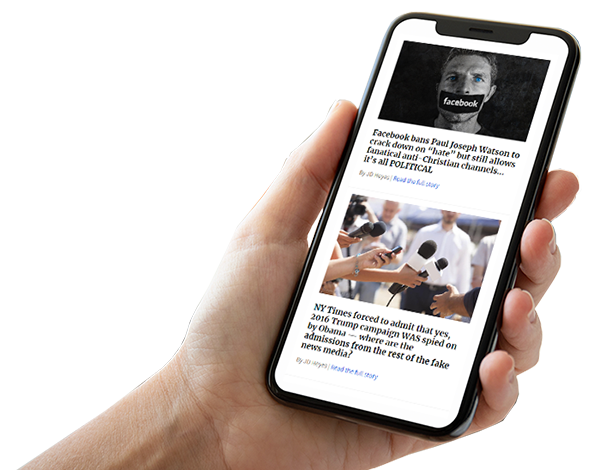

"Big Tech and mainstream media are constantly trying to silence the independent voices that dare to bring you the truth about toxic food ingredients, dangerous medications and the failed, fraudulent science of the profit-driven medical establishment.
Email is one of the best ways to make sure you stay informed, without the censorship of the tech giants (Google, Apple, Facebook, Twitter, YouTube, etc.). Stay informed and you'll even likely learn information that may help save your own life."
–The Health Ranger, Mike Adams