



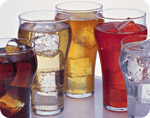
Why Soft Drinks Contribute to Obesity
Monday, September 01, 2008 by: Helmut Beierbeck
Tags: obesity, health news, Natural News
- Peanut oil in vaccines behind widespread peanut allergy epidemic
- Total media blackout on shooting where private citizen stopped mass murder by using a gun
- The REAL FAKE NEWS exposed: '97% of scientists agree on climate change' is an engineered hoax... here's what the media never told you
- Stop stomach ulcers with the miracle remedy of cabbage
- Baking Soda Prevents Kidney Disease, Renal Failure and Kidney Dialysis
- Business is Booming (comic)
- Global warming data FAKED by government to fit climate change fictions
- Forget Filling Cavities: Regrow Your Teeth Instead
- Vitaminwater revealed as non-healthy beverage by Coca-Cola's own lawyers (opinion)
- The 13 most evil U.S. government experiments on humans
- Man who ate hottest pepper in the world and burned a hole in his throat now reliant on feeding tube
- YouTube censors 'Organic Spies' video exposing Whole Foods employees lying about GMOs
- Review: The Best Tasting Green Superfood Powder Products
- Before his death, father of ADHD admitted it was a fictitious disease
- The aloe vera miracle: A natural medicine for cancer, cholesterol, diabetes, inflammation, IBS, and other health conditions
- Lack of Forgiveness Can Affect Our Health
- There are Many Healthy Diet Foods and Snacks for Dieters
- Cannabis chef brings 'healing' to the dinner table
- 'Never has there been a safe vaccine,' Suzanne Humphries, MD, says in interview
- Peanut oil in vaccines behind widespread peanut allergy epidemic
- Lack of Forgiveness Can Affect Our Health
- The United Nations 2030 Agenda decoded: It's a blueprint for the global enslavement of humanity under the boot of corporate masters
- Forget Filling Cavities: Regrow Your Teeth Instead
- Global warming data FAKED by government to fit climate change fictions
- Dandelion root far more effective in fighting cancer cells than chemotherapy
- Food freedom alert: Bureaucrats in Michigan threaten woman with jail time for planting vegetable garden in her own yard
- McDonald's Chicken McNuggets found to contain mysterious fibers, hair-like structures; Natural News Forensic Food Lab posts research photos, video
- Do Statin Drugs Cause Vitamin D Deficiency?
- Have your herbs and take them too - Make your own tinctures
- Ten Natural Ways Grow Hair and Reduce Hair Loss
- Natural solutions for varicose veins
- With Alzheimer's, continuing to keep the mind active slows deterioration
- Business is Booming (comic)
- The best and worst forms of magnesium to take as a supplement
- The big lie of genetics exposed: human DNA incapable of storing complete blueprint of the human form
- How to Detox Fluorides from Your Body
- 'Never has there been a safe vaccine,' Suzanne Humphries, MD, says in interview
- The REAL FAKE NEWS exposed: '97% of scientists agree on climate change' is an engineered hoax... here's what the media never told you
- Bill Gates says vaccines can help reduce world population
- The best and worst forms of magnesium to take as a supplement
- The United Nations 2030 Agenda decoded: It's a blueprint for the global enslavement of humanity under the boot of corporate masters
- Lack of Forgiveness Can Affect Our Health
- Nine cancer cures that the Medical Mafia doesn't want you to know about
- Shock findings in new GMO study: Rats fed lifetime of GM corn grow horrifying tumors, 70% of females die early
- Eighteen Overlooked Symptoms of Adrenal Fatigue
- Peanut oil in vaccines behind widespread peanut allergy epidemic
- Beat cancer with 35% hydrogen peroxide
- Do Statin Drugs Cause Vitamin D Deficiency?
- Baking Soda Prevents Kidney Disease, Renal Failure and Kidney Dialysis
- Apricot Seeds Kill Cancer Cells without Side Effects
- Antibiotics used in meat pose a threat to public health, admits FDA
- New vitamin D recommendations promote nutritional deficiency, protect cancer industry
- Colorado Batman shooting shows obvious signs of being staged
- Nearly two dozen medical studies prove that vaccines can cause autism
- The REAL FAKE NEWS exposed: '97% of scientists agree on climate change' is an engineered hoax... here's what the media never told you
- Beat cancer with 35% hydrogen peroxide
- The best and worst forms of magnesium to take as a supplement
- The United Nations 2030 Agenda decoded: It's a blueprint for the global enslavement of humanity under the boot of corporate masters
- Apricot Seeds Kill Cancer Cells without Side Effects
- Bill Gates says vaccines can help reduce world population
- Forget Filling Cavities: Regrow Your Teeth Instead
- Six little-known natural remedies for tinnitus
- The MMR vaccine, autism connection
- Supplements to detox the body from vaccinations
- Dandelion root extract found to kill leukemia cells, prostate cancer cells and chemo-resistant melanoma
- What's really in vaccines? Proof of MSG, formaldehyde, aluminum and mercury
- Indian black salve: The magical cancer cure
- High-dose vitamin C injections shown to annihilate cancer
- Reverse and eliminate cataracts naturally without surgery
- INVESTIGATION: Three days before Dr. Bradstreet was found dead in a river, U.S. govt. agents raided his research facility to seize a breakthrough cancer treatment called GcMAF
- The aloe vera miracle: A natural medicine for cancer, cholesterol, diabetes, inflammation, IBS, and other health conditions
- Dandelion root far more effective in fighting cancer cells than chemotherapy





On the other hand, obesity rates also increased in Europe and other parts of the world where sucrose (table sugar) remained the major caloric sweetener. This seemed to argue against a connection between HFCS and weight gain, particularly since the fructose/glucose ratios of high fructose corn syrup and sucrose are quite similar.
What sucrose and high fructose corn syrup have in common, and what distinguishes them from dietary carbohydrates such as starch, is their fructose content. Fructose contributes the same amount of energy as glucose, but it doesn′t trigger the same satiety signals. The sharp rise in the consumption of soft drinks and processed foods sweetened with HFCS and sucrose led to a dramatic increase in fructose intake, a source of energy that goes essentially unnoticed.
What is high fructose corn syrup?
High fructose corn syrup is made from corn starch, a glucose polymer. First, enzymatic starch breakdown yields corn syrup which is essentially free glucose. The glucose is then further enzymatically converted to fructose. After various purification steps, a mixture of 90% fructose and 10% glucose (HFCS-90) is obtained. HFCS-90 is mixed with appropriate amounts of corn syrup to make either HFCS-55 or HFCS-42, mixtures with 55% and 42% fructose, respectively. HFCS-55 is mainly used for soft drinks, whereas HFCS-42 is primarily used to sweeten baked goods.
Not only are sucrose and high fructose corn syrup similar in their fructose/glucose ratios, but soft drinks are acidic enough to hydrolyze sucrose. An analysis of sucrose-sweetened soft drinks showed that ten days after manufacture only 50% of the sucrose was still intact. After three months 90% of the sucrose was hydrolyzed, i.e. even sucrose-sweetened soft drinks contain mostly free fructose and glucose (2).
HFCS has largely replaced sucrose in commercial foods in North America. It is cheaper than sucrose, partly because of import tariffs on sucrose and agricultural subsidies to corn producers.
HFCS versus sucrose in drinks - is there a difference?
37 men and women in their twenties and in the healthy weight range were recruited to compare the effects of soft drinks sweetened with sucrose and HFCS on subsequent food intake (2). At mid-morning the participants were given one of six preloads: 215 kcal from sodas sweetened with sucrose, HFCS-42, or HFCS-55, 215 kcal from 1% milk, 4 kcal from aspartame-sweetened diet soda, or no drink at all. Later all subjects were given the same lunch and they were free to eat as much as they wanted. Leftover food was weighed, giving the investigators an accurate measure of energy intake. Averaged over six lunches, the following total calorie intakes (in kcal) from preload plus lunch were found: HFCS-42 1193, HFCS-55 1182, sucrose 1170, 1% milk 1129, aspartame 1011, and no drink 1008.
Clearly, there was no signficant difference between the sodas sweetened with sucrose and those with HFCS. In addition, the subjects drinking caloric preloads clearly took in more total calories than those drinking the low-cal soda or nothing at all. In other words, those who had caloric drinks before lunch did not reduce their food intake sufficiently to compensate for the preload.
Sugars in solid versus liquid form - does it matter?
To answer this question, 15 men and women were recruited for a short cross-over trial designed to compare the effects of equicaloric liquid and solid carbohydrate sweeteners on food intake (3). All participants were in their twenties and in the healthy weight range.
The trial consisted of two four-week interventions, separated by a four-week washout period and cross-over. Once a week during the two trial phases the participants presented themselves to the investigators to be weighed and supplied with weekly rations of their daily 450 kcal sweeteners. The solid load consisted of sucrose-sweetened jelly beans, and the liquid load of HFCS-sweetened soda. The
participants were free to decide when to take their daily loads, and when and what to eat. Calorie intake was estimated from self-assessments of food consumption.
Analysis of the food questionnaires indicated that during their solid phase the subjects fully compensated for the energy content of their preload; the total calorie intake from food plus test sweetener was equal to the pre-trial food energy intake. This was not the case, however, during their liquid trial phase, where food intake remained unchanged, i.e. the sweetened drink added to the total calories.
While conclusions based on self-reporting of food eaten are always questionable, these were within-subject comparisons, i.e. the same bias was likely present in their estimate of food intake after liquid and after solid preloading. Furthermore, the estimated energy intakes were consistent with measured changes in body weight. The participants experienced significant weight gains during the liquid trial phase, but not during the solid trial phase, consistent with an excess energy intake in the liquid phase.
It appears therefore that caloric sweeteners contribute to weight gain if consumed in drinks, but not in solid food.
Fructose and glucose affect appetite and food intake differently
Two hormones, insulin and leptin, act as satiety signals in the brain and thus are critical to energy homeostasis (4). Both insulin and leptin circulate in the blood at levels proportional to body fat content, and enter the central nervous system in proportion to their plasma levels. Low hormone levels increase appetite, and high levels act to reduce energy intake.
Insulin levels rise in response to blood glucose. Insulin-mediated entry of glucose into adipocytes (fat cells) in turn causes the release of leptin. In other words, both insulin and leptin levels react to glucose concentrations. Fructose, on the other hand, does not trigger insulin release. This in turn means that fructose doesn′t affect leptin levels either. Since it increases neither insulin nor leptin levels, fructose consumption does not generate the same satiety signals as glucose. The result is overeating and weight gain.
Summary
To summarize, the rise in obesity rates with increasing HFCS consumption was no coincidence. The increased popularity of soft drinks and HFCS-sweetened convenience foods led to a rapid increase in fructose consumption. It was this excessive fructose intake that fuelled the rapid weight gain, since fructose does not generate the same satiety signals as glucose. It is likely that sweetened drinks are worse than sweet solid foods, and that sucrose has the same effect as high fructose corn syrup.
Most studies of the effects of calorically sweetened liquids on appetite and weight gain looked at soft drinks. However, fruit juices and drinks also contain added sweeteners, typically HFCS, i.e. they pose the same obesity risk. Switching to noncalorically sweetened soft drinks isn′t the answer either, since artificial sweeteners like aspartame come with problems of their own (5).
Of course fruit also contains fructose ("fruit sugar"), but this obviously doesn′t mean that one should stop eating fruit. It doesn′t contain nearly as much fructose as sweetened drinks and it is a valuable source of phytonutrients and fiber, whereas soft drinks provide little more than empty calories.
Clearly, one of the best things we can do for our health is to stop drinking soft drinks.
References:
1. Bray GA, Nielsen SJ and Popkin BM. Consumption of high-fructose corn syrup in beverages may play a role in the epidemic of obesity. Am J Clin Nutr 2004;79:537-543.
(http://epsl.asu.edu/ceru/Articles/CERU-0406-...)
2. Monsivais P, Perrigue MM and Drewnowski A. Sugars and satiety: does the type of sweetener make a difference? Am J Clin Nutr 2007;86:116-123.
(http://www.ajcn.org/cgi/reprint/86/1/116)
3. DiMeglio DP and Mattes RD. Liquid versus solid carbohydrate: effects on food intake and body weight. Int J Obes 2000;24:794-800.
(http://www.nature.com/ijo/journal/v24/n6/pdf...)
4. Schwartz MW, et al. Central nervous system control of food intake. Nature 2000;404:661-671. (http://www.saegre.org.ar/docs/schwartz_2000....)
5. JAMA questions sense of sweeteners for weight loss. NutraIngredients May 18,
2008.
About the author
Helmut Beierbeck has a science background and a strong interest in all scientific aspects of health, nutrition, medicine, weight loss, or any other topic related to wellness. You can follow his ruminations on his blog http://healthcomments.info and leave comments on this or any other health-related topic.


Obesity at FETCH.news
Get independent news alerts on natural cures, food lab tests, cannabis medicine, science, robotics, drones, privacy and more.

Take Action: Support Natural News by linking to this article from your website
Permalink to this article:
Embed article link: (copy HTML code below):
Reprinting this article:
Non-commercial use OK, cite NaturalNews.com with clickable link.
Follow Natural News on Facebook, Twitter, Google Plus, and Pinterest

Science News & Studies

Medicine News and Information

Food News & Studies

Health News & Studies

Herbs News & Information

Pollution News & Studies

Cancer News & Studies

Climate News & Studies

Survival News & Information

Gear News & Information

News covering technology, stocks, hackers, and more






"Big Tech and mainstream media are constantly trying to silence the independent voices that dare to bring you the truth about toxic food ingredients, dangerous medications and the failed, fraudulent science of the profit-driven medical establishment.
Email is one of the best ways to make sure you stay informed, without the censorship of the tech giants (Google, Apple, Facebook, Twitter, YouTube, etc.). Stay informed and you'll even likely learn information that may help save your own life."
–The Health Ranger, Mike Adams