




Drug Companies Routinely Bury Studies Showing Their Drugs Don't Work
 Wednesday, August 20, 2008 Wednesday, August 20, 2008by Mike Adams, the Health Ranger Editor of NaturalNews.com (See all articles...) Tags: clinical trials, health news, Natural News |
- 'Never has there been a safe vaccine,' Suzanne Humphries, MD, says in interview
- Ten Natural Ways Grow Hair and Reduce Hair Loss
- Forget Filling Cavities: Regrow Your Teeth Instead
- Consumer Reports finds hamburger from grass-fed and organic cattle poses fewer health risks
- Naturally whiten your teeth with these five tips
- Robert De Niro denounces medical totalitarians: 'Let the people see VAXXED' and decide for themselves what the evidence shows
- Lack of Forgiveness Can Affect Our Health
- Indian doctors sue Bill Gates for harming children with deadly 'humanitarian' vaccines
- Dandelion root far more effective in fighting cancer cells than chemotherapy
- Is the GAPS diet right for you?
- Battle for humanity nearly lost: global food supply deliberately engineered to end life, not nourish it
- Top six alkaline foods to eat every day for vibrant health
- The true history of gun control - Timeline
- Jesse Ventura speaks out about conspiracy theories in NaturalNews interview
- CDC issues flu vaccine apology: this year's vaccine doesn't work!
- FDA allows unlimited heavy metals in most foods, but now seeks to limit arsenic in rice formulas for infants
- Choosing healthy foods now called a mental disorder
- Scientific American discredits itself by insisting that consumers be kept in the dark about GMOs
- 'Never has there been a safe vaccine,' Suzanne Humphries, MD, says in interview
- Eighteen Overlooked Symptoms of Adrenal Fatigue
- A common vegetable cures skin cancer
- Have your herbs and take them too - Make your own tinctures
- Bill Gates says vaccines can help reduce world population
- Indian black salve: The magical cancer cure
- Indian doctors sue Bill Gates for harming children with deadly 'humanitarian' vaccines
- Shock findings in new GMO study: Rats fed lifetime of GM corn grow horrifying tumors, 70% of females die early
- The REAL FAKE NEWS exposed: '97% of scientists agree on climate change' is an engineered hoax... here's what the media never told you
- Lack of Forgiveness Can Affect Our Health
- Why Vaccinations Harm Children: Health Experts Sound Off
- Ten Natural Ways Grow Hair and Reduce Hair Loss
- The United Nations 2030 Agenda decoded: It's a blueprint for the global enslavement of humanity under the boot of corporate masters
- Pfizer to Pay Tens of Millions for Deaths of Nigerian Children in Drug Trial Experiment
- The last antibiotic: Drug companies run out of weapons against the very same superbugs they helped create
- New York abandons swine flu vaccine mandate for health care workers, blames vaccine shortage
- Water filters tested for heavy metals removal: Zero Water, Pur, Brita, Mavea, Culligan, Seychelle and Waterman
- The best and worst forms of magnesium to take as a supplement
- 'Never has there been a safe vaccine,' Suzanne Humphries, MD, says in interview
- The REAL FAKE NEWS exposed: '97% of scientists agree on climate change' is an engineered hoax... here's what the media never told you
- Bill Gates says vaccines can help reduce world population
- The best and worst forms of magnesium to take as a supplement
- Nine cancer cures that the Medical Mafia doesn't want you to know about
- Eighteen Overlooked Symptoms of Adrenal Fatigue
- The United Nations 2030 Agenda decoded: It's a blueprint for the global enslavement of humanity under the boot of corporate masters
- Shock findings in new GMO study: Rats fed lifetime of GM corn grow horrifying tumors, 70% of females die early
- Antibiotics used in meat pose a threat to public health, admits FDA
- Beat cancer with 35% hydrogen peroxide
- Lack of Forgiveness Can Affect Our Health
- Apricot Seeds Kill Cancer Cells without Side Effects
- Water filters tested for heavy metals removal: Zero Water, Pur, Brita, Mavea, Culligan, Seychelle and Waterman
- What's really in vaccines? Proof of MSG, formaldehyde, aluminum and mercury
- Baking Soda Prevents Kidney Disease, Renal Failure and Kidney Dialysis
- Urgent lawsuit filed against FDA to halt swine flu vaccines; claims FDA violated federal law
- REVEALED: Cancer industry profits 'locked in' by nagalase molecule injected into humans via vaccines... spurs tumor growth... explains aggressive vaccine push
- Cocktail of Pharmaceuticals Found in the Fish Caught Near Major U.S. Cities
- The REAL FAKE NEWS exposed: '97% of scientists agree on climate change' is an engineered hoax... here's what the media never told you
- Beat cancer with 35% hydrogen peroxide
- The best and worst forms of magnesium to take as a supplement
- The United Nations 2030 Agenda decoded: It's a blueprint for the global enslavement of humanity under the boot of corporate masters
- Apricot Seeds Kill Cancer Cells without Side Effects
- Bill Gates says vaccines can help reduce world population
- Forget Filling Cavities: Regrow Your Teeth Instead
- The MMR vaccine, autism connection
- Six little-known natural remedies for tinnitus
- Supplements to detox the body from vaccinations
- Dandelion root extract found to kill leukemia cells, prostate cancer cells and chemo-resistant melanoma
- What's really in vaccines? Proof of MSG, formaldehyde, aluminum and mercury
- Indian black salve: The magical cancer cure
- Reverse and eliminate cataracts naturally without surgery
- High-dose vitamin C injections shown to annihilate cancer
- Eighteen Overlooked Symptoms of Adrenal Fatigue
- INVESTIGATION: Three days before Dr. Bradstreet was found dead in a river, U.S. govt. agents raided his research facility to seize a breakthrough cancer treatment called GcMAF
- The aloe vera miracle: A natural medicine for cancer, cholesterol, diabetes, inflammation, IBS, and other health conditions





In addition, published studies often interpret the data as more favorable toward the drug than it actually is.
"Not only were positive results more likely to be published, but studies that were not positive, in our opinion, were often published in a way that conveyed a positive outcome," the researchers wrote.
Although the FDA requires that pharmaceutical companies provide the results of all studies conducted on a new drug before it receives approval, there is no requirement that those studies be published where doctors, health researchers and the public can read them. A team of researchers from institutions including the Oregon Health and Science University, the Portland Veterans Affairs Medical Center, Kent State University and the University of California at Riverside compared the results of studies reported in the FDA database with whether and how those studies were reported in published literature.
"It tells you where they placed their bets before they saw the data," lead researcher Erick Turner said.
The researchers examined 74 studies conducted on 12 antidepressants between 1981 and 2004, involving a total of 12,564 patients. Only 38 of these studies (51 percent) produced favorable results for the drugs being tested. All but one of those studies - or 94 percent - were published.
In contrast, 22 of the 36 studies that failed to show favorable results (61 percent) went unpublished. Of the 14 studies published, only three interpreted the data unfavorably. The other 11 studies, in contrast with FDA interpretations of the same data, cast the drugs as more effective than they actually were.
For example, of the three studies conducted on Glaxo SmithKline's Wellbutrin, only the one showing positive results was published. Of five studies conducted on Pfizer's Zoloft, the one showing positive results was published; the one with questionable results was spun as if the drug were effective, and the three with unfavorable results were never published.
According to the researchers, the publication bias inflated the reported effectiveness of the anti-depressant drugs by an average of 32 percent. The actual amount varied from a low of 11 percent for Glaxo SmithKline's Paxil to a high of 69 percent for Bristol-Myers-Squibb's Serzone.
Turner said that this exaggeration of a drug's effectiveness can lead doctors to prescribe it in borderline cases where it might not be appropriate.
"Selective publication can lead doctors to make inappropriate prescribing decisions that may not be in the best interest of their patients and, thus, the public health," the researchers wrote.
The researchers said that the publication bias did not necessarily arise from drug companies actively concealing data. One explanation might be that researchers find negative results uninteresting, and do not go to the effort of writing them up.
"There's an expectation that if you get a positive result, that's what you're supposed to do, and if you get a negative result you have failed," Turner said. "The first impulse is to say, 'I was wrong. Maybe I should move on to something more interesting.'"
The bias could just as easily come from medical journals being more interested in studies with positive results, Turner said, and not from the researchers at all.
Newsweek columnist Sharon Begley expressed skepticism with this view.
"I think he's being too kind," Begley said. "With the proliferation of journals, virtually anything can get published somewhere - maybe not in the New England Journal of Medicine, but in some third-tier rag, which would still count as 'published.'"
Regardless of the reasons behind it, it is widely acknowledged that publication bias has far-reaching ramifications. It skews the results of meta-analyses, in which researchers compile the results of many published studies to get a better picture of how effective a drug or other therapy is. In extreme cases, it can create a totally false impression: Because studies are typically conducted within a 5 percent confidence interval, it is expected that one in 20 of those studies will show a false result simply due to random variation. If only that study is published and the 19 studies showing no results are never seen, this conveys the opposite impression of what the research actually found.
While the current study is the most thorough to date examining publication bias in the drug industry, health professionals have long known that this bias is a problem. In 2004, the state of New York sued Glaxo SmithKline for intentionally concealing the results of studies on Paxil in order to make it appear that the drug was more effective on children and adolescents. The company also sought to conceal evidence of dangerous side effects, the lawsuit alleged, such as an increased incidence of suicidal tendencies.
While that lawsuit was eventually settled, at least 12 jury trials are scheduled for 2008 that accuse Glaxo SmithKline of hiding suicidal side effects in youths.
As part of the 2004 settlement, Glaxo SmithKline agreed to post the results of all its drug trials on the Internet, and other major companies followed suit. In response to the New England Journal of Medicine study, spokespeople for several drug companies pointed to this practice as evidence that the system has been reformed.
But Turner says that posting results online is not the same as publishing them in the medical literature. He doesn't know a single doctor, he said, who regularly consults the companies' online databases.
"We are taught that the medical literature is the Holy Grail," he said.


Clinical trials at FETCH.news
Get independent news alerts on natural cures, food lab tests, cannabis medicine, science, robotics, drones, privacy and more.
 About the author:Mike Adams (aka the "Health Ranger") is a best selling author (#1 best selling science book on Amazon.com) and a globally recognized scientific researcher in clean foods. He serves as the founding editor of NaturalNews.com and the lab science director of an internationally accredited (ISO 17025) analytical laboratory known as CWC Labs. There, he was awarded a Certificate of Excellence for achieving extremely high accuracy in the analysis of toxic elements in unknown water samples using ICP-MS instrumentation. Adams is also highly proficient in running liquid chromatography, ion chromatography and mass spectrometry time-of-flight analytical instrumentation.
Adams is a person of color whose ancestors include Africans and Native American Indians. He's also of Native American heritage, which he credits as inspiring his "Health Ranger" passion for protecting life and nature against the destruction caused by chemicals, heavy metals and other forms of pollution.
Adams is the founder and publisher of the open source science journal Natural Science Journal, the author of numerous peer-reviewed science papers published by the journal, and the author of the world's first book that published ICP-MS heavy metals analysis results for foods, dietary supplements, pet food, spices and fast food. The book is entitled Food Forensics and is published by BenBella Books.
In his laboratory research, Adams has made numerous food safety breakthroughs such as revealing rice protein products imported from Asia to be contaminated with toxic heavy metals like lead, cadmium and tungsten. Adams was the first food science researcher to document high levels of tungsten in superfoods. He also discovered over 11 ppm lead in imported mangosteen powder, and led an industry-wide voluntary agreement to limit heavy metals in rice protein products.
In addition to his lab work, Adams is also the (non-paid) executive director of the non-profit Consumer Wellness Center (CWC), an organization that redirects 100% of its donations receipts to grant programs that teach children and women how to grow their own food or vastly improve their nutrition. Through the non-profit CWC, Adams also launched Nutrition Rescue, a program that donates essential vitamins to people in need. Click here to see some of the CWC success stories.
With a background in science and software technology, Adams is the original founder of the email newsletter technology company known as Arial Software. Using his technical experience combined with his love for natural health, Adams developed and deployed the content management system currently driving NaturalNews.com. He also engineered the high-level statistical algorithms that power SCIENCE.naturalnews.com, a massive research resource featuring over 10 million scientific studies.
Adams is well known for his incredibly popular consumer activism video blowing the lid on fake blueberries used throughout the food supply. He has also exposed "strange fibers" found in Chicken McNuggets, fake academic credentials of so-called health "gurus," dangerous "detox" products imported as battery acid and sold for oral consumption, fake acai berry scams, the California raw milk raids, the vaccine research fraud revealed by industry whistleblowers and many other topics.
Adams has also helped defend the rights of home gardeners and protect the medical freedom rights of parents. Adams is widely recognized to have made a remarkable global impact on issues like GMOs, vaccines, nutrition therapies, human consciousness.
In addition to his activism, Adams is an accomplished musician who has released over a dozen popular songs covering a variety of activism topics.
Click here to read a more detailed bio on Mike Adams, the Health Ranger, at HealthRanger.com.

Take Action: Support Natural News by linking to this article from your website
Permalink to this article:
Embed article link: (copy HTML code below):
Reprinting this article:
Non-commercial use OK, cite NaturalNews.com with clickable link.
Follow Natural News on Facebook, Twitter, Google Plus, and Pinterest

Science News & Studies

Medicine News and Information

Food News & Studies

Health News & Studies

Herbs News & Information

Pollution News & Studies

Cancer News & Studies

Climate News & Studies

Survival News & Information

Gear News & Information

News covering technology, stocks, hackers, and more




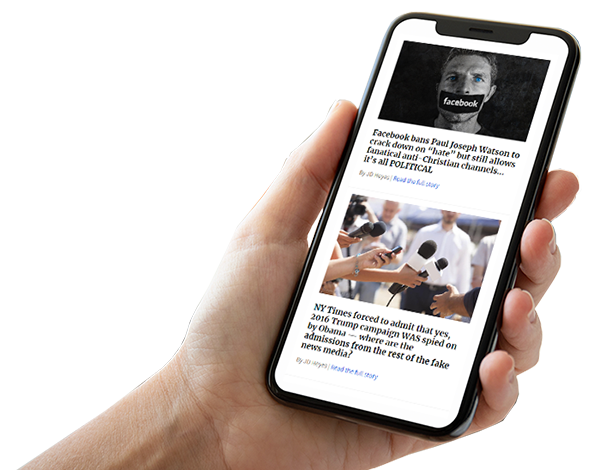

"Big Tech and mainstream media are constantly trying to silence the independent voices that dare to bring you the truth about toxic food ingredients, dangerous medications and the failed, fraudulent science of the profit-driven medical establishment.
Email is one of the best ways to make sure you stay informed, without the censorship of the tech giants (Google, Apple, Facebook, Twitter, YouTube, etc.). Stay informed and you'll even likely learn information that may help save your own life."
–The Health Ranger, Mike Adams