



Antioxidant Blends May Offer Protection in Life Threatening Conditions
Thursday, April 24, 2008 by: Barbara L. Minton
Tags: antioxidants, health news, Natural News
- Royal Rife: Cancer Cure Genius Silenced by Medical Mafia
- Cancer researchers announce breakthroughs in natural prostate cancer prevention and treatment
- Health Ranger's analytical laboratory just awarded Certificate of Excellence in water study involving 323 laboratories
- Colorado Batman shooting shows obvious signs of being staged
- Boost Low White Blood Cell Count and Immune Function Naturally
- Broccoli Juice Proven to Protect Skin Better than Sunscreen
- Vaccinated children have up to 500% more disease than unvaccinated children
- How turmeric kills cancer and how to optimize curcumin absorption
- Pure Water, Pure Consciousness: Finding a Water Filter That Works
- Government pays compensation to 80 flu vaccine injuries and deaths
- Treat skin infections naturally with powerful essential oils
- Genital Herpes May be Reversed with Natural Medicine
- CDC warns Americans to prepare for zombie apocalypse (really)
- Green Tea Nutrients Prevent Leukemia
- Hundreds of children brain damaged by the swine flu vaccine to receive $90 million in financial compensation from UK government
- Vaccines cause autism: Supporting evidence
- What's really in vaccines? Proof of MSG, formaldehyde, aluminum and mercury
- How to heal cavities naturally
- BREAKING: Taiwan bans GMOs from school lunches... mandates GMO labeling nationwide... throws down gauntlet on toxic foods from USA and Monsanto
- GMO dangers revealed by former U.S. government scientist
- Institute of Medicine adverse reactions report admits MMR vaccines cause measles, seizures, anaphylaxis and other health problems
- Homeopathy for children's emotional health
- Royal Rife: Cancer Cure Genius Silenced by Medical Mafia
- Evidence-based vaccinations: A scientific look at the missing science behind flu season vaccines
- The eight best home remedies and holistic treatments to relieve tinnitus and ringing in the ears
- Australian woman wins multi-million dollar payout from Thalidomide drug distributor Diageo
- Evidence emerges that measles outbreaks are deliberately encouraged by Big Pharma to ignite vaccine hysteria
- A common vegetable cures skin cancer
- H1N1 vaccine linked to 700 percent increase in miscarriages
- Andrew Wakefield, Scientific Censorship, and Fourteen Monkeys; A statement by Jenny McCarthy and Jim Carrey
- The United Nations 2030 Agenda decoded: It's a blueprint for the global enslavement of humanity under the boot of corporate masters
- HPV vaccines are harming and killing victims worldwide in a silent epidemic of medical violence against children
- Boost Low White Blood Cell Count and Immune Function Naturally
- The REAL FAKE NEWS exposed: '97% of scientists agree on climate change' is an engineered hoax... here's what the media never told you
- How turmeric kills cancer and how to optimize curcumin absorption
- Colorado Batman shooting shows obvious signs of being staged
- Evidence-based vaccinations: A scientific look at the missing science behind flu season vaccines
- U.S. researchers create 30 genetically modified human babies
- Can you avoid cancer by drinking traditional kefir? Here's the science
- The MMR vaccine, autism connection
- Zeolite detox myths busted: In lab tests, zeolites do NOT bind with aluminum, lead, uranium, mercury or cadmium... only CESIUM
- Oklahoma lawmaker wants to stop Pepsi from using aborted fetus cells in soda flavoring research
- Beat cancer with 35% hydrogen peroxide
- Reverse and eliminate cataracts naturally without surgery
- The United Nations 2030 Agenda decoded: It's a blueprint for the global enslavement of humanity under the boot of corporate masters
- Apricot Seeds Kill Cancer Cells without Side Effects
- The best and worst forms of magnesium to take as a supplement
- H1N1 vaccine linked to 700 percent increase in miscarriages
- Colorado Batman shooting shows obvious signs of being staged
- BREAKING: Taiwan bans GMOs from school lunches... mandates GMO labeling nationwide... throws down gauntlet on toxic foods from USA and Monsanto
- Bill Gates says vaccines can help reduce world population
- Institute of Medicine adverse reactions report admits MMR vaccines cause measles, seizures, anaphylaxis and other health problems
- The best, and worst, laundry detergents with 1,4-dioxane contamination
- The cat's claw plant has been recognized for its effects on cancer for almost 100 years
- The AI Data Center Wars Have Begun… Farms, Water and Electricity is Stripped from Humans to Power the Machines
- Urgent Wake-Up Call: The Coming AI Robot Wars and the Great Human Unity
- The War on Light: How Governments and Big Pharma Keep You Sick By Blocking Healing Photons
- The Coming Gold Revaluation: Strategic Financial Realignment in an Era of Dollar Collapse
- EXCLUSIVE REPORT: The Trump-Putin Meeting in Alaska - A Historic Pivot that Redefined Global Power
- 18 MILLION COVID-JABBED Japanese folks shown to have SIGNIFICANTLY HIGHER DEATH RATES during first year after injection with mRNA clot shots
- AI & economic liberty: Will decentralized tech save human autonomy?
- Franken-butter: Startup backed by Bill Gates creates butter from thin air
- How a nasal spray vaccine could turn Americans into walking bioweapons this Fall
- Brussels-Washington trade deal grinds to halt amid clash over digital CENSORSHIP laws
- Security clearances revoked for 37 Biden/Obama officials as Gabbard targets “weaponized intelligence”
- Coral resilience defies climate doom: New studies reveal ancient reefs flourished in warmer seas
- Trump admin mulls travel bans on EU officials behind digital censorship laws
- EU’s Media Freedom Act criticized as gateway to censorship and state control
- U.S. State Department condemns “buffer zones” outside U.K. abortion clinics as assault on free speech and religious liberty
- AI takeover: 50% of remote jobs to be replaced within 3 years as machines outperform humans in fairness and accuracy
- Brazil’s digital identity push: For child safety or state control?
- Groundbreaking study on FENBENDAZOLE published: Stage IV cancer patients in REMISSION – no chemo needed





Study and Results
Results of the study indicate that these antioxidants significantly increased the 30-day survival rate of the mice after their exposure to a potentially lethal dose of X rays when given prior to or after the irradiation. Pretreatment of animals with antioxidants resulted in significantly higher total white blood cell and neutrophil counts in peripheral blood. Antioxidants were effective in preventing peripheral lymphopenia (reduction in the number of lymphocytes circulating in the blood) only after low-dose radiation. Antioxidant supplementation was also associated with increased bone marrow cell counts after irradiation, and with increased Bcl2 and decreased Bax, caspase9 and TGF-beta1 mRNA expression in the bone marrow after irradiation.
Maintenance of the antioxidant diet was associated with improved recovery of the bone marrow after sub-lethal or potentially lethal irradiation.
The researchers concluded that when taken together, oral supplementation with antioxidants appears to be an effective approach for radioprotection of hematopoietic (blood forming) cells and improvement of animal survival. Modulation of apoptosis is implicated as a mechanism for the radioprotection of the hematopoietic system by antioxidants.
What are antioxidants?
Antioxidants are natural compounds that help protect the body from the ravages of free radicals. Free radicals are atoms or groups of atoms that cause damage to cells, impair the immune system and lead to infections and degenerative diseases such as cancer and heart disease. Many scientists view free radical damage as the basis of the aging process.
Even a healthy body produces free radicals, many of them being oxygen derived. They may form in response to exposure to the sun, toxic chemicals, air pollution, or as part of various metabolic processes.
Ideally these free radicals are kept in check by free radical scavengers, which consist primarily of four enzymes: superoxide dismutase (SOD), methionine reductase, catalase, and glutathione peroxidase. The healthy body produces these enzymes as a matter of course. Melatonin, the sleep hormone, is also a highly powerful antioxidant produced by the body. And under ideal conditions, the body is also able to obtain antioxidants from food, such as vitamin A, beta-carotene and other carotenoids, flavonoids, vitamins C and E, and selenium. Some herbs also have potent antioxidant properties.
Unfortunately, today's food supply reflects less than ideal conditions, so it is quite difficult to get enough antioxidants from your diet to protect you from the ever increasing levels of free radicals generated in our polluted environment. As a result, many people are turning to dietary supplements, which can be extremely effective, as this study indicates.
Implications of the study
The researchers of this study chose to supplement their mice with a variety of powerful antioxidants. That's because antioxidants work synergistically in their ability to provide protection against free radicals, so it is better to take smaller doses of several different antioxidants than a large dose of only one. This finding has implications for diet as well as supplementation.
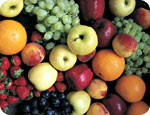
Some examples of obtaining a broad spectrum of antioxidants from the diet would be found in the decision to eat a variety of fruits during the day. By choosing to eat different fruits of different colors, you will obtain a much broader variety of antioxidants than you would if you chose to buy only a large bag of apples or oranges for the week. The variation in their color is your key to the variation of their antioxidant powers.
The same logic hold true with vegetables. You will achieve a much larger array of antioxidants by eating a salad made of small amounts of all the veggies on the salad bar than you will with a full size serving of only one variety. Again, let color be your guide. The more colors on your plate, the higher the variety of antioxidants.
If you are headed to the juice bar, don't just order the carrot juice. Ask for some of all the veggies or fruits they have available.
Berries are extremely rich in antioxidants. They have been shown to be especially protective against cancer.
If you decide to use antioxidant supplements, you can buy one of the multi-antioxidant formulations available. A better way may be to familiarize yourself with the major antioxidants and tailor your supplementation to the gaps in your diet. For example, if you eat a bowl of blueberries every morning, you won't need an antioxidant containing lutein.
The supplements used in the study
L-selenomethionine is a highly bioavailable form of selenium, a nutrient essential for the functioning of glutathione peroxidase, one of the body's main antioxidants. This is the form of selenium increasingly used in cancer treatment and studies and is believed to be protective against cancer. Since selenium content of fruits and vegetables is determined by the selenium content of the soil in which they are grown, it's hard to know that you are getting enough selenium from what you eat. But if you eat Brazil nuts regularly, you probably get plenty of selenium.
Vitamin C is an antioxidant that is required for at least 300 metabolic functions including tissue growth and repair, adrenal functioning, and oral health. It aids in the production of anti-stress hormones and the immune system protein, interferon. It is needed for the metabolism of folic acid, tyrosine, and phenylalanine. Vitamin C can reduce the symptoms of asthma, and protect against the effects of pollution. It is cancer preventative, protects against infection and boosts the immune system. Vitamin C is able to combine with certain heavy metals and other toxic substances, and escort them out of the body. It is instrumental in lowering blood pressure and helping to prevent atherosclerosis and blood clots. It has anti-aging properties and is essential in the formation of collagen.
The body does not manufacture vitamin C so it must be obtained from diet or supplements. Good amounts of vitamin C are found in most fruits, particularly citrus and berries, and in many vegetables, particularly the green leafy varieties. Many herbs also contain amounts of vitamin C. The best supplements of vitamin C are food sourced, such as those from acerola cherry. The bioflavonoid complex is synergistic with vitamin C.
Vitamin E succinate is one of the two ester forms of vitamin E, the other being vitamin E acetate. The ester is a form more resistive to oxidation during storage than the unesterified form. Bio-availability is equal to that of free form vitamin E. The ester form, vitamin E succinate, is required to effectively inhibit growth and induce death in cancer cell grown in culture. Supplements of vitamin E may range from those containing only alpha tocopherol to those containing the full E complex of the four tocopherols and the four tocotrienols.
Alpha lipoic acid (ALA) is known as the all purpose antioxidant. It is powerful in its own right, and also as a recycler of vitamins C and E. It can restore the antioxidant properties of these vitamins after they have already neutralized free radicals. ALA stimulates the production of glutathione in the body, and aids the absorption of coenzyme Q 10. ALA is water soluble as well as fat soluble, a feature that allows it to move into all parts of cells to deactivate free radicals.
According to Phyllis and James Balch in their Prescription for Nutritional Healing, supplemental ALA has been used in Europe for several decades to treat peripheral nerve degeneration and to aid in the control of blood sugar levels in diabetics. It helps the liver detoxify metal pollutants, blocks cataract formation, protects nerve tissues against oxidative stress, and reduces blood cholesterol levels. ALA may also be instrumental in the prevention and treatment of chronic degenerative diseases such as diabetes and cardiovascular disease. Without ALA, cells cannot use sugar to produce energy. People who choose to take only one antioxidant supplement often choose ALA. Food sources are spinach, broccoli, and organ meats.
N-acetyl cysteine (NAC) is a stable form of the amino acid cysteine, and is used by the liver and the lymphocytes to detoxify chemicals and other poisons. It is very powerful against alcohol, tobacco smoke and environmental pollutants, all of which suppress the immune system. It is needed for the production of glutathione and helps maintain glutathione levels in the cells. Supplementing with NAC can boost the levels of protective enzymes in the body, slowing the cellular damage that is characteristic of aging. It may also reduce the frequency and duration of infections. Combined with L Glutamine, NAC offers a powerful energy boost.
NAC is produced in the body from the amino acid cysteine found in all food sources of protein. Its synthesis is dependent on the availability of selenium, vitamin E and the B vitamins. Supplements of NAC are also available and are used in many anti-aging regimens.
Additional sources:
Linus Pauling Institute at Oregon State University
(www.supplementnews.org)
About the author
Barbara is a school psychologist, a published author in the area of personal finance, a breast cancer survivor using "alternative" treatments, a born existentialist, and a student of nature and all things natural.


Antioxidants at FETCH.news
Get independent news alerts on natural cures, food lab tests, cannabis medicine, science, robotics, drones, privacy and more.

Take Action: Support Natural News by linking to this article from your website
Permalink to this article:
Embed article link: (copy HTML code below):
Reprinting this article:
Non-commercial use OK, cite NaturalNews.com with clickable link.
Follow Natural News on Facebook, Twitter, Google Plus, and Pinterest

Science News & Studies

Medicine News and Information

Food News & Studies

Health News & Studies

Herbs News & Information

Pollution News & Studies

Cancer News & Studies

Climate News & Studies

Survival News & Information

Gear News & Information

News covering technology, stocks, hackers, and more





"Big Tech and mainstream media are constantly trying to silence the independent voices that dare to bring you the truth about toxic food ingredients, dangerous medications and the failed, fraudulent science of the profit-driven medical establishment.
Email is one of the best ways to make sure you stay informed, without the censorship of the tech giants (Google, Apple, Facebook, Twitter, YouTube, etc.). Stay informed and you'll even likely learn information that may help save your own life."
–The Health Ranger, Mike Adams