



Extract of Broccoli Sprouts May Protect Against Bladder Cancer
Wednesday, April 02, 2008 by: Leslee Dru Browning
Tags: bladder cancer, health news, Natural News
- Simple home remedies for hayfever and allergies
- Breaking News: Ferguson's Barnes Christian Hospital Preparing for Mass Casualties
- What's really in vaccines? Proof of MSG, formaldehyde, aluminum and mercury
- Updated timeline of mysterious animal deaths
- Support the Free Speech About Science Act and restore freedom of health speech
- Use Homeopathic Gout Remedies: Colchicum, Ledum, Nux Vomica and Aconite
- Lack of Forgiveness Can Affect Our Health
- Diatomaceous earth has many benefits
- Genital Herpes May be Reversed with Natural Medicine
- Obamacare computer code riddled with typos, Latin filler text, desperate programmer comments and disastrous architecture
- The United Nations 2030 Agenda decoded: It's a blueprint for the global enslavement of humanity under the boot of corporate masters
- Humans vs. the environment - A thought experiment
- Irrefutable proof that Big Pharma is a criminal racket: Bribery, scientific fraud, felony crimes and more
- 'Never has there been a safe vaccine,' Suzanne Humphries, MD, says in interview
- Alarming photos show Ebola vomit cleanup crew in Dallas wearing NO protective gear whatsoever
- Shock findings in new GMO study: Rats fed lifetime of GM corn grow horrifying tumors, 70% of females die early
- Burzynski documentary reveals true agenda of FDA and cancer industry to destroy cancer cures that really work
- Lead developer of HPV vaccine admits it's a giant, deadly scam
- Bill Gates says vaccines can help reduce world population
- What's really in vaccines? Proof of MSG, formaldehyde, aluminum and mercury
- Breaking News: Ferguson's Barnes Christian Hospital Preparing for Mass Casualties
- Simple home remedies for hayfever and allergies
- Urgent lawsuit filed against FDA to halt swine flu vaccines; claims FDA violated federal law
- The REAL FAKE NEWS exposed: '97% of scientists agree on climate change' is an engineered hoax... here's what the media never told you
- Ten Things You're Not Supposed to Know about the Swine Flu Vaccine
- Active shooter drills carried out EVERY MONTH at San Bernardino Inland Regional Center... staff tweeted 'drill started' as police raid began
- Monsanto's secret studies showed glyphosate caused cancer four decades ago
- Updated timeline of mysterious animal deaths
- Lack of Forgiveness Can Affect Our Health
- Cops rough up Miss USA beauty queen over police computer glitch
- POM Wonderful under attack by FTC over truthful health claims
- Bosnia war survivor warns of things to come in collapse of America
- Top ten ways humanity is being murdered in the name of 'evidence-based science' (#7 Chemotherapy)
- Fukushima reactor No. 4 vulnerable to catastrophic collapse; could unleash 85 times Cesium-137 radiation of Chernobyl; human civilization on the brink
- Beat cancer with 35% hydrogen peroxide
- Recovering from adrenal fatigue: How your body can overcome chronic stress and feel energized again
- The REAL FAKE NEWS exposed: '97% of scientists agree on climate change' is an engineered hoax... here's what the media never told you
- Bill Gates says vaccines can help reduce world population
- Shock findings in new GMO study: Rats fed lifetime of GM corn grow horrifying tumors, 70% of females die early
- The best and worst forms of magnesium to take as a supplement
- Nine cancer cures that the Medical Mafia doesn't want you to know about
- Lack of Forgiveness Can Affect Our Health
- Beat cancer with 35% hydrogen peroxide
- Antibiotics used in meat pose a threat to public health, admits FDA
- Apricot Seeds Kill Cancer Cells without Side Effects
- The United Nations 2030 Agenda decoded: It's a blueprint for the global enslavement of humanity under the boot of corporate masters
- What's really in vaccines? Proof of MSG, formaldehyde, aluminum and mercury
- Reverse and eliminate cataracts naturally without surgery
- Merck vaccine scientist Dr. Maurice Hilleman admitted presence of SV40, AIDS and cancer viruses in vaccines
- REVEALED: Cancer industry profits 'locked in' by nagalase molecule injected into humans via vaccines... spurs tumor growth... explains aggressive vaccine push
- Measles vaccines kill more people than measles, CDC data proves
- Sickening: Major food corporations use tissue from aborted babies to manufacture flavor additives in processed foods
- Cocktail of Pharmaceuticals Found in the Fish Caught Near Major U.S. Cities
- The Australian kakadu plum is rich in vitamin C and phytochemicals
- AI arms race & big tech censorship: Machines compete for resources while suppressing lifesaving knowledge
- The REAL FAKE NEWS exposed: '97% of scientists agree on climate change' is an engineered hoax... here's what the media never told you
- Breaking down Charlie Kirk's assassination and the Israel connection
- Journal axes editor after publishing paper in defense of carbon dioxide
- Liberalism is More than a Mental Illness – It’s TERRORISM against America’s Youth
- A Billion Voices of Truth: Mike Adams Announces “Moonshot” Mission to Empower Humanity with Hidden Knowledge
- Why We Need the Charlie Kirk Free Speech Act: A Legal Shield Against the Censorship Industrial Complex
- Urgent Wake-Up Call: The Coming AI Robot Wars and the Great Human Unity
- Skin rejuvenation without toxins: The science-backed natural alternatives big beauty doesn't want you to know
- The AI Data Center Wars Have Begun… Farms, Water and Electricity is Stripped from Humans to Power the Machines
- Simple nut snack swap slashes metabolic syndrome risk by up to 67% in new clinical trial
- Unconventional survival strategies from the CIA
- FOLLOW the REAL VACCINE SCIENCE: Study reveals mRNA in COVID vaccines DOES change your DNA and can catapult TURBO CANCER
- A nation in turmoil: Death toll from Nepal’s anti-corruption protests rises to 72
- Coral resilience defies climate doom: New studies reveal ancient reefs flourished in warmer seas
- Questions Raised Over FBI Evidence Handling in Charlie Kirk Case; Kash Patel Criticizes Investigation
- New MAHA plan aims to tackle childhood health crisis with over 120 initiatives
- How a nasal spray vaccine could turn Americans into walking bioweapons this Fall





UCLA researchers this past month have shown that sulforaphane in broccoli switches on a set of antioxidant genes and enzymes in specific immune cells, which then combat the injurious effects of molecules known as free radicals that can damage cells and lead to disease.
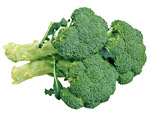
EurekAlert recently reported that a concentrated extract of freeze dried broccoli sprouts cut development of bladder tumors in an animal model by more than half, according to a report in the March 1, 2008 issue of Cancer Research.
This finding reinforces human epidemiologic studies that have suggested that eating cruciferous vegetables like broccoli is associated with reduced risk for bladder cancer, according to the study's senior investigator, Yuesheng Zhang, MD, PhD, professor of oncology at Roswell Park Cancer Institute. "Although this is an animal study, it provides potent evidence that eating vegetables is beneficial in bladder cancer prevention," he said.
There is strong evidence that the protective action of cruciferous vegetables derives at least in part from isothiocyanates (ITCs), a group of phytochemicals with well-known cancer preventive activities. "The bladder is particularly responsive to this group of natural chemicals," Zhang said. "In our experiments, the broccoli sprout ITCs after oral administration were selectively delivered to the bladder tissues through urinary excretion."
Other cruciferous vegetables with ITCs include mature broccoli, cabbage, kale, collard greens and others. Broccoli sprouts have approximately 30 times more ITCs than mature broccoli, and the sprout extract used by the researchers contains approximately 600 times as much.
Although animals that had the most protection against development of bladder cancer were given high doses of the extract, Zhang said humans at increased risk for this cancer likely do not need to eat huge amounts of broccoli sprouts in order to derive protective benefits.
"Epidemiologic studies have shown that dietary ITCs and cruciferous vegetable intake are inversely associated with bladder cancer risk in humans. It is possible that ITC doses much lower than those given to the rats in this study may be adequate for bladder cancer prevention," he said.
Zhang and his colleagues tested the ability of the concentrate to prevent bladder tumors in five groups of rats. The first group acted as a control, while the second group was given only the broccoli extract to test for safety. The remaining three groups were given a chemical, N-butyl-N-(4-hydroxybutyl) nitrosamine (BBN) in drinking water, which induces bladder cancer. Two of these groups were given the broccoli extract in their diet, beginning two weeks before the carcinogenic chemical was delivered.
In the control group and the group given only the extract, no tumors developed, and there was no toxicity from the extract in the rats.
About 96 percent of animals given only BBN developed an average of almost two tumors, each of varying sizes. By comparison, about 74 percent of animals given a low dose of the extract developed cancer, and the number of tumors per rat was 1.39 . The group given the high dose of extract had even fewer tumors. About 38 percent of this high-dose group developed cancer, and the average number of tumors per animal was only .46 and, unlike the other animals, the majority were very small in size.
The study was funded by the Vital Vegetables Research Program of Australia and New Zealand, the National Cancer Institute and the Roswell Park Alliance Foundation.
Sources:
Eurekalert (http://www.eurekalert.org/)
American Association for Cancer Research (2008, February 29). Extract of Broccoli Sprouts May Protect Against Bladder Cancer (http://www.aacr.org/)
About the author
Leslee Dru Browning is a 6th generation Medical Herbalist & Nutritionist from the ancestral line of Patty Bartlett Sessions; Pioneer Mid-Wife & Herbalist. Leslee practiced Medical Herbalism and Nutritional Healing for over 25 years and specialized in Cancer Wellness along with Chronic Illness. She now devotes her career to teaching people, through her writing, about Natural Healing from An Herbal Perspective.


Bladder cancer at FETCH.news
Get independent news alerts on natural cures, food lab tests, cannabis medicine, science, robotics, drones, privacy and more.

Take Action: Support Natural News by linking to this article from your website
Permalink to this article:
Embed article link: (copy HTML code below):
Reprinting this article:
Non-commercial use OK, cite NaturalNews.com with clickable link.
Follow Natural News on Facebook, Twitter, Google Plus, and Pinterest

Science News & Studies

Medicine News and Information

Food News & Studies

Health News & Studies

Herbs News & Information

Pollution News & Studies

Cancer News & Studies

Climate News & Studies

Survival News & Information

Gear News & Information

News covering technology, stocks, hackers, and more






"Big Tech and mainstream media are constantly trying to silence the independent voices that dare to bring you the truth about toxic food ingredients, dangerous medications and the failed, fraudulent science of the profit-driven medical establishment.
Email is one of the best ways to make sure you stay informed, without the censorship of the tech giants (Google, Apple, Facebook, Twitter, YouTube, etc.). Stay informed and you'll even likely learn information that may help save your own life."
–The Health Ranger, Mike Adams