



Plastic Waste is Turning the North Pacific Ocean Into a Garbage Dump
Tuesday, March 25, 2008 by: Tom Mosakowski
Tags: Pacific Ocean, health news, Natural News
- The REAL FAKE NEWS exposed: '97% of scientists agree on climate change' is an engineered hoax... here's what the media never told you
- Repeat business? FDA approves new cancer drug to treat toxicity caused by another cancer drug
- It's all scripted! Ebola outbreak and impossibly rapid vaccine response clearly scripted; U.S. govt. patented Ebola in 2010 and now owns all victims' blood
- Peanut oil in vaccines behind widespread peanut allergy epidemic
- Infants fed rice have twice as high urinary arsenic concentrations than infants fed no rice
- Boost Low White Blood Cell Count and Immune Function Naturally
- Visionary internet activist Aaron Swartz found dead; was this brilliant internet revolutionary 'taken out?'
- Health blogger threatened with jail time for advocating Paleo diet that cured his diabetes
- Shock findings in new GMO study: Rats fed lifetime of GM corn grow horrifying tumors, 70% of females die early
- Ron Paul Introduces Three New Bills Designed to Restore Free Speech to Health
- The medicine cabinet in your kitchen - Heal with ten top common herbs and spices
- VACCINE WAR IN AMERICA: Attempts to legislate mandatory vaccines all across the U.S
- Boosting Your Metabolism to Lose Weight: Truth Or Fiction?
- Feds illegally raid New Mexico farm school without warrant and find nothing but fresh produce
- The remarkable health benefits of Epsom salt baths
- The AIDS myth exposed: Why experts are challenging conventional AIDS mythology
- Mammograms cause breast cancer, groundbreaking new research declares
- Barley Grass brings many benefits to the diet
- Peanut oil in vaccines behind widespread peanut allergy epidemic
- The REAL FAKE NEWS exposed: '97% of scientists agree on climate change' is an engineered hoax... here's what the media never told you
- The United Nations 2030 Agenda decoded: It's a blueprint for the global enslavement of humanity under the boot of corporate masters
- Forget Filling Cavities: Regrow Your Teeth Instead
- Beat cancer with 35% hydrogen peroxide
- Cancer is not a Disease - It's a Survival Mechanism (Book Excerpt)
- Tyson Foods Fined $500,000 in Death Of Worker Who Inhaled Chicken Processing Plant Fumes
- Bill Gates says vaccines can help reduce world population
- Measles outbreak likely caused by vaccinated children, science shows
- Health Ranger threatened by Dr. Fata chemotherapy victims group after attempting to donate immune-boosting nutritional supplements to its members
- U.S. has worst health outcomes of all wealthy countries, study finds
- Colorado Batman shooting shows obvious signs of being staged
- Shock findings in new GMO study: Rats fed lifetime of GM corn grow horrifying tumors, 70% of females die early
- 3 reasons hospitals are not a good place to heal
- CENSORED: The Atlantic buried this amazing interview with the Health Ranger after realizing his answers made too much sense
- Review: Pure Synergy and Vita Synergy food-based vitamins and supplements
- Mammograms cause breast cancer, groundbreaking new research declares
- Reverse and eliminate cataracts naturally without surgery
- 'Never has there been a safe vaccine,' Suzanne Humphries, MD, says in interview
- Peanut oil in vaccines behind widespread peanut allergy epidemic
- The REAL FAKE NEWS exposed: '97% of scientists agree on climate change' is an engineered hoax... here's what the media never told you
- Bill Gates says vaccines can help reduce world population
- Lack of Forgiveness Can Affect Our Health
- The United Nations 2030 Agenda decoded: It's a blueprint for the global enslavement of humanity under the boot of corporate masters
- Shock findings in new GMO study: Rats fed lifetime of GM corn grow horrifying tumors, 70% of females die early
- The best and worst forms of magnesium to take as a supplement
- Beat cancer with 35% hydrogen peroxide
- Forget Filling Cavities: Regrow Your Teeth Instead
- Global warming data FAKED by government to fit climate change fictions
- Eighteen Overlooked Symptoms of Adrenal Fatigue
- Apricot Seeds Kill Cancer Cells without Side Effects
- Baking Soda Prevents Kidney Disease, Renal Failure and Kidney Dialysis
- Colorado Batman shooting shows obvious signs of being staged
- How to Detox Fluorides from Your Body
- Antibiotics used in meat pose a threat to public health, admits FDA
- Urgent lawsuit filed against FDA to halt swine flu vaccines; claims FDA violated federal law
- The REAL FAKE NEWS exposed: '97% of scientists agree on climate change' is an engineered hoax... here's what the media never told you
- Beat cancer with 35% hydrogen peroxide
- The best and worst forms of magnesium to take as a supplement
- The United Nations 2030 Agenda decoded: It's a blueprint for the global enslavement of humanity under the boot of corporate masters
- Apricot Seeds Kill Cancer Cells without Side Effects
- Bill Gates says vaccines can help reduce world population
- Forget Filling Cavities: Regrow Your Teeth Instead
- Six little-known natural remedies for tinnitus
- The MMR vaccine, autism connection
- Supplements to detox the body from vaccinations
- Dandelion root extract found to kill leukemia cells, prostate cancer cells and chemo-resistant melanoma
- What's really in vaccines? Proof of MSG, formaldehyde, aluminum and mercury
- Reverse and eliminate cataracts naturally without surgery
- High-dose vitamin C injections shown to annihilate cancer
- Peanut oil in vaccines behind widespread peanut allergy epidemic
- Indian black salve: The magical cancer cure
- INVESTIGATION: Three days before Dr. Bradstreet was found dead in a river, U.S. govt. agents raided his research facility to seize a breakthrough cancer treatment called GcMAF
- The aloe vera miracle: A natural medicine for cancer, cholesterol, diabetes, inflammation, IBS, and other health conditions





While this "trash continent" is not thick enough to be walked on, from the ocean surface to a depth of 30 feet, the plastic is floating at a concentration six times that of its neighboring zooplankton, the most abundant animal type of life both by number and total weight. The plastic can reach concentrations of a million pieces per square mile.
Most of this plastic debris originates from land as trash, being swept out by rivers or the tide. About one fifth comes from ships' cargo and oil platforms. Toothbrushes, cigarette lighters and syringes have accumulated here and everything from Nike sneakers to plastic yellow ducks has been lost from cargo ships.
Due to undesirable wind patterns, most sailors have avoided this area and a natural lack of nutrients in this ocean region has given fishermen reason to look for fish elsewhere. The translucent quality of the plastic just below the water's surface prevents satellites from detecting it. These two factors have prevented the sheer vastness of the garbage accumulation from being noticed until recently.
This region of the ocean is called the North Pacific Gyre. Warm tropical air descends in a clockwise rotation over this vast area of over 10 million square miles. These wind patterns create comparable ocean currents which circle around a center point between California and Japan. The nature of the North Pacific Gyre has created two garbage patches on either side of the Hawaiian Islands. The Eastern Pacific Garbage Patch is between California and Hawaii and is twice the size of Texas. The Western Pacific Garbage Patch on the other side of Hawaii is smaller, but still massive. The patches are connected by a 6,000 mile long current which itself can accumulate significant amounts of trash.
All debris that comes within this gyre can be caught in the rotation and concentrated toward the center. The result: 100 million tons of plastic circulating in the northern Pacific according to Charles Moore, the American oceanographer who discovered the extent of this accumulation. This is equal to all the plastic produced by the world in one year.
Until recently, debris in this region did not accumulate because it was easily broken down by microorganisms. However, the production of plastics and their prolific distribution across the globe for the last few decades has been the trump card played to the decomposers of the ocean. Unlike wood and cotton, which can be broken down into such things as carbon dioxide and water within months to years, nothing in the ocean can biodegrade plastics.
The plastic from the 1950s that floated out to the ocean is still there in pieces and will be for a long time.
In the sea, forces of the sun, the waves and collisions with other solids break plastics into smaller pieces and eventually into individual molecules, but this is not the same as biodegradation. As the pieces get smaller they are still plastic and become more harmful. They act like sponges for many chemical toxins, such as DDT and PCBs, and concentrate the toxins up to a million times the levels found in the surrounding water. The plastic pieces, whether mistaken for food or so microscopic as to be unavoidable, are consumed by seabirds and fish, which in turn make it to our dinner plates. This can have disastrous consequences for food webs and human health. Many of these chemicals have hormone disrupting properties that affect both animals and humans.
The world produces at least 100 million tons of plastic each year and about ten percent makes it to the oceans. However, the problem lies deeper than just the surface. About 70 percent of plastic products sink to the bottom. Of the 30 percent that floats, most of it aggregates into patches within gyres.
There has been evidence of a high concentration of plastic in at least one of the other four major ocean gyres in the world.
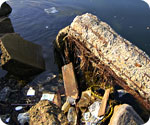
Great quantities of the trash from these garbage patches have washed up on shores, covering beaches in California and especially the islands of Hawaii.
Chris Parry, a public education program manager who works for the California Coastal Commission in San Francisco said, "At this point, cleaning it up isn't an option. It's just going to get bigger as our reliance on plastics continues... The long-term solution is to stop producing as much plastic products at home and change our consumption habits."
Cleaning up this vast quantity of plastic and garbage would cost billions of dollars. Despite the high price tag, the consequences of creating so much permanent trash should be talked about.
Everyday changes can help to limit the growth of this garbage patch. Reducing your use and purchasing of plastic products will lower the production of plastics. Properly disposing of plastics that you come into contact with will slow their accumulation in the environment.
Sources:
(http://science.howstuffworks.com/great-pacif...)
(http://www.naturalhistorymag.com/master.html...)
(http://www.greenpeace.org/international/camp...)
(http://www.sfgate.com/cgi-bin/article.cgi?f=...)
About the author
Tom Mosakowski, B.S. Biochemistry.


Pacific Ocean at FETCH.news
Get independent news alerts on natural cures, food lab tests, cannabis medicine, science, robotics, drones, privacy and more.

Take Action: Support Natural News by linking to this article from your website
Permalink to this article:
Embed article link: (copy HTML code below):
Reprinting this article:
Non-commercial use OK, cite NaturalNews.com with clickable link.
Follow Natural News on Facebook, Twitter, Google Plus, and Pinterest

Science News & Studies

Medicine News and Information

Food News & Studies

Health News & Studies

Herbs News & Information

Pollution News & Studies

Cancer News & Studies

Climate News & Studies

Survival News & Information

Gear News & Information

News covering technology, stocks, hackers, and more






"Big Tech and mainstream media are constantly trying to silence the independent voices that dare to bring you the truth about toxic food ingredients, dangerous medications and the failed, fraudulent science of the profit-driven medical establishment.
Email is one of the best ways to make sure you stay informed, without the censorship of the tech giants (Google, Apple, Facebook, Twitter, YouTube, etc.). Stay informed and you'll even likely learn information that may help save your own life."
–The Health Ranger, Mike Adams