




U.S. Supreme Court Poised to Strip Consumers of Right to Sue over Deadly Pharmaceuticals
 Monday, February 25, 2008 Monday, February 25, 2008by Mike Adams, the Health Ranger Editor of NaturalNews.com (See all articles...) Tags: consumer rights, dangerous drugs, product liability |
- 'Rollie pollies' remove heavy metals from soil, stabilizing growing conditions, protecting groundwater
- Detox with diatomaceous earth to remove allergies, mercury, chemicals, GMOs, parasites
- Children's Fitness Levels Continue to Decline; Today's Kids are Weak and Unfit
- Extreme breastfeeding? Woman saves Rottweiler pup by breastfeeding it alongside her own infant
- Get the benefits of mega-dose IV vitamin C without IVs - by yourself
- NaturalNews, Health Ranger officially endorse GMO labeling ballot measure; Vote YES on 37 'Right to Know' in California
- How to heal cavities naturally
- Fluoridation is the Ultimate Deception (Opinion)
- DAO enzymes and histamine intolerance
- Vaccine fraud exposed: Measles and mumps making a huge comeback because vaccines are designed to fail, say Merck virologists
- Chinese herbs kill cancer cells: study
- The powerful health benefits of curcumin
- Harvard research links fluoridated water to ADHD, mental disorders
- Boost Low White Blood Cell Count and Immune Function Naturally
- The MMR vaccine, autism connection
- The REAL FAKE NEWS exposed: '97% of scientists agree on climate change' is an engineered hoax... here's what the media never told you
- How to Use Organic Neem Leaf for Flea and Tick Control for Cats
- Drinking tea cuts risk of heart disease by one-third
- The MMR vaccine, autism connection
- The best and worst forms of magnesium to take as a supplement
- The United Nations 2030 Agenda decoded: It's a blueprint for the global enslavement of humanity under the boot of corporate masters
- 'Rollie pollies' remove heavy metals from soil, stabilizing growing conditions, protecting groundwater
- How to heal cavities naturally
- Vitamin B-12 warning: Avoid cyanocobalamin, take only methylcobalamin
- Fluoridation is the Ultimate Deception (Opinion)
- Boost Low White Blood Cell Count and Immune Function Naturally
- Vaccine fraud exposed: Measles and mumps making a huge comeback because vaccines are designed to fail, say Merck virologists
- Sodium benzoate is a preservative that promotes cancer and kills healthy cells
- Article updated with new message from the Health Ranger
- Ten ways to use colloidal silver's amazing healing abilities
- Detox with diatomaceous earth to remove allergies, mercury, chemicals, GMOs, parasites
- Is synthetic folic acid toxic to your body? Research suggests 'yes'
- Man heals stage 3 prostate and colon cancers with raw food diet
- Not getting enough sleep can lead to false memories, schizophrenia and other health problems
- Chinese herbs kill cancer cells: study
- How to heal a cavity naturally and nutritionally without the need for 'drilling and filling'
- The MMR vaccine, autism connection
- The best and worst forms of magnesium to take as a supplement
- The REAL FAKE NEWS exposed: '97% of scientists agree on climate change' is an engineered hoax... here's what the media never told you
- The United Nations 2030 Agenda decoded: It's a blueprint for the global enslavement of humanity under the boot of corporate masters
- Water filters tested for heavy metals removal: Zero Water, Pur, Brita, Mavea, Culligan, Seychelle and Waterman
- Indian black salve: The magical cancer cure
- Peanut oil in vaccines behind widespread peanut allergy epidemic
- Apricot Seeds Kill Cancer Cells without Side Effects
- Baking soda, cancer and fungus
- Eighteen Overlooked Symptoms of Adrenal Fatigue
- Sugar takes on high fructose corn syrup in high stakes legal battle to see which is most unhealthy
- Forget Filling Cavities: Regrow Your Teeth Instead
- The remarkable health benefits of Epsom salt baths
- Vaccine fraud exposed: Measles and mumps making a huge comeback because vaccines are designed to fail, say Merck virologists
- The aloe vera miracle: A natural medicine for cancer, cholesterol, diabetes, inflammation, IBS, and other health conditions
- NASA admits to spraying Americans with poisonous chemtrails
- The remarkable health benefits of oil pulling
- Ten ways to use colloidal silver's amazing healing abilities
- Eleven days before Iran bombed Tel Aviv, my microscope revealed haunting images of EXACTLY what would happen
- Morphic resonance “remote viewing” reveals iconic Middle East images of stealth bombers, a falcon and a one-horned ram
- DECENTRALIZED SPIRITUALITY and the true teachings of Christ: Overcoming the censorship, threats and lies of organized religion to truly know God and the Universal Christ
- HEALTH SECRETS: How to Instantly Block MSG Toxicity Using Natural Substances (and the secret of Methylene Blue)
- The Coming Gold Revaluation: Strategic Financial Realignment in an Era of Dollar Collapse
- The AI Data Center Wars Have Begun… Farms, Water and Electricity is Stripped from Humans to Power the Machines
- Urgent Wake-Up Call: The Coming AI Robot Wars and the Great Human Unity
- The War on Light: How Governments and Big Pharma Keep You Sick By Blocking Healing Photons
- Amazing microscopy photos reveal how freezing crystals attempt to mimic electronic structures they are touching
- THE AI RACE IS ALREADY WON: How China’s power dominance (and America’s climate lunacy surrender) secured its victory in the race to AI superintelligence
- Why the U.S. Government May be Seeking to Slaughter 200 Million Americans to Free Up Excess Power for AI Data Centers and the Race to Superintelligence
- Trump's Trojan Horse: How Stablecoins Are Secretly Paving the Way for a CBDC Control Grid – an Interview with Catherine Austin Fitts
- EXCLUSIVE REPORT: The Trump-Putin Meeting in Alaska - A Historic Pivot that Redefined Global Power
- Shingles surge sparks new focus on holistic care: Tackling pain, immunity and risks
- BOMBSHELL: Internal Pfizer documents exposed and reveal at least 16 PERCENT of their mRNA vaccine "adverse events" are REPRODUCTIVE DISORDERS
- Injecting chemicals is MORE DANGEROUS than eating them, so why is polysorbate 80 banned in ICE CREAM but allowed in VACCINES?
- Exploring the depths of alternative medicine: A comprehensive review of “The Gale Encyclopedia of Alternative Medicine”
- 18 MILLION COVID-JABBED Japanese folks shown to have SIGNIFICANTLY HIGHER DEATH RATES during first year after injection with mRNA clot shots





If Ford makes a defective car with a poorly-designed gasoline tank that explodes and kills someone, that person's family has a right to sue Ford, correct? But the U.S. Supreme Court is now effectively arguing that Ford should be granted immunity to all lawsuits because its cars provide benefits to other drivers.
In other words, the fact that Ford cars don't kill some consumers somehow makes up for the ones killed by those defective cars. (In this case, Ford is just an example. There is no pending legislation against Ford that involves the U.S. Supreme Court.)
That argument is absurd. If put in place, it would mean that individuals no longer have the right to sue companies for defective products, and the very definition of "harm" is no longer measured on an individual basis but rather by some sort of yet-unstated collective scorekeeping that says no company can be sued if its products provide benefits to somebody.
Of course, this is all being selectively applied only to the pharmaceutical industry at the moment, but if this line of thinking is allowed to continue, it could very quickly lead to blanket immunity for virtually all corporations against any consumer lawsuits. After all, the argument being made to protect Big Pharma is that even though drugs kill lots of people, the fact that they help some people who aren't killed outweighs the liability from the dead people. Should this also apply to automobiles? Fireworks? Roller coasters? At what point does the U.S. Supreme Court think corporations should actually be held liable for the harm caused by their products?
The abandonment of corporate responsibility and the surrender of consumer rights
Apparently, some Justices believe corporations should never be held liable for harmful products, even if they committed fraud in getting their products approved by regulatory agencies such as the FDA. It's true: At least one Supreme Court Justice is now arguing that even in cases of drug companies defrauding the FDA and lying about the safety of their drugs, the public should still have no right whatsoever to sue over the damage (or death) caused by those drugs.And how about collapsing bridges and buildings? According to the U.S. Supreme Court's current thinking, people who are killed in a collapse of a defective bridge or building should have absolutely no legal recourse. Why? Because that same bridge or building provided benefits to other people who were not killed!
Thus, the Supreme Court is actually following a line of flawed reasoning that would deny consumers the right to sue corporations for practically anything! This is why I have come to the commonsense conclusion that the U.S. Supreme Court has surrendered the rights of the American people to greedy corporations that will soon, it seems, have no incentive at all to make safe products.
By the way, notice too that Big Tobacco was ultimately granted blanket product immunity under a complex settlement that essentially involved paying off U.S. States with a portion of the revenues generated by tobacco products that openly kill people. Thus, Big Tobacco was allowed to stay in business, producing products that directly kill millions of people each year around the world. This bring up an important law of every capitalist society: No sufficiently profitable industry will ever be brought to justice, even if its products destroy the health and lives of consumers. There's simply too much profit at stake, and money has an insidious way of influencing regulatory and judicial decisions while negating whatever imaginary rights the citizens once believed they were entitled to.
Why consumer lives are worth nothing to corporations
Under the protection of blanket immunity, corporations consider the lives of consumers to be worth exactly zero dollars, and thus the normal equations of safety costs vs. liability risk are thrown out the window, replaced with a new equation of maximizing profits by minimizing expensive safety precautions. The only reason corporations currently place any value at all on the lives of consumers is because there are financial costs associated with harming or killing people (thanks to product liability lawsuits). Take away those financial costs, and the corporations will then consider consumer lives to be worthless in any way other than the fact that consumers might be worth something if they live long enough to keep buying more products.What's obvious in all this is that the U.S. legal system has devolved into such a morass of fictitious legal technicalities that it no longer has any concept of commonsense reality. There should be no argument necessary at all in this case: Of course consumers have the right to sue companies over pharmaceuticals (or cars or bridges) that directly harm them! And the fact that the FDA or some other corrupt (or incompetent) government agency slaps its approval onto a product should in no way grant the manufacturer complete immunity from the very real effects caused by its products. Pharmaceuticals kill people. It's a simple fact. And Big Pharma should be held responsible for the harm caused by its products. But the Supreme Court is now looking for ways to weave complex legal technicalities into a convenient but entirely dishonest shield that allows drug companies to literally get away with murder.
An era of unbridled madness
If you were looking for evidence of why the United States of America has gone mad, look no further than the regulatory and legal fabrications surrounding pharmaceuticals. Not only do we now have a system of organized medicine that operates as organized crime by protecting monopoly prices, engaging in routine scientific fraud, and drugging children with powerful psychotropic chemicals without even a single shred of real evidence that those children are "diseased," but now we have a legal system that seems poised to hand Big Pharma unlimited permission to manufacture and market extremely dangerous chemicals with impunity.The consumer has now been relegated to the role of "useless eater," with zero rights and zero value. The corporations are in charge, and the corrupt judicial system is now protecting the profits of these corporations by selling out the people. A new era of corporate-sponsored chemical destruction is spreading like a dark shadow over the future of the American people, and the highest court in the land has declared its loyalty to the corporate Kings who rule over American consumers as tyrants over peasants.


Consumer rights at FETCH.news
Get independent news alerts on natural cures, food lab tests, cannabis medicine, science, robotics, drones, privacy and more.
 About the author:Mike Adams (aka the "Health Ranger") is a best selling author (#1 best selling science book on Amazon.com) and a globally recognized scientific researcher in clean foods. He serves as the founding editor of NaturalNews.com and the lab science director of an internationally accredited (ISO 17025) analytical laboratory known as CWC Labs. There, he was awarded a Certificate of Excellence for achieving extremely high accuracy in the analysis of toxic elements in unknown water samples using ICP-MS instrumentation. Adams is also highly proficient in running liquid chromatography, ion chromatography and mass spectrometry time-of-flight analytical instrumentation.
Adams is a person of color whose ancestors include Africans and Native American Indians. He's also of Native American heritage, which he credits as inspiring his "Health Ranger" passion for protecting life and nature against the destruction caused by chemicals, heavy metals and other forms of pollution.
Adams is the founder and publisher of the open source science journal Natural Science Journal, the author of numerous peer-reviewed science papers published by the journal, and the author of the world's first book that published ICP-MS heavy metals analysis results for foods, dietary supplements, pet food, spices and fast food. The book is entitled Food Forensics and is published by BenBella Books.
In his laboratory research, Adams has made numerous food safety breakthroughs such as revealing rice protein products imported from Asia to be contaminated with toxic heavy metals like lead, cadmium and tungsten. Adams was the first food science researcher to document high levels of tungsten in superfoods. He also discovered over 11 ppm lead in imported mangosteen powder, and led an industry-wide voluntary agreement to limit heavy metals in rice protein products.
In addition to his lab work, Adams is also the (non-paid) executive director of the non-profit Consumer Wellness Center (CWC), an organization that redirects 100% of its donations receipts to grant programs that teach children and women how to grow their own food or vastly improve their nutrition. Through the non-profit CWC, Adams also launched Nutrition Rescue, a program that donates essential vitamins to people in need. Click here to see some of the CWC success stories.
With a background in science and software technology, Adams is the original founder of the email newsletter technology company known as Arial Software. Using his technical experience combined with his love for natural health, Adams developed and deployed the content management system currently driving NaturalNews.com. He also engineered the high-level statistical algorithms that power SCIENCE.naturalnews.com, a massive research resource featuring over 10 million scientific studies.
Adams is well known for his incredibly popular consumer activism video blowing the lid on fake blueberries used throughout the food supply. He has also exposed "strange fibers" found in Chicken McNuggets, fake academic credentials of so-called health "gurus," dangerous "detox" products imported as battery acid and sold for oral consumption, fake acai berry scams, the California raw milk raids, the vaccine research fraud revealed by industry whistleblowers and many other topics.
Adams has also helped defend the rights of home gardeners and protect the medical freedom rights of parents. Adams is widely recognized to have made a remarkable global impact on issues like GMOs, vaccines, nutrition therapies, human consciousness.
In addition to his activism, Adams is an accomplished musician who has released over a dozen popular songs covering a variety of activism topics.
Click here to read a more detailed bio on Mike Adams, the Health Ranger, at HealthRanger.com.

Take Action: Support Natural News by linking to this article from your website
Permalink to this article:
Embed article link: (copy HTML code below):
Reprinting this article:
Non-commercial use OK, cite NaturalNews.com with clickable link.
Follow Natural News on Facebook, Twitter, Google Plus, and Pinterest

Science News & Studies

Medicine News and Information

Food News & Studies

Health News & Studies

Herbs News & Information

Pollution News & Studies

Cancer News & Studies

Climate News & Studies

Survival News & Information

Gear News & Information

News covering technology, stocks, hackers, and more




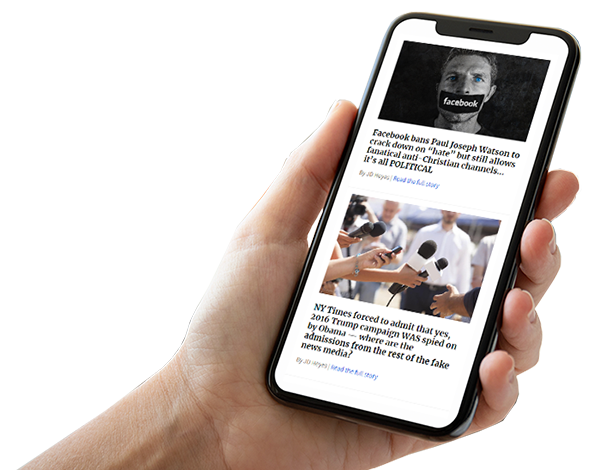

"Big Tech and mainstream media are constantly trying to silence the independent voices that dare to bring you the truth about toxic food ingredients, dangerous medications and the failed, fraudulent science of the profit-driven medical establishment.
Email is one of the best ways to make sure you stay informed, without the censorship of the tech giants (Google, Apple, Facebook, Twitter, YouTube, etc.). Stay informed and you'll even likely learn information that may help save your own life."
–The Health Ranger, Mike Adams