



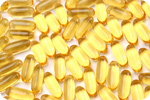
EPA omega-3 oils protect the heart in people with high cholesterol
Wednesday, August 29, 2007 by: David Gutierrez, staff writer
Tags: omega-3 oils, heart health, high cholesterol
- WHO backs off on Pandemic Treaty, makes substantive changes to address tyranny concerns
- PROPAGANDA: Jobless numbers released by government are statistically impossible
- Why do some COVID-19 “vaccine” side effects resemble symptoms of HIV?
- 10 Compelling reasons to steer clear of gluten
- More proof emerges of Dr. Fauci's criminal deceit over COVID-19 origins
- Japan leading the way in holding Big Pharma, politicians accountable for COVID jab genocide
- Honey: An amazing superfood with many health benefits
- Prescription drugs are now the leading cause of death
- Cancer cases are increasing due to COVID vaccines, but Big Government and Big Pharma want you to look the other way
- BIDENSURGENCY: Top 6 Ways to PREVENT the Democrats from STEALING the November POTUS election
- EPA labels two forever chemicals commonly found in cookware, carpets, furniture, cosmetics and firefighting foams as “hazardous substances”
- Bill Gates wants to use AI for genetically modifying beef cows to “save the planet”
- Courts set precedent for mass FORCED VACCINATION of all children
- A collective “common enemy” now stalks mankind
- You should DIE for your country: Ukraine suspends all visa renewals for military-aged Ukrainians living overseas
- Massachusetts Gov. Maura Healey SLAMMED for opening Chelsea Soldier’s Home to illegals for free, while hundreds of military veterans remain homeless
- ‘Conspiracy theories’ aren't ‘theoretical’ anymore: The US govt happily murders political opponents, carries out bioweapon attacks upon the population and openly steals elections
- Calls to BOYCOTT Bank of America grow amid its discrimination targeting Trump supporters
- A MASSIVE financial collapse is coming that will destroy everyone’s assets, warns Paul Craig Roberts
- Courts set precedent for mass FORCED VACCINATION of all children
- Expert warns: Banks will claim that your money is no longer yours, may freeze bank withdrawals
- Big Pharma planning to “vaccinate” America’s chicken supply for bird flu, unleashing a plot to END animal agriculture
- Spirulina protects against COVID death, study finds
- WHO backs off on Pandemic Treaty, makes substantive changes to address tyranny concerns
- Dr. Joseph Mercola: Bird flu can’t kill humans - unless it is WEAPONIZED
- Fully vaccinated about to see “tsunami” of illness and death, warns virologist
- Vaccines have destroyed society, unleashing a wave of irreparable damage to public health
- Here’s what REALLY happened on October 7 (hint: Israel is LYING)
- Evangelical Zionists are trying to “accelerate” the apocalypse because they think it will bring Jesus back
- Rand Paul COVID BOMBSHELL: “We have 15,000 samples in Wuhan … could do full genomes of 700 CoVs”
- Why GLUTEN is so much WORSE for your health than you might have thought (op-ed)
- O’Keefe media uncovers who’s really running the White House: Obama, Clinton, Jeff Zients and others
- Plastic bags four times better for environment than “green” paper bag alternatives, study finds
- Japan holds major press conference to address lawsuits seeking compensation for COVID jab victims
- Mike Adams announces Brighteon.AI release of two new Large Language Models, including 7 billion parameter “Neo-Dolphin-Mistral”
- New evidence proves Tony Fauci LIED under oath, claiming he barely knew top coronavirus scientist Ralph Baric
- Red Cross issues warning to stop blood plasma donations from vaccinated people
- Today I asked our AI language model “Neo” about which phytonutrients or phytochemicals can block the spike protein related to SARS-CoV-2 … Here is what it answered…
- Fully vaccinated about to see “tsunami” of illness and death, warns virologist
- FDA just lost a historic ivermectin lawsuit — so when will FDA officials be arrested and charged with manslaughter for denying lifesaving treatments to Americans?
- A MASSIVE financial collapse is coming that will destroy everyone’s assets, warns Paul Craig Roberts
- Dr. Bossche: Here comes the “massive, massive tsunami” of DEATH and destruction from Operation Warp Speed
- Top 5 reasons the BALTIMORE BRIDGE destruction was likely an INSIDE JOB rather than an “accident” or “cyber attack”
- Francis Scott Key Bridge collapse an “absolutely brilliant strategic attack,” say multiple intel sources
- Is there hidden CRICKET flour in your groceries?
- Secret Society Illuminati card game PREDICTED 9/11 terror attack, Donald Trump, Covid-19 and the “Insurrection” riot at the Washington DC Capitol building
- One dose of Pfizer's COVID-19 vaccine contains over 200 billion DNA fragments that can incorporate into human DNA, causing cancer
- MORE DETAILS, mysteries surrounding the Francis Scott Key Bridge collapse
- Gen. Flynn calls Francis Scott Key Bridge collapse “a black swan event”
- CERN, the Vatican and the upcoming X-marks-the-spot Great American eclipse
- Ivermectin can “kill cancer cells” and boost immune response, suggest health experts
- HIDDEN from public: Study identifies issues with mRNA vaccines “that could have fatal consequences”
- Four years later, Fox News now admits to the entire COVID origins conspiracy and cover-up
- FACT CHECK: Most U.S. slave owners, 78%, were JEWISH
- Red Cross issues warning to stop blood plasma donations from vaccinated people
- 5G REMOTE KILL VECTOR: Science paper reveals cell phone signals can activate the release of biological PAYLOADS from graphene oxide injected into the body
- Jamie Foxx reportedly BLINDED and partially PARALYZED after coerced into taking covid vaccine jab
- Twelve undeniable signs globalists are engineering the end of humanity
- 13 Nations agree to engineer global FAMINE by destroying agriculture, saying that producing food is BAD for the planet
- Heavily CENSORED Pfizer documents show that COVID began a five-year mass DEPOPULATION agenda that will reach completion by 2025
- Secret Pfizer report shows company KNEW since February 2021 that its mRNA COVID jab was killing people
- Synergistic pairing of ivermectin and fenbendazole found HIGHLY EFFECTIVE at preventing and treating cancer
- SOURCES: Jamie Foxx was forced against his will to get covid jabbed for movie, then developed debilitating blood clot in his brain
- MP Han Dong resigns from Trudeau’s Liberal Party following allegations questioning his loyalty to Canada
- These 14 American cities plan to ban meat, dairy and private vehicles by 2030 - is yours on the list?
- Getting vaccinated for covid four or more times results in near-complete collapse of the immune system, bombshell study finds
- DATA: England’s vaccinated population had close to one million deaths in 23 months; unvaccinated population had less than 61,000 deaths over the same period
- New $4B Panasonic electric vehicle (EV) battery factory in Kansas requires so much power that the facility will need its own COAL plant to run
- RED ALERT: Pentagon mobilizing THOUSANDS of aircraft for WWIII confrontations with China, Russia
- Tom Renz slams Manhattan DA over ongoing witch hunt against Trump
- Can you feel it? Ten signs that things in America have reached a BREAKING POINT
- Globalists go crazy trying to suppress these 14 powerful, timeless truths that can SET YOU FREE





Researchers followed 18,645 Japanese high-cholesterol patients for four and a half years. All the patients were already taking cholesterol medications known as statins when the study began. Over the course of the study, half of the patients were assigned a daily EPA supplement in addition to their medication, while the other half received only medication.
The group receiving the EPA supplement had a 24 percent lower occurrence of a type of chest pain known as angina pectoris, and a 19 percent lower occurrence of non-fatal coronary events. The researchers did not report any effect on mortality risk.
"Overall, this study shows that EPA, at a dose of 1,800 milligrams per day, is a very promising regimen for prevention of major coronary events," the researchers wrote. However, they cautioned that their results might not generalize to other ethnic groups.
EPAs occur naturally in fish oils, as well as spirulina and microalgae. They are only one of many types of omega-3 fatty acid.
Previous studies have linked consumption of omega-3s to improved heart health and reduced risk of cancer. Experts are still undecided, however, on the health benefits of EPAs in particular. A study recently published in the British Medical Journal examined a variety of prior studies on the subject, and found no evidence linking EPA to improved heart health.
In an editorial accompanying the study, Dariush Mozaffarian of Harvard School of Public Health praised the search for heart-healthy foods.
"Compared with drugs, invasive procedures and devices, modest dietary changes are low risk, inexpensive and widely available. We must curb our infatuation with downstream risk factors in treatments, and focus on the fundamental risk factors for cardiovascular disease: dietary habits, smoking and physical activity," Mozaffarian said.


Omega-3 oils at FETCH.news
Get independent news alerts on natural cures, food lab tests, cannabis medicine, science, robotics, drones, privacy and more.

Take Action: Support Natural News by linking to this article from your website
Permalink to this article:
Embed article link: (copy HTML code below):
Reprinting this article:
Non-commercial use OK, cite NaturalNews.com with clickable link.
Follow Natural News on Facebook, Twitter, Google Plus, and Pinterest

Science News & Studies

Medicine News and Information

Food News & Studies

Health News & Studies

Herbs News & Information

Pollution News & Studies

Cancer News & Studies

Climate News & Studies

Survival News & Information

Gear News & Information

News covering technology, stocks, hackers, and more






"Big Tech and mainstream media are constantly trying to silence the independent voices that dare to bring you the truth about toxic food ingredients, dangerous medications and the failed, fraudulent science of the profit-driven medical establishment.
Email is one of the best ways to make sure you stay informed, without the censorship of the tech giants (Google, Apple, Facebook, Twitter, YouTube, etc.). Stay informed and you'll even likely learn information that may help save your own life."
–The Health Ranger, Mike Adams