




Book review: The Long Emergency by James Howard Kunstler reveals a bleak future after peak oil
 Friday, July 20, 2007 Friday, July 20, 2007by Mike Adams, the Health Ranger Editor of NaturalNews.com (See all articles...) Tags: peak oil, oil economy, sustainable living |
- If carbon dioxide is so bad for the planet, why do greenhouse growers buy CO2 generators to double plant growth?
- Five year update on the guy who cured his stage IV prostate cancer with baking soda
- Feeding the soil: An introduction to the no-till gardening method
- NASA admits to spraying Americans with poisonous chemtrails
- Eighteen Overlooked Symptoms of Adrenal Fatigue
- CDC pushing yet more disease paranoia over hantavirus pandemic from mouse droppings
- Use Natural Liquid Castile Soap for Safe and Wonderful Homemade Shampoos
- Years ago Russia researched the biological effects of microwave ovens... then banned them
- Cassandra Callender gives first interview after being kidnapped by Connecticut and forced to undergo chemotherapy
- The United Nations 2030 Agenda decoded: It's a blueprint for the global enslavement of humanity under the boot of corporate masters
- Dandelion root extract found to kill leukemia cells, prostate cancer cells and chemo-resistant melanoma
- Right to farm being stripped from Americans: Michigan to criminalize small family farms with chickens, goats, honey bees and more
- Forget Filling Cavities: Regrow Your Teeth Instead
- Beat cancer with 35% hydrogen peroxide
- Use herbs to boost your immune system
- Improve memory loss by using natural alternatives
- Why you should replace your amalgam fillings
- REVEALED: Cancer industry profits 'locked in' by nagalase molecule injected into humans via vaccines... spurs tumor growth... explains aggressive vaccine push
- American College of Pediatricians warns about toxic effects of Gardasil vaccine; sounds alarm over massive scientific fraud that concealed toxic effects
- Beat cancer with 35% hydrogen peroxide
- If carbon dioxide is so bad for the planet, why do greenhouse growers buy CO2 generators to double plant growth?
- 98 million Americans were given polio vaccine contaminated with cancer-causing virus, admits CDC
- The REAL FAKE NEWS exposed: '97% of scientists agree on climate change' is an engineered hoax... here's what the media never told you
- Use Natural Liquid Castile Soap for Safe and Wonderful Homemade Shampoos
- Forget Filling Cavities: Regrow Your Teeth Instead
- Eighteen Overlooked Symptoms of Adrenal Fatigue
- Boost Low White Blood Cell Count and Immune Function Naturally
- Top 10 herbs and spices for strengthening your immune system
- Five year update on the guy who cured his stage IV prostate cancer with baking soda
- Natural remedies for acid reflux disease (GERD)
- The United Nations 2030 Agenda decoded: It's a blueprint for the global enslavement of humanity under the boot of corporate masters
- Bill Gates says vaccines can help reduce world population
- Feeding the soil: An introduction to the no-till gardening method
- Vitamin D: How to Determine Your Optimal Dose
- Dandelion root extract found to kill leukemia cells, prostate cancer cells and chemo-resistant melanoma
- 3 common parasites that are literally eating you alive
- The REAL FAKE NEWS exposed: '97% of scientists agree on climate change' is an engineered hoax... here's what the media never told you
- Bill Gates says vaccines can help reduce world population
- Eighteen Overlooked Symptoms of Adrenal Fatigue
- Beat cancer with 35% hydrogen peroxide
- Sickening: Major food corporations use tissue from aborted babies to manufacture flavor additives in processed foods
- The best and worst forms of magnesium to take as a supplement
- FBI agents now impersonating Associated Press reporters
- Vitamin B-12 warning: Avoid cyanocobalamin, take only methylcobalamin
- Study Reveals Serious HPV Vaccine Problems: Fainting, Blood Clots, Death Among Risks
- Apricot Seeds Kill Cancer Cells without Side Effects
- NASA admits to spraying Americans with poisonous chemtrails
- Six little-known natural remedies for tinnitus
- Peanut oil in vaccines behind widespread peanut allergy epidemic
- The best, and worst, laundry detergents with 1,4-dioxane contamination
- Use Natural Liquid Castile Soap for Safe and Wonderful Homemade Shampoos
- Zeolite detox myths busted: In lab tests, zeolites do NOT bind with aluminum, lead, uranium, mercury or cadmium... only CESIUM
- Five best homeopathic remedies for the treatment of heartburn, GERD and acid reflux
- The MMR vaccine, autism connection
- Eleven days before Iran bombed Tel Aviv, my microscope revealed haunting images of EXACTLY what would happen
- Morphic resonance “remote viewing” reveals iconic Middle East images of stealth bombers, a falcon and a one-horned ram
- DECENTRALIZED SPIRITUALITY and the true teachings of Christ: Overcoming the censorship, threats and lies of organized religion to truly know God and the Universal Christ
- HEALTH SECRETS: How to Instantly Block MSG Toxicity Using Natural Substances (and the secret of Methylene Blue)
- Amazing microscopy photos reveal how freezing crystals attempt to mimic electronic structures they are touching
- The Coming Gold Revaluation: Strategic Financial Realignment in an Era of Dollar Collapse
- The AI Data Center Wars Have Begun… Farms, Water and Electricity is Stripped from Humans to Power the Machines
- Urgent Wake-Up Call: The Coming AI Robot Wars and the Great Human Unity
- The War on Light: How Governments and Big Pharma Keep You Sick By Blocking Healing Photons
- THE AI RACE IS ALREADY WON: How China’s power dominance (and America’s climate lunacy surrender) secured its victory in the race to AI superintelligence
- Why the U.S. Government May be Seeking to Slaughter 200 Million Americans to Free Up Excess Power for AI Data Centers and the Race to Superintelligence
- Trump's Trojan Horse: How Stablecoins Are Secretly Paving the Way for a CBDC Control Grid – an Interview with Catherine Austin Fitts
- EXCLUSIVE REPORT: The Trump-Putin Meeting in Alaska - A Historic Pivot that Redefined Global Power
- BOMBSHELL: Internal Pfizer documents exposed and reveal at least 16 PERCENT of their mRNA vaccine "adverse events" are REPRODUCTIVE DISORDERS
- MSG EXPOSED: Hidden Neurotoxins Found in Groceries, Snacks and Popular Fast Food Menus
- Shingles surge sparks new focus on holistic care: Tackling pain, immunity and risks
- BOMBSHELL: DNA testing kits are a SCAM to develop ethnic-specific bioweapons
- Injecting chemicals is MORE DANGEROUS than eating them, so why is polysorbate 80 banned in ICE CREAM but allowed in VACCINES?





Kunstler points out that not only has oil likely reached a peak in terms of global production that may have occurred in the last two or three years, but at the same time the demand for oil is sharply rising around the world, especially as nations like China demonstrate an increasing appetite for energy consumption. As a result, countries that once seemed to have an unlimited supply of oil, like the United States, are now going to have to compete with nations like China for those limited energy supplies.
He then goes on to discuss the interdependency of our modern-day society on cheap oil. This cheap energy, as Kunstler explains, is responsible for many of the things we take for granted in modern life, including the ability to sustain the population of the world at its current levels. The population explosion over the last century, Kunstler explains, has been fueled by cheap oil.
Oil acts like a helping hand to every individual; it leverages and magnifies the intentions and efforts of societies, allowing, for example, only two percent of the population to engage in farming activities in order to feed 100 percent of the population; whereas a hundred years go, around half of the population engaged in farming. We are able to build our cities, grow our population and businesses, and erect a large international travel infrastructure thanks to cost-effective energy that, according to Kunstler, is likely to start dwindling.
As a result, many things in society we take for granted today may no longer be feasible after the era of cheap oil. For example, simply growing corn requires a tremendous amount of fossil fuel. How do you grow corn, or even transport it, when the era of cheap oil is over? Kunstler believes that the future success of our society will require becoming more localized and community minded. He also points out that big cities in the United States today -- in contrast to their European counterparts -- are designed around the assumption that cheap oil will always be available. Most Americans commute long distances between work, grocery stores, schools and home, and these long commutes are only possible because of cheap oil.
Are we doomed when oil runs out?
I believe that Kunstler is correct in his assessment of the structure of modern society and its dependence on oil. Unless we can cultivate a new source of cost-efficient energy, we are no doubt doomed to roll the clock back to much a simpler time. He convincingly explores the rather startling ramifications of the end of cheap fuel. However, there's one area where I hope the author is incorrect: the search for alternative energy sources. Kunstler refutes the idea that there are any viable replacements for oil, but I believe we may yet find hope in the search for alternative, renewable energy sources.Nuclear, solar, wind, cold fusion, gas hydrates and many other areas of alternative energy are discussed in the book, and each one is shown to be inadequate in replacing the loss of fossil fuels that seems inevitable. If Kunstler is correct, we are in for a rough ride that would no doubt include a rather sharp population correction. Without inexpensive fuel resources, the world simply cannot support our current population. But I personally believe there is reason to be optimistic about possible alternatives, including large-scale solar, solar / Stirling engine hybrid generators, Concentrated Solar Power farms (CSP), and even possible breakthroughs in alternative science that could lead to new energy sources that are nothing less than miraculous (zero point energy harvesters, for example).
Now, it may be naive to have faith in such developments until they can actually be proven viable, but something tells me that human ingenuity will find a way to overcome the loss of cheap oil, even if it involves doing the exact things described by Kunstler -- riding our bicycles more and greatly reducing our consumption of energy in both residential and commercial environments. To succeed in a post-oil era, we may need to radically alter the zoning of our cities so we can live closer to the businesses we visit on a day-to-day basis, and give up many of the luxuries of modern American life including RVing across the country at six miles per gallon.
Regardless of whether Kunstler is correct about the bad news on dwindling energy supplies, "The Long Emergency" is worth reading. The thoughtful presentation shows that Kunstler has a wide-ranging, well-educated view of what makes society tick. He understands that in this era of mass specialization and dependence, it takes only one wrench in the machine to throw the whole system out of whack, and the end of cheap energy could be that wrench.
If you are not familiar with the concept of extreme interdependence in our global community today, then you may find this book to be one of the scariest you'll ever read. If you think that water magically appears out of your faucets, or food magically appears in the grocery store, or that gasoline just flows out of gas station pumps sort of like water out of a spring in the ground, then this book is going to give you quite a shock. It's going to show you a different side of society, where the interdependence that we take for granted might not remain viable. Whether you believe in the author's conclusions or not, this book makes for excellent reading about the future we may all face if we don't get serious about two things:
1) Reducing our energy consumption through conservation and efficiency measures. (This is part of the reason why I launched www.EcoLEDs.com and the effort to promote energy-efficient LED lighting products.)
2) Developing renewable energy sources to replace fossil fuels. The most promising are wind, CSP and solar power.
So grab a bicycle. Turn in your old gas banger for a hybrid vehicle or, better yet, a plug-in electric when they become available. And stop driving five miles to the video store to return a DVD that weighs 4 ounces. Go solar!


Peak oil at FETCH.news
Get independent news alerts on natural cures, food lab tests, cannabis medicine, science, robotics, drones, privacy and more.
 About the author:Mike Adams (aka the "Health Ranger") is a best selling author (#1 best selling science book on Amazon.com) and a globally recognized scientific researcher in clean foods. He serves as the founding editor of NaturalNews.com and the lab science director of an internationally accredited (ISO 17025) analytical laboratory known as CWC Labs. There, he was awarded a Certificate of Excellence for achieving extremely high accuracy in the analysis of toxic elements in unknown water samples using ICP-MS instrumentation. Adams is also highly proficient in running liquid chromatography, ion chromatography and mass spectrometry time-of-flight analytical instrumentation.
Adams is a person of color whose ancestors include Africans and Native American Indians. He's also of Native American heritage, which he credits as inspiring his "Health Ranger" passion for protecting life and nature against the destruction caused by chemicals, heavy metals and other forms of pollution.
Adams is the founder and publisher of the open source science journal Natural Science Journal, the author of numerous peer-reviewed science papers published by the journal, and the author of the world's first book that published ICP-MS heavy metals analysis results for foods, dietary supplements, pet food, spices and fast food. The book is entitled Food Forensics and is published by BenBella Books.
In his laboratory research, Adams has made numerous food safety breakthroughs such as revealing rice protein products imported from Asia to be contaminated with toxic heavy metals like lead, cadmium and tungsten. Adams was the first food science researcher to document high levels of tungsten in superfoods. He also discovered over 11 ppm lead in imported mangosteen powder, and led an industry-wide voluntary agreement to limit heavy metals in rice protein products.
In addition to his lab work, Adams is also the (non-paid) executive director of the non-profit Consumer Wellness Center (CWC), an organization that redirects 100% of its donations receipts to grant programs that teach children and women how to grow their own food or vastly improve their nutrition. Through the non-profit CWC, Adams also launched Nutrition Rescue, a program that donates essential vitamins to people in need. Click here to see some of the CWC success stories.
With a background in science and software technology, Adams is the original founder of the email newsletter technology company known as Arial Software. Using his technical experience combined with his love for natural health, Adams developed and deployed the content management system currently driving NaturalNews.com. He also engineered the high-level statistical algorithms that power SCIENCE.naturalnews.com, a massive research resource featuring over 10 million scientific studies.
Adams is well known for his incredibly popular consumer activism video blowing the lid on fake blueberries used throughout the food supply. He has also exposed "strange fibers" found in Chicken McNuggets, fake academic credentials of so-called health "gurus," dangerous "detox" products imported as battery acid and sold for oral consumption, fake acai berry scams, the California raw milk raids, the vaccine research fraud revealed by industry whistleblowers and many other topics.
Adams has also helped defend the rights of home gardeners and protect the medical freedom rights of parents. Adams is widely recognized to have made a remarkable global impact on issues like GMOs, vaccines, nutrition therapies, human consciousness.
In addition to his activism, Adams is an accomplished musician who has released over a dozen popular songs covering a variety of activism topics.
Click here to read a more detailed bio on Mike Adams, the Health Ranger, at HealthRanger.com.

Take Action: Support Natural News by linking to this article from your website
Permalink to this article:
Embed article link: (copy HTML code below):
Reprinting this article:
Non-commercial use OK, cite NaturalNews.com with clickable link.
Follow Natural News on Facebook, Twitter, Google Plus, and Pinterest

Science News & Studies

Medicine News and Information

Food News & Studies

Health News & Studies

Herbs News & Information

Pollution News & Studies

Cancer News & Studies

Climate News & Studies

Survival News & Information

Gear News & Information

News covering technology, stocks, hackers, and more




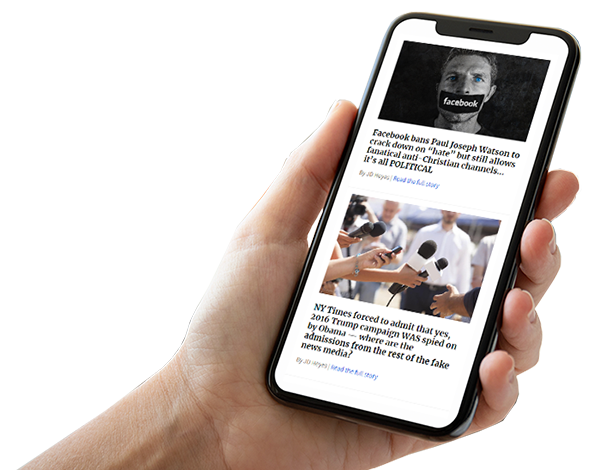

"Big Tech and mainstream media are constantly trying to silence the independent voices that dare to bring you the truth about toxic food ingredients, dangerous medications and the failed, fraudulent science of the profit-driven medical establishment.
Email is one of the best ways to make sure you stay informed, without the censorship of the tech giants (Google, Apple, Facebook, Twitter, YouTube, etc.). Stay informed and you'll even likely learn information that may help save your own life."
–The Health Ranger, Mike Adams