



Revolutionary laundry soap product grows on trees, replaces laundry detergent with eco-friendly solution
 Wednesday, May 30, 2007 Wednesday, May 30, 2007by Mike Adams, the Health Ranger Editor of NaturalNews.com (See all articles...) Tags: laundry products, laundry detergent, toxic chemicals |
- Peanut oil in vaccines behind widespread peanut allergy epidemic
- Cancer is not a Disease - It's a Survival Mechanism (Book Excerpt)
- Measles outbreak likely caused by vaccinated children, science shows
- Six little-known natural remedies for tinnitus
- Reverse and eliminate cataracts naturally without surgery
- Eliminate bladder infections without antibiotics
- Coconut Water is wrongfully attacked
- Fruit Pectin Chelates Heavy Metals and Facilitates Drug Detox
- Despite FDA concern, American Chemistry Council insists Bisphenol A is safe for everyone
- Artificial Sweetener Disease; a new breed of sickness
- Daughters born to junk food-eating men more likely to get breast cancer, research shows
- High Fructose Corn Syrup Now Labeled as Fructose or HFCS-90
- Bill Gates says vaccines can help reduce world population
- The suicide disease - Trigeminal neuralgia
- Truth about CDC vaccine fraud revealed by Jon Rappoport in new video interview
- Shaken Baby Syndrome (SBS) often a false diagnosis really caused by vaccines
- Vitamin D and cancer - nine facts "they" won't tell you
- Ferguson riots escalate: tear gas fired, crowd assaults police vehicle, gunshot heard - PHOTOS
- Peanut oil in vaccines behind widespread peanut allergy epidemic
- Global warming data FAKED by government to fit climate change fictions
- The REAL FAKE NEWS exposed: '97% of scientists agree on climate change' is an engineered hoax... here's what the media never told you
- Lack of Forgiveness Can Affect Our Health
- 'Never has there been a safe vaccine,' Suzanne Humphries, MD, says in interview
- Bill Gates says vaccines can help reduce world population
- Stop stomach ulcers with the miracle remedy of cabbage
- Total media blackout on shooting where private citizen stopped mass murder by using a gun
- Business is Booming (comic)
- The best and worst forms of magnesium to take as a supplement
- Do Statin Drugs Cause Vitamin D Deficiency?
- Baking Soda Prevents Kidney Disease, Renal Failure and Kidney Dialysis
- The aloe vera miracle: A natural medicine for cancer, cholesterol, diabetes, inflammation, IBS, and other health conditions
- 10 outrageous (but true) facts about vaccines the CDC and the vaccine industry don't want you to know
- Natural solutions for varicose veins
- Federal agents raid Mormon food storage facility, demand list of customers storing emergency food
- New study: Infants receiving the most vaccines are the most likely to be hospitalized and die
- Review: The Best Tasting Green Superfood Powder Products
- 'Never has there been a safe vaccine,' Suzanne Humphries, MD, says in interview
- Peanut oil in vaccines behind widespread peanut allergy epidemic
- The REAL FAKE NEWS exposed: '97% of scientists agree on climate change' is an engineered hoax... here's what the media never told you
- Bill Gates says vaccines can help reduce world population
- The best and worst forms of magnesium to take as a supplement
- Lack of Forgiveness Can Affect Our Health
- The United Nations 2030 Agenda decoded: It's a blueprint for the global enslavement of humanity under the boot of corporate masters
- Shock findings in new GMO study: Rats fed lifetime of GM corn grow horrifying tumors, 70% of females die early
- Eighteen Overlooked Symptoms of Adrenal Fatigue
- Beat cancer with 35% hydrogen peroxide
- Global warming data FAKED by government to fit climate change fictions
- Apricot Seeds Kill Cancer Cells without Side Effects
- Baking Soda Prevents Kidney Disease, Renal Failure and Kidney Dialysis
- Antibiotics used in meat pose a threat to public health, admits FDA
- Do Statin Drugs Cause Vitamin D Deficiency?
- Forget Filling Cavities: Regrow Your Teeth Instead
- 'Natural' breakfast cereals loaded with pesticides and GMOs - explosive new scorecard from Cornucopia reveals all
- Urgent lawsuit filed against FDA to halt swine flu vaccines; claims FDA violated federal law
- The REAL FAKE NEWS exposed: '97% of scientists agree on climate change' is an engineered hoax... here's what the media never told you
- Beat cancer with 35% hydrogen peroxide
- The best and worst forms of magnesium to take as a supplement
- The United Nations 2030 Agenda decoded: It's a blueprint for the global enslavement of humanity under the boot of corporate masters
- Apricot Seeds Kill Cancer Cells without Side Effects
- Bill Gates says vaccines can help reduce world population
- Forget Filling Cavities: Regrow Your Teeth Instead
- Six little-known natural remedies for tinnitus
- The MMR vaccine, autism connection
- Supplements to detox the body from vaccinations
- What's really in vaccines? Proof of MSG, formaldehyde, aluminum and mercury
- Dandelion root extract found to kill leukemia cells, prostate cancer cells and chemo-resistant melanoma
- Indian black salve: The magical cancer cure
- Reverse and eliminate cataracts naturally without surgery
- High-dose vitamin C injections shown to annihilate cancer
- The aloe vera miracle: A natural medicine for cancer, cholesterol, diabetes, inflammation, IBS, and other health conditions
- Dandelion root far more effective in fighting cancer cells than chemotherapy
- INVESTIGATION: Three days before Dr. Bradstreet was found dead in a river, U.S. govt. agents raided his research facility to seize a breakthrough cancer treatment called GcMAF





Even worse, all those toxic chemicals get flushed downstream where they contribute to the mass killing of fish and ocean ecosystems, including all the various life forms that depend on the fish (such as birds). We're offering a rediscovered natural product -- "Soap Nuts!" -- right now at www.BetterLifeGoods.com
What if there were a natural laundry soap that actually grew on trees and could replace commercial detergents for good?
It sounds too good to be true, but in fact, it's real. For the past two months, I've been washing all my own clothes with this simple, natural laundry soap that's been used in India for centuries, and I've never felt happier (or more environmentally conscious) about my laundry.
Here's the story about the natural laundry detergent that literally grows on trees. I'll reveal what it is, how it works, and how you can get some right now at www.BetterLifeGoods.com
The soap that grows on trees
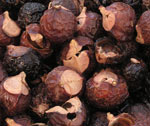
Across the jungles of India and Indonesia, a surprisingly practical tree called sapindus mukorrosi grows a small fruit surrounded by a firm outer shell, much like a lychee or rambutan. This tree, also called the Chinese Soapberry Tree, is unique in the fact that it synthesizes its own natural soap-like saponins that coat the shell of the fruit. When the fruits ripen and fall from the tree, local families harvest the windfall, then remove the inner fruit from the outer shell. The shell is then dried in the sun, using absolutely no chemical processing or manufacturing processes. In fact, the whole process uses no fossil fuels either, except in the transportation of the product to the western world (which is efficiently accomplished by ship).It is this outer shell -- rich in natural saponins which act as water surfactants -- that the native families in India have used for centuries to wash their own clothes. They toss 2-3 shells into a small burlap bag and work it in with their laundry (which is usually washed by hand, by the way). The soap nuts, as they're now called (even though they have no relation to actual nuts), absorb water and release their saponins which circulate as a natural surfactant in the wash water, reducing the surface tension of the water and freeing dirt, grime and oils from the clothing.
When the clothes are rinsed, the soap nut saponins are washed downstream where they remain harmless to the environment. No synthetic chemicals, no fragrance chemicals, no foaming agents or other toxins. Just nut shells grown by nature. (See the resources section at the end of this article to learn where you can buy these nuts in the US, Canada, UK, Ireland and elsewhere...)
Soap nuts can replace all brand-name detergents
Even though these soap nuts have been used for hundreds of years in India and Indonesia, they're barely known in the western world where brand-name chemical detergents are heavily marketed to consumers through advertising, coupons and in-store displays. Packed in eye-catching boxes and scented with artificial fragrance chemicals, these synthetic detergents are literally scooped up by tens of millions of consumers who have no idea they're bathing their clothes in cancer-causing chemicals while destroying the environment by flushing dangerous chemicals downstream.Until now, there have been few options for eco-conscious consumers. While an increasing number of eco-friendly manufactured laundry products now exist in the marketplace (such as Seventh Generation and Biokleen brands), no natural laundry product has appeared in the western world that is 100% manufactured directly by nature. And many of the so-called "natural" laundry products are still made with fragrance chemicals, anyway.
When I first saw these soap nuts, I got really excited about the possibility of publicizing an eco-friendly solution that could replace all the manufactured laundry products currently being bought by consumers. So I decided to financially support the Bodhi Soap Nuts company by buying a large number of her soap nut products and stocking them in our Phoenix fulfillment center. They're now available for you to purchase (at a very reasonable price, by the way) at www.BetterLifeGoods.com
When you purchase these soap nuts and put them to use, you're not only protecting your health and the environment, you're also supporting the families in India and Indonesia that sustainably harvest these nuts as a way of life. Remember how I'm always urging us all to "vote with our dollars?" This is the perfect opportunity to do so. Vote against the chemical laundry companies and vote FOR natural, tree-grown laundry products by switching to soap nuts!
This is the "miracle" laundry product made by Mother Nature that I've been looking for. It's made by a tree, with absolutely nothing added or taken away (except the fruit, of course). It's natural through and through. No other laundry product even comes close.
Bodhi Soap Nuts replace both laundry detergent and fabric softener, by the way. They leave your clothes clean, unscented and feeling cozy soft. It's the first laundry product I've ever found that I was truly happy with. This is what I'm now washing all my clothes with.
But do the soap nuts really work?
Of course, any skeptical consumer would be asking one question right now: "Do these soap nuts really work?"I was skeptical, too, that a soap nut grown by a tree in India could really replace my high-tech eco-friendly laundry soap made in America. So I bought a box of Bodhi Soap Nuts and tried them myself. I took 3 soap nuts and dropped them into the small cotton bag that comes in each box of Bodhi Soap Nuts, then I tossed them into my laundry and avoided using any other detergents or laundry products. I set the temperature on warm and gave it a normal wash cycle, then I hit the start button and walked away.
An hour later, I returned and examined the finished load. They sure smelled clean. But the real test would come from wearing them during a workout, so I took them outside to dry them in the sun (since we have such great sunlight here in Arizona, I often use it for drying clothes). After a few hours of blazing desert sunlight, the clothes were completely dry. I suited up with a pair of workout pants and an A shirt, then headed to the gym for an intense workout designed to produce lots of sweat.
The short version of this story is that the clothes were really, truly clean and they smelled just fine, even after an hour of sweat-inducing cardiovascular activity. (It also helps that I don't drink dairy products, which makes people stink, but that's another story...) My workout clothes seemed just as clean to me as any other load of laundry I washed in various eco-friendly laundry products!
Over the next few days, I continued washing more loads with the soap nuts. Every load came out clean, yet unscented (just the way I like it). I washed grimy socks, workout pants, hiking shorts and sweaty underwear, and everything was cleaned to my satisfaction. In other words, Bodhi Soap Nuts really clean your clothes just as good as commercial soap products! I remain convinced that these tree-grown soap nuts are just as good as any other soap products on the market.
One thing I did learn in all this, however, was that you probably shouldn't wash bedsheets with these soap nuts. What happened? In my wash, the small cotton bag holding the soap nuts got wrapped up in the sheet, and the soap nuts soaked the sheet with a slight soap nut color (sort of rust colored). This color came out in the next wash, because it's not a permanent stain or anything, but it taught me that for the soap nuts to be really effective, they needed to be able to circulate freely in the laundry and not get caught in a large bedsheet.
Aside from the bedsheet incident, everything else came out of the wash sqeaky clean!
How soap nuts clean your laundry
The process by which soap nuts clean your clothes is naturally quite simple. The soap nut shell contains a natural saponin that works as a surfactant, making your water "wetter" and allowing it to penetrate the fibers of your clothing, working away the dirt and grime that makes clothes dirty. The surfactant then holds on to the dirt, keeping it in suspension in the water until it's drained away, taking the dirt with it.What's left is a load of clean clothes and nothing else! That's the way laundry should be. Much like clean water, clean laundry should NOT contain toxic chemical residues. In fact, it's more important to consider what laundry products do NOT contain than to look at what they do contain.
What Bodhi Soap Nuts do NOT contain include:
• Foaming chemicals that fool consumers into thinking their clothes are cleaner because there are "suds" in the wash. TRUTH: Suds have nothing to do with cleaning. They are chemical additives used to create the illusion of cleaning action. (Silly consumers actually expect suds, so the manufacturers add them in.)
• Fragrance chemicals that make laundry "smell" clean. Most commercial laundry products use toxic, synthetic fragrance chemicals that are, in fact, well known to promote cancer and liver disorders. Laundry products are not really regulated by any single government agency, and there is currently no law banning the use of known cancer-causing chemicals in laundry products (much like with cosmetics).
• Filler ingredients. Nearly all commercial laundry products are made with at least 50% filler ingredients to "bulk them up" and make them appear to deliver more value for the price. Consumers are mostly just buying the illusion of detergent, made mostly with filler.
You won't find filler or toxic chemicals in Bodhi Soap Nuts. Just pure, natural saponins grown by a tree and engineered by nature. In my opinion, that's where more of our products should ultimately come from. Wouldn't it be great if shampoo also grew on trees?
Actually, it does.
More than just laundry soap
The natural saponins found in Bodhi Soap Nuts are universal cleaning agents. Sure, they work great in the laundry, but did you know they are also traditionally used to clean skin and hair? In fact, the soap nut saponins work on everything from pets and children to washing fruits and vegetables. In ancient India, jewelers even used the soap to shine their precious metals and stones, giving them a beautiful natural luster.By the way, all children's clothes should be washed in these soap nuts to avoid exposing infants and children to the toxic chemicals found in commercial laundry products. And while you're at it, why not save yourself from that exposure, too, by washing your own clothes with nature's laundry soap?
Using Bodhi Soap Nuts, you can make your own ultra-pure multipurpose cleaner.
Here's the recipe:
Simmer 1 cup of soap nuts in 4 cups of water on your stove, then allow the liquid to cool. Mash the soap nuts by hand (squish them around to get out all the saponins), then drain the resulting liquid through a cheese cloth or nut milk bag. Voila! You've got a concentrated cleaner made by nature! Use it around the kitchen, in the shower, washing the dog... it's all good. You can even use it to wash your dishes.
Remember: This natural soap isn't going to foam up like phoney cleaning products made by chemical companies, and it sure doesn't smell like fragrance chemicals. So don't expect it to look or smell like the products you might have been using. However, soap nuts get things really clean. The soap works so well that it's actually being studied right now as a way to decontaminate soils from exposure to toxic chemicals. How's that for a natural solution? Nature's soap can save the planet from man's soap.
The bottom line: Nature's replacement for manufactured soap products
Overall, I'm incredibly delighted to have discovered Bodhi Soap Nuts. They're nature's gift to the world, and we would all be smart to stop buying manufactured laundry detergents and switch to natural laundry soaps that grow on trees. It's good for your health, your family and your environment. Plus, it ends the cycle of monetary support for manipulative consumer product companies that poison the world with their harmful chemicals products. All those brightly-colored laundry detergent boxes lining the shelves of your local grocery store are, indeed, quite poisonous to both you and the planet.How much do soap nuts cost? The price of using these soap nuts in your laundry is well under fifty cents a load (U.S.), making it quite comparable to other eco-friendly laundry products. It's not as cheap as dumping foaming chemicals into your laundry, but then again, if you're the kind of person reading this website, you're probably far more concerned about saving your health than saving a quarter on a load of toxic laundry. Isn't it good to know that you can protect your health and protect the planet as the same time?
Washing your clothes doesn't have to be bad for the environment. There's a new option now in the western world: Soap nuts!
Where to get your soap nuts: U.S., Canada, U.K. and more
Our e-commerce site www.BetterLifeGoods.com is now shipping these soap nuts throughout the U.S. and Canada, including Hawaii and Puerto Rico. Orders are also accepted from other countries, but we urge consumers to carefully consider the fuel resources needed to ship such items internationally. If you live in Australia, New Zealand or anywhere near Asia, we encourage you to find a regional source for these soap nuts to avoid redundant international shipping. Here are a few sources we know of right now:U.S. and Canada: www.BetterLifeGoods.com (that's our e-commerce site)
UK & Ireland sources for Soapods, another brand of a similar product: http://www.soapods.com/stockists.html


Laundry products at FETCH.news
Get independent news alerts on natural cures, food lab tests, cannabis medicine, science, robotics, drones, privacy and more.
More news on laundry products
 About the author:Mike Adams (aka the "Health Ranger") is a best selling author (#1 best selling science book on Amazon.com) and a globally recognized scientific researcher in clean foods. He serves as the founding editor of NaturalNews.com and the lab science director of an internationally accredited (ISO 17025) analytical laboratory known as CWC Labs. There, he was awarded a Certificate of Excellence for achieving extremely high accuracy in the analysis of toxic elements in unknown water samples using ICP-MS instrumentation. Adams is also highly proficient in running liquid chromatography, ion chromatography and mass spectrometry time-of-flight analytical instrumentation.
Adams is a person of color whose ancestors include Africans and Native American Indians. He's also of Native American heritage, which he credits as inspiring his "Health Ranger" passion for protecting life and nature against the destruction caused by chemicals, heavy metals and other forms of pollution.
Adams is the founder and publisher of the open source science journal Natural Science Journal, the author of numerous peer-reviewed science papers published by the journal, and the author of the world's first book that published ICP-MS heavy metals analysis results for foods, dietary supplements, pet food, spices and fast food. The book is entitled Food Forensics and is published by BenBella Books.
In his laboratory research, Adams has made numerous food safety breakthroughs such as revealing rice protein products imported from Asia to be contaminated with toxic heavy metals like lead, cadmium and tungsten. Adams was the first food science researcher to document high levels of tungsten in superfoods. He also discovered over 11 ppm lead in imported mangosteen powder, and led an industry-wide voluntary agreement to limit heavy metals in rice protein products.
In addition to his lab work, Adams is also the (non-paid) executive director of the non-profit Consumer Wellness Center (CWC), an organization that redirects 100% of its donations receipts to grant programs that teach children and women how to grow their own food or vastly improve their nutrition. Through the non-profit CWC, Adams also launched Nutrition Rescue, a program that donates essential vitamins to people in need. Click here to see some of the CWC success stories.
With a background in science and software technology, Adams is the original founder of the email newsletter technology company known as Arial Software. Using his technical experience combined with his love for natural health, Adams developed and deployed the content management system currently driving NaturalNews.com. He also engineered the high-level statistical algorithms that power SCIENCE.naturalnews.com, a massive research resource featuring over 10 million scientific studies.
Adams is well known for his incredibly popular consumer activism video blowing the lid on fake blueberries used throughout the food supply. He has also exposed "strange fibers" found in Chicken McNuggets, fake academic credentials of so-called health "gurus," dangerous "detox" products imported as battery acid and sold for oral consumption, fake acai berry scams, the California raw milk raids, the vaccine research fraud revealed by industry whistleblowers and many other topics.
Adams has also helped defend the rights of home gardeners and protect the medical freedom rights of parents. Adams is widely recognized to have made a remarkable global impact on issues like GMOs, vaccines, nutrition therapies, human consciousness.
In addition to his activism, Adams is an accomplished musician who has released over a dozen popular songs covering a variety of activism topics.
Click here to read a more detailed bio on Mike Adams, the Health Ranger, at HealthRanger.com.

Take Action: Support Natural News by linking to this article from your website
Permalink to this article:
Embed article link: (copy HTML code below):
Reprinting this article:
Non-commercial use OK, cite NaturalNews.com with clickable link.
Follow Natural News on Facebook, Twitter, Google Plus, and Pinterest

Science News & Studies

Medicine News and Information
Food News & Studies

Health News & Studies

Herbs News & Information

Pollution News & Studies

Cancer News & Studies

Climate News & Studies

Survival News & Information

Gear News & Information

News covering technology, stocks, hackers, and more






"Big Tech and mainstream media are constantly trying to silence the independent voices that dare to bring you the truth about toxic food ingredients, dangerous medications and the failed, fraudulent science of the profit-driven medical establishment.
Email is one of the best ways to make sure you stay informed, without the censorship of the tech giants (Google, Apple, Facebook, Twitter, YouTube, etc.). Stay informed and you'll even likely learn information that may help save your own life."
–The Health Ranger, Mike Adams