




The discovery of DNA variability, holographic blueprints and the symphony of life
 Thursday, November 23, 2006 Thursday, November 23, 2006by Mike Adams, the Health Ranger Editor of NaturalNews.com (See all articles...) Tags: Human Genome, DNA, genetics |
- Lack of Forgiveness Can Affect Our Health
- Before his death, father of ADHD admitted it was a fictitious disease
- The United Nations 2030 Agenda decoded: It's a blueprint for the global enslavement of humanity under the boot of corporate masters
- Apricot Seeds Kill Cancer Cells without Side Effects
- Dental x-rays can cause brain tumors
- The lost interview with the late Dr. Nicholas Gonzalez: Chemotherapy drugs are derived from World War I nerve gas chemicals
- Bill Gates says vaccines can help reduce world population
- Aldosterone Provides New Treatment for Age-Related Hearing Loss
- Baking soda, cancer and fungus
- Whole Foods caught in GMO marketing deception, false advertising - here's the proof
- Top 10 amazing, indigenous, all-natural cures from around the world
- Eighteen Overlooked Symptoms of Adrenal Fatigue
- Organic sulfur crystals are a miracle food that provides amazing health benefits
- Top 10 inexpensive food items that can PREVENT nearly every disease and disorder known to mankind
- Evidence-based vaccinations: A scientific look at the missing science behind flu season vaccines
- FDA finally admits antibacterial soap ingredients are unsafe - and ineffective
- There's no such thing as WHITE people... we are all people of color, and I'm a red-skinned American Indian (seriously)
- Beat cancer with 35% hydrogen peroxide
- Home remedies from herbal teas and grocery foods dissolve kidney stones and reverse renal failure
- The REAL FAKE NEWS exposed: '97% of scientists agree on climate change' is an engineered hoax... here's what the media never told you
- Lack of Forgiveness Can Affect Our Health
- There is nothing innocent about these baby carrots
- The United Nations 2030 Agenda decoded: It's a blueprint for the global enslavement of humanity under the boot of corporate masters
- Indian black salve: The magical cancer cure
- Apricot Seeds Kill Cancer Cells without Side Effects
- Health Basics: The 11 most toxic vaccine ingredients and their side effects
- How to Detox Fluorides from Your Body
- Dental x-rays can cause brain tumors
- 30 solid scientific studies that prove vaccines are linked with autism
- Proof: MMS cures malaria, despite Red Cross cover-up
- Ten reasons why you shouldn't vaccinate your children
- Lowe's agrees to $500,000 fine for violating lead paint rules
- Before his death, father of ADHD admitted it was a fictitious disease
- Bill Gates says vaccines can help reduce world population
- Boost Low White Blood Cell Count and Immune Function Naturally
- Forget Filling Cavities: Regrow Your Teeth Instead
- The REAL FAKE NEWS exposed: '97% of scientists agree on climate change' is an engineered hoax... here's what the media never told you
- Peanut oil in vaccines behind widespread peanut allergy epidemic
- 'Never has there been a safe vaccine,' Suzanne Humphries, MD, says in interview
- Home remedies from herbal teas and grocery foods dissolve kidney stones and reverse renal failure
- Lack of Forgiveness Can Affect Our Health
- Forget Filling Cavities: Regrow Your Teeth Instead
- The United Nations 2030 Agenda decoded: It's a blueprint for the global enslavement of humanity under the boot of corporate masters
- Bill Gates says vaccines can help reduce world population
- The best and worst forms of magnesium to take as a supplement
- Apricot Seeds Kill Cancer Cells without Side Effects
- Global warming data FAKED by government to fit climate change fictions
- Eighteen Overlooked Symptoms of Adrenal Fatigue
- Beat cancer with 35% hydrogen peroxide
- Ten reasons why you shouldn't vaccinate your children
- How to Detox Fluorides from Your Body
- Canola oil: a chemical carcinogen that doesn't belong anywhere near your food
- Baking Soda Prevents Kidney Disease, Renal Failure and Kidney Dialysis
- The aloe vera miracle: A natural medicine for cancer, cholesterol, diabetes, inflammation, IBS, and other health conditions
- The REAL FAKE NEWS exposed: '97% of scientists agree on climate change' is an engineered hoax... here's what the media never told you
- Beat cancer with 35% hydrogen peroxide
- The best and worst forms of magnesium to take as a supplement
- The United Nations 2030 Agenda decoded: It's a blueprint for the global enslavement of humanity under the boot of corporate masters
- Apricot Seeds Kill Cancer Cells without Side Effects
- Bill Gates says vaccines can help reduce world population
- Forget Filling Cavities: Regrow Your Teeth Instead
- The MMR vaccine, autism connection
- Six little-known natural remedies for tinnitus
- Supplements to detox the body from vaccinations
- What's really in vaccines? Proof of MSG, formaldehyde, aluminum and mercury
- Dandelion root extract found to kill leukemia cells, prostate cancer cells and chemo-resistant melanoma
- Reverse and eliminate cataracts naturally without surgery
- Peanut oil in vaccines behind widespread peanut allergy epidemic
- High-dose vitamin C injections shown to annihilate cancer
- Indian black salve: The magical cancer cure
- INVESTIGATION: Three days before Dr. Bradstreet was found dead in a river, U.S. govt. agents raided his research facility to seize a breakthrough cancer treatment called GcMAF
- Eighteen Overlooked Symptoms of Adrenal Fatigue





More importantly, this discovery humbles us, and shows us that even our top scientists know less about human DNA than they once thought. Researching DNA is a lot like researching astronomy: the more we learn, the less we realize we know. It's as if every newly discovered fact unveils the existence of ten new questions we never knew existed.
The mainstream media, in its usual limited view, is reporting this discovery as a breakthrough that will help scientists develop new drugs to treat disease. Every "Eureka!" moment having anything to do with the genetic code seems to lead the mainstream media to the same advertiser-pleasing conclusion, but they haven't even begun to realize the big story here. The real news in this discovery, you see, has nothing to do with pharmaceuticals or even medical science. It is larger and more profound than any of us could have possibly imagined.
Allow me to explain...
Where are all the missing blueprints?
Until today, it was widely believed that individual genes directly controlled physical traits in the human body (and even mental and behavioral traits, according to some), but now it turns out that a surprisingly large number of individuals have wild variations in their genetic code, such as multiple copies of the same gene or even entire genes that are missing from their DNA. And yet they're not walking around without a kidney, for example, or missing their left eyeball.It's all quite shocking and rather difficult to explain from a Western point of view where scientists believe that DNA is like a computer program containing sequential instructions for building a physical organism. Truth is, there aren't enough genes in the human genome to even build a human being in the first place. A human has about 30,000 genes, yet an adult human has trillions of specialized cells governed by millions of different chemical reactions. How do 30,000 genes control all this?
Only a few years ago (2001), humans were believed to have 100,000 genes while all simple life forms contained far fewer. But this assumption of humans being some "advanced" life form turned out to be utterly false. It turns out that the mustard weed contains the same number of genes as humans, and even the common mouse has nearly as many. From certain types of worms to common trees, there are many organisms on the planet that have very nearly the same number of genes as human beings (and some have more).
Even more surprising to most, human beings appear to actually be human-bacteria hybrids. We are not all human, in other words. At least 200 genes in our genetic code were mysteriously borrowed from bacteria, we now know. Nobody is sure how they got there (did early humans mate with bacteria? Odd...), but we are sure that they exist.
Furthermore, if you look at the composition of cells in the typical human body, and you start counting them all, you realize that most of the cells in the typical human body are not human. Read that again, if you need to. It's a shocking statement, but it's entirely true. The vast majority of cells contained in the human body are bacteria cells -- about 100 trillion of them for a typical human being.
In other words, when you walk around, most of the cells you're carrying with you are not even you. The importance of this is in understanding that the human organism does not exist in isolation to the world around it. Regardless of what we believe, we are all closer to nature than we think. In fact, we are literally living with nature inside us, permeating our cells and accounting for more of us than us ourselves.
Epigenetic factors
There's also no mention of epigenetics in all this news about the human genome. As recently understood -- to the great surprise of the hard science community, no doubt -- epigenetic factors control the expression of genes, activating or deactivating them based on environmental factors such as nutrition or exposure to synthetic chemicals.Epigenetic factors are inherited, too, and passed from one generation to the next, meaning that if one woman suffers from chronic nutritional deficiencies when she conceives a child, the detrimental side effects of that nutritional deficiency will be passed down through multiple generations (at least four generations, according to Pottenger, but perhaps as many as seven according to others).
So DNA is not the only archive of information that's passed from mother to child. Even if we understood everything about DNA, we would still lack the big picture unless we also understood epigenetic factors -- and most old-school researchers and Western scientists don't even believe in epigenetic factors, adhering to the outdated point of view that genes alone control everything, and that all disease is predetermined, with environmental factors having little or no effect.
The human genome reflects the patterns of nature
Most Western scientists currently believe the human genome is sort of like a biological computer program; a series of instructions that tells the cells how to construct a complete organism containing trillions of new cells. Of course, there's no real explanation as to how a mere 30,000 genes could oversee the construction, maintenance and operation of such a highly complex organism. As Francis Collins, director of the National Human Genome Research Institute, said, "It's astounding that we get by with so few protein-coding genes, but that seems to be sufficient because here we all are." It's hard to argue with logic like that.Indeed, it does work. But not in the way Western scientists believe. My own personal theory of the human genome takes special note of the multiple copies of many genes that have now been observed across a wide spectrum of the human population. Some people carry one, two, three or even four copies of the same gene.
If you look around in nature, where else do you notice copies of the same information? In harmonics, of course. A complex sound such as a single note on a violin is not made up of a simple square wave tone, it's made up of highly complex harmonics which give the violin its own tone and timbre, a sort of auditory personality. On an oscilloscope, these often appear as copies of the same underlying waveforms.
They're also called "overtones," and they're present throughout the human experience. Simple saying the word, "we," for example, involves shaping the mouth and tongue into an arrangement that creates complex, high-frequency overtones. The "ee" sound is the highest multi-frequency overtone sound created in human speech, but every vowel sound has its own unique pattern of repeating information. From low to high, it's "uuu" "ooo" "aaah" "eh" "eee."
Physically, a human being is more like musical expression than a set of construction blueprints. The human body has near-perfect symmetry and economies of expression through fractal geometry that are quite evident in the structure of the circulatory system, for example, or the nervous system. Just look at a drawing of veins and arteries and you'll notice the fractal patterns of geometry -- the same patterns you'll see drawn in the underside of a leaf, by the way.
The same is also true with human hair and skin cells. Every police detective knows that the human fingerprint is made up of readily identifiable patterns that are connected through a sort of biological artistry. In any human fingerprint, you'll notice the loops, swishes and curves that give strong clues to the underlying fractal geometry. Fingerprints aren't built with cellular bricks, they're built with repeating patterns that give us strong clues about the true structure of our DNA.
(Fractal geometry is also the dominant form of physical structure in nature, by the way. In fact, it was the study of plant leaves and mollusk shells that led to the discovery of fractal geometry.)
Throughout the human body, from the lining of the cells of the stomach to the structure of the eye, you find patterns that go way beyond mere construction blueprints. The human body is a symphony, a grand musical masterpiece played out in billions of variations across the planet.
And the DNA, in my view, is a holographic reflection of the whole being. The repeating patterns of genes and the symmetry of the double helix are all expressions of music. The human genome is a symphony, and it is through this symphony that we play the music of life. Combined with environmental factors and energetic factors (such as parental love), the symphony of human DNA creates a physical being. But it doesn't stop there. It also helps create the framework for an emotional being, an energetic being and a spiritual being.
Some scientists see nothing but cold, hard construction blueprints in that DNA. Others see God in the symphony, or Mother Nature directing the orchestra. What I see is a miracle of life, created with such masterful poetry and music that it is something to behold, to honor and to be humbled by. It is the ultimate statement of our connection to nature, for everywhere you look in nature, you see the same patterns we express, carried out in a range of melodies through the plants, animals and even the waters and skies. Looking closely at ourselves, we cannot help but notice nature. If we are keen observers, that is.
Western scientists refuse to hear the music
For Western scientists to think they've figured out the Human Genome, and that they can now use it to design new synthetic drugs that hijack the biochemical orchestra of the human body, is the epitome of medical arrogance. They refuse to recognize the miracle of human life, believing instead in the superiority of Man over nature. They would destroy a thousand symphonies to sell another million dollars worth of pharmaceuticals. Every day, they pad their fragile egos with "heroic" surgical procedures and organ transplants that grind the orchestra to a halt.They are the music stoppers, the nature deniers... the rationalists. They believe all things are compartmentalized and separated. There is no connection between living things, according to the rationalists, and living creatures are nothing more than players in some cruel game called survival of the fittest.
But I say we are all unique, creative expressions of the same universal tune. Even our very blueprint -- our DNA -- is a symphony of expression that will never be understood until researchers start to think holographically rather than sequentially. DNA is a wonderful mystery, as is any good symphony, or novel, or collection of poetry. And just as a novel is more than the sum of its words, a human being is more than the accounting of her DNA. Let me give you a simple example to make this all more apparent.
In the paragraph below, each word represents a gene. What is this paragraph trying to say?
a, a, a, above, air, all, almost, alone, and, and, and, anywhere, as, breadth, brought, by, cluster, color, combining, crate, crooked, dropped, evening, fine, first-water, follow, freedom, from, glossy, greater, hair, hazy, i, i, image, in, in, in, in, it, it, it, it, it, i've, i've, i've, jewel, later, little, luster, might, moon, moon, new, of, of, of, of, on, one, one, or, ornament, over, please, pulled, put, run, seen, shining, shining, slowly, some, sorts, start, the, the, the, the, the, the, tilted, tree-and-farmhouse, trees, tried, tried, try, walking, wallow, water, with, with, wonder, you, your.
Presented as such, it seems to be nonsense, right? This is the Western view of the human genome, where each "word" (or gene) stands on its own, existing in some isolated way for the purpose of governing the construction of some correlated physical structure. Western scientists even use the term, "words" to describe genes, and they describe the variation in the protein sequences as different "spellings" of those words. Yet they completely miss the grammar of those words: the music, the poetry, the linguistics.
So let's take those same words (genes) and rearrange them to create music. Or poetry, as it were, thanks to Robert Frost:
The Freedom of the Moon
I've tried the new moon tilted in the air
I put it shining anywhere I please.
Above a hazy tree-and-farmhouse cluster
As you might try a jewel in your hair.
I've tried it fine with little breadth of luster,
Alone, or in one ornament combining
With one first-water start almost shining.
By walking slowly on some evening later,
I've pulled it from a crate of crooked trees,
And brought it over glossy water, greater,
And dropped it in, and seen the image wallow,
The color run, all sorts of wonder follow.
Do you see the difference? They are the same words as the nonsense paragraph shown earlier, but now suddenly the words create something far more complex and intelligent than the sum of their parts. Through the arrangement of the words, or the symphony of words, Robert Frost takes us on a journey that touches on the human experience, our relationship with nature and the meaning of life itself. All this has been brought forth by a set of words that seemed meaningless when read in isolated, absent the context of their interrelationships (or holographic relationships).
DNA is poetry, you see. And as long as Western scientists continue to look at genes in isolation, they will only see a scramble of isolated words whose meaning remains forever elusive. But genuine, curious scientists who are true enough to their own hearts to take a leap of faith at believing in the symphony of nature will find something far different in human DNA. They will find poetry, symmetry, harmonics... and a song of life that, if truly understood, would humble even the most brilliant among us.
You see, this year's discovery of widespread variability in the genetic code -- and gene copies, and missing genes -- is not something to be viewed as a way to sell more drugs. That view is childish. It is insulting to nature herself. This discovery is far more profound. It gives us an important clue that can help humankind remember where it came from. It reminds us that we are part of nature, not its conquerors or masters. We are, in fact, an expression of the very phenomena we are attempting to understand, and if we read the poetry of DNA correctly, we will realize that life itself is not about the accumulation of wealth, or stuff, or power over others, but rather the discovery of self.
And "self" does not exist in isolation. We are, in every way imaginable, intertwined. We are all made of the same stuff, wrought from the same patterns of nature, and in fact, formulated from the same musical notes played out in five billion unique but compatible tunes. With this discovery, Western science has concluded we are all more different from each other than previously thought, but I believe it is evidence that we are all just unique verses of the same universal poem.
By the way, if you enjoyed this article, you may also enjoy a free report I've authored entitled, How to End Cruelty to Animals, People and Nature. - Mike
###


Human Genome at FETCH.news
Get independent news alerts on natural cures, food lab tests, cannabis medicine, science, robotics, drones, privacy and more.
More news on Human Genome
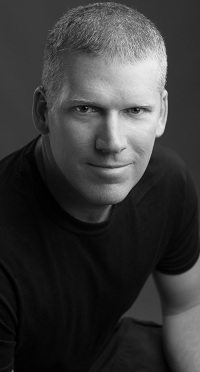 About the author:Mike Adams (aka the "Health Ranger") is a best selling author (#1 best selling science book on Amazon.com) and a globally recognized scientific researcher in clean foods. He serves as the founding editor of NaturalNews.com and the lab science director of an internationally accredited (ISO 17025) analytical laboratory known as CWC Labs. There, he was awarded a Certificate of Excellence for achieving extremely high accuracy in the analysis of toxic elements in unknown water samples using ICP-MS instrumentation. Adams is also highly proficient in running liquid chromatography, ion chromatography and mass spectrometry time-of-flight analytical instrumentation.
Adams is a person of color whose ancestors include Africans and Native American Indians. He's also of Native American heritage, which he credits as inspiring his "Health Ranger" passion for protecting life and nature against the destruction caused by chemicals, heavy metals and other forms of pollution.
Adams is the founder and publisher of the open source science journal Natural Science Journal, the author of numerous peer-reviewed science papers published by the journal, and the author of the world's first book that published ICP-MS heavy metals analysis results for foods, dietary supplements, pet food, spices and fast food. The book is entitled Food Forensics and is published by BenBella Books.
In his laboratory research, Adams has made numerous food safety breakthroughs such as revealing rice protein products imported from Asia to be contaminated with toxic heavy metals like lead, cadmium and tungsten. Adams was the first food science researcher to document high levels of tungsten in superfoods. He also discovered over 11 ppm lead in imported mangosteen powder, and led an industry-wide voluntary agreement to limit heavy metals in rice protein products.
In addition to his lab work, Adams is also the (non-paid) executive director of the non-profit Consumer Wellness Center (CWC), an organization that redirects 100% of its donations receipts to grant programs that teach children and women how to grow their own food or vastly improve their nutrition. Through the non-profit CWC, Adams also launched Nutrition Rescue, a program that donates essential vitamins to people in need. Click here to see some of the CWC success stories.
With a background in science and software technology, Adams is the original founder of the email newsletter technology company known as Arial Software. Using his technical experience combined with his love for natural health, Adams developed and deployed the content management system currently driving NaturalNews.com. He also engineered the high-level statistical algorithms that power SCIENCE.naturalnews.com, a massive research resource featuring over 10 million scientific studies.
Adams is well known for his incredibly popular consumer activism video blowing the lid on fake blueberries used throughout the food supply. He has also exposed "strange fibers" found in Chicken McNuggets, fake academic credentials of so-called health "gurus," dangerous "detox" products imported as battery acid and sold for oral consumption, fake acai berry scams, the California raw milk raids, the vaccine research fraud revealed by industry whistleblowers and many other topics.
Adams has also helped defend the rights of home gardeners and protect the medical freedom rights of parents. Adams is widely recognized to have made a remarkable global impact on issues like GMOs, vaccines, nutrition therapies, human consciousness.
In addition to his activism, Adams is an accomplished musician who has released over a dozen popular songs covering a variety of activism topics.
Click here to read a more detailed bio on Mike Adams, the Health Ranger, at HealthRanger.com.

Take Action: Support Natural News by linking to this article from your website
Permalink to this article:
Embed article link: (copy HTML code below):
Reprinting this article:
Non-commercial use OK, cite NaturalNews.com with clickable link.
Follow Natural News on Facebook, Twitter, Google Plus, and Pinterest

Science News & Studies

Medicine News and Information

Food News & Studies

Health News & Studies

Herbs News & Information

Pollution News & Studies

Cancer News & Studies

Climate News & Studies

Survival News & Information

Gear News & Information

News covering technology, stocks, hackers, and more






"Big Tech and mainstream media are constantly trying to silence the independent voices that dare to bring you the truth about toxic food ingredients, dangerous medications and the failed, fraudulent science of the profit-driven medical establishment.
Email is one of the best ways to make sure you stay informed, without the censorship of the tech giants (Google, Apple, Facebook, Twitter, YouTube, etc.). Stay informed and you'll even likely learn information that may help save your own life."
–The Health Ranger, Mike Adams