




Health Roundup: Side effects, generic drugs and glucosamine sleight of hand (satire)
 Friday, March 10, 2006 Friday, March 10, 2006by Mike Adams, the Health Ranger Editor of NaturalNews.com (See all articles...) Tags: glucosamine, health news, Natural News |
- WHO backs off on Pandemic Treaty, makes substantive changes to address tyranny concerns
- PROPAGANDA: Jobless numbers released by government are statistically impossible
- Why do some COVID-19 “vaccine” side effects resemble symptoms of HIV?
- 10 Compelling reasons to steer clear of gluten
- More proof emerges of Dr. Fauci's criminal deceit over COVID-19 origins
- Honey: An amazing superfood with many health benefits
- Japan leading the way in holding Big Pharma, politicians accountable for COVID jab genocide
- Prescription drugs are now the leading cause of death
- BIDENSURGENCY: Top 6 Ways to PREVENT the Democrats from STEALING the November POTUS election
- EPA labels two forever chemicals commonly found in cookware, carpets, furniture, cosmetics and firefighting foams as “hazardous substances”
- Cancer cases are increasing due to COVID vaccines, but Big Government and Big Pharma want you to look the other way
- Bill Gates wants to use AI for genetically modifying beef cows to “save the planet”
- Courts set precedent for mass FORCED VACCINATION of all children
- A collective “common enemy” now stalks mankind
- You should DIE for your country: Ukraine suspends all visa renewals for military-aged Ukrainians living overseas
- Massachusetts Gov. Maura Healey SLAMMED for opening Chelsea Soldier’s Home to illegals for free, while hundreds of military veterans remain homeless
- ‘Conspiracy theories’ aren't ‘theoretical’ anymore: The US govt happily murders political opponents, carries out bioweapon attacks upon the population and openly steals elections
- Calls to BOYCOTT Bank of America grow amid its discrimination targeting Trump supporters
- A MASSIVE financial collapse is coming that will destroy everyone’s assets, warns Paul Craig Roberts
- Courts set precedent for mass FORCED VACCINATION of all children
- Expert warns: Banks will claim that your money is no longer yours, may freeze bank withdrawals
- Big Pharma planning to “vaccinate” America’s chicken supply for bird flu, unleashing a plot to END animal agriculture
- Spirulina protects against COVID death, study finds
- WHO backs off on Pandemic Treaty, makes substantive changes to address tyranny concerns
- Dr. Joseph Mercola: Bird flu can’t kill humans - unless it is WEAPONIZED
- Fully vaccinated about to see “tsunami” of illness and death, warns virologist
- Vaccines have destroyed society, unleashing a wave of irreparable damage to public health
- Here’s what REALLY happened on October 7 (hint: Israel is LYING)
- Evangelical Zionists are trying to “accelerate” the apocalypse because they think it will bring Jesus back
- Rand Paul COVID BOMBSHELL: “We have 15,000 samples in Wuhan … could do full genomes of 700 CoVs”
- Why GLUTEN is so much WORSE for your health than you might have thought (op-ed)
- O’Keefe media uncovers who’s really running the White House: Obama, Clinton, Jeff Zients and others
- Plastic bags four times better for environment than “green” paper bag alternatives, study finds
- Japan holds major press conference to address lawsuits seeking compensation for COVID jab victims
- Mike Adams announces Brighteon.AI release of two new Large Language Models, including 7 billion parameter “Neo-Dolphin-Mistral”
- New evidence proves Tony Fauci LIED under oath, claiming he barely knew top coronavirus scientist Ralph Baric
- Red Cross issues warning to stop blood plasma donations from vaccinated people
- Today I asked our AI language model “Neo” about which phytonutrients or phytochemicals can block the spike protein related to SARS-CoV-2 … Here is what it answered…
- Fully vaccinated about to see “tsunami” of illness and death, warns virologist
- FDA just lost a historic ivermectin lawsuit — so when will FDA officials be arrested and charged with manslaughter for denying lifesaving treatments to Americans?
- A MASSIVE financial collapse is coming that will destroy everyone’s assets, warns Paul Craig Roberts
- Dr. Bossche: Here comes the “massive, massive tsunami” of DEATH and destruction from Operation Warp Speed
- Top 5 reasons the BALTIMORE BRIDGE destruction was likely an INSIDE JOB rather than an “accident” or “cyber attack”
- Francis Scott Key Bridge collapse an “absolutely brilliant strategic attack,” say multiple intel sources
- Is there hidden CRICKET flour in your groceries?
- Secret Society Illuminati card game PREDICTED 9/11 terror attack, Donald Trump, Covid-19 and the “Insurrection” riot at the Washington DC Capitol building
- One dose of Pfizer's COVID-19 vaccine contains over 200 billion DNA fragments that can incorporate into human DNA, causing cancer
- MORE DETAILS, mysteries surrounding the Francis Scott Key Bridge collapse
- Gen. Flynn calls Francis Scott Key Bridge collapse “a black swan event”
- CERN, the Vatican and the upcoming X-marks-the-spot Great American eclipse
- Ivermectin can “kill cancer cells” and boost immune response, suggest health experts
- HIDDEN from public: Study identifies issues with mRNA vaccines “that could have fatal consequences”
- Four years later, Fox News now admits to the entire COVID origins conspiracy and cover-up
- FACT CHECK: Most U.S. slave owners, 78%, were JEWISH
- Red Cross issues warning to stop blood plasma donations from vaccinated people
- 5G REMOTE KILL VECTOR: Science paper reveals cell phone signals can activate the release of biological PAYLOADS from graphene oxide injected into the body
- Jamie Foxx reportedly BLINDED and partially PARALYZED after coerced into taking covid vaccine jab
- Twelve undeniable signs globalists are engineering the end of humanity
- 13 Nations agree to engineer global FAMINE by destroying agriculture, saying that producing food is BAD for the planet
- Heavily CENSORED Pfizer documents show that COVID began a five-year mass DEPOPULATION agenda that will reach completion by 2025
- Secret Pfizer report shows company KNEW since February 2021 that its mRNA COVID jab was killing people
- Synergistic pairing of ivermectin and fenbendazole found HIGHLY EFFECTIVE at preventing and treating cancer
- SOURCES: Jamie Foxx was forced against his will to get covid jabbed for movie, then developed debilitating blood clot in his brain
- MP Han Dong resigns from Trudeau’s Liberal Party following allegations questioning his loyalty to Canada
- These 14 American cities plan to ban meat, dairy and private vehicles by 2030 - is yours on the list?
- Getting vaccinated for covid four or more times results in near-complete collapse of the immune system, bombshell study finds
- DATA: England’s vaccinated population had close to one million deaths in 23 months; unvaccinated population had less than 61,000 deaths over the same period
- New $4B Panasonic electric vehicle (EV) battery factory in Kansas requires so much power that the facility will need its own COAL plant to run
- RED ALERT: Pentagon mobilizing THOUSANDS of aircraft for WWIII confrontations with China, Russia
- Tom Renz slams Manhattan DA over ongoing witch hunt against Trump
- Can you feel it? Ten signs that things in America have reached a BREAKING POINT
- Globalists go crazy trying to suppress these 14 powerful, timeless truths that can SET YOU FREE





I'm not making this up. Taurel claims that really good drugs are being delayed in the approval process because -- get this -- too many people are concerned about their side effects. Gee, I suppose if we all just agreed that heart attacks, strokes, muscle wasting, liver damage, kidney failure, brain fog, nutritional deficiencies and death were of no consequences, then we could get all these drugs approved lickity split!
The arrogance of Big Pharma knows no bounds, it seems. The chemical holocaust taking place right now in the United States due to the mass over-consumption of dangerous, medically unnecessary, and fraudulently approved prescription drugs is apparently of no concern to this industry. Its leaders simply want to find more ways to drug more people with fewer regulatory "hassles" such as paying attention to side effects.
Taurel also said he wants tort reform, meaning he wants caps on damages awarded to victims harmed by drug side effects. Why not just throw in blanket legal immunity for all drug companies, too? After all, they ARE trying to find the cure for cancer, aren't they?
(The following paragraph is pure sarcasm...) I agree with Taurel that we should stop talking about these negative side effects. We should also stop hassling auto manufacturers over defective brakes that get people killed. While we're at it, we should stop giving food manufacturers grief over using carcinogenic ingredients in their processed food products, too -- just let 'em use anything they want. We can trust 'em , can't we? Let's face it: Corporate America has your best interests at heart, and we should just let these companies operate with impunity so that they can get down to the business of helping everyone.
Taurel says we should focus more on the BENEFITS of the drugs. Like how much money they make shareholders, for example. Or, perhaps, how prescription drugs are good for the economy because they create new job opportunities for doctors, nurses and surgeons to treat all the dangerous drug side effects.
How much of a better deal does Taurel want than today's industry-friendly FDA, anyway? It's hard to get any more lenient on drug companies than the FDA is right now. That's why some people call the FDA the, "Federal Drug Advocates."
Yet another clever way to boost Big Pharma profits
Always pondering ways to make the drug market more lucrative for large pharmaceutical corporations, the FDA is now floating the idea of charging application fees to manufacturers of generic drugs. This, in turn, would make it more expensive for generic drugs to receive approval, hiking their price and limiting their price advantage vs. brand-name drugs. The end result? Greater brand-name drug sales (which, of course, is what the FDA is ultimately after).The whole problem with corruption and fraud at the FDA today is largely due to the fact that the agency is largely funded by brand-name drug makers through drug application fees. Thus, drug companies are the FDA's "customers." But the FDA is supposed to be regulating these companies, not serving them like royal guests at a five-star hotel. And this idea of accepting even more money from more drug companies would only compromise the integrity of the agency even further.
The agency, of course, is spinning this whole proposal as a huge benefit to consumers, saying it would help them approve generic drugs more quickly, thereby saving U.S. employers hundreds of millions of dollars in lower drug costs. Of course, those same corporations could save BILLIONS if they invested in nutrition, prevention and natural health instead of drugs and surgery, but that's another story.
Clearly what we need is genuine FDA reform, not making the FDA even more addicted to industry money. But don't expect to see any real reform efforts until there's a changing of the guard in Washington, as the current administration is quite cozy with Big Pharma.
Researchers now try to discredit glucosamine chondroitin sulfate supplements
Always working hard on new ways to discredit nutritional supplements, conventional medical researchers have now found a clever way to attack nutritional supplements used to treat joint pain. In what can only be called a fraudulently designed study, the Glucosamine-chondroitin Arthritis Intervention Trial (GAIT) compared these nutritional supplements with Celebrex, a prescription drug that only treats joint pain symptomatically and does nothing to rebuild cartilage or other tissue.In other words, the study compared what is essentially a short-term painkiller with nutritional supplements that obviously take time to support the rebuilding of tissue. When Celebrex turned out to produce faster pain-reducing results, the mainstream media essentially declared glucosamine supplements to be useless.
It's nonsense, of course. All smoke and mirrors. Or, in this case, a comparison of apples and oranges. Masking pain with a painkiller is always fast. But if you really want to solve the underlying problem, you need good nutrition, not just dangerous chemicals that also cause heart attacks and strokes as side effects, by the way.
By the way, the study also used a low-dose, cheap version of glucosamine known to have poor assimilation. That's how the majority of so-called "alternative" studies are conducted: Researchers just happen to coincidentally use synthetic, low-dose vitamins or supplements, all the while acting like they're conducting real science.
This isn't real science. It's a charade. And once again, the mainstream media bought the whole thing hook, line and sinker.
If you're going to compare glucosamine with Celebrix, why not run another trial and compare calcium with crack? I can see the results now: "100% of the patients reported feeling better on crack. Therefore, calcium is useless." It's exactly the same stupid logic. I'm convinced many researchers are actually ON crack.

)

Glucosamine at FETCH.news
Get independent news alerts on natural cures, food lab tests, cannabis medicine, science, robotics, drones, privacy and more.
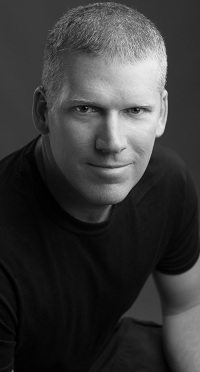 About the author:Mike Adams (aka the "Health Ranger") is a best selling author (#1 best selling science book on Amazon.com) and a globally recognized scientific researcher in clean foods. He serves as the founding editor of NaturalNews.com and the lab science director of an internationally accredited (ISO 17025) analytical laboratory known as CWC Labs. There, he was awarded a Certificate of Excellence for achieving extremely high accuracy in the analysis of toxic elements in unknown water samples using ICP-MS instrumentation. Adams is also highly proficient in running liquid chromatography, ion chromatography and mass spectrometry time-of-flight analytical instrumentation.
Adams is a person of color whose ancestors include Africans and Native American Indians. He's also of Native American heritage, which he credits as inspiring his "Health Ranger" passion for protecting life and nature against the destruction caused by chemicals, heavy metals and other forms of pollution.
Adams is the founder and publisher of the open source science journal Natural Science Journal, the author of numerous peer-reviewed science papers published by the journal, and the author of the world's first book that published ICP-MS heavy metals analysis results for foods, dietary supplements, pet food, spices and fast food. The book is entitled Food Forensics and is published by BenBella Books.
In his laboratory research, Adams has made numerous food safety breakthroughs such as revealing rice protein products imported from Asia to be contaminated with toxic heavy metals like lead, cadmium and tungsten. Adams was the first food science researcher to document high levels of tungsten in superfoods. He also discovered over 11 ppm lead in imported mangosteen powder, and led an industry-wide voluntary agreement to limit heavy metals in rice protein products.
In addition to his lab work, Adams is also the (non-paid) executive director of the non-profit Consumer Wellness Center (CWC), an organization that redirects 100% of its donations receipts to grant programs that teach children and women how to grow their own food or vastly improve their nutrition. Through the non-profit CWC, Adams also launched Nutrition Rescue, a program that donates essential vitamins to people in need. Click here to see some of the CWC success stories.
With a background in science and software technology, Adams is the original founder of the email newsletter technology company known as Arial Software. Using his technical experience combined with his love for natural health, Adams developed and deployed the content management system currently driving NaturalNews.com. He also engineered the high-level statistical algorithms that power SCIENCE.naturalnews.com, a massive research resource featuring over 10 million scientific studies.
Adams is well known for his incredibly popular consumer activism video blowing the lid on fake blueberries used throughout the food supply. He has also exposed "strange fibers" found in Chicken McNuggets, fake academic credentials of so-called health "gurus," dangerous "detox" products imported as battery acid and sold for oral consumption, fake acai berry scams, the California raw milk raids, the vaccine research fraud revealed by industry whistleblowers and many other topics.
Adams has also helped defend the rights of home gardeners and protect the medical freedom rights of parents. Adams is widely recognized to have made a remarkable global impact on issues like GMOs, vaccines, nutrition therapies, human consciousness.
In addition to his activism, Adams is an accomplished musician who has released over a dozen popular songs covering a variety of activism topics.
Click here to read a more detailed bio on Mike Adams, the Health Ranger, at HealthRanger.com.

Take Action: Support Natural News by linking to this article from your website
Permalink to this article:
Embed article link: (copy HTML code below):
Reprinting this article:
Non-commercial use OK, cite NaturalNews.com with clickable link.
Follow Natural News on Facebook, Twitter, Google Plus, and Pinterest

Science News & Studies

Medicine News and Information

Food News & Studies

Health News & Studies

Herbs News & Information

Pollution News & Studies

Cancer News & Studies

Climate News & Studies

Survival News & Information

Gear News & Information

News covering technology, stocks, hackers, and more





"Big Tech and mainstream media are constantly trying to silence the independent voices that dare to bring you the truth about toxic food ingredients, dangerous medications and the failed, fraudulent science of the profit-driven medical establishment.
Email is one of the best ways to make sure you stay informed, without the censorship of the tech giants (Google, Apple, Facebook, Twitter, YouTube, etc.). Stay informed and you'll even likely learn information that may help save your own life."
–The Health Ranger, Mike Adams