




Role of MicroRNA Identified in Breast Cancer (press release)
 Sunday, August 28, 2005 Sunday, August 28, 2005by Mike Adams, the Health Ranger Editor of NaturalNews.com (See all articles...) Tags: health news, Natural News, nutrition |
- Vaccine mafia earns 'F' in science: Australian Health Minister utters the most insanely stupid anti-science statement ever recorded... 'no risks in vaccinating children'
- Vaccinated children have up to 500% more disease than unvaccinated children
- The real vaccine scam is not that they cause autism, but that they don't even work!
- How to make an Orgone Accumulator for improved health and energy
- Saffron cures macular degeneration
- Treating Herpes Naturally and with Fewer Side Effects
- Tungsten in rice protein: Health Ranger releases new chart, petitions all protein manufacturers to commit to reasonable industry standards for heavy metals
- Herbs destroy mycoplasma, disabling deadly opportunistic infections: Research
- The FDA Exposed: An Interview With Dr. David Graham, the Vioxx Whistleblower
- Four things you need to know about cancer and Candida
- INVESTIGATION: Three days before Dr. Bradstreet was found dead in a river, U.S. govt. agents raided his research facility to seize a breakthrough cancer treatment called GcMAF
- Secret audio of Aajonus Vonderplanitz demanding $500,000 from Sharon Palmer released by mystery blogger
- Liposomal vitamin C: More potency and less expense than IV mega-dose vitamin C
- 131 Ways for an Infant to Die: Vaccines and Sudden Death
- Natural News launches 'miracle' Ozone Dentistry product for gum care: O3 Essentials OraJuvenate
- Abdominal fat stores found to be a trigger for heart disease and cancer development
- Genital Herpes May be Reversed with Natural Medicine
- 3 common parasites that are literally eating you alive
- Vaccine mafia earns 'F' in science: Australian Health Minister utters the most insanely stupid anti-science statement ever recorded... 'no risks in vaccinating children'
- Vaccinated children have up to 500% more disease than unvaccinated children
- The real vaccine scam is not that they cause autism, but that they don't even work!
- The MMR vaccine, autism connection
- Resveratrol in red wine protects the brain from stroke damage
- Repel ticks with this natural oil
- The United Nations 2030 Agenda decoded: It's a blueprint for the global enslavement of humanity under the boot of corporate masters
- INVESTIGATION: Three days before Dr. Bradstreet was found dead in a river, U.S. govt. agents raided his research facility to seize a breakthrough cancer treatment called GcMAF
- FDA-approved drug turns ordinary people into obedient zombies... saps all free will... allows people to be programmed by the media or government... sold as transdermal patch
- Skin tags - Natural remedies and prevention
- Saffron cures macular degeneration
- Colorado Batman shooting shows obvious signs of being staged
- A look at the MMR vaccine ingredients
- How to make an Orgone Accumulator for improved health and energy
- Lower your homocysteine levels naturally
- Treat Skin Rashes with Natural Remedies
- The most frequently used words on television
- CLAIM: Cell towers across the USA are broadcasting brain resonance frequencies to disrupt human minds, says former DARPA scientist
- The MMR vaccine, autism connection
- The best and worst forms of magnesium to take as a supplement
- Vaccine mafia earns 'F' in science: Australian Health Minister utters the most insanely stupid anti-science statement ever recorded... 'no risks in vaccinating children'
- The United Nations 2030 Agenda decoded: It's a blueprint for the global enslavement of humanity under the boot of corporate masters
- Vaccinated children have up to 500% more disease than unvaccinated children
- The real vaccine scam is not that they cause autism, but that they don't even work!
- Colorado Batman shooting shows obvious signs of being staged
- Use natural remedies for a hiatal hernia
- Reverse and eliminate cataracts naturally without surgery
- Top six alkaline foods to eat every day for vibrant health
- Apricot Seeds Kill Cancer Cells without Side Effects
- Boost Low White Blood Cell Count and Immune Function Naturally
- Vaccine fraud exposed: Measles and mumps making a huge comeback because vaccines are designed to fail, say Merck virologists
- Extreme breastfeeding? Woman saves Rottweiler pup by breastfeeding it alongside her own infant
- Beat cancer with 35% hydrogen peroxide
- Cannabis kicks Lyme disease to the curb
- Baking soda, cancer and fungus
- Flu vaccines causing massive spike in deaths of elderly across the UK, warn health officials
- Eleven days before Iran bombed Tel Aviv, my microscope revealed haunting images of EXACTLY what would happen
- DECENTRALIZED SPIRITUALITY and the true teachings of Christ: Overcoming the censorship, threats and lies of organized religion to truly know God and the Universal Christ
- Morphic resonance “remote viewing” reveals iconic Middle East images of stealth bombers, a falcon and a one-horned ram
- The Coming Gold Revaluation: Strategic Financial Realignment in an Era of Dollar Collapse
- The AI Data Center Wars Have Begun… Farms, Water and Electricity is Stripped from Humans to Power the Machines
- Urgent Wake-Up Call: The Coming AI Robot Wars and the Great Human Unity
- The War on Light: How Governments and Big Pharma Keep You Sick By Blocking Healing Photons
- HEALTH SECRETS: How to Instantly Block MSG Toxicity Using Natural Substances (and the secret of Methylene Blue)
- THE AI RACE IS ALREADY WON: How China’s power dominance (and America’s climate lunacy surrender) secured its victory in the race to AI superintelligence
- Why the U.S. Government May be Seeking to Slaughter 200 Million Americans to Free Up Excess Power for AI Data Centers and the Race to Superintelligence
- Trump's Trojan Horse: How Stablecoins Are Secretly Paving the Way for a CBDC Control Grid – an Interview with Catherine Austin Fitts
- EXCLUSIVE REPORT: The Trump-Putin Meeting in Alaska - A Historic Pivot that Redefined Global Power
- Amazing microscopy photos reveal how freezing crystals attempt to mimic electronic structures they are touching
- 18 MILLION COVID-JABBED Japanese folks shown to have SIGNIFICANTLY HIGHER DEATH RATES during first year after injection with mRNA clot shots
- BOMBSHELL: Internal Pfizer documents exposed and reveal at least 16 PERCENT of their mRNA vaccine "adverse events" are REPRODUCTIVE DISORDERS
- AI & economic liberty: Will decentralized tech save human autonomy?
- Injecting chemicals is MORE DANGEROUS than eating them, so why is polysorbate 80 banned in ICE CREAM but allowed in VACCINES?
- BOMBSHELL: DNA testing kits are a SCAM to develop ethnic-specific bioweapons





The researchers were the first to define how miRNA malfunctions in some forms of leukemia and lymphoma, and now have discovered how it works in breast cancer. More importantly, they say the miRNA “signature” in breast cancer is directly linked to several biological features that physicians routinely use to diagnose and appropriately treat the disease.
The findings appear in the Aug. 15 issue of Cancer Research.
“MiRNA is opening up a whole new way of understanding carcinogenesis,” says Carlo Croce, professor and chair of the department of molecular virology, immunology and medical genetics at Ohio State and the senior author of the study.
Traditional science holds that a specific stretch of DNA, or gene, encodes a sequence of messenger RNA that in turn creates instructions for the cell to make a particular protein. Cancer arises when there are mutations, deletions or other alterations in that initiating gene.
But what governs the entire process? A growing number of researchers like Croce believe that miRNA may play a major role. In contrast to regular RNA, miRNA does not code for protein production. Instead, it causes the destruction of coding RNA directly, or garbles its translational activity so proper protein production cannot take place. MiRNA was first discovered almost 15 years ago in studies of roundworms, and since then, it has been found throughout plant and animal genomes. Because it becomes active early on in development and appears to be tissue-specific, researchers believe miRNA plays a fundamental role throughout an organism’s lifespan.
Scientists have identified over 200 distinct miRNAs, but Croce feels there may be hundreds more, and adds that researchers are just beginning to understand what they do. “Some of the breast cancer-specific miRNA we identified appear to act like tumor suppressors, and others appear to act like oncogenes, encouraging tumor growth.”
Interestingly, earlier research in Croce’s laboratory revealed that the majority of miRNA genes in humans are located near chromosomal sites that are especially vulnerable to alteration, a finding that leads him to believe that the role of miRNA in cancer is underestimated.
Croce, along with colleagues at Ohio State, Thomas Jefferson University and three cancer centers in Italy, used a microarray containing all known miRNA to examine miRNA activity in 76 breast tumors. They compared the findings to a microarray analysis of 34 samples of normal breast tissue.
They found 29 miRNAs that are significantly deregulated in breast cancer (some were over-expressed and others were under-expressed) and discovered that only five members of that group (identified as miR10b, miR-125b, miR-145, miR-21 and miR-155) were needed to successfully separate normal tissue from cancerous tissue 100 percent of the time.
They also conducted multiple tests designed to reveal any links between the newly identified expression pattern and important clinical features of the breast cancer, such as the type of the cancer - lobular vs. ductal, estrogen and progesterone receptor status, lymph node metastasis, vascular invasion, proliferation index, and presence of two genes that can play a role in tumor growth, HER2 and p53.
They found that miRNA expression was correlated with breast tumors’ hormone status as well as its metastatic, invasive and proliferative potential.
“This leaves little doubt that aberrant expression of miRNA is involved in the development of breast cancer,” says Croce, adding that this information and the results of related studies already under way should offer valuable information for physicians as well as for researchers designing new treatments.
The National Cancer Institute and a Kimmel Scholar Award supported the study, as well as grants from the Associazione Italiana per la Ricerca and Cancro; Ministero dell’Istruzione, dell’Universita e della Ricera Programma Post-genoma; Ministero della Salute Italiano; and Progetto CAN2005-Comitato dei Sostenitori.
The Ohio State University Comprehensive Cancer Center – Arthur G. James Cancer Hospital and Richard J. Solove Research Institute is one of the nation’s leading centers for research on the prevention, detection, diagnosis and treatment of cancer. The OSU CCC-James encompasses six interdisciplinary research programs and includes more than 200 investigators who generate over $100 million annually in external funding. OSU James, a founding member of the National Comprehensive Cancer Network, is ranked by U.S. News & World Report as one of America’s best cancer hospitals.

)

Health news at FETCH.news
Get independent news alerts on natural cures, food lab tests, cannabis medicine, science, robotics, drones, privacy and more.
 About the author:Mike Adams (aka the "Health Ranger") is a best selling author (#1 best selling science book on Amazon.com) and a globally recognized scientific researcher in clean foods. He serves as the founding editor of NaturalNews.com and the lab science director of an internationally accredited (ISO 17025) analytical laboratory known as CWC Labs. There, he was awarded a Certificate of Excellence for achieving extremely high accuracy in the analysis of toxic elements in unknown water samples using ICP-MS instrumentation. Adams is also highly proficient in running liquid chromatography, ion chromatography and mass spectrometry time-of-flight analytical instrumentation.
Adams is a person of color whose ancestors include Africans and Native American Indians. He's also of Native American heritage, which he credits as inspiring his "Health Ranger" passion for protecting life and nature against the destruction caused by chemicals, heavy metals and other forms of pollution.
Adams is the founder and publisher of the open source science journal Natural Science Journal, the author of numerous peer-reviewed science papers published by the journal, and the author of the world's first book that published ICP-MS heavy metals analysis results for foods, dietary supplements, pet food, spices and fast food. The book is entitled Food Forensics and is published by BenBella Books.
In his laboratory research, Adams has made numerous food safety breakthroughs such as revealing rice protein products imported from Asia to be contaminated with toxic heavy metals like lead, cadmium and tungsten. Adams was the first food science researcher to document high levels of tungsten in superfoods. He also discovered over 11 ppm lead in imported mangosteen powder, and led an industry-wide voluntary agreement to limit heavy metals in rice protein products.
In addition to his lab work, Adams is also the (non-paid) executive director of the non-profit Consumer Wellness Center (CWC), an organization that redirects 100% of its donations receipts to grant programs that teach children and women how to grow their own food or vastly improve their nutrition. Through the non-profit CWC, Adams also launched Nutrition Rescue, a program that donates essential vitamins to people in need. Click here to see some of the CWC success stories.
With a background in science and software technology, Adams is the original founder of the email newsletter technology company known as Arial Software. Using his technical experience combined with his love for natural health, Adams developed and deployed the content management system currently driving NaturalNews.com. He also engineered the high-level statistical algorithms that power SCIENCE.naturalnews.com, a massive research resource featuring over 10 million scientific studies.
Adams is well known for his incredibly popular consumer activism video blowing the lid on fake blueberries used throughout the food supply. He has also exposed "strange fibers" found in Chicken McNuggets, fake academic credentials of so-called health "gurus," dangerous "detox" products imported as battery acid and sold for oral consumption, fake acai berry scams, the California raw milk raids, the vaccine research fraud revealed by industry whistleblowers and many other topics.
Adams has also helped defend the rights of home gardeners and protect the medical freedom rights of parents. Adams is widely recognized to have made a remarkable global impact on issues like GMOs, vaccines, nutrition therapies, human consciousness.
In addition to his activism, Adams is an accomplished musician who has released over a dozen popular songs covering a variety of activism topics.
Click here to read a more detailed bio on Mike Adams, the Health Ranger, at HealthRanger.com.

Take Action: Support Natural News by linking to this article from your website
Permalink to this article:
Embed article link: (copy HTML code below):
Reprinting this article:
Non-commercial use OK, cite NaturalNews.com with clickable link.
Follow Natural News on Facebook, Twitter, Google Plus, and Pinterest

Science News & Studies

Medicine News and Information

Food News & Studies

Health News & Studies

Herbs News & Information

Pollution News & Studies

Cancer News & Studies

Climate News & Studies

Survival News & Information

Gear News & Information

News covering technology, stocks, hackers, and more




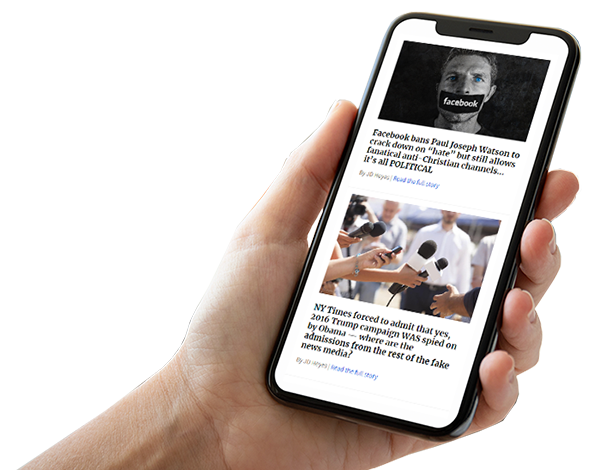

"Big Tech and mainstream media are constantly trying to silence the independent voices that dare to bring you the truth about toxic food ingredients, dangerous medications and the failed, fraudulent science of the profit-driven medical establishment.
Email is one of the best ways to make sure you stay informed, without the censorship of the tech giants (Google, Apple, Facebook, Twitter, YouTube, etc.). Stay informed and you'll even likely learn information that may help save your own life."
–The Health Ranger, Mike Adams