



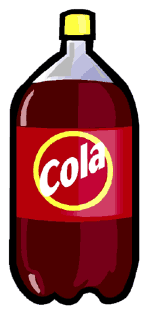
The unauthorized history of Coca-Cola (satire)
 Friday, January 14, 2005 Friday, January 14, 2005by Mike Adams, the Health Ranger Editor of NaturalNews.com (See all articles...) Tags: Coca-Cola, soft drinks, soft drink companies |
- The REAL FAKE NEWS exposed: '97% of scientists agree on climate change' is an engineered hoax... here's what the media never told you
- Gandhi still right after 90 years: Vaccines are toxic, unhealthy and ineffective
- Lack of Forgiveness Can Affect Our Health
- The best and worst forms of magnesium to take as a supplement
- Home remedies from herbal teas and grocery foods dissolve kidney stones and reverse renal failure
- Top seven fuels that feed the cancer 'fire' and mutate more cells
- What to eat to prevent cataracts and even reverse early-stage eye problems
- Turmeric spice could have cured pancreatic cancer that killed Steve Jobs, suggests oncologist
- Peanut oil in vaccines behind widespread peanut allergy epidemic
- Mushrooms That Fight Cancer and Boost the Immune System
- Top 9 vaccines you NEVER need and exactly why the CDC has to scare everybody into getting them
- America today: There are a lot of good people who are homeless - video proof
- The twisted medicine of immoral America: Killing your baby is a choice; protecting your baby is a crime
- Ten reasons why you shouldn't vaccinate your children
- Profit Driven Swine Flu Propaganda - Pump Up the Volume Part 1
- Americans' brains being fried by cell towers: New scientific evidence reveals shocking extent of electropollution damage
- Amazing food fact: Confectioner's glaze, a common coating on candies and pills, is made from the bodily excretions of an Asian beetle
- Measles vaccine far more dangerous than measles itself
- The REAL FAKE NEWS exposed: '97% of scientists agree on climate change' is an engineered hoax... here's what the media never told you
- Gandhi still right after 90 years: Vaccines are toxic, unhealthy and ineffective
- Home remedies from herbal teas and grocery foods dissolve kidney stones and reverse renal failure
- Ten reasons why you shouldn't vaccinate your children
- The best and worst forms of magnesium to take as a supplement
- Canola oil: a chemical carcinogen that doesn't belong anywhere near your food
- Forget Filling Cavities: Regrow Your Teeth Instead
- Heal and Soothe Stomach Ulcers without Mainstream Drugs
- Mainstream media websites promoting Acai Berry Diet weight loss scam with "weird belly fat tips" ads
- Peanut oil in vaccines behind widespread peanut allergy epidemic
- Heal yourself in 15 days by fasting for 24 hours (part six)
- The aloe vera miracle: A natural medicine for cancer, cholesterol, diabetes, inflammation, IBS, and other health conditions
- Every mass shooting over last 20 years has one thing in common... and it's not guns
- Surgeon General, scientists agree: Cigarettes are more addictive and deadly than ever before
- Thermograms - a safe, accurate and reliable alternative to mammograms
- Eighteen Overlooked Symptoms of Adrenal Fatigue
- Senate Bill S 510 Food Safety Modernization Act vote imminent: Would outlaw gardening and saving seeds
- Eating chocolate regularly may prevent strokes
- Peanut oil in vaccines behind widespread peanut allergy epidemic
- 'Never has there been a safe vaccine,' Suzanne Humphries, MD, says in interview
- The REAL FAKE NEWS exposed: '97% of scientists agree on climate change' is an engineered hoax... here's what the media never told you
- Bill Gates says vaccines can help reduce world population
- Lack of Forgiveness Can Affect Our Health
- Forget Filling Cavities: Regrow Your Teeth Instead
- The best and worst forms of magnesium to take as a supplement
- The United Nations 2030 Agenda decoded: It's a blueprint for the global enslavement of humanity under the boot of corporate masters
- Global warming data FAKED by government to fit climate change fictions
- Shock findings in new GMO study: Rats fed lifetime of GM corn grow horrifying tumors, 70% of females die early
- Eighteen Overlooked Symptoms of Adrenal Fatigue
- Apricot Seeds Kill Cancer Cells without Side Effects
- Home remedies from herbal teas and grocery foods dissolve kidney stones and reverse renal failure
- Beat cancer with 35% hydrogen peroxide
- How to Detox Fluorides from Your Body
- Colorado Batman shooting shows obvious signs of being staged
- Baking Soda Prevents Kidney Disease, Renal Failure and Kidney Dialysis
- Urgent lawsuit filed against FDA to halt swine flu vaccines; claims FDA violated federal law
- The REAL FAKE NEWS exposed: '97% of scientists agree on climate change' is an engineered hoax... here's what the media never told you
- Beat cancer with 35% hydrogen peroxide
- The best and worst forms of magnesium to take as a supplement
- The United Nations 2030 Agenda decoded: It's a blueprint for the global enslavement of humanity under the boot of corporate masters
- Apricot Seeds Kill Cancer Cells without Side Effects
- Bill Gates says vaccines can help reduce world population
- Forget Filling Cavities: Regrow Your Teeth Instead
- Six little-known natural remedies for tinnitus
- The MMR vaccine, autism connection
- Supplements to detox the body from vaccinations
- Dandelion root extract found to kill leukemia cells, prostate cancer cells and chemo-resistant melanoma
- Reverse and eliminate cataracts naturally without surgery
- What's really in vaccines? Proof of MSG, formaldehyde, aluminum and mercury
- Peanut oil in vaccines behind widespread peanut allergy epidemic
- High-dose vitamin C injections shown to annihilate cancer
- The aloe vera miracle: A natural medicine for cancer, cholesterol, diabetes, inflammation, IBS, and other health conditions
- Indian black salve: The magical cancer cure
- INVESTIGATION: Three days before Dr. Bradstreet was found dead in a river, U.S. govt. agents raided his research facility to seize a breakthrough cancer treatment called GcMAF





It's no coincidence that the name "Coca-Cola" starts with the name of the leaf used to manufacture cocaine: the coca leaf. From the late 1800's, Coca-Cola contained varying amounts of cocaine (about 60mg of cocaine per serving in 1900) all the way up until 1929, when cocaine was finally removed from its formula. That was when all the doctors and dentists who were prescribing coke to their patients said, in unison, "Guess we'll have to start actually addressing their medical problems instead of sending them home with more cocaine." Simultaneously, Coca-Cola executives probably said, "Guess we'll have to find another ingredient that's highly addictive." Hence, caffeine. But that's not until later in this story.
The "Cola" part of the name comes from the "kola" nut -- a nut containing yet an addictive chemical: caffeine. Combine caffeine and cocaine and, not surprisingly, you get a powerful drink called "Coca-Cola" that benefited strongly (from a marketing point of view) from the addictive traits of the narcotic / caffeine combination. It's "The Real Thing," all right, real substance addiction! Hard drugs and Starbucks, all in the same cup!
Not surprisingly, the Coca-Cola company claimed all sorts of health benefits for their product. Coca-cola was introduced in 1886 as "a valuable brain-tonic and cure for all nervous afflictions." Its slogan in 1900 was, "For headache and exhaustion, drink Coca-Cola," a slogan that now seems ridiculous for a beverage perhaps known best for its ability to cause obesity. A 1904 Coca-Cola slogan claims, "Coca-Cola is a delightful, palatable, healthful beverage," and even in recent years, Coca-Cola has called its product "a wholesome beverage." In my view, this is sort of like your neighborhood crack dealer saying, "Yep, this here crack will cure that cancer in no time!" Of course, Coke finally took the coke out of their formula, but they're still using coca leaves.
Still Using Coca Leaves
If you hike a bag of coca leaves through U.S. customs on your way home from, say, Peru, you might be arrested for the federal crime of drug trafficking. Coca-Cola, however, imports nearly eight tons of coca leaves from South America each year (source: Cocaine.org, which appears to be an authority on coca leaves, imagine that...), and still uses those leaves in preparing its soft drinks. The cocaine is, reportedly, removed from the leaves before the leaves are used in the coca-cola manufacturing process. I'm just wondering where all that cocaine really goes. Do they destroy it? Do they sell it out the back door? Does the cocaine go back to Peru? I actually emailed Coca-Cola and asked them this every question. So far, I've received no response other than, "Hold on, we'll reply as soon as we're done snorting..." and I have no idea what that means.
Anyone who has actually been to Peru, by the way, knows that coca leaves are frequently chewed by Peruvian natives (and the ancient Incas, of course) to aid in altitude sickness and enhance stamina. It's what helps a 110-pound Peruvian male wearing leather sandals sprint up a 14,000 foot mountain carrying the 80-pound pack. I know this because I hired the guy to carry my pack. Within seconds, he had sprinted up the mountain with all of my belongings and was out of sight. Hmmm...
But getting back to coca leaves, when they are chewed in their natural form, coca leaves hardly present a drug addiction problem, it's only when they're refined that they become hard drugs. As an occasional medicinal herb, the coca leaf actually does have health-enhancing characteristics, but it seems likely that Coca-Cola was a lot more interested in its profit characteristics than its health characteristics.
As an example of just how important profits are to Coca-Cola, take a look at the company's effort to wipe out competing beverages... like water!
Coca-Cola Declares War on Water
Your body needs water, and lots of it! But if you're drinking water, according to the way Coca-Cola once thought, you're not drinking a Coke, and that's bad for business. The solution? Declare war on water.
August, 2001: Coca-Cola announces the launch of an assault against tap water in restaurants, code-named "H2No." (No, I'm not making this up...) They begin with the Olive Garden restaurants, describing customers' ordering of water as a kind of affliction. From their own site, "Olive Garden restaurants... were facing a high water incidence rate." (emphasis added).
A "high water incidence rate?" Sounds bad, doesn't it? Sounds like an insidious anthrax attack. To combat this threat, they came up with their "water reduction plan." This plan involved the re-education of waiters to suggest a "profitable beverage" in place of water. Olive Garden restaurants, according to the Coke site, liked the program so much that they incorporated it into their monthly skills training exercises. "Here's a new skill, folks, we're going to force all our customer to order a coke before they die of thirst..."
Believe it or not, they even developed an employee incentive contest, based on how much Coke the restaurant servers could get customers to drink. The program was called, "Just Say No to H2O" and it's sort of like a college frat game where you see how much beer you can get the new pledges to drink in one night, without actually killing them. (Because if they're dead, you can't force them to clean up the frat house the next morning...)
If it sounds like madness, you're right! Giving consumers a choice of drinks is considered polite; declaring war on water is something altogether different. The slogans chosen by Coca-Cola weren't pro-Coke, they were anti-water. "Just Say No to H2O" sounds sort of like the cry of a political rally. Just imagine a herd of overweight Coca-cola executives marching around outside Olive Garden restaurants, holding up signs and declaring that water is actually BAD for you.
As waiters were selling more Coke to customers, profits were flowing into the restaurants -- and into Coca-Cola's coffers -- but what about the health cost of drinking soft drinks? It is well known that consumption of soft drinks is a strong contributing factor in obesity -- a condition that, according to former Surgeon General David Satcher, causes 300,000 deaths each year and $117 billion in unnecessary health bills from diseases like diabetes and clogged arteries. Heck, that's almost as much as Coca-cola spends on advertising and celebrity endorsements! "Hi, I'm a well known sports celebrity with the brain of a naked mole rat. And I drink Coke!"
Today, there's really no question that soft drink consumption directly promotes a variety of chronic diseases. For starters, here's evidence of how soft drink consumption multiplies a person's risk of diabetes. (See http://www.newstarget.com/001614.html for a summary.)
And just this year, new research was published in the American Journal of Clinical Nutrition linking the consumption of high-fructose corn syrup (the primary sweetener in soft drinks) with both diabetes and obesity: http://www.newstarget.com/001054.html
Clearly, soft drinks are a hazard to the health of any individual (intelligent or otherwise) who chooses to consume them. Some of the other health effects now being attributed to soft drinks include loss of bone density, blood acidosis, kidney stress, immune system suppression, ADHD and even dramatic mood swings -- these are the claims by well-known health and nutrition authors, including many prominent MDs.
As the profits flow into Coca-Cola, who pays the cost for the health effects caused by Coca-Cola products? You guessed it: you do. The consumer foots the bill not only for the product, but also for the doctor, hospital and insurance costs that inevitably appear as a result of consuming this health-harming beverage. I'm just guessing, but for every dollar a person spends on soft drinks, there might be as much as $4 - $5 in long-term costs to society.
Not surprisingly, Coca-Cola's "H2No" web pages didn't stay on their site for very long. They were taken down on August 2, 2001 and haven't re-appeared since. Apparently, they no longer want to be known as the "anti-water" company. Because that would be, well, stupid. More importantly, it would go against their brand spankin' new product offering -- get this -- water!
Enter Coca-Cola's Water Product: Dasani
Coca-Cola apparently realized they couldn't prevent the entire world from drinking water, even by brainwashing Olive Garden waiters, and the next best thing to declaring war on water is, of course, making money from it. Enter Coca-Cola's water product, "Dasani," now sold everywhere. Don't confuse Dasani with spring water. It's just plain old tap water (that starts out with all the same contaminants you get out of your kitchen faucet), but filtered and "enhanced" with some minerals.
Once Coca-Cola had a profitable water product in the mix, their message about water was magically transformed into something a lot more pro-water. Hooking up with Ideas.com, Coca-Cola solicited water product branding ideas from consumers, promising a $5,000 award to the best idea submitted. Their idea solicitation text read, "Many doctors have suggested that people should drink eight glasses of water a day. What ideas can you think of, that would make it easier for people to drink more water?"
Where was the "many doctors" attitude when Coca-Cola was pushing the H2No program? Naturally, it was nowhere to be found. There were profits to be had, after all! It's amazing how Coca-cola seems to be able to find doctors to make sweeping statements that support whatever product is being pushed at the time, even if those statements contradict the company's former position on the subject... heck, I bet Coke could even find a doctor that would testify before Congress that, "caffeine is not addictive!"
Twisting the truth for profit
As you can see from the information presented here so far, Coca-Cola appears to have a fascinating tendency to twist reality into whatever distortion supports higher corporate profits. Perhaps the most wildly humorous example of this reality twisting comes from Coca-Cola's website right now. If you visit http://www2.coca-cola.com/contactus/myths_rumors/ingredients_addictive.html you'll find this astounding statement, which could only have been authored by an individual who was smoking crack (hey, maybe that's where all the cocaine goes. They're feeding it to their webmasters!):
"Caffeine is not addictive."
 In fact, here's a screen shot of the statement from Coca-Cola, which calls caffeine addiction a "myth" and "rumor." Sort of like the Tooth Fairy or Santa Claus. Come to think of it, I think the Tooth Fairy once told me that if I drank more coke, I'd earn more money by losing my teeth...
Does this official Coca-Cola statement remind you of anything? Sure it does: Big Tobacco executives swearing that nicotine is not addictive! I'm not sure how much mental reprogramming has to take place in the mind of an individual to be able to state (and believe!) that caffeine is not addictive, but I'm sure Jim Jones, the cult leader, could have learned a few tricks.
Coca-Cola's "caffeine is not addictive" statement appears as part of the company's "myth busting" section of the website, where the company has apparently hired a hypnotist to make statements defending the wholesome nature of every single ingredient, including aspartame and high-fructose corn syrup. Apparently, there's NOTHING in Coca-Cola that's bad for you! Imagine that! And all the coke-drinking fat kids in our public schools are just coincidentally fat, by the way. It must have something to do with breathing chalk dust.
"...increased soft-drink consumption is a major factor that contributes to osteoporosis." -- Michael T. Murray, N.D., author, the Encyclopedia of Natural Medicine
According to Coca-Cola, all the negative information about Coke is nothing more than "internet myths." Coke won't make you fat, it won't cause diabetes, it won't promote osteoporosis. Heck, it's not even acidic according to Coca-Cola. You CAN'T use coke as a household cleaner, they explain. (Never mind that a can of coke fizzes away toilet scum better than anything else I've seen on the market. It can also unclog kitchen drains and makes a fairly effective engine degreaser.)
This is all covered on the official Coca-Cola website where they dutifully explain that coke won't dissolve your teeth because it doesn't spend much time in your mouth. In other words, you swallow the acidic beverage before it can disintegrate your teeth, and isn't that just brilliant! I can just imagine two college students standing around with a bottle of commercial degreaser: "Jeez, man, don't put that in your mouth. It will dissolve your teeth!" And the other guy says, "Don't worry, I'm swallowing it before it can do any damage."
I'm not kidding. As of this writing, the official Coca-Cola website literally says, "People don't hold soft drinks in their mouths for long periods of time, nor rub their teeth with fabric soaked in soft drinks, so it doesn't make sense to extend these possible affects to normal use of the product."
Or, to paraphrase this, Coca-cola apparently believes it is possible to drink soft drinks without the beverage actually touching your teeth! I'm not even sure a circus performer could pull that off, although if one could be found, I'm sure they'd fit right in with coca-cola culture, which is looking more and more like a circus act with each passing day.
"Excessive consumption of soft drinks, which are high in phosphorus, can deplete you of calcium and increase your chances of osteoporosis." -- Dr. Earl Mindell, author, Unsafe At Any Meal
Given that coke is apparently a wholesome beverage that can't possibly promote osteoporosis, I suppose Coca-Cola would be shocked to learn that the American Journal of Clinical Nutrition published yet another study showing that caffeine consumption leads to osteoporosis: http://www.sciencedaily.com/releases/2001/10/011024073604.htm
The study of 96 elderly women showed that caffeine consumption (not even with tons of sugar, mind you) caused measurable losses of bone mass in the spine and throughout the skeleton system.
I guess Coca-Cola thinks all this research has just been made up as a grand conspiracy. Maybe the entire world of nutrition researchers is conspiring to make Coca-Cola look bad by plotting to discredit high-fructose corn syrup and caffeine. Or maybe, just maybe, Coca-Cola is getting a little paranoid. Perhaps they've been doing too much of their own coke, so to speak, and are getting weird visions of public persecution. And, poof! A miniature translucent devil appears on the right shoulder of the Coke CEO, saying, "Caffeine is not addictive" and "Refined sugars don't cause diabetes." (Along with some prodding from the miniature devil's fork, too.)
Coke: the drink of a dumbed-down population
All I can say is that the lower your IQ, the more likely you are to consume large quantities of soft drinks. In my opinion, coke is the drink of the dumbed-down; the elixir of ignorance, the beverage of boneheads. Smart people drink far more sophisticated drinks -- like Starbucks coffee. (And you can tell they're smart by how they happily pay four bucks for a fifty-cent cup of java.) And the really smart people in society drink red wine. Did I say smart? I meant snotty.
Regardless, Coca-Cola maintains a prominent place in American history. It's pure Americana. After all, what could better describe American culture than a heavily marketed beverage originally based on hard drugs that now contributes to the diabetes and obesity of an entire nation? It's the classic American saga: a lean, healthy immigrant comes to America, settles down in the Bronx, starts buying soft drinks, and pretty soon gives birth to an entire generation of overweight children who chug coke and occasionally get outside to participate in the "Walk for the Diabetes Cure," also sponsored by coke.
What could be more American than that?
DISCLAIMER: The above article is pure satire and is not meant as a factual representation of the position of Coca-Cola or its executives. It is offered purely for entertainment purposes.
The health effects of soft drinks - quotes from the experts
This is a compilation of quotes about the destructive health effects of soft drinks from some of the leading authors on health, nutrition and junk food. This full list, and much more information, is included in The Five Soft Drink Monsters downloadable ebook.
Michael Murray ND and Joseph Pizzorno ND
Encyclopedia of Natural Medicine, Revised Second Edition
"The allergenicity of penicillin in the general population is thought to be at least ten percent. Nearly 25 percent of these individuals will display hives, angioedema, or anaphylaxis upon ingestion of penicillin…. hives and anaphylactic symptoms have been traced to penicillin in milk, soft drinks, and frozen dinners."
"Many general dietary factors have been suggested as a cause of osteoporosis, including: low calcium-high phosphorus intake, high-protein diet, high-acid-ash diet, high salt intake, and trace mineral deficiencies. It appears that increased soft drink consumption is a major factor that contributes to osteoporosis. A deficiency of vitamin K leads to impaired mineralization of bone. Boron deficiency may contribute greatly to osteoporosis as well as to menopausal symptoms."
"Soft drinks have long been suspected of leading to lower calcium levels and higher phosphate levels in the blood. When phosphate levels are high and calcium levels are low, calcium is pulled out of the bones. The phosphate content of soft drinks like Coca -Cola and Pepsi is very high, and they contain virtually no calcium."
"The United States ranks first among countries in soft drink consumption. The per-capita consumption of soft drinks is in excess of 150 quarts per year, or about three quarts per week."
"Soft drink consumption in children poses a significant risk factor for impaired calcification of growing bones."
"Of the fifty-seven children who had low blood calcium levels, thirty-eight (66.7 percent) drank more than four bottles (12 to 16 ounces per bottle) of soft drinks per week, but only forty-eight (28 percent) of the 171 children with normal serum calcium levels consumed as much soft drink … These results more than support the contention that soft drink consumption leads to lower calcium levels in children. This situation that ultimately leads to poor bone mineralization, which explains the greater risk of broken bones in children who consume soft drinks."
"Soft drink consumption may be a major factor for osteoporosis as they are high in phosphates but contain virtually no calcium. This leads to lower calcium levels and higher phosphate levels in the blood. The United States ranks first among countries for soft drink consumption with a per capita consumption of approximately 15 ounces a day."
James A Howenstine M.D.
A Physician's Guide to Natural Health Products That Work
"In an interesting experiment the sugar from one soft drink was able to damage the white blood cells' ability to ingest and kill gonococcal bacteria for seven hours."
"Soft drinks also contain large quantities of phosphorus, which when excreted pulls calcium out of the bones. Heavy users of soft drinks will have osteoporosis along with their damaged arteries."
James Duke PhD
The Green Pharmacy : The Ultimate Compendium Of Natural Remedies From The World's Foremost Authority On Healing Herbs
"And watch out for cola soft drinks, which are very high in bone-dissolving phosphorus."
Marion Nestle
Food Politics: How the Food Industry Influences Nutrition and Health (California Studies in Food and Culture)
"Soft drinks are the single greatest source of caffeine in children's diets; a 12-ounce can of cola contains about 45 milligrams but the amounts in more potent soft drinks can exceed 100 milligrams— a level approaching that found in coffee."
"Soft drinks have replaced milk in the diets of many American children as well as adults. School purchases reflect such trends. From 1985 to 1997, school districts decreased the amounts of milk they bought by nearly 30% and increased their purchases of carbonated sodas."
"The relationship between soft drink consumption and body weight is so strong that researchers calculate that for each additional soda consumed, the risk of obesity increases 1.6 times."
"Adolescents who consume soft drinks display a risk of bone fractures three to four-fold higher than those who do not."
"Sugar and acid in soft drinks so easily dissolve tooth enamel."
"Americans drink 13.15 billion gallons of carbonated drinks every year."
William Duffy
The doctor speaking in these dialogs is, Dr. McCay, the nutritionist at the Naval Medical Research Institute.
"I was amazed to learn," he testified, "that the beverage contained substantial amounts of phosphoric acid. . . . At the Naval Medical Research Institute, we put human teeth in a cola beverage and found they softened and started to dissolve within a short period… The acidity of cola beverages ... is about the same as vinegar. The sugar content masks the acidity, and children little realize they are drinking this strange mixture of phosphoric acid, sugar, caffeine, coloring, and flavoring matter."
Carol Simontacchi
The Crazy Makers: How the Food Industry Is Destroying Our Brains and Harming Our Children
"One liter of an aspartame-sweetened beverage can produce about fifty-six milligrams of methanol. When several of these beverages are consumed in a short period of time (one day, perhaps), as much as two hundred fifty milligrams of methanol are dumped into the bloodstream, or thirty-two times the EPA limit."
"What may happen, in the face of day-to-day, continuously high levels of sodium in the diet and the bloodstream, is that we experience a type of acute hypernatremia—not enough to kill us or cause the myelin sheath to lose its integrity, but enough to keep our sodium potassium pump slightly dysregulated and throw off the electrical system of the brain…. Americans drink soft drinks that are often loaded with more sodium and which further unbalance the mineral stores."
Greg Critser
Fat Land : How Americans Became the Fattest People in the World
"A joint study by Harvard University and Boston Children's Hospital researchers in February 2001 concluded that such excess liquid calories inhibited the ability of older children to compensate at mealtime, leading to caloric imbalance and, in time, obesity."
"One extra soft drink a day gave a child a 60 percent greater chance of becoming obese. One could even link specific amounts of soda to specific amounts of weight gain. Each daily drink added .18 points to a child's body mass index (BMI). This, the researchers noted, was regardless of what else they ate or how much they exercised. "Consumption of sugar [high fructose corn syrup]-sweetened drinks," they concluded, "is associated with obesity in children."
Samuel S. Epstein MD
The Safe Shopper's Bible : A Consumer's Guide to Nontoxic Household Products
"Saccharin is a 100-year-old non-nutritive, non-caloric sweetening agent… its use has exploded over the last twenty years as a staple of the diet food and drink craze. Its major current consumption is in diet pop by teenagers, and not by diabetics and the obese. The public now firmly believes that foods containing saccharin are effective in weight control, and has been persuaded by the soft drink industry (through the Calorie Control Council) that these benefits outweigh any possible health risks."
"More than a dozen animal tests over the last thirty years have demonstrated the carcinogenic effects of saccharin in the bladder and other sites, particularly female reproductive organs, and in some instances at doses as low as the equivalent of one to two bottles of diet pop daily."
"The public board of inquiry concluded that experimental data "’…do not rule out an oncogenic effect of aspartame, and that, to the contrary, they appear to suggest the possibility that aspartame, at least when administered in the 'huge' quantities employed in the studies, may contribute to the development of brain tumors.’" Until these controversial findings on brain cancer in experimental animals have been resolved, use this product sparingly, if at all."
"PET bottling and packaging: Polyethylene terephthalate (PET) is used extensively in soft drink containers. PET bottles can release small amounts of dimethyl terephthalate into foods and beverages. Although the National Cancer Institute claims that dimethyl terephthalate is noncarcinogenic, these results have been questioned. Some experts believe this compound to be carcinogenic."
Neal Barnard MD
Foods That Cause You to Lose Weight: : The Negative Calorie Effect
"Another advantage of avoiding sodas is that you will avoid the caffeine that is in many of them. Caffeine is a weak diuretic that causes calcium loss via the kidneys."
Dr. Earl Mindell
Earl Mindell's New Vitamin Bible
"Recent research has linked soft drinks with childhood obesity— and an estimated 200 school districts nationwide have contracts with soft drink companies that give them exclusive rights to sell their products in schools."
"Saccharin is a noncaloric petroleum derivative estimated to be three hundred to five hundred times sweeter than sugar… It's used in diet soft drinks… Studies done in the 1970s linked saccharin ingestion to bladder cancer in laboratory animals"
"Children who drink large quantities of diet sodas containing aspartame are particularly vulnerable to its dangerous side effects."
"Aspartame contains methyl or wood alcohol, which can affect fetal brain development."
"Twenty-one percent of the sugar in the American diet comes from soft drinks! That's more than just an unhealthy consumption of empty calories. It is a dangerous overload of caffeine and potentially hazardous, nutrient-depleting additives."
"Soft drinks contain large amounts of phosphorus, which can throw off the body's calcium/phosphorus ratio (twice as much calcium as phosphorus), decreasing calcium as well as reducing your body's ability to use it."
"For anyone over age 40, soft drinks can be especially hazardous because the kidneys are less able to excrete excess phosphorus, causing depletion of vital calcium."
"Heavy soft drink consumption can interfere with your body's metabolization of iron and diminish nerve impulse transmission."
"Cola drinks can interact adversely with antacids, possibly causing constipation, calcium loss, hypertension, nausea, vomiting, headaches, and kidney damage."
"Soft drinks can decrease the antibacterial action of penicillin and ampicillin."
"Diet sodas that are low in calories are high in sodium. Too much salt in the diet may cause more calcium to be excreted in the urine and increase the risk of osteoporosis."
"Excessive consumption of soft drinks, which are high in phosphorus, can also deplete you of calcium and increase your chances of osteoporosis."
Jean Carper
Food: Your Miracle Medicine : How Food Can Prevent and Cure over 100 Symptoms and Problems
"Tests at Johns Hopkins University School of Medicine by Roland R. Griffiths, MD, show caffeine withdrawal can strike people who drink a single cup of strongly brewed coffee or drink caffeinated soft drinks everyday. Further, Dr. Griffiths discovered that caffeine-withdrawal symptoms include not only headache, but also fatigue, mild depression, muscle pain and stiffness, flu-like feelings, nausea and vomiting."
"Those consuming at least one cup of a caffeine-containing beverage per day, such as coffee, tea or soft drinks, were more prone to PMS. And the more caffeine they consumed, the more severe their PMS symptoms."
Elson M Haas MD
The Detox Diet: A How-To & When-To Guide for Cleansing the Body
"Phosphorus is found in most foods but soda pops, diet pops… contain especially high amounts. The ideal dietary phosphorus-calcium ratio is about 1:1. The ratio in the average American diet is often greater than 2:1 and sometimes even 4:1 or 5:1. At those levels, excess calcium is removed from bone and eliminated, blood levels are reduced, and there is bone demineralization. A diet high in phosphorus and low in calcium has been shown to cause bone loss and increase tissue calcification."
"Tooth loss, periodontal disease, and gingivitis can be problems, especially with a high phosphorus intake, particularly from soft drinks. All kinds of bone problems can occur with prolonged calcium deficiency, which causes a decrease in bone mass. Rickets in children, osteomalacia (decreased bone calcium) in adults, and osteoporosis (porous and fragile bones) can occur when calcium is withdrawn from bones faster than it is deposited. Fractures are more common with osteoporosis—almost eight million yearly in the United States are related to this prevalent nutritional deficiency disease"
"High dietary phosphorus, as is found in a diet with meats, soft drinks, and other convenience foods, can readily affect calcium metabolism. Potential calcium deficiency symptoms may be more likely when the phosphorus intake is very high. A low calcium-to-phosphorus ratio in the diet increases the incidence of hypertension and the risk of colon-rectal cancer."
Barnet Meltzer MD
Food Swings: Make the Life-Changing Connection Between the Foods You Eat and Your Emotional Health and Well-Being
"But soft drinks are far from soft. High in phosphorous and phosphoric acid, they infiltrate bodily fluids and corrode stomach linings, upset the alkaline-acid balance of the kidneys, and eat away at your liver like Hannibal Lecter. Soft drinks also contain hidden caffeine, refined sugar, and artificial chemicals."
Ralph T Golan ND
Optimal Wellness
"Avoid processed foods and cola soft drinks; their phosphates can also cause calcium loss and excretion."
Dr. Gary Null
"Natural Living" radio show
Gary Null's Power Aging
"A study on the relationship between caffeine and fertility found that… just one caffeinated soft drink per day was associated with a reduced monthly chance of conception of 50 percent."
"It should be noted here that soft drinks are the number one source of phosphorus in the American diet today… According to Dr. Steenblock, excess phosphorus is one of the major contributing factors to the development of osteoarthritis."
James A May
United American Industries Inc.
"Absorption in primates is hastened considerably if the methanol is ingested as free methanol as it occurs in soft drinks after the decomposition of aspartame during storage or in other foods after being heated. Regardless of whether the aspartame-derived methanol exists in food in its free form or still esterified to phenylalanine, 10 percent of the weight of aspartame intake of an individual will be absorbed by the bloodstream as methanol within hours after consumption."
Marcia Zimmerman CN
The A.D.D. Nutrition Solution : A Drug-Free 30 Day Plan
"Sodium benzoate Sodium benzoate is used as a preservative (microbial control) in foods, including soft drinks, fruit juices, margarine, confections, pickles, and jams. Sodium preservatives add sodium to the diet and reduce the availability of potassium. Some reported reactions to sodium benzoate include recurring urticaria (rash), asthma, and eczema."

)

Coca-Cola at FETCH.news
Get independent news alerts on natural cures, food lab tests, cannabis medicine, science, robotics, drones, privacy and more.
 About the author:Mike Adams (aka the "Health Ranger") is a best selling author (#1 best selling science book on Amazon.com) and a globally recognized scientific researcher in clean foods. He serves as the founding editor of NaturalNews.com and the lab science director of an internationally accredited (ISO 17025) analytical laboratory known as CWC Labs. There, he was awarded a Certificate of Excellence for achieving extremely high accuracy in the analysis of toxic elements in unknown water samples using ICP-MS instrumentation. Adams is also highly proficient in running liquid chromatography, ion chromatography and mass spectrometry time-of-flight analytical instrumentation.
Adams is a person of color whose ancestors include Africans and Native American Indians. He's also of Native American heritage, which he credits as inspiring his "Health Ranger" passion for protecting life and nature against the destruction caused by chemicals, heavy metals and other forms of pollution.
Adams is the founder and publisher of the open source science journal Natural Science Journal, the author of numerous peer-reviewed science papers published by the journal, and the author of the world's first book that published ICP-MS heavy metals analysis results for foods, dietary supplements, pet food, spices and fast food. The book is entitled Food Forensics and is published by BenBella Books.
In his laboratory research, Adams has made numerous food safety breakthroughs such as revealing rice protein products imported from Asia to be contaminated with toxic heavy metals like lead, cadmium and tungsten. Adams was the first food science researcher to document high levels of tungsten in superfoods. He also discovered over 11 ppm lead in imported mangosteen powder, and led an industry-wide voluntary agreement to limit heavy metals in rice protein products.
In addition to his lab work, Adams is also the (non-paid) executive director of the non-profit Consumer Wellness Center (CWC), an organization that redirects 100% of its donations receipts to grant programs that teach children and women how to grow their own food or vastly improve their nutrition. Through the non-profit CWC, Adams also launched Nutrition Rescue, a program that donates essential vitamins to people in need. Click here to see some of the CWC success stories.
With a background in science and software technology, Adams is the original founder of the email newsletter technology company known as Arial Software. Using his technical experience combined with his love for natural health, Adams developed and deployed the content management system currently driving NaturalNews.com. He also engineered the high-level statistical algorithms that power SCIENCE.naturalnews.com, a massive research resource featuring over 10 million scientific studies.
Adams is well known for his incredibly popular consumer activism video blowing the lid on fake blueberries used throughout the food supply. He has also exposed "strange fibers" found in Chicken McNuggets, fake academic credentials of so-called health "gurus," dangerous "detox" products imported as battery acid and sold for oral consumption, fake acai berry scams, the California raw milk raids, the vaccine research fraud revealed by industry whistleblowers and many other topics.
Adams has also helped defend the rights of home gardeners and protect the medical freedom rights of parents. Adams is widely recognized to have made a remarkable global impact on issues like GMOs, vaccines, nutrition therapies, human consciousness.
In addition to his activism, Adams is an accomplished musician who has released over a dozen popular songs covering a variety of activism topics.
Click here to read a more detailed bio on Mike Adams, the Health Ranger, at HealthRanger.com.

Take Action: Support Natural News by linking to this article from your website
Permalink to this article:
Embed article link: (copy HTML code below):
Reprinting this article:
Non-commercial use OK, cite NaturalNews.com with clickable link.
Follow Natural News on Facebook, Twitter, Google Plus, and Pinterest

Science News & Studies

Medicine News and Information

Food News & Studies

Health News & Studies

Herbs News & Information

Pollution News & Studies

Cancer News & Studies

Climate News & Studies

Survival News & Information

Gear News & Information

News covering technology, stocks, hackers, and more





"Big Tech and mainstream media are constantly trying to silence the independent voices that dare to bring you the truth about toxic food ingredients, dangerous medications and the failed, fraudulent science of the profit-driven medical establishment.
Email is one of the best ways to make sure you stay informed, without the censorship of the tech giants (Google, Apple, Facebook, Twitter, YouTube, etc.). Stay informed and you'll even likely learn information that may help save your own life."
–The Health Ranger, Mike Adams