




The Top Ten Technologies: #5 High-Density Portable Power
 Wednesday, July 14, 2004 Wednesday, July 14, 2004by Mike Adams, the Health Ranger Editor of NaturalNews.com (See all articles...) Tags: top technologies, health news, Natural News |
- 'Rollie pollies' remove heavy metals from soil, stabilizing growing conditions, protecting groundwater
- The MMR vaccine, autism connection
- Fluoridation is the Ultimate Deception (Opinion)
- Children's Fitness Levels Continue to Decline; Today's Kids are Weak and Unfit
- Detox with diatomaceous earth to remove allergies, mercury, chemicals, GMOs, parasites
- Is synthetic folic acid toxic to your body? Research suggests 'yes'
- Chinese herbs kill cancer cells: study
- Prevent arthritis and cancer with broccoli: Research proven
- The powerful health benefits of curcumin
- How to heal cavities naturally
- The REAL FAKE NEWS exposed: '97% of scientists agree on climate change' is an engineered hoax... here's what the media never told you
- Vaccine fraud exposed: Measles and mumps making a huge comeback because vaccines are designed to fail, say Merck virologists
- Harvard research links fluoridated water to ADHD, mental disorders
- Extreme breastfeeding? Woman saves Rottweiler pup by breastfeeding it alongside her own infant
- Homeopathic Alternatives to Antibiotics
- Shower filters head off water contaminants
- 'Proof of Heaven' documents existence of afterlife, multiverse, intelligent life beyond Earth, multidimensional realities
- Doctors billing Medicare for patients' unneeded, expensive tests
- The best and worst forms of magnesium to take as a supplement
- The MMR vaccine, autism connection
- The United Nations 2030 Agenda decoded: It's a blueprint for the global enslavement of humanity under the boot of corporate masters
- 'Rollie pollies' remove heavy metals from soil, stabilizing growing conditions, protecting groundwater
- How to heal a cavity naturally and nutritionally without the need for 'drilling and filling'
- Cannabis kicks Lyme disease to the curb
- Vaccine fraud exposed: Measles and mumps making a huge comeback because vaccines are designed to fail, say Merck virologists
- How to heal cavities naturally
- Ten ways to use colloidal silver's amazing healing abilities
- Boost Low White Blood Cell Count and Immune Function Naturally
- Six natural remedies for acid reflux
- Is synthetic folic acid toxic to your body? Research suggests 'yes'
- Article updated with new message from the Health Ranger
- Harvard research links fluoridated water to ADHD, mental disorders
- Fluoridation is the Ultimate Deception (Opinion)
- Olive oil antioxidant naturally kills all cancer cells tested within an hour
- Man heals stage 3 prostate and colon cancers with raw food diet
- Every neighborhood in America mapped to show risk levels of lead contamination in the water supply
- The MMR vaccine, autism connection
- The best and worst forms of magnesium to take as a supplement
- The REAL FAKE NEWS exposed: '97% of scientists agree on climate change' is an engineered hoax... here's what the media never told you
- The United Nations 2030 Agenda decoded: It's a blueprint for the global enslavement of humanity under the boot of corporate masters
- Apricot Seeds Kill Cancer Cells without Side Effects
- Water filters tested for heavy metals removal: Zero Water, Pur, Brita, Mavea, Culligan, Seychelle and Waterman
- Peanut oil in vaccines behind widespread peanut allergy epidemic
- Indian black salve: The magical cancer cure
- Forget Filling Cavities: Regrow Your Teeth Instead
- Bill Gates says vaccines can help reduce world population
- NASA admits to spraying Americans with poisonous chemtrails
- The remarkable health benefits of Epsom salt baths
- Sugar takes on high fructose corn syrup in high stakes legal battle to see which is most unhealthy
- Ten ways to use colloidal silver's amazing healing abilities
- Baking soda, cancer and fungus
- Kale is great for your sex life
- Eighteen Overlooked Symptoms of Adrenal Fatigue
- INVESTIGATION: Three days before Dr. Bradstreet was found dead in a river, U.S. govt. agents raided his research facility to seize a breakthrough cancer treatment called GcMAF
- Eleven days before Iran bombed Tel Aviv, my microscope revealed haunting images of EXACTLY what would happen
- Morphic resonance “remote viewing” reveals iconic Middle East images of stealth bombers, a falcon and a one-horned ram
- DECENTRALIZED SPIRITUALITY and the true teachings of Christ: Overcoming the censorship, threats and lies of organized religion to truly know God and the Universal Christ
- HEALTH SECRETS: How to Instantly Block MSG Toxicity Using Natural Substances (and the secret of Methylene Blue)
- The Coming Gold Revaluation: Strategic Financial Realignment in an Era of Dollar Collapse
- The AI Data Center Wars Have Begun… Farms, Water and Electricity is Stripped from Humans to Power the Machines
- Urgent Wake-Up Call: The Coming AI Robot Wars and the Great Human Unity
- The War on Light: How Governments and Big Pharma Keep You Sick By Blocking Healing Photons
- Amazing microscopy photos reveal how freezing crystals attempt to mimic electronic structures they are touching
- THE AI RACE IS ALREADY WON: How China’s power dominance (and America’s climate lunacy surrender) secured its victory in the race to AI superintelligence
- Why the U.S. Government May be Seeking to Slaughter 200 Million Americans to Free Up Excess Power for AI Data Centers and the Race to Superintelligence
- Trump's Trojan Horse: How Stablecoins Are Secretly Paving the Way for a CBDC Control Grid – an Interview with Catherine Austin Fitts
- EXCLUSIVE REPORT: The Trump-Putin Meeting in Alaska - A Historic Pivot that Redefined Global Power
- Shingles surge sparks new focus on holistic care: Tackling pain, immunity and risks
- BOMBSHELL: Internal Pfizer documents exposed and reveal at least 16 PERCENT of their mRNA vaccine "adverse events" are REPRODUCTIVE DISORDERS
- Injecting chemicals is MORE DANGEROUS than eating them, so why is polysorbate 80 banned in ICE CREAM but allowed in VACCINES?
- Exploring the depths of alternative medicine: A comprehensive review of “The Gale Encyclopedia of Alternative Medicine”
- 18 MILLION COVID-JABBED Japanese folks shown to have SIGNIFICANTLY HIGHER DEATH RATES during first year after injection with mRNA clot shots





It's not that battery manufacturers aren't trying to develop something better: efforts to improve battery capacity and power density have been underway for years. Despite the research, arguably the best technology they've produced yet is the ingenious battery testing strip that you can use to check how quickly your batteries have gone dead.
Today's battery technology is simply outdated. The chemicals are extremely hazardous to the environment (Nickel-Cadmium, for example, is made from two heavy metals that are toxic to practically all forms of life on the planet), dangerous to nearby users (risk of explosions), heavy (standard car batteries can weigh 70+ pounds) and unreliable. They charge slowly, their output voltage wavers, and their size becomes a major limiting factor when designing portable electronics like digital cameras. Did I mention they also leak acid from time to time?
Clearly, the world needs a breakthrough in portable power. But what does this have to do with uplifting humanity and improving our collective quality of life? Portable power is a crucial enabling technology for a vast array of applications that promise to improve our lives and our planet. Some of these applications include:
Wearable computers: Smaller batteries will make wearable computers more comfortable and convenient. A power pack the size of a matchbox might power a wearable computer for an entire day.
Personal robots: Autonomous robots require an enormous amount of electrical power for the operation of motors, artificial muscles and CPUs. Today's chemical batteries just don't deliver the horsepower. AIBO, Sony's robotic pet, only barks for 2-3 hours on a typical charge, and the working prototypes of humanoid robots from Japan only have enough juice for brief public performances.
Medical devices: The miniaturization of medical devices depends heavily on increasing the power density of batteries. From portable monitoring systems to handheld diagnostic devices, the medical industry would benefit greatly from a breakthrough in power density and portability.
Electric vehicles: To date, electric vehicles have bombed in the market due primarily to their lack of range (power density). That's the fault of the battery technology: it requires a thousand pounds of batteries to drive a vehicle the same distance delivered by four gallons of gasoline. While hybrid vehicles are finding tremendous success in the marketplace by packing both batteries and combustion engines under the same hood, tomorrow's vehicles could run off batteries alone if high density power storage systems were available.
Space exploration: The limitations of portable power are critical when it comes to space exploration. Battery requirements shape the scope of entire missions. The primary factor limiting the life and utility of the 2004 Mars rovers, for example, was battery life. With the help of higher density power systems, space exploration takes a quantum leap forward and unleashes spectacular new possibilities in remote sensing vehicles and manned missions.
Help for third world populations: Today, all over the world, hundreds of millions of people suffer from the devastating health consequences of nonfunctioning sewage systems, lack of running water, lack of communications technologies like radio, and other critical infrastructure failures. Many of these issues can be addressed with portable power systems, but not at today's price / performance ratios. If portable power can be made significantly less expensive, it can allow the dollars and efforts of international aid to produce greater results.
Solar power systems: Solar power is clean, renewable, safe, reliable and environmentally friendly. Unfortunately, it's expensive to install, and the single greatest cost often comes from the batteries, not the solar panels. Batteries for solar systems are typically large, heavy, dangerous (risk of explosions), expensive and short-lived (many need replacing in a mere five years). A breakthrough in power density and storage costs could revolutionize the solar industry, making residential and commercial solar systems far more affordable. If battery costs could be halved, it would subtract five years from the average twenty-year return on solar systems.
These are just a few of the many important applications of high density portable power. Remember, though, it's not just the density that matters: it's the cost as well. To herald a genuine breakthrough, the next wave of technology needs to be better on all counts: size, weight and cost.
Fuel cells look promising
The most promising candidate technology that meets this requirement is fuel cell technology. Fuel cells are clean, small and lightweight, and will eventually be cheap to produce. The choice of fuels for those fuel cells, however, remains undecided.One of the promising contenders is zinc -- one of the most abundant minerals on the planet (or, more precisely, "in" the planet). With the help of fuel cell membranes, zinc particles release electricity when oxidized by exposing them to air. Once all the zinc is oxidized, the zinc particles can be quickly "recharged" (reversing the oxidation process with the help of electricity) and used again. This process can be endlessly repeated, since the zinc never wears out.
Zinc is promising because it offers high density portable power (far greater power density than chemical batteries), a widely-available element, and outstanding safety (zinc won't explode if exposed to flames or high temperatures). The industry leader in portable zinc power is Metallic Power (http://www.metallicpower.com)
Methanol fuel cells
Zinc power isn't seeing many headlines these days. Much of the news about portable fuel cells seems focused on methanol. These so-called Direct Methanol Fuel Cells (DMFCs) convert methanol (a common alcohol that can be derived from corn, among other renewable sources) into electricity. NEC, Samsung, and Hitachi already have working prototypes of DMFCs for notebook computers or portable electronics.The problem with methanol is its combustibility: methanol ignites easily and has a flash point ranging from room temperature to 130 degrees (F), depending on the concentration of water in the mixture. That makes it an illegal explosive according to the FAA (Federal Aviation Administration), meaning that DMFCs would not be allowed on airplanes unless existing regulations are changed.
Methanol also has the drawback of not being easily renewed by consumers. Few people have the know-how to distill methanol in their own garage, meaning that consumers would be dependent on DMFC manufacturers for methanol recharge kits. Like ink jet printer refill kits, this is where DMFC manufacturers will probably make the bulk of their profits.
In the end, however, the choice of fuel isn't as important as the widespread adoption of a fuel cell battery standard. Today's chemical batteries are holding back promising applications for emerging technologies, and only a breakthrough in portable power can overcome those limitations. Fuel cells can make the leap, and their adoption by consumers and manufacturers alike is all but assured.
Next: Part 6 - Fuel cell vehicles
This article has been adapted from, The Ten Most Important Emerging Technologies For Humanity, an ebook by futurist Mike Adams.


Top technologies at FETCH.news
Get independent news alerts on natural cures, food lab tests, cannabis medicine, science, robotics, drones, privacy and more.
 About the author:Mike Adams (aka the "Health Ranger") is a best selling author (#1 best selling science book on Amazon.com) and a globally recognized scientific researcher in clean foods. He serves as the founding editor of NaturalNews.com and the lab science director of an internationally accredited (ISO 17025) analytical laboratory known as CWC Labs. There, he was awarded a Certificate of Excellence for achieving extremely high accuracy in the analysis of toxic elements in unknown water samples using ICP-MS instrumentation. Adams is also highly proficient in running liquid chromatography, ion chromatography and mass spectrometry time-of-flight analytical instrumentation.
Adams is a person of color whose ancestors include Africans and Native American Indians. He's also of Native American heritage, which he credits as inspiring his "Health Ranger" passion for protecting life and nature against the destruction caused by chemicals, heavy metals and other forms of pollution.
Adams is the founder and publisher of the open source science journal Natural Science Journal, the author of numerous peer-reviewed science papers published by the journal, and the author of the world's first book that published ICP-MS heavy metals analysis results for foods, dietary supplements, pet food, spices and fast food. The book is entitled Food Forensics and is published by BenBella Books.
In his laboratory research, Adams has made numerous food safety breakthroughs such as revealing rice protein products imported from Asia to be contaminated with toxic heavy metals like lead, cadmium and tungsten. Adams was the first food science researcher to document high levels of tungsten in superfoods. He also discovered over 11 ppm lead in imported mangosteen powder, and led an industry-wide voluntary agreement to limit heavy metals in rice protein products.
In addition to his lab work, Adams is also the (non-paid) executive director of the non-profit Consumer Wellness Center (CWC), an organization that redirects 100% of its donations receipts to grant programs that teach children and women how to grow their own food or vastly improve their nutrition. Through the non-profit CWC, Adams also launched Nutrition Rescue, a program that donates essential vitamins to people in need. Click here to see some of the CWC success stories.
With a background in science and software technology, Adams is the original founder of the email newsletter technology company known as Arial Software. Using his technical experience combined with his love for natural health, Adams developed and deployed the content management system currently driving NaturalNews.com. He also engineered the high-level statistical algorithms that power SCIENCE.naturalnews.com, a massive research resource featuring over 10 million scientific studies.
Adams is well known for his incredibly popular consumer activism video blowing the lid on fake blueberries used throughout the food supply. He has also exposed "strange fibers" found in Chicken McNuggets, fake academic credentials of so-called health "gurus," dangerous "detox" products imported as battery acid and sold for oral consumption, fake acai berry scams, the California raw milk raids, the vaccine research fraud revealed by industry whistleblowers and many other topics.
Adams has also helped defend the rights of home gardeners and protect the medical freedom rights of parents. Adams is widely recognized to have made a remarkable global impact on issues like GMOs, vaccines, nutrition therapies, human consciousness.
In addition to his activism, Adams is an accomplished musician who has released over a dozen popular songs covering a variety of activism topics.
Click here to read a more detailed bio on Mike Adams, the Health Ranger, at HealthRanger.com.

Take Action: Support Natural News by linking to this article from your website
Permalink to this article:
Embed article link: (copy HTML code below):
Reprinting this article:
Non-commercial use OK, cite NaturalNews.com with clickable link.
Follow Natural News on Facebook, Twitter, Google Plus, and Pinterest

Science News & Studies

Medicine News and Information

Food News & Studies

Health News & Studies

Herbs News & Information

Pollution News & Studies

Cancer News & Studies

Climate News & Studies

Survival News & Information

Gear News & Information

News covering technology, stocks, hackers, and more




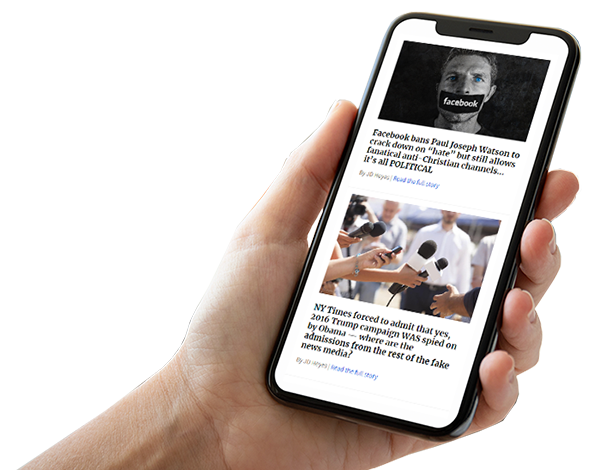

"Big Tech and mainstream media are constantly trying to silence the independent voices that dare to bring you the truth about toxic food ingredients, dangerous medications and the failed, fraudulent science of the profit-driven medical establishment.
Email is one of the best ways to make sure you stay informed, without the censorship of the tech giants (Google, Apple, Facebook, Twitter, YouTube, etc.). Stay informed and you'll even likely learn information that may help save your own life."
–The Health Ranger, Mike Adams